The Corneal Dissector: Precision Tools for Intrastromal Surgery
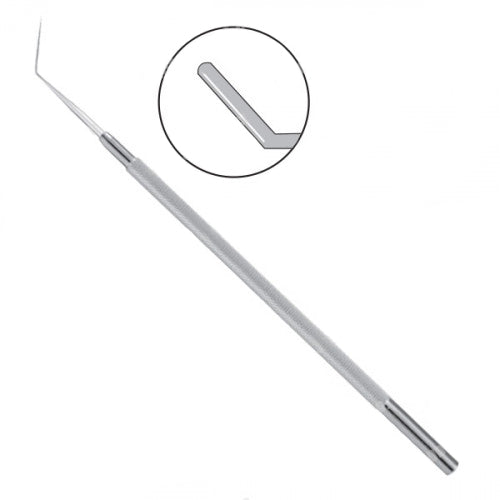
In cornea surgery that is advanced In advanced corneal surgery, the Corneal Dissector is an instrument that is essential for forming precise planes in the corneal stroma. This particular model--which has a bent shaft and straight blade--is designed for the dissection of intrastromal structures, which is a crucial process like the DALK (Deep Anterior Lamellar Keratoplasty) and the creation of a corneal inlay pocket or the incision of intracorneal rings (ICRS).
Design: The Angled Shaft & Straight Blade
Combining an bent shaft as well as the combination of a straight blade is an intentional ergonomic decision to enhance the surgical experience and accessibility.
-
Angled Shaft. This "bend" in the instrument lets the hand of the surgeon remain out of the direct line of view that the microscope can see. It also gives the clearance to move through the brow or speculum, making sure that the blade's entry into the stroma is made at the proper angle to approach.
-
Straight Blade Though some dissectors are curved to conform to corneal contours, this straight blade model is more suited to creating flat planes that are controlled. This allows surgeons to apply a uniform pressure over the entire dissection and is essential to ensure a uniform thickness across the corneal bed.
Applications in Intrastromal Dissection
The Corneal Dissector is utilized to remove the tough collagen lamellae in the cornea. Its specialized design excels in:
-
Lamellar Keratoplasty: Facilitating the manual separation of the anterior stroma and the more subcutaneous layers.
-
Tunnel Construction: For surgeries like Intacs implantation The straight blade is used to determine the entry route as well as the first intrastromal pocket.
-
DaLK Methods Aiding surgeons get to the plane of pre-Descemet by carefully navigating through stromal fibers, without making perforations.
Key Technical Features
-
The thin profile: This blade has been designed to be extremely thin to limit the displacement of tissue as well as "drag" during the dissection procedure, which helps to preserve the structural integrity of the cornea.
-
Semi-Sharp Edges. Typically, the edges can be sharp enough to split lamellar fibers, but are sharp enough to avoid the accidental "diving" into deeper, non-intentional layers.
-
Top Materials Constructed of the highest-tension Stainless Steel or Titanium, which ensures that the instrument gives the feedback needed for surgeons to "feel" the resistance of corneal tissue.
Why the Straight Blade Matters
Many surgeons find that a straight blade is the most predictable "cutting path" compared to the curved options. It permits the possibility of a linear movement across the stroma that is more easy to track in high magnification. This is essential for working within a couple of thousand microns in the surface of the endothelium.
Conclusion
The Corneal Dissector with a bent shaft, straight blade is a marvel of the field of ophthalmic engineering. It gives you the range, visibility, and mechanical accuracy required in the most precise intrastromal procedures. Ensuring that there is a constant dissection plane, it makes a crucial contribution to the effectiveness of modern lamellar and refractive procedures.