Featured Collection
Your cart
Featured Collection

PEAK SURGICAL
SKU:PS-1748
Couldn't load pickup availability
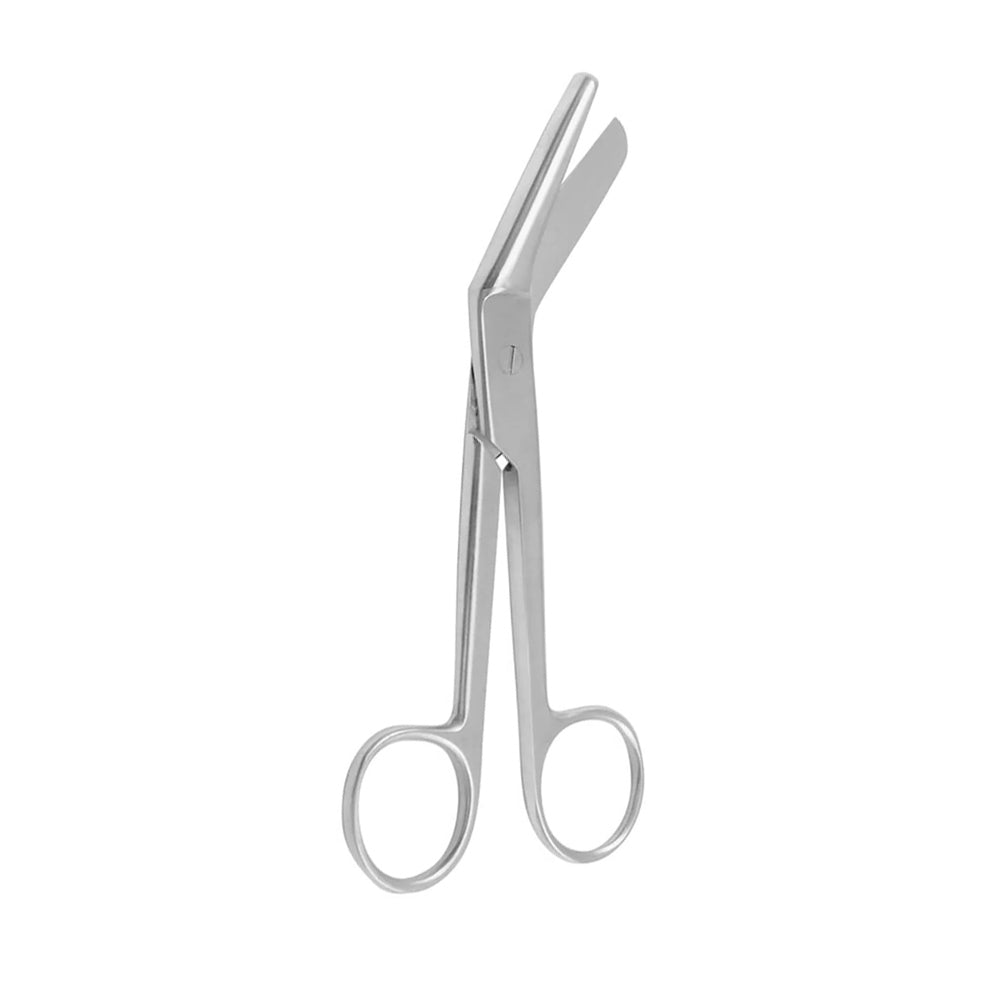
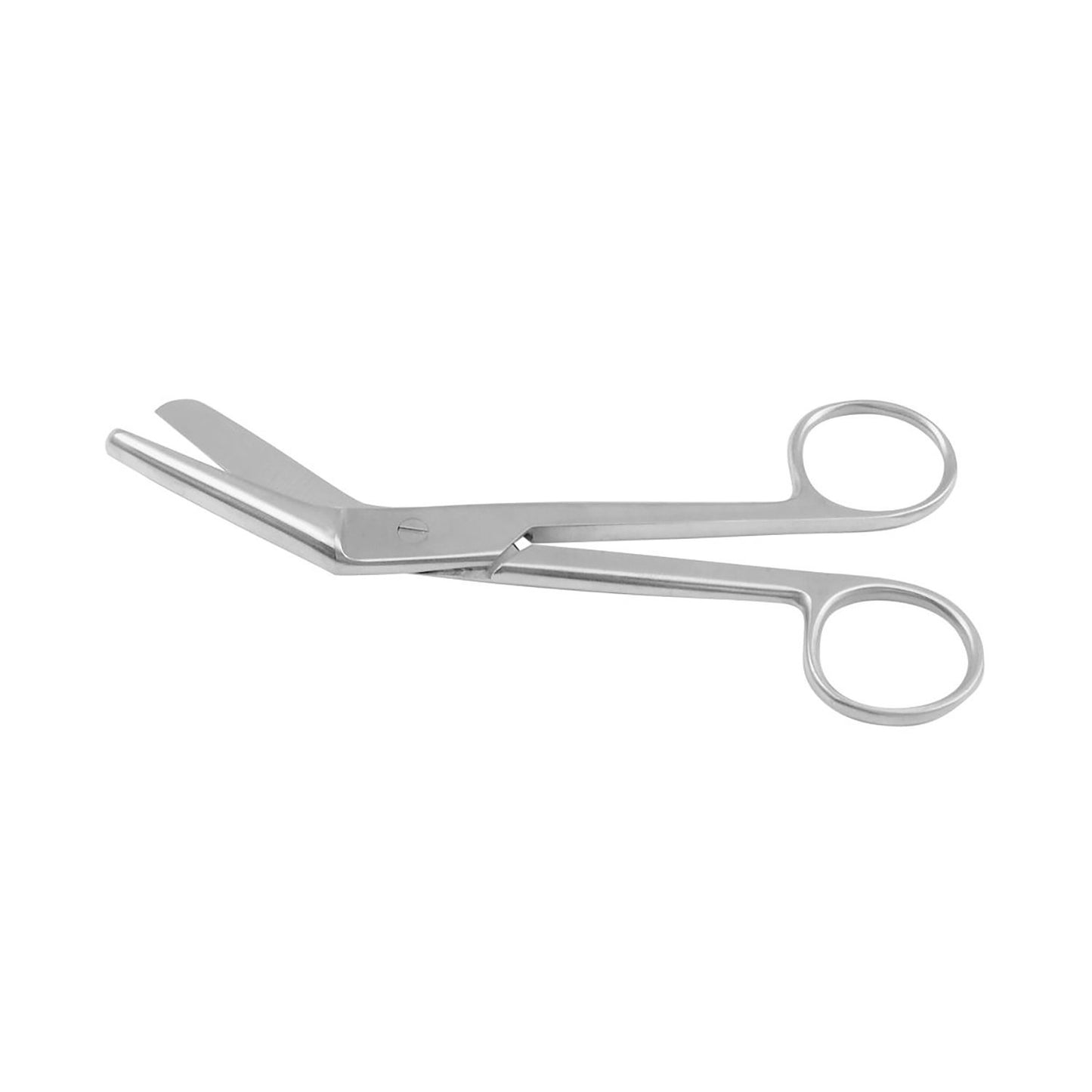
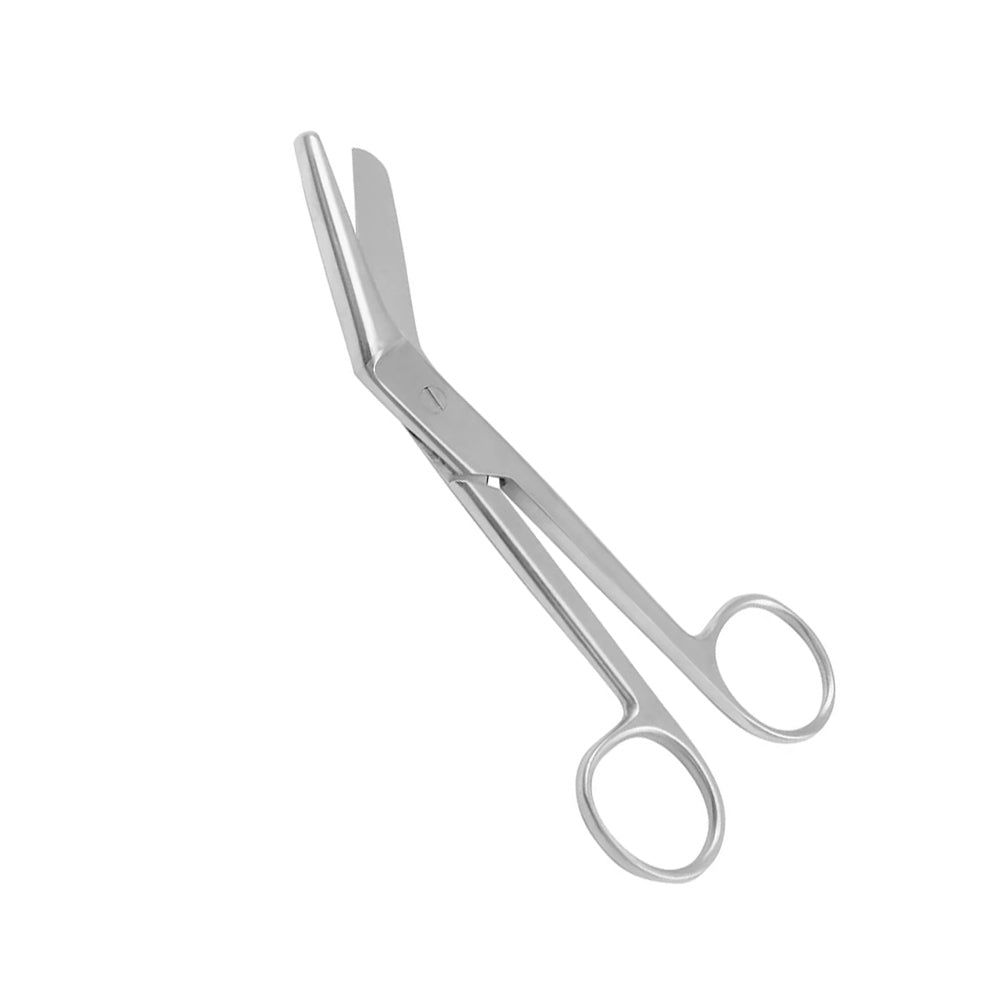
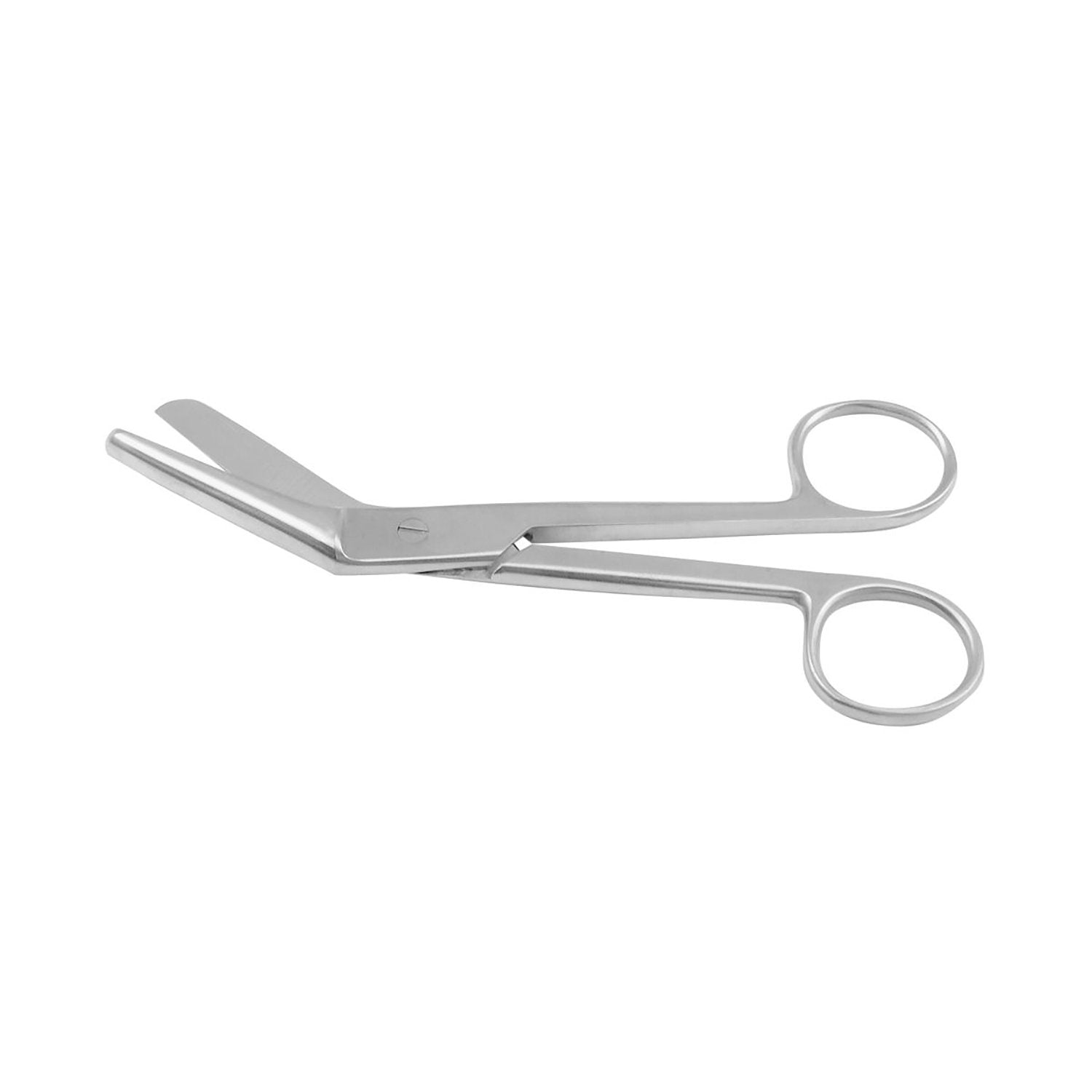
The Braun Episiotomy Scissors are German stainless steel obstetric surgical scissors available in two overall lengths — 6 inches (15.2cm, PS-1748) and 8 inches (20.3cm, PS-1749) — designed for performing episiotomies and episiotomy-related perineal incisions during vaginal delivery, with the Braun design's characteristic strongly angled blade profile that positions the cutting edges at the correct approach angle to the perineum while the accoucheur maintains the handle in an ergonomic grip position outside the immediate delivery field. The angled blade geometry — a defining feature of the Braun pattern that distinguishes it from straight episiotomy scissors — allows the obstetrician or midwife to direct the scissor blades through the perineal tissue at the 45-degree lateral angle required for a mediolateral episiotomy, or at the midline for a midline episiotomy, without requiring extreme wrist pronation or supination that would compromise blade control at the moment of incision. The precision-ground cutting edges of both blades produce a clean, single-stroke perineal incision with minimal tissue drag — a critical performance requirement at the moment of crowning, when the episiotomy must be performed during a contraction window and blade hesitation or incomplete incision would defeat the purpose of the procedure. The ergonomic finger ring handles provide a secure grip with the standard scissor technique for both right-handed and left-handed operators. Manufactured from German stainless steel for blade edge retention, corrosion resistance through repeated autoclaving, and the dimensional stability required of a reusable obstetric instrument. Used by obstetricians, midwives, obstetric registrars, and obstetric nurses in hospital labor wards, maternity units, birth suites, obstetric surgical theaters, and midwifery-led birth centers. Sold as 1 piece per length variant selected.
The Braun pattern episiotomy scissors are named for their distinctive angled blade configuration — a strong offset between the blade axis and the handle axis that is the instrument's most clinically significant design feature and the reason obstetricians and midwives specify the Braun pattern rather than straight scissors for episiotomy procedures. The anatomical problem that the Braun angle solves is one of access geometry: during the second stage of labor at the point where an episiotomy is indicated, the accoucheur's operating hand is positioned above and posterior to the perineum, gripping the scissor handles with the wrist in a position roughly perpendicular to the perineal surface. For the scissor blades to reach the perineum at the correct incision angle — approximately 45 degrees from the midline for a standard mediolateral episiotomy, or directly at the midline for a median episiotomy — with the handle at this grip position, the blades must be angled relative to the handle axis by an amount that compensates for the anatomical approach angle. Straight scissors held in this grip position present the blades parallel to the handle axis, which means the blade tips approach the perineum from an angle that would produce either a more vertical incision than intended or require the operator to rotate the wrist into an uncomfortable and less controlled position to achieve the correct blade-tissue angle. The Braun angle — typically 45–60 degrees between blade and handle axes — pre-corrects for this approach geometry, allowing the operator to hold the handle comfortably in the natural grip position while the blades arrive at the perineum at the intended incision angle. This pre-correction is particularly important because the episiotomy incision is typically performed under time pressure during the contraction window, requiring the operator to position the scissors, confirm blade placement, and complete the incision in a single controlled sequence without opportunity for positional adjustment.
Episiotomy is a surgical incision of the perineum and posterior vaginal wall performed during the second stage of labor to enlarge the vaginal opening, primarily to facilitate delivery in situations where the perineum is not distending sufficiently to allow passage of the presenting fetal part without severe, uncontrolled laceration, or where rapid delivery is required due to fetal distress, shoulder dystocia, instrumental delivery with forceps or ventouse, or impending perineal rupture extending toward the anal sphincter. The two standard episiotomy incision patterns are the mediolateral — a 45-degree incision directed away from the midline toward either the right or left ischial tuberosity — and the midline (median) episiotomy, directed directly posteriorly along the perineal raphae. The mediolateral approach, the more commonly performed pattern in the UK, Europe, South Asia, and most institutional obstetric practice globally, is designed to direct the incision away from the anal sphincter and rectum, reducing the risk of the incision extending to a third- or fourth-degree obstetric anal sphincter injury compared to a midline episiotomy that extends directly toward the sphincter if overcutting or laceration extension occurs. The scissors are used at the moment of maximal perineal stretching — when the presenting part is crowning and the perineum is under tension — because the stretched, thinned perineal tissue incises more cleanly with less bleeding than unstretched tissue. One blade of the scissor is inserted beneath the perineal skin with the tip directed away from the fetal head, the blade angle is confirmed against the intended incision line, and a single decisive closing stroke completes the incision through the full perineal thickness to the levator ani fascia. A hesitant or repeated partial incision increases tissue trauma and bleeding compared to a single complete stroke. The Braun scissors' blade geometry and cutting edge sharpness are both oriented toward making this single decisive stroke as consistent and controlled as possible.
The two length variants of the PS series Braun Episiotomy Scissors address different clinical reach requirements and operator preferences in perineal incision procedures. The 6-inch (15.2cm, PS-1748) variant is the standard length for the majority of episiotomy procedures performed during vaginal delivery — its overall length provides the handle leverage needed for controlled blade positioning at the perineum from the accoucheur's standard working position at the foot of the delivery bed or table, while the shorter blade length gives the operator precise control of the incision depth without over-insertion of the distal blade tip into the vagina. At 6 inches, the instrument is also more compact and less unwieldy in a delivery environment where instrument handling, patient movement, and cord and membranes management are all occurring simultaneously. The 8-inch (20.3cm, PS-1749) variant is preferred by some operators for situations requiring additional working length — including operative vaginal deliveries with Kjelland or Neville-Barnes forceps where the blade of the delivery instrument occupies part of the access field and the episiotomy scissors must be introduced around or beside it, perineal incision in patients with a particularly long perineum or increased adipose tissue depth requiring the blade tips to travel further to reach the full perineal thickness, and operative deliveries where the accoucheur's working position is more distal than in a standard delivery. Some operators also prefer the longer instrument as a general practice preference, finding that the additional handle length provides more grip surface for a secure ring-handle grip in a gloved hand during a delivery procedure. Both variants share the same Braun angled blade geometry and German stainless steel construction, and both are appropriate for mediolateral and midline episiotomy incision techniques.
The Braun Episiotomy Scissors are manufactured from German stainless steel, providing the blade hardness, edge retention, and corrosion resistance required for a reusable obstetric surgical scissors that undergoes repeated steam autoclave sterilization across a clinical service life in a high-throughput labor ward or maternity unit. The cutting performance of an episiotomy scissors depends on the hardness of the blade steel and the precision of the blade edge grinding — both of which are determined by the steel specification and manufacturing process. German stainless steel provides the blade Rockwell hardness (typically HRC 52–56 for surgical scissors) that allows the ground cutting edge to remain sharp through the combined loading of perineal tissue incision and autoclave cycles, rather than rolling or blunting after the first few uses as lower-specification stainless steel blades do. Blade alignment at the crossing point — where the two blades meet during the closing stroke — must be maintained within microns to produce the shearing action that cuts tissue cleanly rather than the compressing action that tears and crushes it. The German stainless steel construction and precision grinding provide this alignment stability through the mechanical stresses of repeated use and reprocessing. The instrument should be inspected at each reprocessing cycle for blade edge condition and closing alignment; any scissors that require two or more strokes to complete a clean incision on inspection paper (a standard scissors quality test), or that show visible blade gapping during the closing stroke, should be removed from the obstetric instrument tray and replaced. An episiotomy scissors that produces a ragged or incomplete incision increases operative blood loss, produces irregular wound edges that are more difficult to repair, and may require a second incision — all avoidable consequences of inadequate instrument maintenance.
The Braun Episiotomy Scissors (PS-1748, PS-1749) are manufactured under a quality management system certified to ISO 13485, governing German stainless steel material sourcing, blade forging and grinding, pivot mechanism assembly, dimensional inspection at both the 6-inch and 8-inch overall lengths, surface finishing, and packaging. CE Mark certification confirms conformity with European Medical Device Regulation requirements for Class I reusable surgical instruments distributed within EU and associated regulatory territories. FDA compliance documentation is maintained for United States distribution, satisfying regulatory requirements for reusable obstetric surgical instruments procured by US hospitals, maternity units, obstetric surgical centers, and gynecology instrument distributors. These certifications satisfy procurement and tender documentation requirements for institutional buyers in the USA, India, Pakistan, Vietnam, and across international gynecology and obstetric instrument procurement frameworks. Certificates of conformity and quality management system documentation are available on request. OEM manufacturing is available within the same certified framework.
| SKU | PS-1748 (6" / 15.2cm) · PS-1749 (8" / 20.3cm) |
|---|---|
| Product Name | Braun Episiotomy Scissors |
| Price | $1.32 USD per piece |
| Available Lengths | PS-1748: 6 inches (15.2cm) · PS-1749: 8 inches (20.3cm) |
| Blade Design | Braun pattern — strongly angled blade relative to handle axis (approx. 45–60° offset) for perineal approach access |
| Cutting Edges | Precision-ground, hardened stainless steel, smooth shear action |
| Handle Type | Ergonomic finger ring handles |
| Instrument Classification | Class I Reusable Obstetric Surgical Scissors |
| Primary Indication | Episiotomy incision during vaginal delivery (mediolateral and midline patterns); perineal incision for instrumental delivery |
| Clinical Setting | Hospital labor ward, maternity unit, birth suite, obstetric surgical theater, midwifery-led birth center |
| Users | Obstetricians, midwives, obstetric registrars, obstetric nurses |
| Material | German Stainless Steel |
| Certifications | CE Mark, ISO 13485, FDA |
| Reusability | Reusable |
| Quantity | 1 Piece |
| Rust Resistance | Yes |
| Warranty | 1 Year |
| MOQ | 1 Piece |
| OEM / Custom Orders | Available |
| Packing | Carton Box |
| Place of Origin | Pakistan |
| Brand | Peak Surgicals |
| Primary Use | Episiotomy incision during the second stage of vaginal delivery using the Braun angled blade design for controlled mediolateral or midline perineal incision at 6" (PS-1748) or 8" (PS-1749) working length |
| After-Sale Service | Return and Replacement |
What is an episiotomy and when are these scissors used during delivery?
Episiotomy is a surgical perineal incision performed during the second stage of labor to enlarge the vaginal outlet and facilitate delivery when the perineum is restricting passage of the fetal presenting part, when uncontrolled perineal laceration toward the anal sphincter appears imminent, when delivery must be expedited due to fetal distress or bradycardia, or when instrumental delivery with forceps is performed. The scissors are applied at the moment of maximal perineal stretching during a uterine contraction, when the presenting part is crowning and the perineal tissue is under tension and thinned — conditions that produce a cleaner, better-hemostatic incision than cutting on unstretched tissue. Current evidence-based obstetric practice endorses episiotomy as a selective rather than routine procedure, reserved for clinical situations where the individual benefits of the incision — facilitation of delivery, reduction of severe sphincter injury risk in specific presentations — outweigh the morbidity of the episiotomy wound itself, which requires suture repair and produces perineal pain and dyspareunia in the postpartum period. The Braun scissors are used for both mediolateral episiotomies — the standard in most institutional and midwifery practice globally — and midline episiotomies preferred by some practitioners in North America, with the blade angle pre-correcting for the perineal approach geometry regardless of the incision pattern chosen.
What is the clinical difference between the 6-inch PS-1748 and the 8-inch PS-1749?
Both variants perform the same surgical function — episiotomy incision using the Braun angled blade design — and the choice between them is determined by the operator's working distance from the perineum, the clinical scenario, and operator preference. The 6-inch PS-1748 is the standard choice for routine vaginal delivery episiotomy, where the accoucheur is positioned at the foot of the delivery bed with comfortable access to the perineum and where the shorter instrument provides precise blade tip control during the incision. The 8-inch PS-1749 is used when additional reach is needed: during forceps-assisted deliveries where the delivery instrument is already occupying part of the vaginal access field and the episiotomy scissors must be introduced alongside it, in patients with a long perineum or increased perineal tissue depth, and in clinical scenarios where the operator's working position is more distal or where individual preference favors the longer grip length. In high-volume maternity units that perform both spontaneous and instrumental deliveries, stocking both lengths ensures the appropriate instrument is available without delay when it is needed. At $1.32 per piece, equipping delivery trays with both lengths is a negligible cost increment for the flexibility it provides.
How do Braun episiotomy scissors differ from straight scissors used for perineal incision?
The Braun pattern's angled blade is not a cosmetic design variation — it addresses a specific intraoperative access geometry problem. When performing a mediolateral episiotomy, the operator's hand must approach the perineum from above and posterior to the introitus, with the handle in the operator's normal grip orientation. For the blade to arrive at the perineal tissue at a 45-degree mediolateral angle, a straight scissors held in this grip would require the operator to rotate the wrist significantly into pronation or supination — an awkward, unstable position that reduces blade control at the critical moment of the incision. The Braun angle — built into the instrument design — pre-corrects for this approach geometry so that the handle sits in a natural, stable grip position while the blades arrive at the perineum at the correct incision angle without wrist rotation. This design advantage translates directly into more consistent incision angle and depth, fewer hesitation marks from positional instability during the cutting stroke, and greater operator confidence in a procedure that must be completed quickly and decisively under the time pressure of the second stage. Straight scissors can be used for episiotomy — and are used in some settings — but they require the operator to compensate with wrist positioning for what the Braun design provides automatically.
What sterilization and reprocessing protocol is recommended?
Between uses, the scissors should be pre-cleaned in an enzymatic ultrasonic bath to remove blood, tissue, and vernix from the blade surfaces, pivot joint, and the inner faces of the ring handles before terminal sterilization. Following cleaning, rinse, dry, and pouch for steam autoclave sterilization at 134°C pre-vacuum parameters — the standard method for reusable obstetric surgical instruments. The pivot screw joint should be checked at each reprocessing cycle for debris accumulation, which stiffens the blade action, and for pivot screw looseness, which allows the blades to misalign during the closing stroke and produces a tearing rather than shearing incision. Lubricate the pivot joint with instrument oil after each reprocessing cycle to maintain smooth blade action. The blade edges should be tested against inspection paper — both blades should engage the paper cleanly from the pivot to the tip without sliding or deflecting — before placing the instrument back into the delivery tray. Any scissors that fail this inspection should be removed from clinical service and either resharpened by a specialist instrument service or replaced.
What certifications do these scissors carry, and are bulk or OEM orders available?
The Braun Episiotomy Scissors (PS-1748 and PS-1749) are manufactured under an ISO 13485-certified quality management system covering German stainless steel material procurement, blade forging, grinding and alignment, pivot assembly, dimensional inspection at both overall lengths, and packaging. CE Mark certification confirms conformity with European Medical Device Regulation requirements for Class I reusable surgical instruments. FDA compliance documentation supports United States distribution. Certificates of conformity are available on request for hospital procurement and tender documentation. Bulk orders are accepted with a minimum of 1 piece per variant, and volume pricing is available for hospitals, maternity units, obstetric instrument distributors, and group purchasing organizations. Both the 6-inch and 8-inch variants can be ordered individually or as paired sets for complete delivery tray equipping. OEM manufacturing is available within the same certified framework. Free shipping on orders of $99 or more.