
Featured Collection
Your cart
Featured Collection

PEAK SURGICALS
SKU:PS-OT-0379
Couldn't load pickup availability
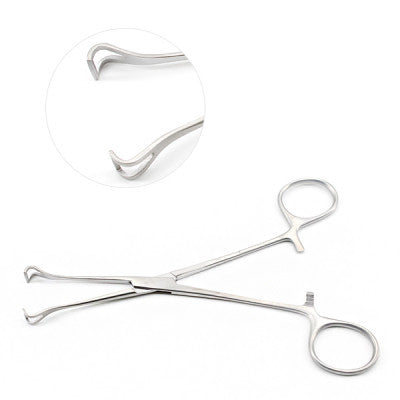
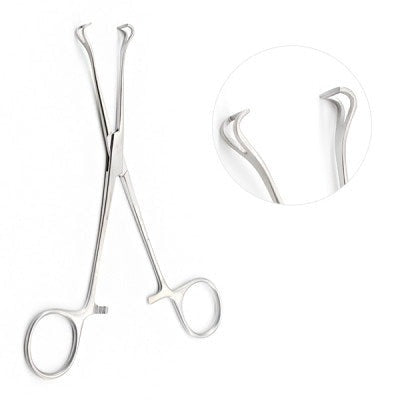
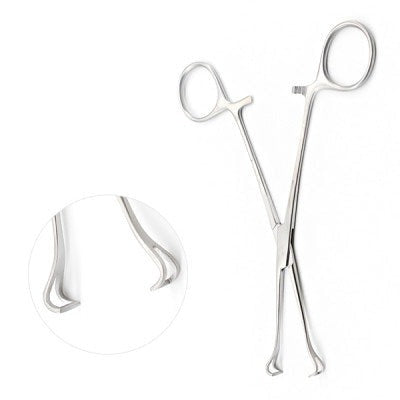
The professional clinical solution for secure, non-perforating grasping and stable handling of delicate tubular structures. The Babcock Intestinal Forceps are specialized surgical instruments engineered to solve the problem of manipulating soft, fluid-filled, or fragile organs—such as the intestines, bladder, or fallopian tubes—that are prone to tearing under the pressure of standard toothed forceps. Characterized by their fenestrated, flared jaws and smooth gripping surfaces, these forceps act as a mechanical necessity for surgeons who require a firm hold without puncturing the tissue wall. Its design is specifically optimized to provide a "cupping" grip, ensuring that visceral structures are managed with mathematical accuracy while maintaining a strictly atraumatic environment.
The Babcock Intestinal Forceps represent the industry standard for atraumatic surgical ergonomics and visceral stabilization. In any professional environment—from general laparotomy suites to specialized gynecological theaters—the ability to move and hold delicate structures like the appendix or bowel loops is a critical success factor.
At its core, the instrument is built for professional-grade longevity. The flared jaws are mathematically calibrated to provide maximum grip security with minimum compression. The ratchet mechanism is designed for smooth engagement and quick release, facilitating rapid instrument transitions during high-paced surgical maneuvers..
Feature Details
Jaw Pattern Flared, Fenestrated, Non-Toothed
Closure Type Multi-Position Ratchet Lock
Joint Type High-Stability Box Joint
Material Core Premium Surgical-Grade Stainless Steel
Maintenance Fully Autoclavable / Reusable
Standard ISO Surgical Grade
Primary Use Cases:
Q: What is the main difference between Babcock and Allis forceps?
A: Allis forceps have sharp interlocking teeth for dense tissue (like fascia). Babcock forceps have smooth, flared, fenestrated jaws for delicate tissues (like the bowel) where puncturing must be avoided.
Q: Can Babcock forceps be used to hold blood vessels?
A: While atraumatic, they are generally too large for vascular work. Specialized vascular clamps (like DeBakey or Cooley) are better suited for managing arteries and veins.
Q: Are these forceps suitable for laparoscopic procedures?
A: This specific pattern is for open surgery. However, the Babcock design is so effective that "Laparoscopic Babcock" versions are a standard tool in minimally invasive surgery.
Q: How do I maintain the ratchet and box joint?
A: Ensure the joint is thoroughly cleaned of bioburden using a soft brush. Apply a medical-grade, water-soluble lubricant to the box joint and ratchet before autoclaving to keep the action fluid.
