
PEAK SURGICAL
Schiotz Tonometer – Ophthalmic Analog Tonometer Instrument
Schiotz Tonometer – Ophthalmic Analog Tonometer Instrument
SKU:
Couldn't load pickup availability
- 30 Days Money Back Guarantee.
- 100% Quality Satisfaction.
- Medical Grade Steel Reusable.
 CE Certified
 FDA Certified
 ISO Certified


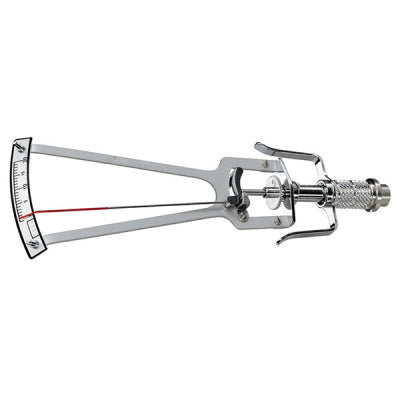
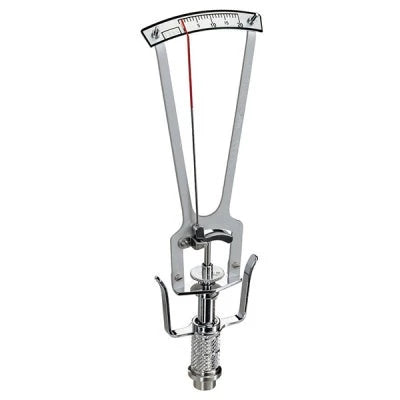
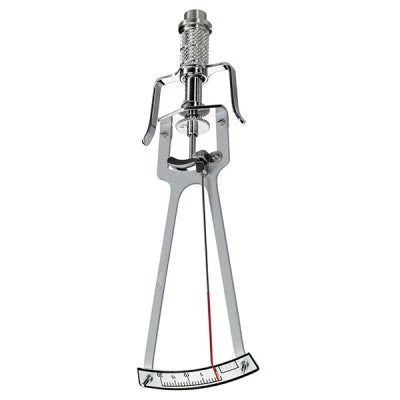
Schiotz Tonometer – Precision Analog Intraocular Pressure Assessment
The clinical standard for reliable indentation tonometry and cost-effective glaucoma screening. The Schiotz Tonometer is a foundational ophthalmic diagnostic instrument meticulously engineered for the accurate measurement of intraocular pressure (IOP). Characterized by its precision mechanical plunger system and weighted scale, this tool acts as a mechanical necessity for ophthalmologists and veterinarians who require a portable, power-independent method to assess ocular tension. Its design is specifically optimized to provide consistent results through the principle of indentation, ensuring that clinicians can identify hypertension within the globe with mathematical reliability.
Key Features for Professional Ophthalmic Diagnostics
- Precision Mechanical Indentation System: Features a calibrated plunger that measures the depth of corneal indentation under a known weight. This analog system provides a direct reading on the integrated scale, which is then converted to mmHg using standardized conversion tables.
- Hollow Barrel & Open Footplate: The barrel is engineered for friction-free plunger movement, while the open footplate ensures a stable, perpendicular interface with the patient’s cornea. This design minimizes measurement error caused by instrument drag or misalignment.
- Weighted Calibration Set: Typically supplied with a series of interchangeable weights (e.g., 5.5g, 7.5g, 10g). This allows the clinician to adjust the instrument’s sensitivity based on the patient's estimated ocular tension, ensuring accuracy across a wide range of pressures.
- Surgical-Grade Stainless Steel Construction: Manufactured from premium, high-tensile medical steel that is impervious to rust and corrosion. The high-quality finish ensures that the contact footplate remains smooth and atraumatic to the corneal epithelium.
- Lightweight Ergonomic Holder: Features an integrated handle that allows the clinician to lower the instrument onto the eye with maximum control and minimal manual pressure, preventing "false high" readings.
- Power-Independent Reliability: As a purely mechanical analog device, the Schiotz Tonometer requires no batteries or electrical charging, making it an indispensable tool for mobile clinics, emergency rooms, and remote veterinary field work.
Detailed Product Description
The Schiotz Tonometer represents a pinnacle of diagnostic ergonomics, designed to solve the problem of "measurement accessibility" in diverse clinical environments. In any high-stakes environment—from a busy hospital ophthalmology ward to a specialized veterinary practice—the early detection of elevated intraocular pressure is a critical success factor in preventing permanent vision loss from glaucoma. This tonometer acts as a high-sensitivity mechanical sensor, providing a level of reliability that has been the global benchmark for indentation tonometry for decades.
At its core, the instrument is built for professional-grade longevity. The mechanical components are hand-assembled to ensure that the plunger glides with zero resistance, which is essential for accurate readings. This mechanical reliability ensures that the instrument remains a dependable asset for routine screenings and complex ocular assessments.
Built to exceed the most rigorous international medical standards, the Schiotz Tonometer is fully decontaminable and reusable. Its robust construction and specialized weighted system make it an indispensable asset for ensuring safe, organized, and mathematically accurate results in ocular health monitoring.
Specifications & Clinical Applications
Feature Details
Material Premium Surgical-Grade Stainless Steel
Measurement Principle Indentation Tonometry (Analog)
Included Weights Standard Set (5.5g, 7.5g, 10g)
Scale Range 0 to 20 Units
Maintenance Reusable / Decontaminable
Application Human & Veterinary Ophthalmology
Primary Use Cases:
- Glaucoma Screening: Identifying elevated IOP in at-risk patient populations.
- Routine Eye Examinations: Establishing baseline ocular pressure during comprehensive check-ups.
- Veterinary Ophthalmology: The "gold standard" for portable pressure testing in dogs and cats.
- Emergency Medicine: Rapid assessment of ocular tension following trauma or acute vision changes.
- Remote Field Clinics: Providing accurate diagnostics in areas without access to electronic tonometry.
Why Professionals Choose the Schiotz Tonometer?
- Proven Accuracy: Decades of clinical data support the reliability of the Schiotz indentation method.
- Zero Downtime: No electronics or batteries means the instrument is always ready for immediate use.
- Superior Durability: Forged to withstand the rigors of daily clinical and field use.
- Tactile Sensitivity: The mechanical design provides the clinician with a direct physical "feel" for the measurement process.
FAQ Section
Q: How do I read a Schiotz Tonometer?
A: The needle points to a number on the scale (0–20). You then refer to a standardized Schiotz conversion chart (included) to cross-reference that scale reading with the weight used (e.g., 5.5g) to find the pressure in mmHg.
Q: Is anesthesia required for the patient?
A: Yes. Because the footplate and plunger make physical contact with the cornea, a topical anesthetic drop must be applied to the eye before the measurement is taken.
Q: How should I clean the tonometer between patients?
A: The footplate and plunger are the primary contact points. They should be cleaned with an alcohol swab or a dedicated disinfectant. The plunger should be removed from the barrel periodically to clean out any dust or debris that might cause friction.
Q: Can this be used on all animals in a veterinary setting?
A: It is most commonly used on dogs and cats. For very small species or birds, the weight of the instrument may be too high, and specialized micro-tonometry may be required.
Q: Does the instrument need to be calibrated?
A: Before each use, you should check the "zero" setting using the included test block. If the needle does not point to zero on the test block, the instrument may require professional adjustment to ensure accuracy.