
PEAK SURGICAL
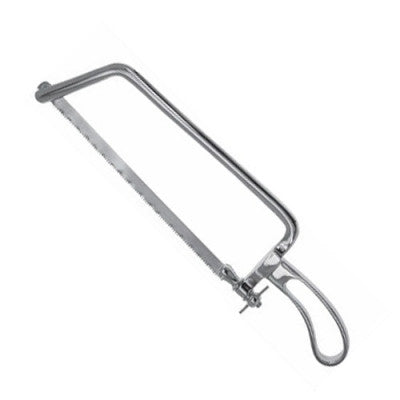
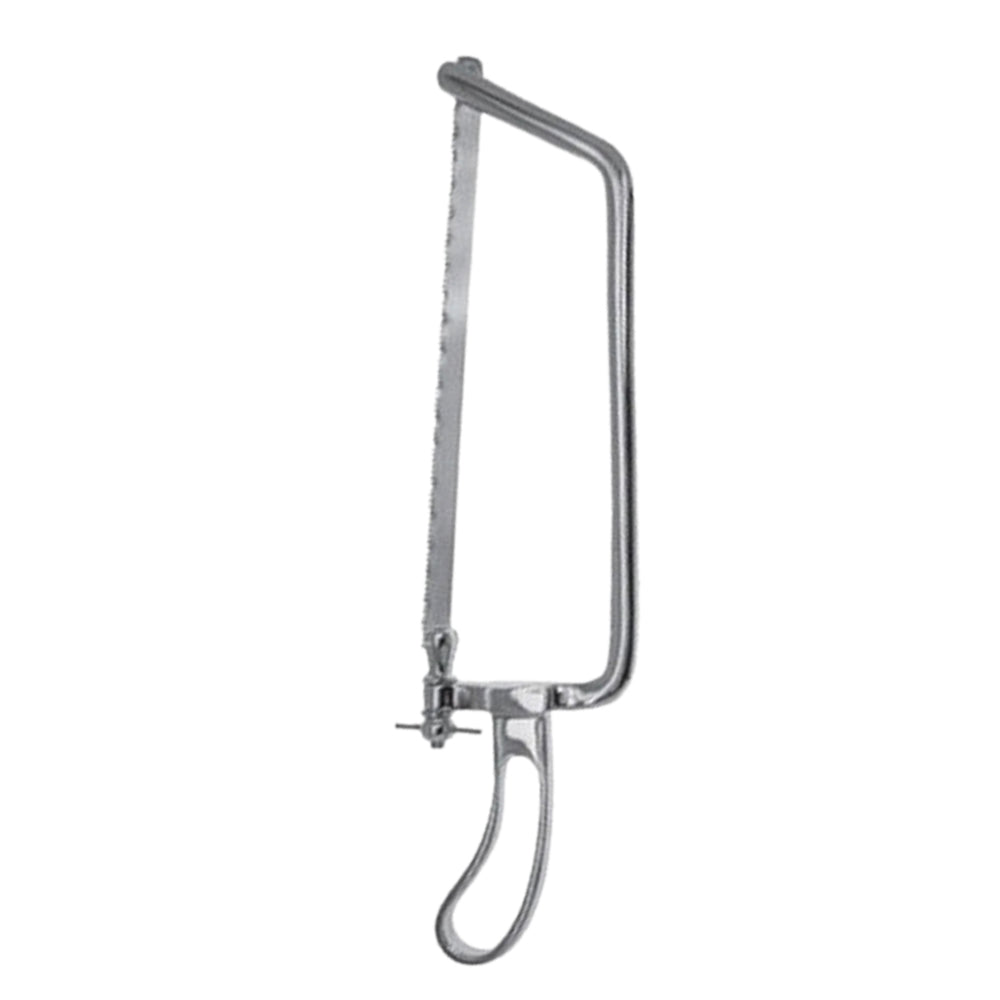
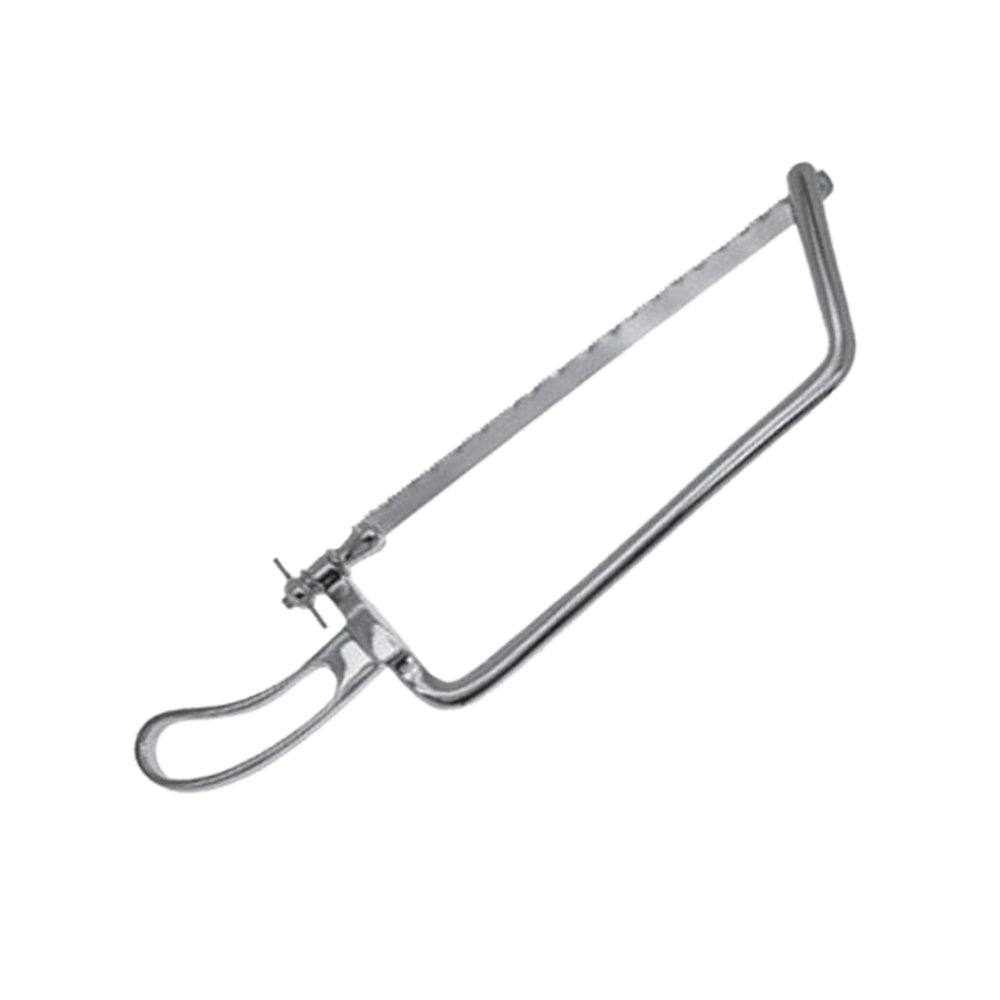
Charriere Bow Style Amputating Saw with 2 Blades 12mm & 18mm
Charriere Bow Style Amputating Saw with 2 Blades 12mm & 18mm
SKU:PS-6987
Couldn't load pickup availability
- 30 Days Money Back Guarantee.
- 100% Quality Satisfaction.
- Medical Grade Steel Reusable.
 CE Certified
 FDA Certified
 ISO Certified


Charriere Bow Amputation Saw – Professional Orthopedic Precision
The gold-standard mechanical instrument for high-stability bone division and controlled surgical amputation. The Charriere Bow Style Amputating Saw is a heavy-duty orthopedic tool engineered to solve the requirement for absolute blade tension and structural rigidity during manual bone resection. Featuring a robust bow-frame architecture and a dual-interchangeable blade system (12mm and 18mm), this saw serves as a mechanical necessity for surgical teams needing to perform clean, straight-line osteotomies where powered instruments may not be suitable or necessary. Its frame-tensioned geometry provides unparalleled control, minimizing blade “drift” and ensuring every pass is decisive and anatomically accurate.
Key Features for Professional Surgical Management
- High-Tension Bow-Frame Geometry: Forged with a rigid, arch-stabilized chassis. This frame is a mechanical necessity for maintaining constant blade tension; it prevents the “buckling” or bending common in thin-profile saw blades, ensuring perfectly flat, perpendicular bone cuts.
- Dual-Blade Versatility Kit: Supplied with both 12mm and 18mm precision-toothed blades. This inclusion is a mechanical necessity for surgical flexibility, allowing the clinician to select the blade width optimized for the specific bone diameter—using the 12mm for smaller structures and the 18mm for larger, high-density bone segments.
- Rapid-Exchange Blade Interface: Engineered with a secure, quick-lock tensioning mechanism. This interface is a mechanical necessity for OR efficiency, allowing the surgical team to swap blade sizes in seconds without compromising blade tension.
- Ergonomic “Power-Grip” Handle: Formed with a weighted, non-slip handle architecture. This design is a mechanical necessity for ensuring a secure, steady grip—providing the surgeon with the leverage needed for efficient sawing while mitigating fatigue during complex orthopedic interventions.
- Open-Field Visual Clearance: Designed with a slim frame-to-blade ratio. This profile is a mechanical necessity for maintaining clear visibility of the osteotomy site throughout the cutting process, enabling real-time adjustments and precise anatomical placement.
- Autoclave-Grade Surgical Steel: Forged from high-grade, corrosion-resistant stainless steel. This material composition is a mechanical necessity for ensuring the saw remains bio-inert, rust-proof, and structurally sound through thousands of high-heat, high-pressure hospital sterilization cycles.
Detailed Product Description
The Charriere Bow-Style Amputating Saw is an essential asset for orthopedic departments where reliable manual bone division is a primary requirement. Unlike powered saws, the Charriere offers the surgeon total, immediate tactile feedback—you can feel the bone density and the bite of the teeth through the frame. This mechanical sensitivity is essential for surgeons who prefer the predictability and safety of a manual approach, especially in delicate amputations where soft-tissue preservation is critical.
At its core, the instrument is engineered for durability and surgical precision. The bow-frame acts as a structural stabilizer, absorbing mechanical vibrations that can cause splintering or uneven cuts. By using a tensioned blade, the surgeon can apply controlled pressure, a mechanical necessity for achieving a “clean finish” on the bone cross-section, thereby facilitating optimal wound healing and tissue closure post-amputation.
Built to exceed international quality metrics for medical hardware, this saw is fully reusable, easily serviced, and designed for long-term clinical utility. Its classic, weld-free construction, balanced feel, and dependable blade-exchange system make it the instrument of choice for modern hospital surgical sets.
Technical Specifications & Geometry
Feature Details
Instrument Style Traditional Charriere Bow-Pattern Saw
Blade Sizes 12mm and 18mm (Interchangeable Set)
Frame Material High-Tensile Surgical Stainless Steel
Blade Tensioning Precision Screw-Lock Bow Tensioner
Handle Geometry Ergonomic Non-Slip Power-Grip
Reprocessing Limits Fully Autoclavable / High-Vacuum Steam-Safe
Certifications CE, ISO, Professional Surgical Grade
Primary Clinical Applications:
- Orthopedic Amputations: Precise, high-control bone division for limb preservation or modification.
- Manual Osteotomies: Cutting bone where high-torque power tools are contraindicated.
- Trauma Surgery: Rapid and stable bone resection in emergency orthopedic scenarios.
- Bone Management: Sizing bone grafts or removing large pathological segments.
- General Reconstructive Surgery: Providing a reliable “back-up” or primary tool for bone sculpting.
Why Orthopedic Surgical Teams Choose the Charriere Saw?
- Absolute Cutting Control: The bow-tensioned blade is a mechanical necessity for surgeons who need to make exact, unyielding cuts without the erratic vibration often caused by electric saw attachments.
- Structural Stability: The rigid frame design is a mechanical necessity for preventing blade deflection and ensuring the cut remains exactly where it started, even in dense cortical bone.
- Versatility in the OR: The inclusion of both 12mm and 18mm blades is a mechanical necessity for surgical inventory management, providing the correct tool for every anatomical diameter in a single kit.
- Reliable Sterilization Performance: The open, high-steel frame is a mechanical necessity for rapid, thorough, and completely predictable decontamination in hospital CSSDs.
FAQ Section
Q: Why is the bow frame better than a flat hacksaw design?
A: The bow frame is a mechanical necessity because it allows for significantly higher blade tension. Higher tension results in a much straighter, more accurate cut with virtually zero blade drift in high-density bone.
Q: How do I ensure the blade tension is correct?
A: The tensioner should be tightened until the blade produces a clear, ringing tone when lightly plucked. This “tuning” is a mechanical necessity for achieving peak cutting efficiency.
Q: Is the 12mm blade too narrow for larger bones?
A: Using a blade that is too narrow for a large bone can increase drag and heat. Selecting the 18mm blade for larger structures is a mechanical necessity to minimize heat buildup and ensure a clean cut.
Q: How do I clean the blade attachment points?
A: The tensioning screws can trap microscopic debris. A manual scrub with an enzymatic brush, followed by an ultrasonic bath, is a mechanical necessity to ensure these points remain functional and sterile.
Q: Can I use this for deep-tissue procedures?
A: The Charriere saw is designed primarily for bone resection. While excellent for its intended use, its frame size is a mechanical necessity that dictates it be used only in fields where the bow frame can maneuver without causing soft-tissue damage.