


PEAK SURGICAL
Diamond Retractor – Surgical Wound Opening Retractor
Diamond Retractor – Surgical Wound Opening Retractor
SKU:
Couldn't load pickup availability
- 30 Days Money Back Guarantee.
- 100% Quality Satisfaction.
- Medical Grade Steel Reusable.
 CE Certified
 FDA Certified
 ISO Certified


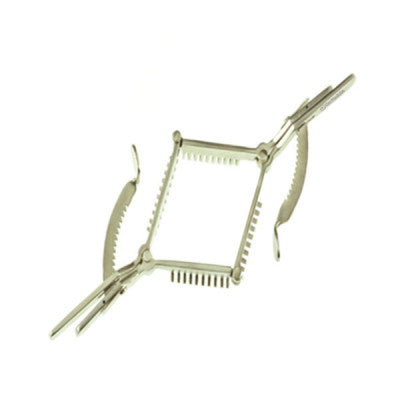
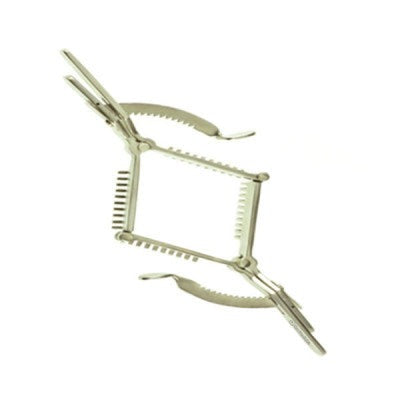
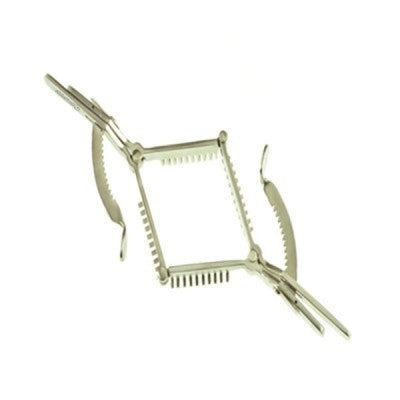
Diamond Retractor – High-Stability Wound Exposure for Specialized Surgery
The clinical standard for uniform, multi-vector retraction in general and reconstructive surgery. The Diamond Retractor is a specialized self-retaining surgical instrument meticulously engineered to provide maximum wound exposure with minimal mechanical footprint. Characterized by its unique quadrilateral frame and high-traction serrated arms, this tool acts as a mechanical necessity for surgeons who require a stable, hands-free operative field. The diamond-shaped geometry ensures that retraction force is distributed evenly across four axes, preventing localized tissue trauma while maintaining a clear and consistent line of sight to deep-seated structures.
Key Features for Optimal Field Management
- Precision Diamond-Frame Geometry: The quadrilateral design allows for symmetrical retraction. By providing equal tension on all sides of the incision, it ensures a square-shaped operative field, which is often superior to the linear retraction provided by standard retractor patterns.
- Self-Retaining "Hands-Free" Mechanism: Equipped with a reliable locking mechanism that maintains the desired degree of expansion. This eliminates the need for manual retraction by assistants, reducing congestion around the surgical site and allowing the primary surgeon to work with greater autonomy.
- High-Traction Serrated Arms: The retraction blades are engineered with fine serrations that "bite" into the tissue interface. This ensures a slip-free grip even in the presence of blood or moisture, maintaining consistent wound opening throughout prolonged procedures.
- Calibrated Adjustable Expansion: Featuring an intuitive adjustment system that allows for incremental expansion. Surgeons can fine-tune the tension to the specific anatomical requirements of the patient, ensuring safe and effective exposure.
- Surgical-Grade Stainless Steel: Forged from high-tensile medical steel with a satin finish to reduce glare from high-intensity operating room lights. The material is fully resistant to corrosion and designed to maintain its structural integrity through thousands of sterilization cycles.
- Ergonomic Low-Profile Design: The frame is designed to sit low against the patient's body, minimizing the risk of the instrument obstructing surgical tools or the surgeon’s range of motion.
Detailed Product Description
The Diamond Retractor represents a pinnacle of surgical ergonomics, designed to solve the common problem of uneven wound tension. While traditional retractors often apply force in only two directions, the diamond pattern expands the operative window in multiple vectors. This is particularly advantageous in procedures where deep visibility is required, such as in orthopedic trauma, general abdominal surgery, or complex plastic reconstructions.
At its core, the retractor is built for professional durability. The adjustable mechanism is precision-machined to ensure smooth operation without sticking or slipping. When the serrated arms are positioned, the self-retaining lock secures the expansion, providing a rock-solid field that does not drift. This stability is vital when performing intricate tasks like vessel ligation or nerve decompression, where any movement of the wound edge could compromise the surgery.
The handle and frame are forged as a cohesive unit to provide a continuous path for tension. This solid construction allows the surgeon to receive immediate tactile feedback; they can "feel" the resistance of the fascia or muscle layers, allowing for real-time adjustments in retraction force. Built to exceed the rigorous hygiene standards of modern medicine, this instrument is fully autoclavable and designed for a long, dependable clinical lifespan in high-volume surgical centers.
Specifications & Clinical Applications
Feature Details
Material Premium Surgical-Grade Stainless Steel
Retraction Style Self-Retaining / Multi-Vector
Frame Type Diamond (Quadrilateral)
Arm Type Serrated for Anti-Slip Grip
Maintenance Fully Autoclavable / Reusable
Primary Use Cases:
- General Surgery: Providing exposure for abdominal, thoracic, or soft tissue procedures.
- Orthopedic Surgery: Holding back muscle and fascia to access bone or joint spaces.
- Plastic & Reconstructive Surgery: Maintaining a stable field for skin grafting or flap procedures.
- Trauma Surgery: Rapid and stable wound opening in emergency settings.
- Veterinary Orthopedics: Highly versatile for bone and soft tissue management in animal patients.
Why Professionals Choose the Diamond Retractor?
- Maximized Operative Field: Provides a larger, square-shaped window of visibility.
- Operational Efficiency: Frees up an assistant's hands by remaining self-locked.
- Tissue Safety: Even distribution of force reduces the risk of focal pressure necrosis.
- Sterile Longevity: Forged to withstand heavy-duty use and repeated autoclaving.
FAQ Section
Q: Is the Diamond Retractor suitable for deep tissue retraction?
A: Yes. The adjustable mechanism and serrated arms provide enough force to retract denser tissue layers, though it is most commonly used for soft tissue and fascia in general and plastic surgery.
Q: How does the self-retaining mechanism lock?
A: Depending on the specific model, it typically utilizes a ratcheted or screw-lock system that prevents the arms from closing once the desired tension is achieved.
Q: Will the serrations damage delicate tissue?
A: The serrations are designed to provide grip without excessive trauma. However, like all retractors, it should be used with appropriate care and tension according to the specific tissue type being managed.
Q: Can this instrument be used in veterinary surgery?
A: Absolutely. Its reliability and ease of use make it a popular choice for veterinary surgeons performing orthopedic or soft tissue procedures.
Q: How should I maintain the adjustable mechanism?
A: Ensure the instrument is cleaned thoroughly after use with an enzymatic detergent. Periodic lubrication of the joints and moving parts with surgical-grade lubricant will ensure the mechanism remains smooth and reliable.