
PEAK SURGICAL
Dental Posterior Root Canal Plugger – 0.9mm Stainless Steel Endodontic Plugger for Molar and Premolar Obturation
Dental Posterior Root Canal Plugger – 0.9mm Stainless Steel Endodontic Plugger for Molar and Premolar Obturation
SKU:PS-D-093
Couldn't load pickup availability
- 30 Days Money Back Guarantee.
- 100% Quality Satisfaction.
- Medical Grade Steel Reusable.
 CE Certified
 FDA Certified
 ISO Certified


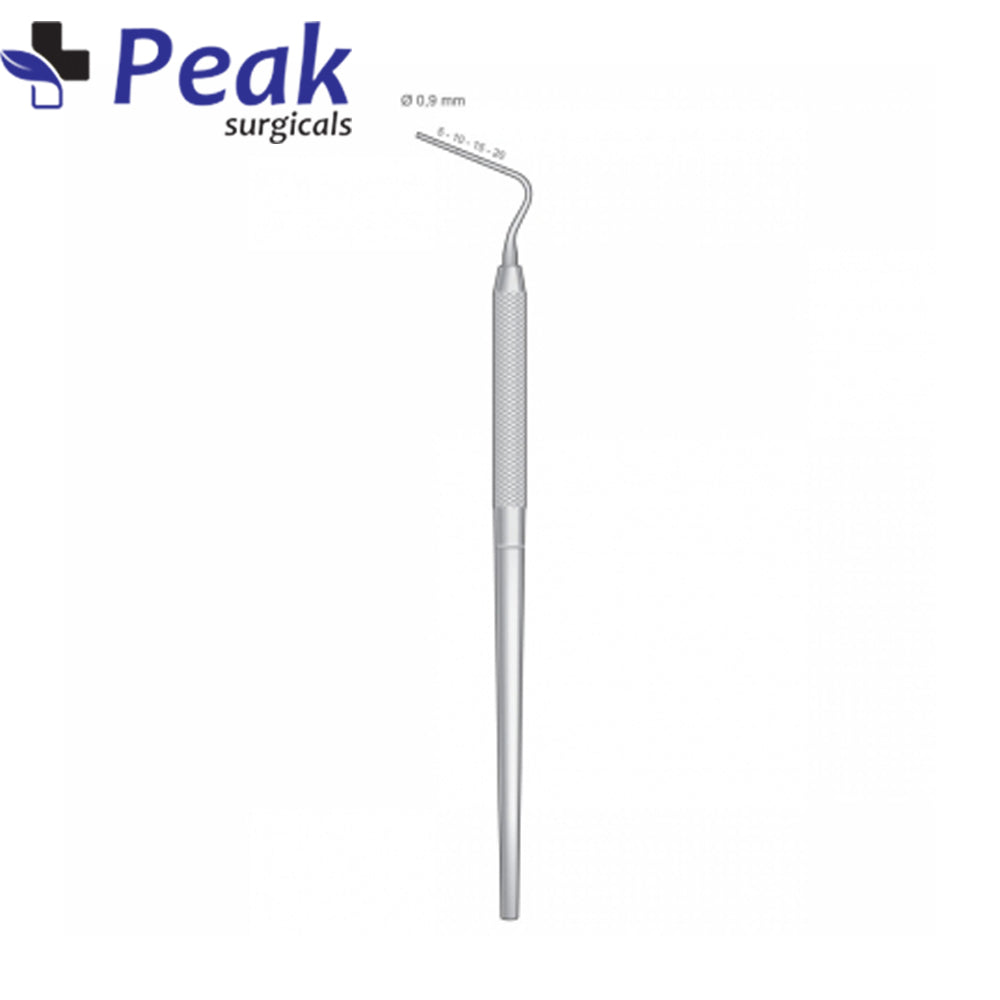
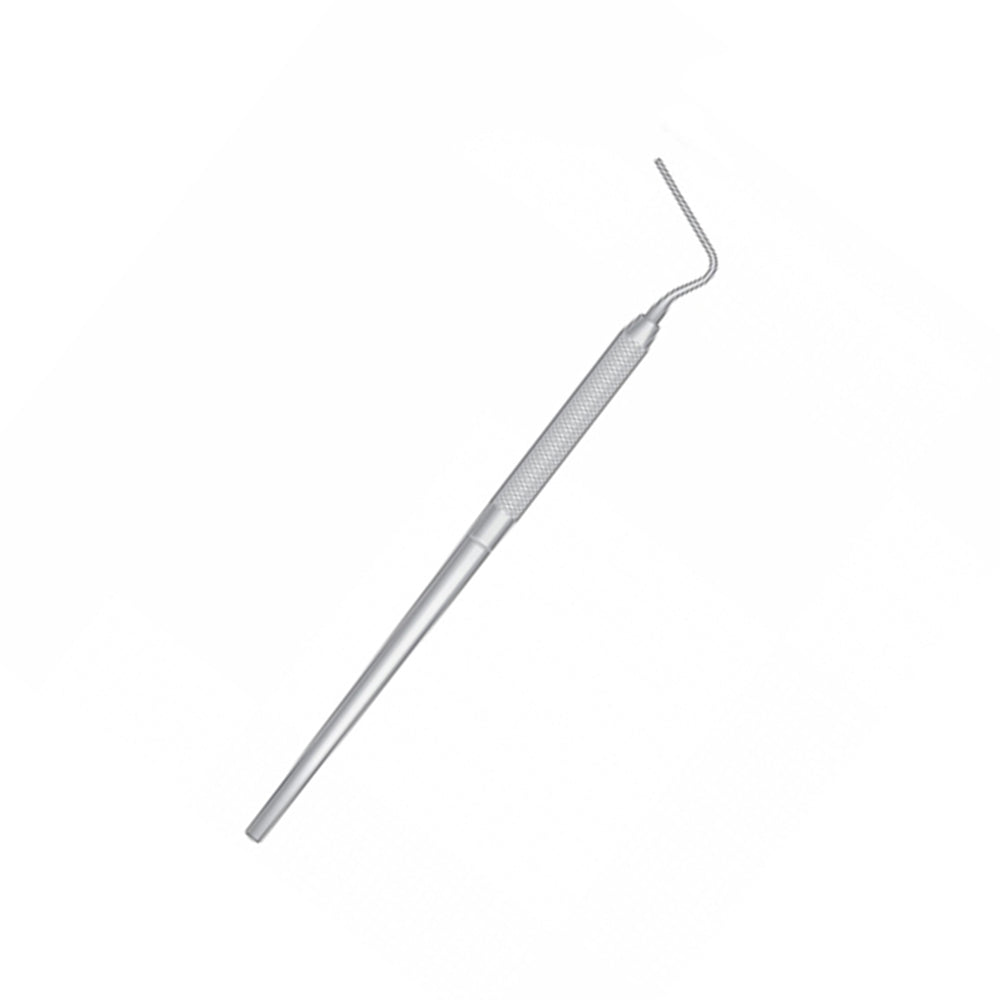
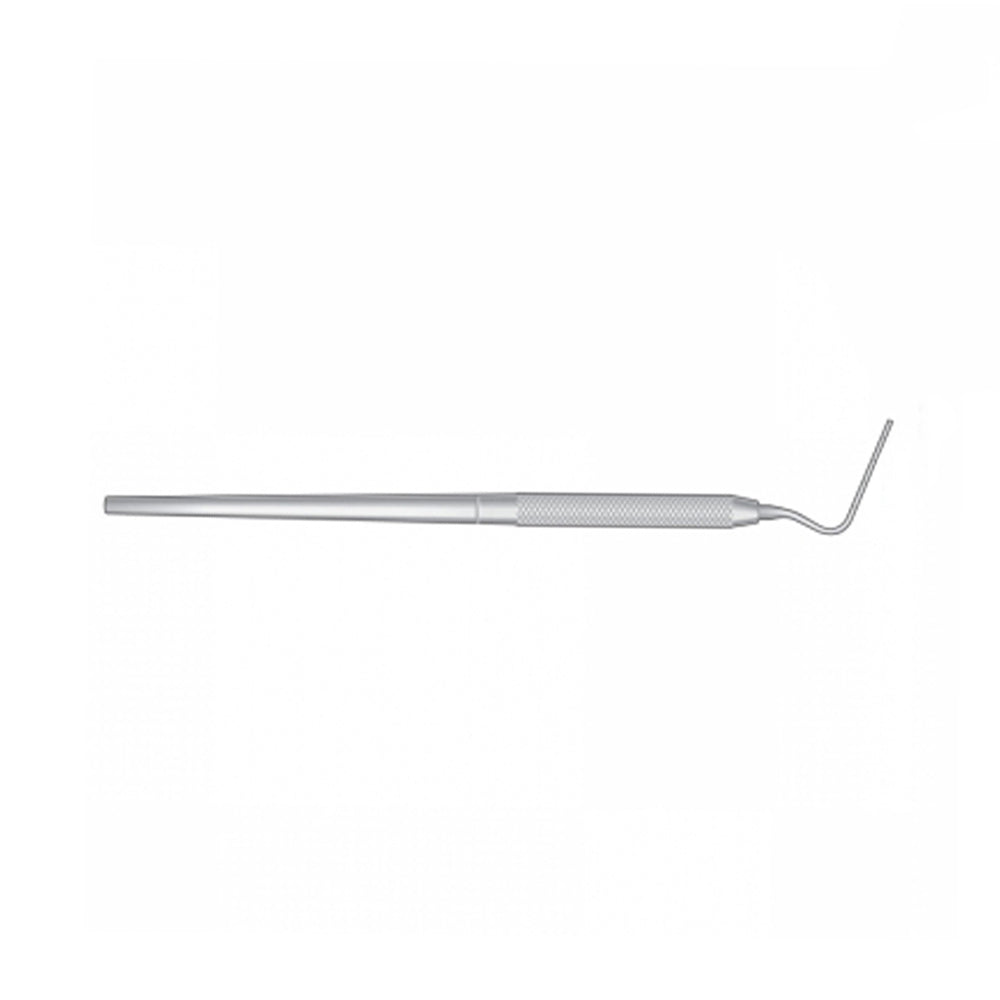
The Dental Posterior Root Canal Plugger is a 0.9mm tip-diameter endodontic hand instrument manufactured from medical-grade stainless steel, designed for the vertical condensation of gutta-percha during root canal obturation in posterior teeth — premolars and molars — where the anatomical position and limited access angle of the working site require an angled or offset working-end geometry to achieve effective apical and mid-canal compaction without soft tissue or occlusal interference. The plugger working tip is flat-ended and smooth, producing consistent condensation pressure perpendicular to the canal axis to compact warm or cold gutta-percha laterally and apically at each incremental fill level during warm vertical compaction, single-cone, or thermoplasticized carrier-based obturation techniques. The 0.9mm tip diameter is appropriate for the wide oval, round, and flattened canal cross-sections commonly encountered in the mesial and distal canals of mandibular molars, the buccal and palatal canals of maxillary molars, and the single canals of upper and lower premolars following mechanical shaping to a medium-to-large apical preparation. Used by endodontists, general dentists performing root canal therapy, and dental residents in private dental offices, endodontic specialty practices, dental school clinics, and hospital dental departments. Sold as 1 piece.
Posterior Access Design: Offset Working End for Molar and Premolar Canal Obturation
The defining clinical feature of a posterior root canal plugger — distinct from a general or anterior plugger — is the angulation or offset of the working shank relative to the handle axis. In anterior teeth, the long axis of the tooth is broadly aligned with the line of access through the incisal edge, and a straight plugger can be advanced apically along the canal without the handle contacting the opposing teeth or the buccal mucosa. In posterior teeth, the buccal cusp height, the cheek tissue medial to the buccal corridor, and the vertical distance from the occlusal table to the canal orifice all combine to create an access angle that makes a straight-shanked instrument mechanically impossible to seat without either tilting the instrument off the canal axis or opening the mouth beyond a comfortable range. The posterior plugger addresses this by incorporating a shank bend that offsets the working tip away from the handle, allowing the clinician to maintain the handle in a more vertical or oblique grip position while directing the tip perpendicular to the canal orifice and parallel to the long axis of the canal root. This geometry is critical for effective vertical condensation because condensation force must be directed apically along the canal axis — not at an angle that would laterally displace the gutta-percha mass and create voids in the apical third. The 0.9mm tip diameter of this plugger corresponds to the working width used at the mid-canal and coronal third condensation steps in a standard warm vertical compaction sequence following apical preparation to an ISO size 30–45 or equivalent rotary master size.
Root Canal Obturation: Vertical Condensation Technique and Plugger Function
Root canal obturation is the phase of root canal treatment in which the cleaned and shaped canal space is filled with a biocompatible material — almost universally gutta-percha in combination with a sealer — to create a three-dimensional, void-free seal that prevents reinfection of the periapical tissues via the root canal system. The plugger is the instrument that achieves this three-dimensional compaction. In warm vertical condensation, the technique for which posterior pluggers are most specifically designed, a master gutta-percha cone is fitted and confirmed at the working length, the sealer is placed, and heat is then applied with a heat carrier to the coronal portion of the cone, softening it to a thermoplastic state. The plugger is immediately inserted and a controlled downward condensation force is applied, compacting the softened gutta-percha apically and laterally against the canal walls and into lateral canals, fins, isthmuses, and apical ramnifications. This step is repeated — heat, followed by plugger condensation — in incremental backfill levels from the mid-canal to the canal orifice, each time using a plugger sized to the working width at that canal level. The 0.9mm tip diameter of this posterior plugger is sized for the mid-canal and coronal condensation steps where the canal diameter is widest and the condensation pressure must be distributed across a broader cross-sectional area to prevent plugger binding or ledging against the canal wall. In the posterior dentition, where the oval and flattened canals of molars and premolars present larger cross-sectional diameters than anterior teeth, the 0.9mm plugger provides the contact area needed for effective compaction without the excessive resistance that a wider plugger would create in the coronal third.
Medical-Grade Stainless Steel Construction and Instrument Durability
The Dental Posterior Root Canal Plugger is manufactured from medical-grade stainless steel, providing the corrosion resistance, dimensional stability, and surface hardness required for an endodontic hand instrument that undergoes repeated autoclaving and intracanal condensation force cycles across its clinical life. Stainless steel is the standard material for root canal pluggers because its elastic modulus and yield strength allow the working tip to transmit the controlled condensation forces required during vertical compaction without permanent deformation or tip fracture under normal clinical use loads. The flat working surface of the plugger tip is machined to precise dimensional tolerances, ensuring consistent contact area between the tip face and the gutta-percha mass at the condensation level — an important factor for reproducible condensation pressure and homogeneous fill density across the canal cross-section. The handle is textured or knurled for positive grip control under the gloved, potentially moist conditions of clinical endodontic practice, where tactile feedback from the plugger handle is the clinician's primary indicator of gutta-percha resistance and condensation endpoint. The instrument is reusable and maintains its dimensional accuracy through repeated sterilization cycles, supporting cost-effective instrument management in a high-volume endodontic practice.
CE Mark, ISO 13485, and FDA Certification for Dental Instrument Procurement
The Dental Posterior Root Canal Plugger is manufactured under a quality management system certified to ISO 13485, governing raw material sourcing, precision machining, dimensional inspection, surface finishing, and packaging at every production stage. CE Mark certification confirms conformity with European Medical Device Regulation requirements for Class I reusable dental hand instruments distributed within EU and associated regulatory territories. FDA compliance documentation is maintained for United States distribution, satisfying the regulatory requirements applicable to reusable endodontic instruments procured by US dental practices, endodontic specialty offices, dental schools, and hospital dental departments. These certifications satisfy the procurement and tender documentation requirements recognized by institutional buyers in the USA, India, Pakistan, Vietnam, and across international dental supply frameworks. Certificates of conformity and quality management system documentation are available upon request for vendor qualification and institutional procurement submissions. OEM and custom instrument configurations are available within the same certified manufacturing framework.
Product Specifications
| SKU | — (verify in Shopify admin) |
|---|---|
| Product Name | Dental Posterior Root Canal Plugger |
| Price | $4.51 USD |
| Tip Diameter | 0.9mm |
| Working End | Flat-ended, smooth tip — posterior offset/angled shank |
| Instrument Type | Root Canal Plugger (Endodontic Hand Instrument) |
| Indicated Teeth | Posterior — premolars and molars (maxillary and mandibular) |
| Obturation Technique | Warm vertical condensation, single-cone, thermoplasticized carrier-based obturation |
| Condensation Level | Mid-canal and coronal third (0.9mm tip for medium-to-wide canal preparations) |
| Material | Medical-Grade Stainless Steel |
| Certifications | CE Mark, ISO 13485, FDA |
| Reusability | Reusable |
| Quantity | 1 Piece |
| Rust Resistance | Yes |
| Warranty | 1 Year |
| MOQ | 1 Piece |
| OEM / Custom Orders | Available |
| Packing | Carton Box |
| Place of Origin | Pakistan |
| Brand | Peak Surgicals |
| Primary Use | Vertical condensation of gutta-percha during root canal obturation in posterior teeth (premolars and molars) using warm vertical compaction or thermoplasticized fill techniques |
| After-Sale Service | Return and Replacement |
Frequently Asked Questions
What does a root canal plugger do and how is it used during obturation?
A root canal plugger is the instrument used to compact gutta-percha within the root canal during the obturation phase of root canal treatment. After the canal has been cleaned, shaped, and dried, the plugger is used to apply downward (apical) condensation pressure to the gutta-percha mass at successive fill levels, packing it against the canal walls and into the anatomical complexities of the root canal system — lateral canals, fins, isthmuses, and apical ramifications — to create a dense, void-free, three-dimensional seal. In warm vertical condensation, the technique most commonly used with posterior pluggers, the sequence involves fitting a master cone to length, applying sealer, heating the coronal portion of the gutta-percha with a heat carrier to produce a thermoplastic state, and then immediately inserting the plugger and applying a firm condensation stroke. This compacts the softened material apically. The heat-and-condense sequence is then repeated incrementally in backfill from the mid-canal to the orifice level, using the plugger at each step. The flat-ended tip of the plugger maintains contact across the full width of the gutta-percha cross-section at the working level, ensuring uniform pressure distribution rather than point loading that would perforate or laterally displace the material. The 0.9mm diameter of this posterior plugger places it in the mid-canal and coronal condensation role in a standard multi-plugger warm vertical compaction setup.
When is a posterior root canal plugger used instead of a standard plugger?
A posterior root canal plugger is indicated whenever the treatment tooth is a premolar or molar — specifically when the posterior position of the tooth in the arch creates an access angle that makes a straight-shanked plugger mechanically unable to engage the canal orifice with the working tip aligned along the canal's long axis. In the posterior sextants, the buccal cusp height, the medial soft tissue of the cheek, and the limited interocclusal space between the upper and lower arch during working aperture all combine to produce an access corridor that is oblique to the vertical axis of a standard plugger handle. Attempting to use a straight plugger in this situation forces the clinician to tilt the instrument, which directs condensation force laterally rather than apically, resulting in incomplete compaction and potential voids in the apical third. The offset or angled shank of the posterior plugger corrects for this geometric constraint by allowing the tip to be directed apically while the handle remains in a comfortable, controllable grip position outside the arch. The posterior plugger is most commonly used at the maxillary second premolar, all maxillary and mandibular molars, and the mandibular second premolar in patients with a prominent buccal shelf or limited opening. In endodontic specialty practice and dental school clinics where comprehensive root canal instrumentation trays are maintained, posterior pluggers of multiple tip sizes are stocked alongside anterior pluggers to enable obturation of any tooth in the arch without access compromise.
How does the 0.9mm tip diameter determine where in the canal this plugger is used?
In warm vertical condensation, a series of pluggers of decreasing tip diameter is used sequentially to condense gutta-percha at progressively more apical canal levels. The plugger tip diameter at any given canal level should be slightly smaller than the canal preparation diameter at that level — close enough to provide broad surface contact for efficient condensation, but not so large that it binds against the canal walls and requires excessive insertion force that could generate hydraulic pressure on the apical seal or laterally crack a thin root. The 0.9mm tip diameter of this posterior plugger corresponds to the working dimension appropriate for the mid-canal and coronal third of a posterior tooth canal that has been prepared to a medium-to-large apical diameter — typically an ISO-equivalent size 30 to 50 or a ProTaper/WaveOne/Reciproc master size in the medium-to-large range. In a standard posterior warm vertical compaction workflow, this 0.9mm plugger would follow an initial apical plugger of 0.4–0.6mm used for the first condensation stroke after heat, and would itself be followed by wider pluggers of 1.1mm and above for the coronal third and orifice-level condensation steps. In single-cone obturation or sealer-based fill systems, the plugger is used for the final seating and orifice-level compaction stroke to ensure coronal seal integrity. The 0.9mm size is also appropriate as a stand-alone obturation plugger in premolars and molars where the canal preparation has not been enlarged beyond a medium master cone size.
What sterilization methods are compatible with this instrument?
The Dental Posterior Root Canal Plugger is compatible with steam autoclave sterilization at standard dental office parameters — 134°C / 273°F pre-vacuum cycle — which is the recommended routine reprocessing method for reusable endodontic hand instruments. Chemical vapor sterilization (chemiclave) and dry heat sterilization at 160–180°C are also compatible with the stainless steel construction. Cold chemical disinfection is not an acceptable substitute for terminal sterilization for instruments that contact the root canal system directly. Before sterilization, the instrument should be pre-cleaned to remove gutta-percha residue, sealer, and organic debris from the working tip and shank surfaces using an ultrasonic cleaner with an enzymatic solution, followed by rinsing and drying before pouch packaging. The instrument should be inspected at each reprocessing cycle for tip deformation, shank bending, or handle loosening; any instrument showing permanent deformation of the working tip should be removed from service, as a deformed tip produces non-uniform condensation pressure and inaccurate seating depth. Ethylene oxide sterilization is compatible but unnecessary for a solid stainless steel instrument given the available heat sterilization options.
What regulatory certifications does this instrument carry?
The Dental Posterior Root Canal Plugger is manufactured under an ISO 13485-certified quality management system covering all production stages including raw material procurement, precision machining of the tip and shank, dimensional inspection, surface finishing, and packaging. CE Mark certification confirms conformity with European Medical Device Regulation requirements for Class I reusable dental hand instruments distributed in the EU and associated regulatory territories. FDA compliance documentation is maintained for United States distribution, meeting regulatory requirements for reusable endodontic instruments supplied to US dental practices and dental institutions. These certifications are recognized by institutional procurement offices in the USA, India, Pakistan, Vietnam, and international dental supply frameworks. Certificates of conformity and quality management system documentation are available on request.
Are bulk or OEM orders available for this instrument?
Yes. Peak Surgicals accepts bulk orders for the Dental Posterior Root Canal Plugger with a minimum order quantity of 1 piece, and volume pricing is available for dental practices, endodontic specialty offices, dental schools, dental distributors, and group purchasing organizations. OEM manufacturing is available for buyers requiring private-label branding, modified tip diameters, alternative handle designs, or custom packaging, produced within the same ISO 13485-certified manufacturing framework with CE Mark and FDA compliance documentation. This instrument qualifies for free shipping on orders of $99 or more. Contact Peak Surgicals to discuss volume pricing, lead times, and OEM options.