


PEAK SURGICAL
Luxating Elevators Straight Standard Handle with 1–6mm Tips for Root Luxation
Luxating Elevators Straight Standard Handle with 1–6mm Tips for Root Luxation
SKU:
Couldn't load pickup availability
- 30 Days Money Back Guarantee.
- 100% Quality Satisfaction.
- Medical Grade Steel Reusable.
 CE Certified
 FDA Certified
 ISO Certified


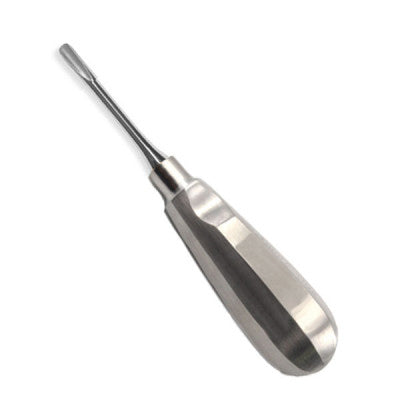
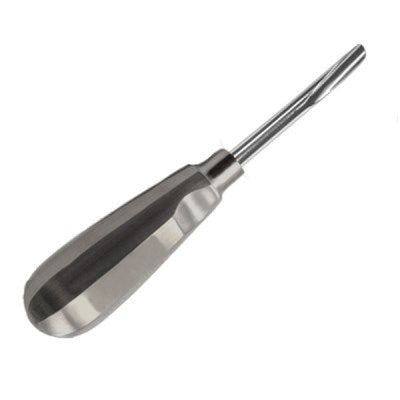
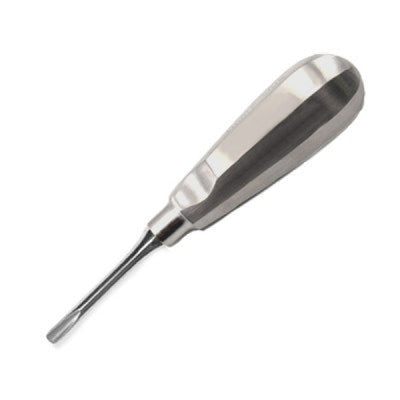
Luxating Elevators Straight Standard Handle (SKU: PS-VET-LUX-STH) is a German stainless steel veterinary dental luxation elevator with a straight blade, 5 3/4 inch standard handle, and narrow apical working tip for periodontal ligament release, root luxation, tooth elevation, and controlled socket expansion during small animal exodontia. The available variants are Luxating Elevator Straight Tip 1mm 5 3/4 inch Standard Handle, Luxating Elevator Straight Tip 2mm 5 3/4 inch Standard Handle, Luxating Elevator Straight Tip 3mm 5 3/4 inch Standard Handle, Luxating Elevator Straight Tip 4mm 5 3/4 inch Standard Handle, Luxating Elevator Straight Tip 5mm 5 3/4 inch Standard Handle, and Luxating Elevator Straight Tip 6mm 5 3/4 inch Standard Handle. It is used for feline dental extraction, canine premolar removal, retained root retrieval, fractured root elevation, molar root luxation, periodontal ligament separation, closed extraction, open extraction, and socket access before forceps delivery. Veterinary dentists, oral surgeons, general practitioners, dental residents, shelter surgery teams, and procurement officers use this instrument in dental operatories, teaching laboratories, mobile clinics, and small animal surgical rooms.
Straight Luxating Blade with Standard Handle Force Transfer
The straight blade design gives direct axial force transfer from the handle to the apical working edge, allowing the operator to enter the periodontal ligament space in a controlled line parallel to the root surface. The slim metal shaft reduces visual obstruction at the gingival margin, while the narrow blade tip separates ligament fibers before broader elevation is attempted. The standard handle gives a firm palm-supported grip for controlled apical pressure and short rotational movements during tooth mobilization. Faceted handle surfaces improve tactile orientation, allowing the surgeon to recognize blade direction without looking away from the operative field. The straight working profile is suited to anterior teeth, accessible premolars, exposed retained fragments, and roots where direct line entry is available. The blade is seated between cementum and alveolar bone, advanced with fingertip pressure, and rotated in small movements to expand the socket gradually. This mechanism prepares the tooth for forceps engagement while limiting uncontrolled crown leverage during veterinary exodontia.
Feline Extraction, Canine Premolar Luxation, and Retained Root Access
Clinical use begins after oral examination, dental radiography, gingival release, local anesthesia, and extraction planning. The 1mm straight tip is selected for feline incisors, deciduous teeth, tiny retained apical fragments, and narrow periodontal ligament spaces where a wider blade blocks entry. The 2mm variant is used around feline premolars, toy-breed teeth, and small canine incisors when early ligament release requires fine tactile feedback. The 3mm size supports routine anterior and premolar extraction after sulcular separation. The 4mm tip gives broader root contact for canine premolars and single-rooted teeth with moderate socket width. The 5mm variant is used when a larger cervical root surface needs stable blade contact before forceps delivery. The 6mm size supports wider premolar and molar access in larger dogs, open extraction fields, and broad retained root sites. During flap-assisted exodontia, the straight blade is used after mucoperiosteal reflection and bone removal to mobilize exposed roots before socket curettage, lavage, and closure.
1mm, 2mm, 3mm, 4mm, 5mm, and 6mm Straight Tip Selection
The 1mm option provides fine access for feline mandibular incisors, small deciduous roots, and delicate apical fragments where socket walls are thin. The 2mm size increases blade contact for feline premolars, toy-breed roots, and tight interproximal spaces while preserving controlled entry. The 3mm variant is selected for routine small animal extraction where the operator needs a balanced width for ligament release and early luxation. The 4mm tip supports canine premolars, maxillary incisor roots, and accessible single-rooted teeth after mobility has started. The 5mm working end gives wider surface contact for larger premolars and cervical root areas that require distributed pressure along the socket wall. The 6mm blade is selected for broader roots, larger adult dentition, molar access after flap elevation, and open extraction fields where a stable contact face is required. All sizes share the 5 3/4 inch standard handle, which keeps reach consistent across the tray while changing only the blade width for the targeted tooth position.
German Stainless Steel Construction, Autoclaving, and Procurement Documentation
German stainless steel construction gives the straight luxating elevator the rigidity required for ligament separation, root-surface tracking, and repeated clinical turnover. The polished shaft and blade resist corrosion during cleaning, ultrasonic processing, steam sterilization, and storage in veterinary dental extraction trays. The standard metal handle provides a durable gripping surface for gloved hands during blood, saliva, irrigation, and dental debris exposure. Satin and mirror-finished surfaces support visibility at the operative field while allowing debris removal before packaging. The reusable Class I profile fits a manually operated veterinary dental elevator used for nonpowered tooth mobilization and socket preparation. Autoclave compatibility supports repeated use after cleaning, inspection, wrapping, sterilization, drying, and storage according to clinic workflow. CE marking, ISO 13485 certification, and FDA compliance support procurement documentation for veterinary hospitals, dental clinics, distributors, and teaching programs. The one-year warranty, OEM availability, one-piece MOQ, and return and replacement support make the pattern suitable for single-instrument replacement and standardized extraction tray building.
| SKU | PS-VET-LUX-STH |
|---|---|
| Product Name | Luxating Elevators Straight Standard Handle |
| Price | $16.50 |
| Size/Gauge Variants | Straight Tip 1mm 5 3/4 inch Standard Handle, Straight Tip 2mm 5 3/4 inch Standard Handle, Straight Tip 3mm 5 3/4 inch Standard Handle, Straight Tip 4mm 5 3/4 inch Standard Handle, Straight Tip 5mm 5 3/4 inch Standard Handle, Straight Tip 6mm 5 3/4 inch Standard Handle |
| Instrument Category | Veterinary dental luxation elevator |
| Procedure | Feline dental extraction, canine premolar removal, retained root retrieval, fractured root elevation, periodontal ligament release, closed extraction, open extraction, molar root luxation |
| Material | German stainless steel |
| Finish | Satin and mirror polished stainless steel surfaces |
| Sterilization | Reusable and autoclavable after standard instrument cleaning |
| Instrument Classification | Class I reusable veterinary dental hand instrument |
| Reusable | Yes |
| Certifications | CE marked, ISO 13485 certified, FDA compliant |
| Warranty | 1 year |
| MOQ | 1 piece |
| OEM / Custom Orders | Available |
| After-Sale Service | Return and replacement support |
How does the Luxating Elevators Straight Standard Handle compare with a curved luxating elevator?
The Luxating Elevators Straight Standard Handle gives direct-line entry for periodontal ligament release when the tooth surface is accessible from a straight approach. A curved luxating elevator is selected when the working end needs to follow posterior root curvature or reach around distal and lingual surfaces. The straight pattern transfers hand pressure directly along the shaft, which is useful around incisors, premolars, exposed retained roots, and open extraction windows. The curved pattern gives better handle clearance in caudal oral spaces. The Luxating Elevators Straight Standard Handle is stronger for controlled axial blade seating and early luxation before forceps application. Both patterns belong in veterinary extraction trays, but the straight instrument is the direct-access option for roots aligned with the operator’s hand path.
Which straight tip size should be selected from 1mm to 6mm?
The Luxating Elevators Straight Standard Handle in 1mm is selected for feline incisors, deciduous roots, narrow apical fragments, and tiny retained root pieces. The 2mm size is used for feline premolars, toy-breed teeth, and tight periodontal ligament spaces. The 3mm variant supports routine anterior and premolar luxation after gingival release. The 4mm size is selected for canine premolars and single-rooted teeth where wider blade contact improves controlled mobility. The 5mm option supports larger premolar roots and broader cervical areas. The 6mm size is used for larger dog dentition, open extraction sites, molar access, and broad retained root preparation.
How do CE, ISO 13485, and FDA compliance support veterinary procurement?
The Luxating Elevators Straight Standard Handle supports procurement programs that require documented sourcing for reusable veterinary dental instruments. CE marking supports international conformity records for regulated purchasing environments. ISO 13485 certification supports manufacturing control, inspection consistency, traceability, and quality-system documentation. FDA compliance language supports USA-facing procurement records where device sourcing and supplier details are reviewed. These credentials help veterinary clinics, hospitals, distributors, and teaching programs standardize extraction trays across multiple operators. The one-year warranty, OEM availability, MOQ of one piece, and return and replacement service support repeat purchasing and distributor supply planning.
How is the standard handle controlled during intraoperative luxation?
The standard handle is the primary control feature on the Luxating Elevators Straight Standard Handle. The surgeon stabilizes it with a palm-supported or fingertip-supported grip and aligns the straight blade with the long axis of the root. Short apical movements advance the blade into the periodontal ligament space while controlled wrist rotation separates ligament fibers. The faceted metal handle helps the operator maintain blade orientation when blood, saliva, or irrigation fluid reaches the glove surface. During retained root work, the handle position is adjusted so the tip remains seated beside the fragment without levering against the crown of an adjacent tooth. This control sequence supports staged luxation before extraction forceps or root forceps are applied.
What role does this instrument serve in a veterinary dental extraction tray?
The Luxating Elevators Straight Standard Handle serves as a direct-access root mobilization instrument in small animal dental extraction trays. It is placed with curved luxators, winged elevators, periosteal elevators, extraction forceps, root forceps, curettes, suction tips, mirrors, and needle holders. Before forceps delivery, the straight blade releases periodontal ligament fibers and expands the socket around the selected root. During open extraction, it mobilizes exposed roots after flap reflection, bone removal, and sectioning. The instrument is useful when the operator needs a straight working path into an incisor, premolar, or retained root site. Reusable German stainless steel construction supports repeated tray cycling in veterinary dental clinics.