
Featured Collection
Your cart
Featured Collection

PEAK SURGICAL
SKU:PS-O T-01027
Couldn't load pickup availability
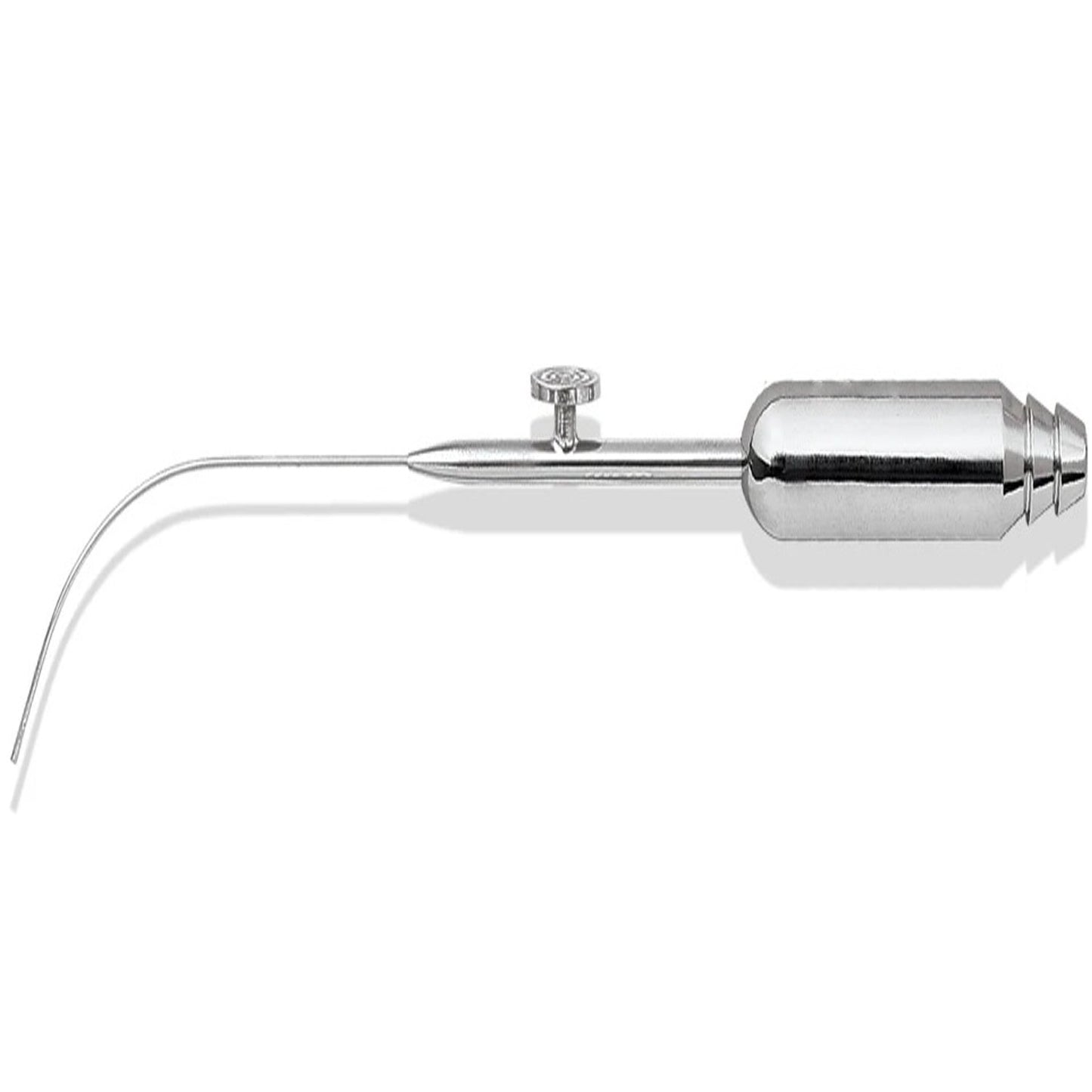
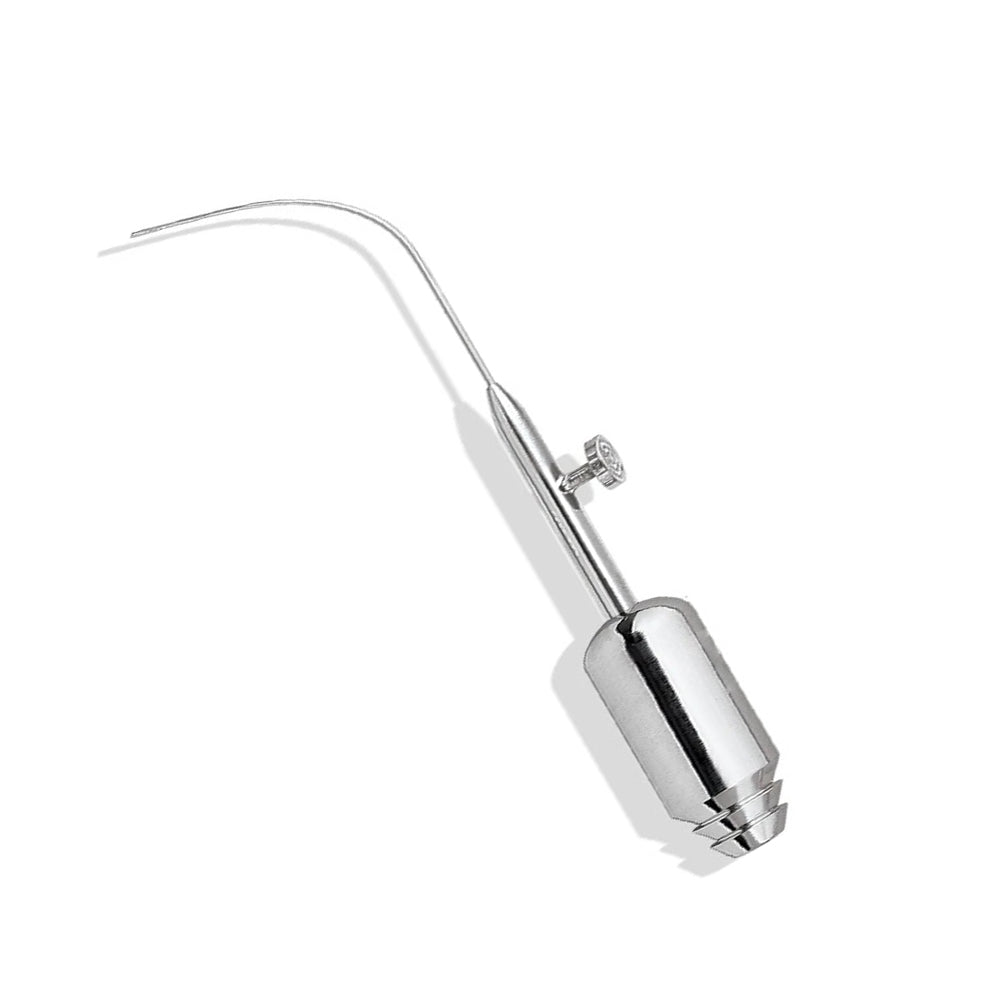
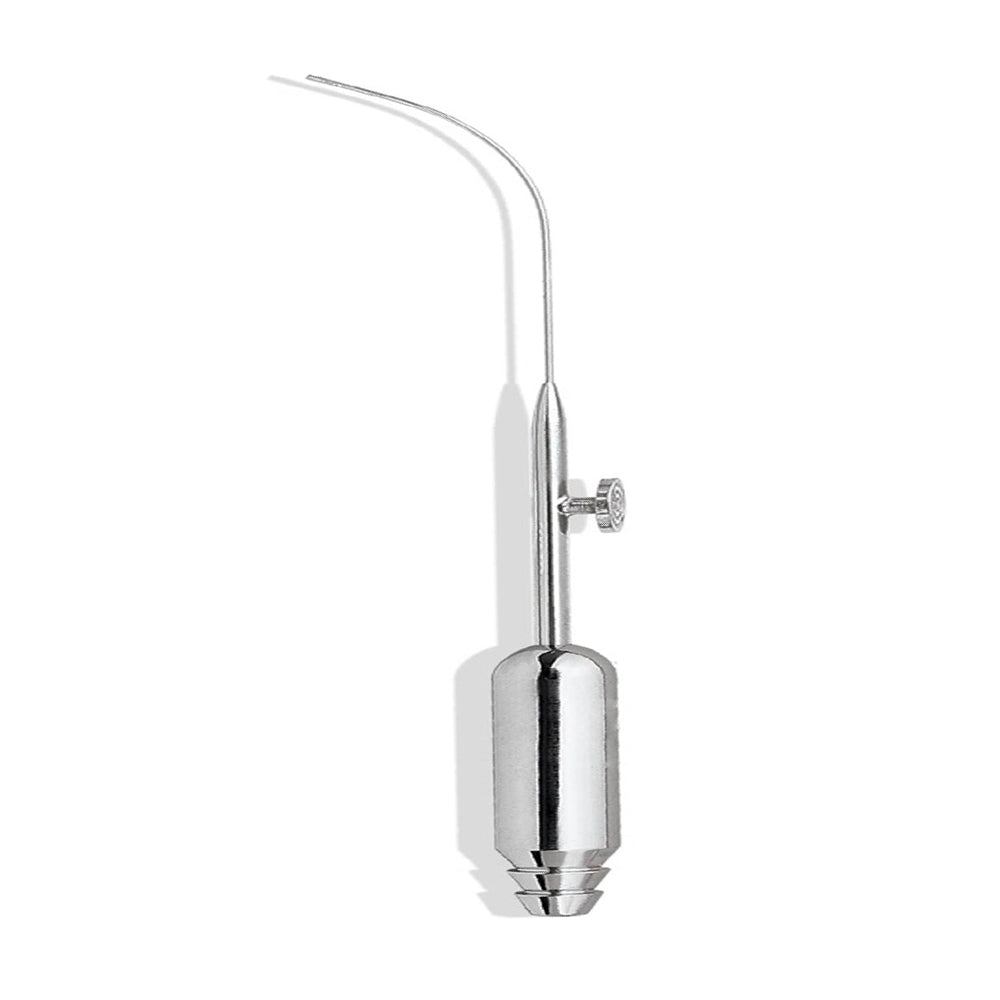
The Micro Suction Tip from Peak Surgicals (SKU: PS-O T-01027) is a reusable German Stainless Steel microsurgical suction cannula designed for controlled aspiration of irrigation fluid, blood, mucus, bone dust, soft tissue debris, cerebrospinal fluid, middle ear fluid, and fine particulate matter from narrow surgical corridors. This instrument is listed in 0.5MM, 1.0MM, and 2.0MM size variants, with each suction tip priced at $14.30. The visible design includes a curved fine-lumen cannula, tapered distal tube, smooth atraumatic intake end, thumb vent control port, polished shaft, enlarged proximal handle body, ribbed tubing connector, internal suction lumen, and rigid stainless steel structure for stable suction tubing attachment. ENT surgeons, otologists, neurosurgeons, ophthalmic surgeons, plastic surgeons, reconstructive microsurgeons, oral surgeons, maxillofacial teams, hospital operating rooms, outpatient surgical units, and procurement departments use this instrument during tympanoplasty, myringotomy, stapedectomy, mastoidectomy, cochlear implant surgery, endoscopic sinus surgery, cranial microsurgical dissection, spinal decompression, ophthalmic irrigation control, microvascular anastomosis, peripheral nerve repair, flap surgery, apical surgery, and delicate operative field evacuation.
The Micro Suction Tip uses a curved fine-lumen cannula so the distal intake can reach the dependent fluid pool while the surgeon’s hand, tubing, and connector remain outside the microscope, endoscope, headlight, or loupe viewing axis. The tapered distal tube supports entry into narrow operative corridors, including the external auditory canal, middle ear space, sinus recesses, apical dental field, dural edge, nerve root corridor, and microvascular dissection plane. The smooth atraumatic intake end allows controlled placement near ossicles, tympanic membrane graft margins, oval window anatomy, dura, nerve fascicles, retinal-adjacent tissue, vessels, and flap edges. The thumb vent control port regulates vacuum intensity by covering, partially covering, or releasing the opening during use. This gives immediate suction modulation without changing the suction unit setting. The enlarged proximal handle body stabilizes the instrument during fine repositioning, while the ribbed connector anchors suction tubing and reduces unwanted disconnection during delicate operative movement.
During tympanoplasty, the Micro Suction Tip removes blood, irrigation fluid, and epithelial debris from the external auditory canal and middle ear while the surgeon works around the tympanic membrane remnant, malleus handle, annulus, and graft bed. In myringotomy, the fine cannula clears middle ear effusion through a small tympanic membrane incision while maintaining visibility for ventilation tube placement. During stapedectomy, the instrument supports precise fluid control around the oval window, stapes footplate, prosthesis shaft, promontory, and facial nerve region. In mastoidectomy and cochlear implant surgery, it evacuates bone dust and irrigation fluid around the mastoid cavity, facial recess, round window niche, and electrode insertion path. In endoscopic sinus surgery, the curved tube helps clear blood and irrigation around the uncinate process, ethmoid cavity, maxillary ostium, sphenoid recess, and frontal recess. Neurosurgical, ophthalmic, and plastic surgery teams use the same fine suction principle around dura, nerve roots, small vessels, anterior segment tissue, flap undersurfaces, and microvascular anastomosis sites.
The 0.5MM Micro Suction Tip is selected for the smallest operative spaces where tissue draw must be minimized, including stapedectomy around the oval window, cochlear implant electrode insertion support, delicate myringotomy suction, ophthalmic irrigation control, microvascular anastomosis, and nerve repair. The 1.0MM size provides balanced aspiration for tympanoplasty, middle ear work, endoscopic sinus surgery, apical dental surgery, small biopsy fields, and controlled fluid removal around fine dissection planes. The 2.0MM variant is selected when the field contains more irrigation, blood, mucus, bone dust, or soft tissue debris, including mastoidectomy, sinus cavity work, spinal decompression, maxillofacial microsuction, and reconstructive flap surgery. The size progression allows the surgeon to match lumen diameter to anatomical corridor, debris burden, tissue sensitivity, and suction requirement. Smaller lumens favor delicate structure protection, while the larger option improves evacuation when fluid volume increases. All three variants retain the same curved cannula, thumb vent control, tapered geometry, and reusable stainless steel construction.
German Stainless Steel gives the Micro Suction Tip the rigidity, corrosion resistance, and reusable durability required for repeated ENT, neuro, dental, ophthalmic, plastic, and reconstructive microsurgery use. A fine suction cannula must retain lumen patency, tip smoothness, shaft curvature, thumb vent responsiveness, connector grip, and distal alignment because obstruction or deformation affects field visibility and suction control. The polished atraumatic finish supports placement near delicate structures while reducing residue retention along the shaft and intake end. After use, the lumen is flushed immediately, the distal opening is cleared, the thumb vent is brushed, the curved tube is cleaned with an appropriate channel brush, and the ribbed connector is inspected before steam sterilization by autoclave after complete drying. CE marking, ISO-13485 certification, and FDA compliance support hospital purchasing, dental clinic procurement, distributor documentation, and international tender files. The listed price, three size options, reusable format, MOQ of 1 piece, and return-and-replacement service support standardized microsurgical suction inventory planning.
| SKU | PS-O T-01027 |
|---|---|
| Product Name | Micro Suction Tip |
| Price | $14.30 per piece |
| Size/Gauge Variants | 0.5MM, 1.0MM, 2.0MM |
| Instrument Category | Surgical Instruments / Micro Suction Tips / Fine-Lumen Aspirators |
| Procedure | Tympanoplasty, Myringotomy, Stapedectomy, Mastoidectomy, Cochlear Implant Surgery, Endoscopic Sinus Surgery, Neurosurgical Microsuction, Spinal Decompression, Ophthalmic Irrigation Control, Microvascular Anastomosis, Nerve Repair, Plastic and Reconstructive Surgery |
| Material | German Stainless Steel |
| Finish | Polished atraumatic stainless steel clinical finish |
| Sterilization | Steam sterilizable / Autoclave compatible after lumen flushing and cleaning |
| Instrument Classification | Class I reusable surgical suction instrument |
| Reusable | Yes |
| Certifications | CE, ISO-13485, FDA |
| Warranty | 1 Year |
| MOQ | 1 Piece |
| OEM / Custom Orders | Available |
| After-Sale Service | Return and Replacement |
How does the Micro Suction Tip compare with a Frazier suction tube?
The Micro Suction Tip is configured for fine-lumen aspiration in very restricted operative corridors, while a Frazier suction tube is a broader precision suction instrument used across ENT, neurosurgery, plastic surgery, and general surgery. Frazier suction tubes commonly provide strong point aspiration and are effective in many narrow fields, but the Micro Suction Tip gives a smaller working profile for microscope-guided procedures. The tapered distal cannula and thumb vent control are selected when suction must be adjusted instantly around delicate tissue. The 0.5MM and 1.0MM sizes are especially useful where a standard fine suction tube would occupy too much space or draw tissue too aggressively. The 2.0MM option provides stronger evacuation while keeping a micro-profile. Surgical trays use both instruments because Frazier suction supports general fine aspiration, while the Micro Suction Tip is dedicated to finer microsurgical field control.
Which size should be selected: 0.5MM, 1.0MM, or 2.0MM?
The 0.5MM size is selected for the most delicate suction tasks, including stapedectomy, myringotomy, cochlear implant work near the round window, ophthalmic fluid control, microvascular anastomosis, and nerve repair. This size gives minimal tissue draw and controlled aspiration where the working space is extremely narrow. The 1.0MM size is selected for tympanoplasty, endoscopic sinus work, apical dental surgery, small biopsy fields, and microsurgical dissection where balanced aspiration is required. The 2.0MM size is selected for mastoidectomy, sinus cavity suction, spinal decompression, maxillofacial work, and reconstructive flap surgery where blood, irrigation, mucus, or bone dust volume is higher. The Micro Suction Tip size choice is based on anatomy, fluid volume, debris load, and proximity to delicate structures. Stocking all three options gives the surgical team a practical suction range from ultra-fine control to broader microsurgical evacuation.
What do CE, ISO 13485, and FDA compliance mean for procurement?
CE marking supports conformity documentation for hospitals, surgical centers, dental clinics, ENT departments, and distributors sourcing reusable suction instruments. ISO 13485 indicates that manufacturing is managed under a medical device quality management system with controlled production, inspection, and traceability. FDA compliance supports procurement records for buyers sourcing reusable stainless steel surgical devices for regulated healthcare markets. The Micro Suction Tip fits purchasing categories for non-powered surgical aspiration and microsurgical suction instruments. These credentials help procurement officers compare the instrument against tender requirements, internal purchasing rules, and distributor documentation needs. German Stainless Steel construction, reusable format, listed SKU PS-O T-01027, $14.30 price, three size options, and return-and-replacement service support repeat ordering. For ENT, neurosurgery, ophthalmology, oral surgery, plastic surgery, and reconstructive departments, the documentation aligns fine suction function with regulated sourcing expectations.
How is the thumb vent used during microsurgical aspiration?
The thumb vent is controlled by covering, partially covering, or releasing the port while the distal cannula remains positioned at the fluid source. Covering the vent increases suction at the working tip for pooled irrigation, blood, mucus, or fine debris. Opening the vent reduces vacuum draw immediately, which protects delicate structures such as tympanic membrane margins, ossicles, oval window anatomy, dura, nerve fascicles, retinal-adjacent tissue, vessels, or flap edges. Partial coverage allows the surgeon or assistant to fine-tune suction intensity during continuous movement. The Micro Suction Tip uses this control feature to separate vacuum modulation from the suction machine setting. The curved cannula is positioned at the dependent fluid pool while the handle and connector remain outside the operative sightline. This control method supports ENT, neuro, ophthalmic, dental, and plastic microsurgical workflow.
How should the Micro Suction Tip be cleaned and sterilized after use?
After use, the suction tip is flushed promptly so blood, saline, mucus, bone dust, cerebrospinal fluid, tissue debris, irrigant, or surgical residue does not dry inside the lumen. The distal intake is brushed carefully because fine openings can retain small particles that reduce suction flow. The curved cannula is cleaned with a channel brush from the connector side through the working tube. The thumb vent is cleared so vacuum regulation remains responsive during the next procedure. The ribbed connector is cleaned and inspected for secure suction tubing fit. German Stainless Steel supports steam sterilization by autoclave after complete cleaning and drying. The Micro Suction Tip should return to the surgical tray only after the lumen is patent, the vent is open, the connector is clean, and all external surfaces are visually intact.


