Featured Collection
Your cart
Featured Collection

PEAK SURGICALS
SKU:PS-OT-0705
Couldn't load pickup availability
 CE Certified
 FDA Certified
 ISO Certified
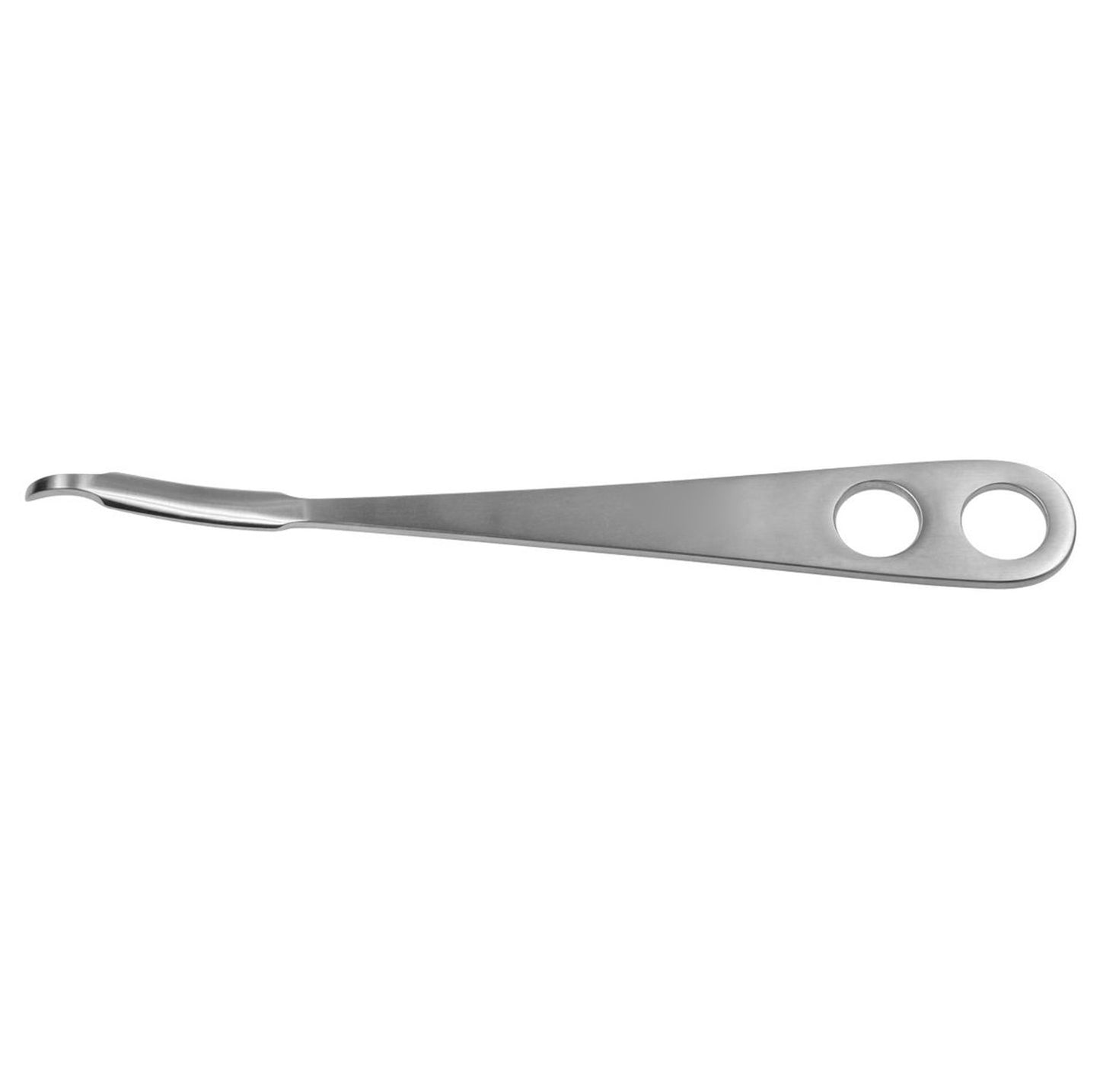
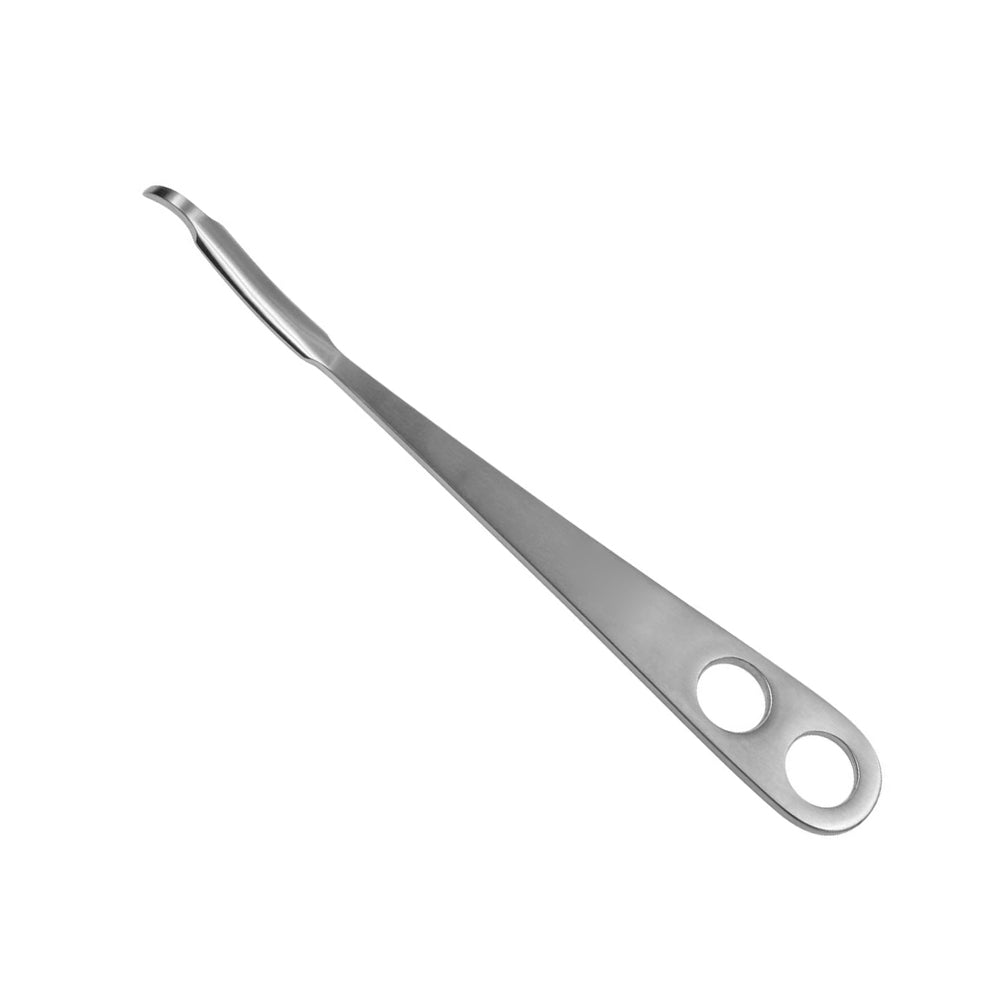
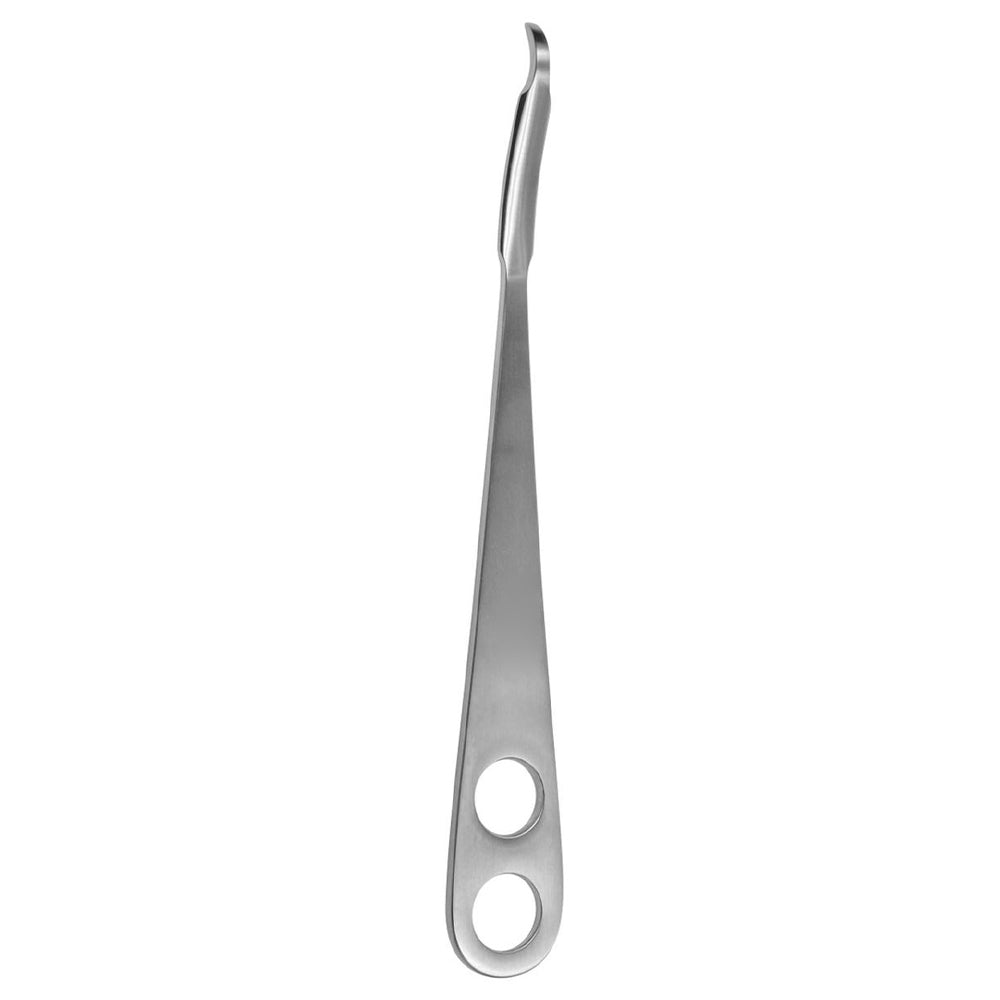
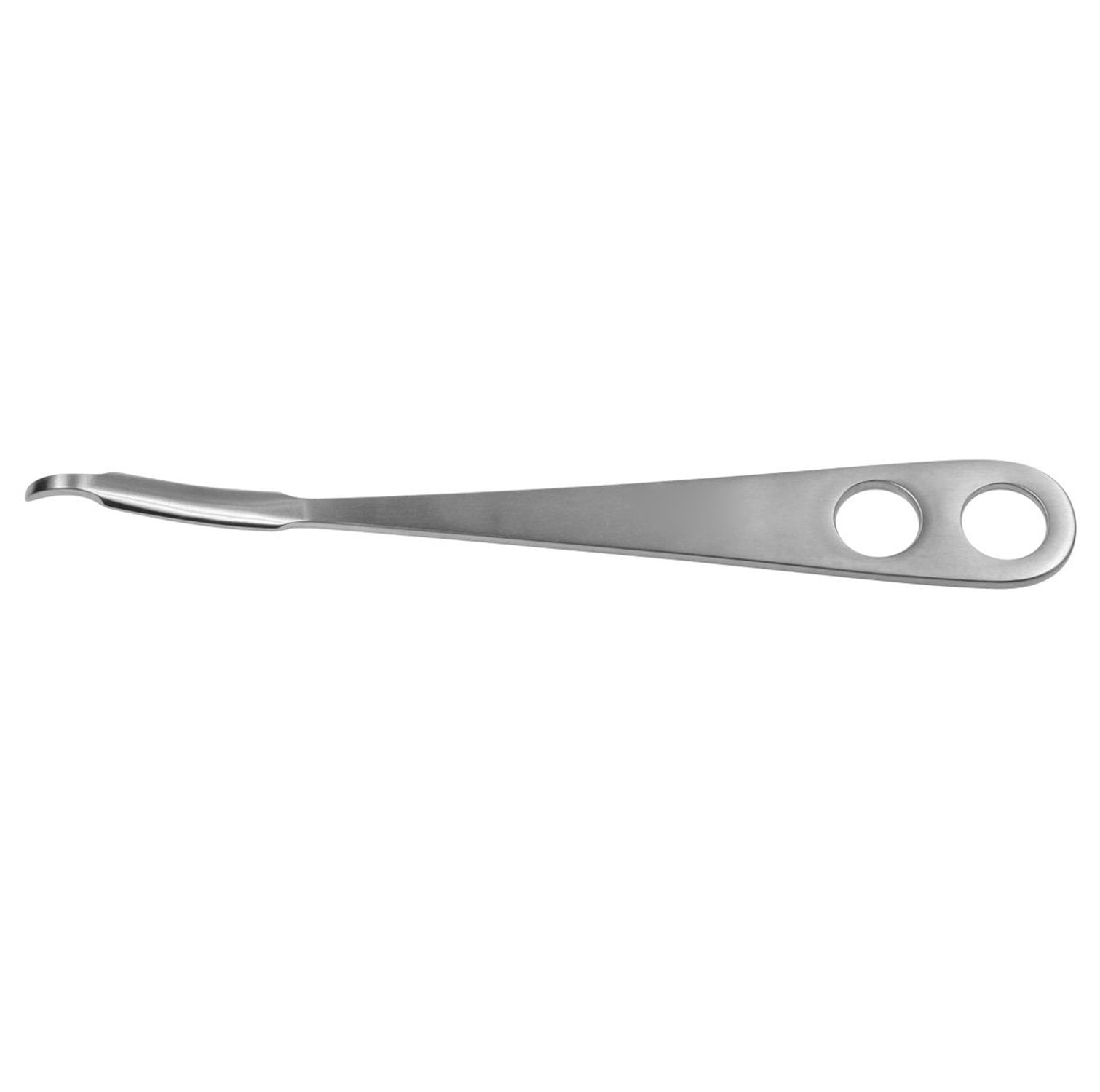
Hohmann Retractors, SKU PS-OT-0705, are reusable orthopedic bone retractors manufactured from German stainless steel for controlled soft-tissue displacement and direct exposure of osseous structures during trauma, arthroplasty, and reconstructive procedures. Three model configurations are available: PS-8803 with an 18 mm blade and 9 1/4 in (23.5 cm) overall length, PS-8804 with a 44 mm blade and 9 1/2 in (24.1 cm) overall length, and PS-8805 with a 70 mm blade and 9 1/2 in (24.1 cm) overall length. The characteristic Hohmann pattern combines a flat elongated handle, rigid shaft, curved distal transition, and shaped blade that can be positioned against a bone margin while surrounding muscle and soft tissue are displaced from the operative field. These retractors are used during total hip arthroplasty, acetabular exposure, proximal femoral surgery, total knee arthroplasty, fracture fixation, osteotomy, and open reduction procedures. The 18 mm model supports more focused access around narrower bone surfaces, while the 44 mm and 70 mm blades provide progressively broader retraction around larger hip and proximal femoral exposures. Orthopedic trauma, joint-replacement, reconstructive, and lower-extremity surgeons use the range in hospital operating rooms and specialist orthopedic surgical centers.
The Hohmann pattern functions through direct manual leverage rather than a ratchet, spring, pivot, or self-retaining lock. Its distal blade is introduced along a defined bone margin so the shaped working end can establish a stable contact point while the shaft redirects surrounding muscle, fascia, capsule, or other soft tissue away from the operative surface. The transition between the blade and shaft is angled or curved to move the main body of the instrument away from the center of the incision, preserving access for saw guides, drills, reamers, reduction forceps, plates, screws, broaches, and implant components. A rigid flat shaft transmits controlled traction from the surgeon or assistant directly to the working end without mechanical articulation. The broad proximal handle provides leverage and directional control, while the terminal handle openings can support secure manual grip and instrument organization. Blade width determines how broadly the applied force is distributed across the retracted tissue margin. Narrow configurations occupy less space around confined anatomy, whereas wider models support a larger retraction footprint. The retractor should be seated against a suitable bony boundary before sustained force is applied so traction is transferred through the intended contact surface rather than through unsupported soft tissue.
During total hip arthroplasty, Hohmann Retractors can be placed around the acetabular margins after femoral head removal and capsular preparation to displace soft tissue and improve circumferential visualization of the acetabular rim. Bent Hohmann patterns are commonly incorporated into acetabular exposure while the surgeon removes residual labrum, identifies landmarks, performs sequential reaming, and prepares for cup insertion. Wider blades are particularly useful when a broad section of capsule, muscle, or periarticular tissue must remain outside the reaming pathway. During total knee arthroplasty, a narrower configuration can be positioned around the femoral or tibial margins to maintain exposure during bone preparation, trialing, and component implantation without occupying excessive space in the operative field. In fracture surgery, the instrument may retract muscle from the femur, tibia, humerus, or other exposed long-bone surfaces while reduction, plate positioning, drilling, and screw placement are performed. Hohmann Retractors are also used during osteotomy and reconstructive procedures where direct bone visualization must be maintained through an open approach. Placement must respect neurovascular structures lying beyond the visible bone margin, because deep insertion or uncontrolled levering can transfer force outside the intended field. Retraction should therefore complement adequate surgical exposure rather than substitute for appropriate dissection.
PS-8803 uses an 18 mm blade and measures 9 1/4 in (23.5 cm) overall, making it the narrowest configuration in this Peak Surgicals range. The reduced blade width is suited to focused retraction around smaller bone margins, knee exposure, fracture approaches, and surgical corridors where a wide blade would obstruct adjacent instruments. PS-8804 measures 9 1/2 in (24.1 cm) overall with a 44 mm working blade. Its broader contact surface is appropriate for substantial periarticular tissue displacement around the hip, proximal femur, and acetabular region while maintaining a controlled retraction plane. PS-8805 shares the 9 1/2 in (24.1 cm) length but increases blade width to 70 mm, providing the widest tissue-contact footprint among the three listed models. This configuration is useful when extensive soft tissue surrounding a large joint or broad bony exposure must be held outside the operative corridor. Blade width should be selected according to anatomy, incision dimensions, depth, soft-tissue bulk, and the space required for other orthopedic instruments. A larger blade does not inherently provide safer or stronger exposure; it increases the area of contact and therefore requires adequate room for placement. The chosen model should achieve visualization without unnecessary pressure on adjacent structures.
German stainless steel provides the rigidity, corrosion resistance, and dimensional stability required for reusable orthopedic retractors exposed to repeated manual leverage and contact with hard bony surfaces. Peak Surgicals lists satin, dull, and mirror finish options. Satin and dull surfaces can reduce reflected operating-room light around deep orthopedic fields, while polished surfaces allow straightforward visual inspection during sterile processing. Reprocessing should begin promptly after use so blood, marrow residue, and tissue debris do not dry along the curved blade, shaft transitions, or handle openings. Cleaning should be followed by thorough rinsing, complete drying, and inspection for corrosion, deformation, edge damage, surface defects, or alteration of the intended blade angle. The shaft should remain structurally straight outside its designed curvature, and the working end should retain its original profile before being returned to an orthopedic tray. The reusable instruments can undergo steam sterilization through a validated healthcare-facility cycle compatible with stainless steel instrumentation and applicable reprocessing instructions. Peak Surgicals lists the product as Class I with CE, ISO 13485, and FDA-related procurement documentation. The listing also specifies a one-year warranty, MOQ of one piece, OEM availability, and return-and-replacement after-sale service for hospitals, clinics, and distributors.
| SKU | PS-OT-0705 |
|---|---|
| Product Name | Hohmann Retractors |
| Price | $19.25 USD |
| Size/Gauge Variants | PS-8803: 18 mm blade, 9 1/4 in (23.5 cm) overall; PS-8804: 44 mm blade, 9 1/2 in (24.1 cm) overall; PS-8805: 70 mm blade, 9 1/2 in (24.1 cm) overall |
| Instrument Category | Orthopedic Bone Retractor |
| Procedure | Total hip arthroplasty, acetabular exposure, total knee arthroplasty, fracture fixation, osteotomy, and open orthopedic reconstruction |
| Material | German Stainless Steel |
| Finish | Satin, Dull, Mirror |
| Sterilization | Reusable; steam sterilization following validated healthcare-facility cleaning and reprocessing protocols |
| Instrument Classification | Class I Reusable Manual Orthopedic Retractor |
| Reusable | Yes |
| Certifications | CE, ISO 13485, FDA-related procurement documentation |
| Warranty | 1 Year |
| MOQ | 1 Piece |
| OEM / Custom Orders | Available |
| After-Sale Service | Return and Replacement |
How does a Hohmann Retractor differ from a Cobra Retractor?
A Hohmann Retractor uses a relatively flat orthopedic shaft with a curved or angled distal blade that is positioned against a bone margin to displace surrounding tissue. A Cobra Retractor typically has a more pronounced hooked or curved working profile designed to reach around deeper osseous contours, particularly during hip exposure. The Hohmann pattern is available in multiple blade widths so the surgeon can choose between focused and broad retraction across different orthopedic sites. Cobra designs are commonly selected when a deeper hook-like relationship around the femur or acetabulum is needed. Both are manually controlled and depend on secure placement against an appropriate bony boundary rather than a ratchet mechanism. Selection should reflect the surgical approach, depth of the target, bone contour, and direction in which the surrounding tissue must be displaced.
Which Hohmann blade width should be selected for hip or knee surgery?
PS-8803 has an 18 mm blade and provides the most focused retraction in this range. Its narrower profile is useful around knee margins, fracture approaches, and restricted operative corridors where excessive blade width could interfere with adjacent instruments. PS-8804 uses a 44 mm working end and provides broader contact for proximal femoral and acetabular exposure during hip procedures. PS-8805 increases the blade to 70 mm and is intended for operative fields where a wide section of soft tissue must be displaced from a larger bone surface. The 44 mm and 70 mm models share a 9 1/2 in overall length, while PS-8803 measures 9 1/4 in. Selection should be based on bone size, surgical depth, available insertion space, tissue bulk, and the amount of exposure required for the next procedural stage.
What do CE, ISO 13485 and FDA references mean for procurement?
Peak Surgicals lists CE, ISO 13485, and FDA-related information for Hohmann Retractors. ISO 13485 concerns the quality-management system used for controlled medical-device manufacturing and associated processes. CE documentation supports conformity review in applicable medical-device markets. United States hospitals and distributors should evaluate FDA records according to the instrument category, establishment responsibilities, device listing requirements, and their own procurement procedures. These references should not be rewritten as an unsupported statement that each Hohmann model is individually FDA approved. Supplier certificates, model identification, purchase records, and applicable regulatory documents can be retained within the healthcare organization or distributor's vendor-qualification system.
How is a Hohmann Retractor controlled without a ratchet or locking mechanism?
Hohmann Retractors are manually controlled instruments with no self-retaining ratchet, spring, box lock, or pivot assembly. The distal blade is first positioned against the selected bone margin while the operator confirms that important soft tissue and neurovascular structures are not trapped beneath the working end. Traction is then applied through the long flat handle, and the rigid shaft transfers that force directly to the blade. The distal curve redirects the force so adjacent tissue is displaced away from the visible bone surface. Increasing or reducing hand pressure changes the amount of exposure immediately, allowing the assistant to respond as drilling, reaming, reduction, or implant placement progresses. Because the instrument does not lock, sustained retraction requires continuous controlled support rather than unattended leverage.
How should hospitals order, inspect and sterilize Hohmann Retractors?
Hospitals should order Hohmann Retractors using Shopify SKU PS-OT-0705 together with the exact model number and blade width required for the orthopedic tray. PS-8803 identifies the 18 mm blade, PS-8804 the 44 mm version, and PS-8805 the 70 mm configuration. Peak Surgicals lists the product at $19.25 with a one-piece MOQ, one-year warranty, OEM availability, and return-and-replacement service. Following surgery, visible contamination should be removed promptly from the blade, shaft, curved transition, handle, and apertures. Cleaning should be followed by complete rinsing, drying, and inspection for bending, corrosion, edge damage, surface defects, or distortion of the blade profile. Final steam sterilization should follow the healthcare facility's validated reusable-instrument cycle and applicable instructions before the correct model is returned to the hip, knee, or trauma instrument set.