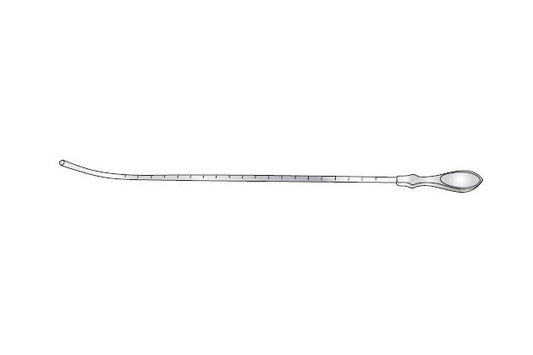
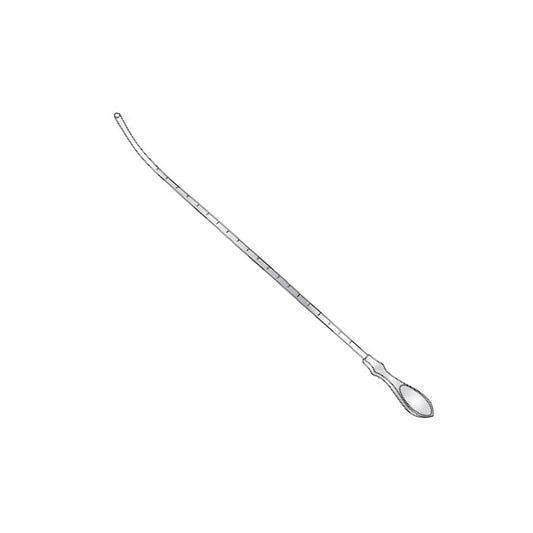
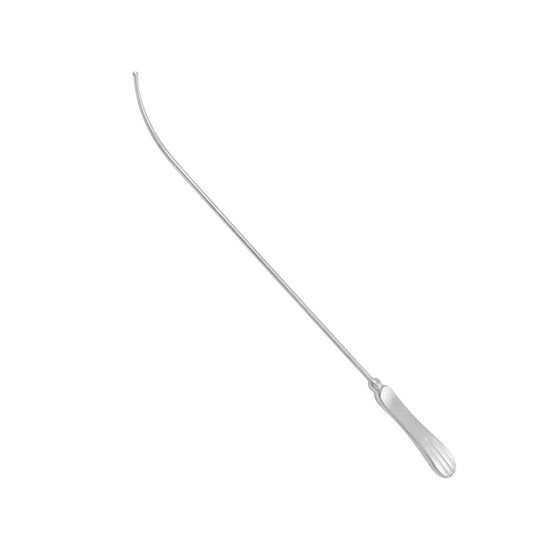
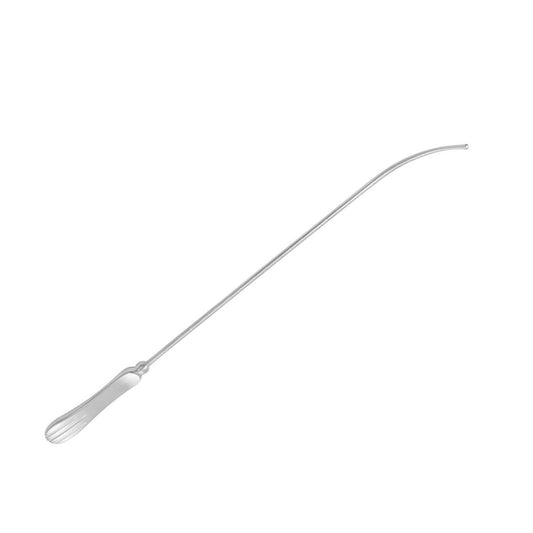
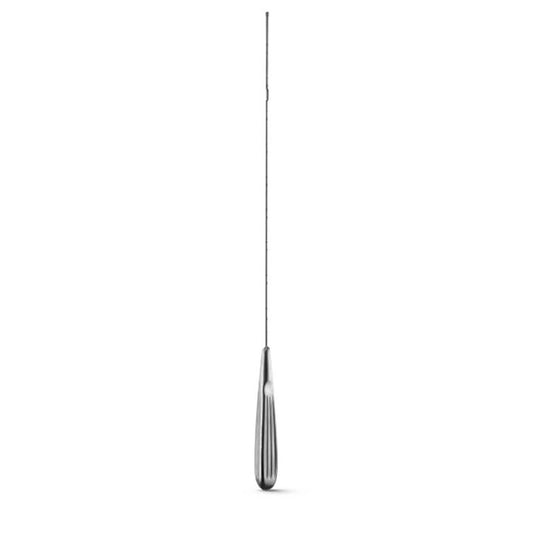
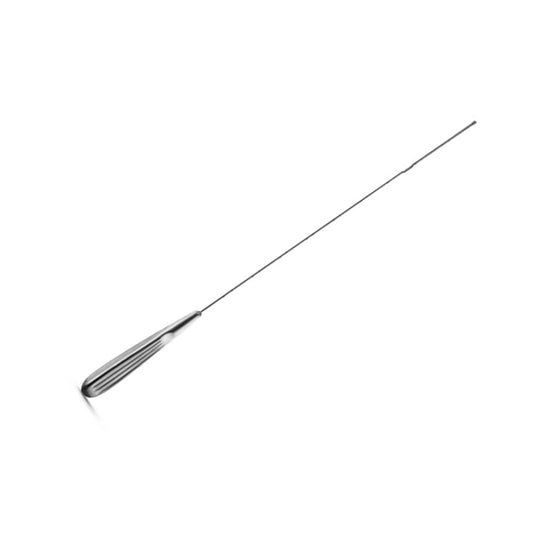
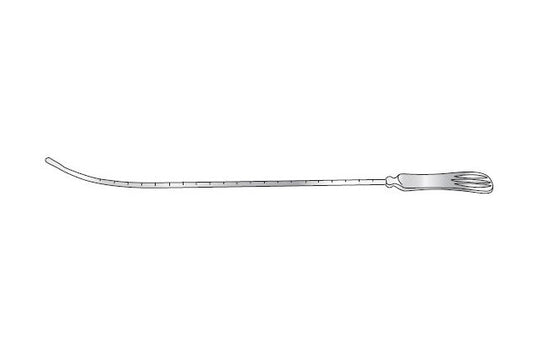
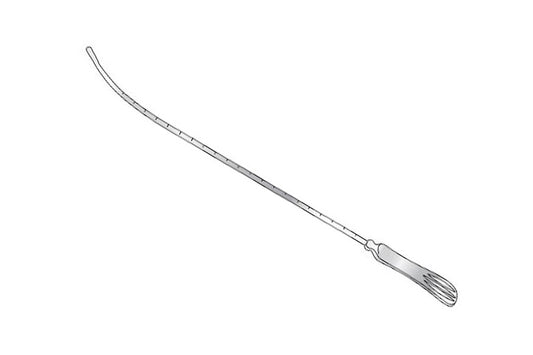
A uterine sound measures the depth and orientation of the uterine cavity, a thin, graduated rod passed through the cervix before an IUD placement, D&C or hysteroscopy to confirm how deep and in which direction the cavity runs, so the next instrument is neither too short to reach nor forced past where the cavity actually ends. Peak Surgicals supplies four patterns Sims, Simpson and Galabin, graduated in centimetres, from $4.95 to $11.00. Each is CE marked and built under ISO 13485. Compare all four patterns in the grid below.
Why the Uterus Is Sounded Before IUD Placement
Sounding the uterus measures cavity depth and confirms whether the uterus is anteverted or retroverted, which prevents two specific complications, uterine perforation from advancing an instrument too far, and false passage formation from forcing it against the cavity wall at the wrong angle. Depth varies by patient, typically between 4 and 10cm, and no instrument placed afterward, an IUD, a curette, a hysteroscope, should go in blind.
The bulbous, blunt tip common to these patterns is deliberate: it slides along the cavity wall on contact rather than catching or piercing it, so the clinician feels resistance before it becomes a perforation risk. Graduated markings then give the objective measurement, not a guess based on feel alone, but a reading the clinician can record and act on. This is why sounding is treated as a distinct step rather than skipped in favour of estimating depth from bimanual exam alone; the sound is the only instrument that measures from inside the cavity itself.
Sims or Simpson: Which Curve for Which Case?
The Simpson pattern carries a gentle curve that follows the natural anteverted path most patients present, making it the default choice for routine measurement, while the Sims pattern is malleable enough to be shaped by hand to an unusual path identified on ultrasound or bimanual exam, congenital variation, fibroids, or a markedly retroverted uterus. Curve, not length, is the primary decision between them.
Simpson Uterine Sound (PS-1903, $4.95) is the pattern most clinics reach for first, a flat handle and a shaft curved to match the majority of anatomy without adjustment. Sims Uterine Sound (from $4.95, also available at 220mm, $11.00) trades that fixed curve for malleability: the clinician bends it to the path found on exam rather than working against a curve that doesn't match. Galabin Uterine Sound (regular size, $11.00) offers a further pattern option, also fully graduated. For a thinner, more flexible option in nulliparous patients, where a rigid sound causes more discomfort, a malleable pattern like the Sims is generally preferred over a fixed-curve one. We supply every pattern at MOQ 1.
Reprocessing, Graduation Legibility and Certification
The graduated markings are the feature this instrument cannot function without, and they are also the first thing to degrade with rough handling, etched graduations that have worn or corroded no longer give a reliable reading, which defeats the purpose of sounding at all. Inspect markings for legibility each cycle, and on malleable Sims patterns, confirm the shaft still holds a shaped curve without springing back, since a sound that won't hold its bend forces the clinician to work against it mid-procedure.
Every instrument is forged from stainless steel, Class I, reusable, CE marked and built under ISO 13485, the documentation a hospital supply team verifies before qualifying a vendor. Warranty is one year with return-and-replacement, MOQ is 1 piece, orders over $99 ship free in carton box packing, and OEM marking is available for distributors. For related dilation and curettage instruments see uterine dilators and curettes; browse all gynecology instruments. Talk to us about OEM and volume terms.