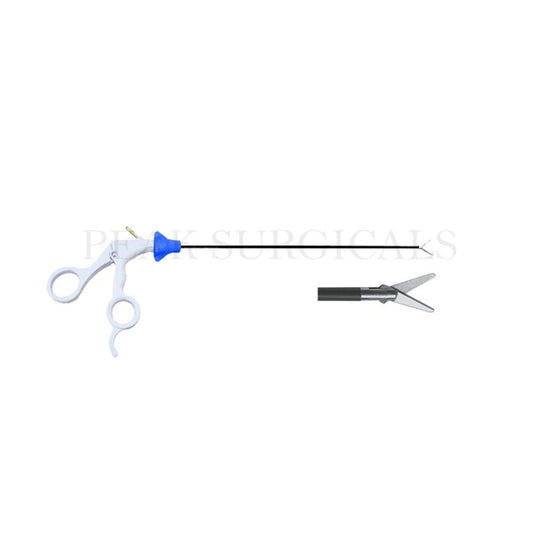
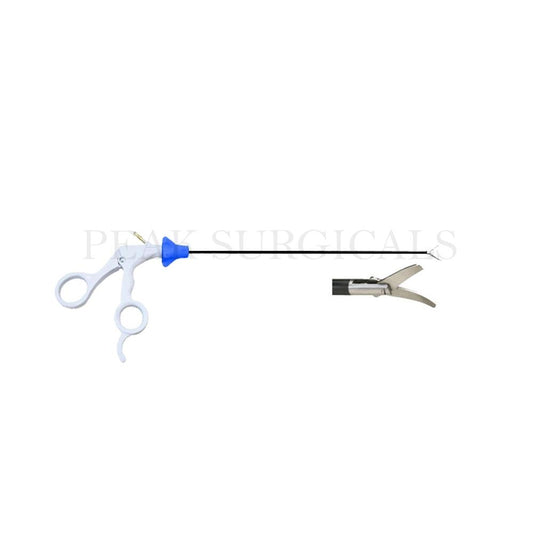
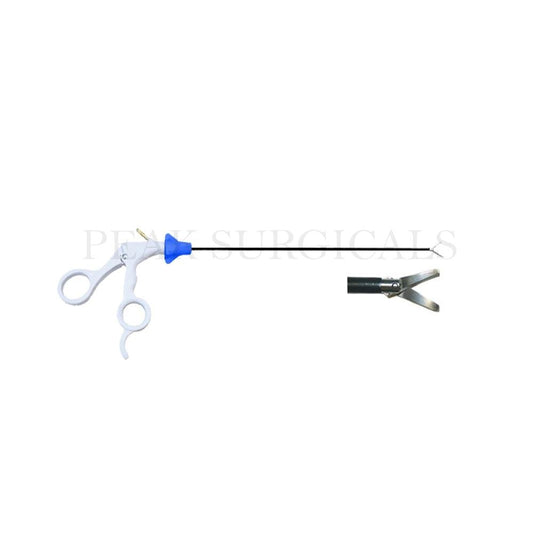
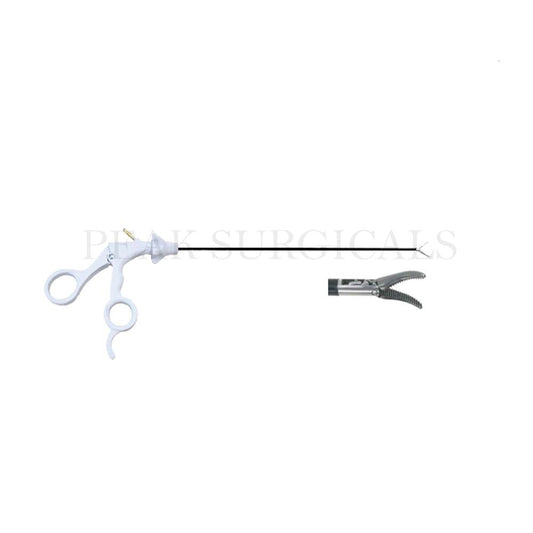
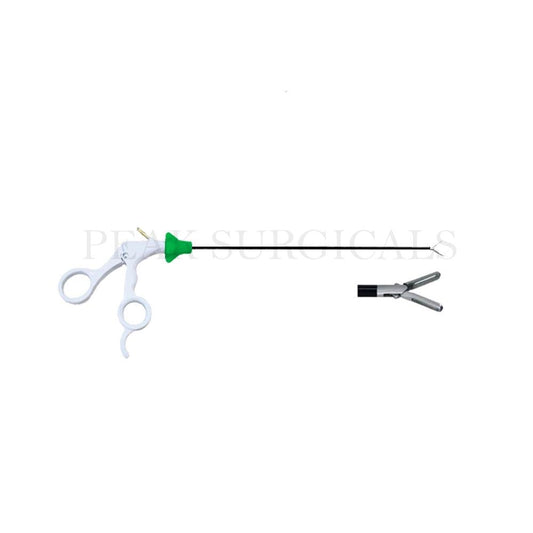
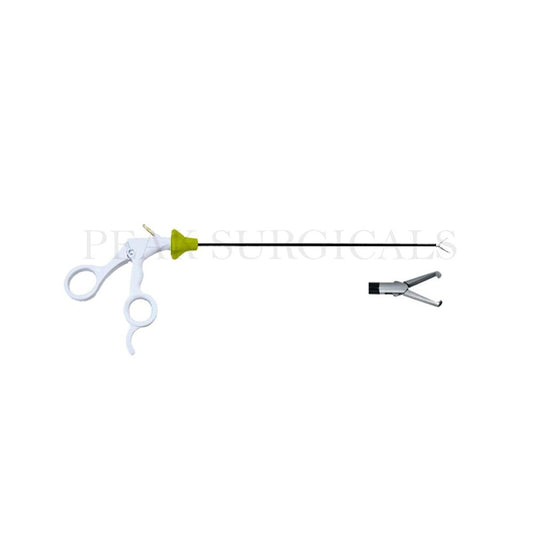
Os instrumentos laparoscópicos eletrocirúrgicos transportam corrente monopolar por um eixo isolado para cortar e coagular dentro de um abdómen selado. O isolamento é o que mantém essa corrente na ponta e fora do intestino. A Peak Surgicals fornece seis padrões reutilizáveis de tesouras monopolares, dissecador Maryland, Babcock e pinças de preensão em aço inoxidável alemão por 132,00 $. Cada um possui marcação CE e é construído sob a norma ISO 13485. Compare todos os seis padrões na tabela abaixo.
Qual Instrumento para Qual Etapa Laparoscópica?
As tesouras monopolares cortam e coagulam o tecido num único instrumento, o dissecador Maryland espalha os planos de tecido e agarra estruturas finas com capacidade monopolar, as pinças de preensão Babcock seguram o intestino e o tecido tubular de forma atraumática, e as pinças de preensão padrão manipulam o tecido durante o procedimento. Cada uma cobre uma etapa distinta, razão pela qual um conjunto laparoscópico as contém todas, em vez de uma ferramenta universal.
A Tesoura Monopolar Curva (PS-1012, 132,00 $) e Reta (PS-1013, 132,00 $) possuem uma ponta estilo Metzenbaum que transeciona o tecido e sela pequenos vasos com o mesmo instrumento — a curva proporciona visibilidade quando o laparoscópio olha diretamente para o eixo. A Pinça de Preensão Maryland (PS-1010, 132,00 $) é o dissecador mais utilizado em cirurgia laparoscópica: uma ponta fina para agarrar o peritoneu, uma ponta longa que se abre amplamente para dissecção romba e coagulação monopolar na mesma ponta. A Pinça de Preensão Babcock (PS-1008, a partir de 132,00 $) segura o intestino sem o esmagar, enquanto a Pinça de Preensão (PS-1009, 132,00 $) e a Tesoura Metzenbaum (PS-1011, 132,00 $) completam o conjunto. Fornecemos todos os padrões com MOQ 1.
Isolamento, Rotação e o Eixo Modular
Três características definem um instrumento laparoscópico eletrocirúrgico, e a primeira é crítica para a segurança. O eixo é totalmente isolado para que a corrente monopolar atinja a ponta e mais nada; uma falha nesse isolamento direciona a corrente para qualquer tecido que o eixo toque, fora da visão do cirurgião, que é o mecanismo por trás das lesões por queimadura laparoscópica. A integridade do isolamento é, portanto, a inspeção mais importante nestes instrumentos.
A rotação é a segunda. Uma roda manual que gira o eixo em 360° permite ao cirurgião alinhar a ponta ao tecido sem mover a mão inteira, o que é importante quando o instrumento entra por uma porta de trocarte fixa. A terceira é a construção modular padrão dos instrumentos laparoscópicos reutilizáveis: a inserção, o eixo e o manípulo separam-se para limpeza e para substituir uma ponta desgastada sem descartar o instrumento inteiro.
A dimensão laparoscópica padrão é de 5 mm de diâmetro num eixo de 330 mm, dimensionada para passar por um trocarte de 5 mm e atingir o campo operatório. Confirme o comprimento de trabalho e o diâmetro em relação à porta e ao procedimento antes de encomendar, uma vez que um eixo demasiado curto não alcança e um demasiado largo não se encaixa.
Reprocessamento, Teste de Isolamento e Certificação
Os instrumentos laparoscópicos reutilizáveis acarretam uma carga de reprocessamento que é mais importante aqui do que nos instrumentos abertos. O lúmen e o espaço entre o inserto e o eixo retêm tecido, pelo que o instrumento é desmontado nas suas partes modulares, escovado através do lúmen e limpo por ultrassons antes da autoclavagem; a imersão por si só não limpa um eixo estreito. O isolamento é testado periodicamente, não apenas em danos visíveis, porque uma perfuração minúscula transporta corrente sem ser vista.
Cada instrumento é forjado em aço inoxidável alemão, Classe I, reutilizável, com marcação CE e fabricado sob a norma ISO 13485 — a documentação que uma equipa de aprovisionamento hospitalar verifica antes de qualificar um fornecedor. A garantia é de um ano com devolução e substituição, o MOQ é de 1 peça, as encomendas acima de 99 $ são enviadas gratuitamente em caixa de cartão, e a marcação OEM está disponível para distribuidores. Para a gama completa, consulte instrumentos laparoscópicos; os padrões monopolares reutilizáveis também se encontram em pinças monopolares reutilizáveis. Explore todos os instrumentos eletrocirúrgicos. Fale connosco sobre termos OEM e de volume.