
Utvalgt kolleksjon
Handlekurven din
Utvalgt kolleksjon

PEAK SURGICALS
SKU:PS-J-196
Kunne ikke laste inn tilgjengelighet for henting


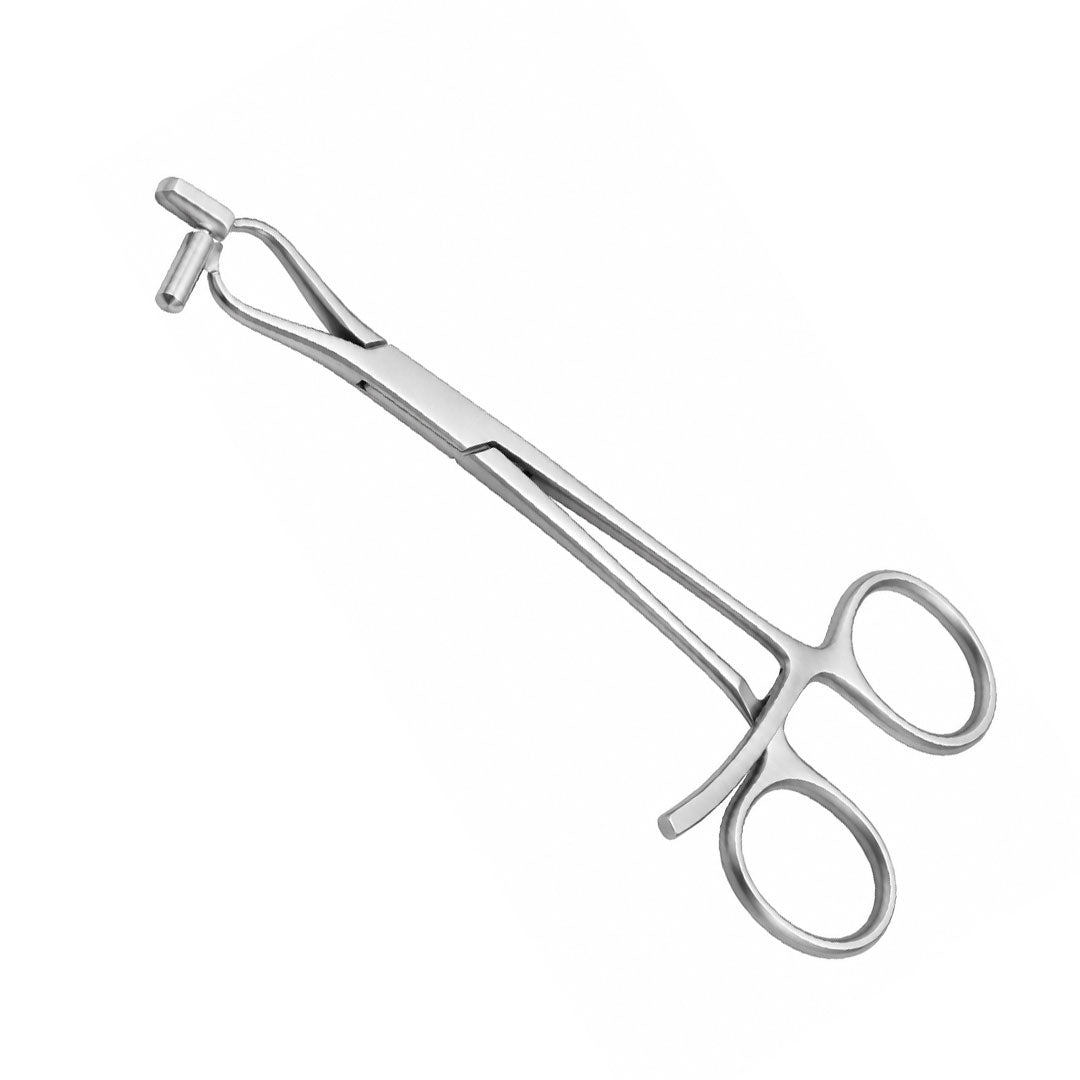
The Lesser Wire Passer and Retrieval Forceps are specialized veterinary orthopedic instruments designed to combine tissue-protecting drill guidance with wire and suture retrieval. Featuring an open-sided toothed guide tube, opposing retrieval jaws, and ring handles, this instrument assists with selected orthopedic fixation procedures.
Available in 150 mm (15 cm) and 190 mm (19 cm) lengths, the Lesser pattern is particularly associated with hemi-cerclage and the passage of lateral sutures through the tibial crest.
The original instrument design is attributed to Arnie Lesser.
The Lesser Wire Passer incorporates an open-sided guide tube designed to assist with drill positioning during selected veterinary orthopedic procedures.
The open guide configuration allows the instrument to be disengaged from the wire or suture without requiring the entire material length to pass through a closed tube.
The guide also serves as a tissue-protecting interface during the relevant surgical stage. Appropriate positioning and drill compatibility must be confirmed by the operating surgeon.
The working end of the guide tube features a toothed contact surface intended to reduce drill skating during initial positioning.
The teeth provide a defined contact profile against the selected bone surface when used according to the intended technique.
Drill selection, guide positioning, and surrounding tissue protection remain dependent on the surgical anatomy and the manufacturer's instructions.
The forceps combine a drill-guiding function with a mechanism intended to capture wire or suture material on the opposite side of the operative site.
The retrieval arrangement allows the surgeon to engage and withdraw the selected material during an appropriate orthopedic technique.
This combination distinguishes the Lesser instrument from conventional closed-eye wire passers and ordinary surgical grasping forceps.
The instrument features two circular finger rings connected to elongated forceps arms.
The hinged configuration provides manual control of the retrieval mechanism during positioning and instrument manipulation.
The instrument should be operated according to its intended design to avoid excessive force on the working end or adjacent tissue structures.
The 150 mm Lesser Wire Passer and Retrieval Forceps, supplier reference 001268, is the shorter configuration.
The reference manufacturer's current product title identifies this configuration with a 5–15 mm guide-size range.
The standard model is intended for selected veterinary orthopedic procedures where its dimensions are suitable for the surgical approach.
The 190 mm Lesser Wire Passer and Retrieval Forceps, supplier reference 001269, provides a longer instrument configuration.
The reference manufacturer identifies the Large model with a 10–25 mm guide-size range.
Selection between the 150 mm and 190 mm instruments depends on the operative anatomy, required access, and selected surgical technique.
The Lesser Wire Passer is associated with hemi-cerclage techniques used in selected veterinary orthopedic fixation procedures.
Its combined guiding and retrieval functions assist the surgeon with positioning and recovering the selected wire or suture material.
The instrument does not independently tension, twist, or cut orthopedic wire. Appropriate fixation equipment must be selected separately according to the procedure.
The instrument is also designed for selected procedures involving the passage of lateral sutures through the tibial crest.
The open-sided drill guide provides a positioning interface, while the forceps mechanism is intended to capture material on the opposite side of the passage.
The surgeon should determine the appropriate drilling location, wire or suture pathway, and fixation technique based on the patient's anatomy.
The Lesser Orthopedic Wire Retrieval Forceps may be included in veterinary orthopedic instrument trays used for selected bone fixation and suture-passing procedures.
They are relevant to veterinary orthopedic surgeons, specialist animal hospitals, veterinary surgical facilities, and procurement professionals sourcing orthopedic instrumentation.
Conventional orthopedic wire passers are primarily designed to guide cerclage wire around selected bone structures.
The Lesser Wire Passer combines a tissue-protecting drill guide with a retrieval mechanism designed to capture wire or suture material from the opposite side of the operative site.
Its open-sided guide tube and toothed contact surface provide additional instrument features not found on every conventional wire passer.
The appropriate instrument should be selected according to the surgical technique and required wire-passing method.
| Product Name | Lesser Wire Passer and Retrieval Forceps |
|---|---|
| Instrument Pattern | Lesser |
| Original Design | Arnie Lesser |
| Instrument Type | Orthopedic Wire and Suture Retrieval Forceps |
| Available Lengths | 150 mm and 190 mm |
| Standard Configuration | 150 mm / 15 cm |
| Large Configuration | 190 mm / 19 cm |
| Standard Reference | 001268 |
| Large Reference | 001269 |
| Guide Design | Open-Sided Drill Guide Tube |
| Guide Contact Surface | Toothed |
| Working Mechanism | Wire and Suture Retrieval Forceps |
| Handle Configuration | Double Finger-Ring Handles |
| Primary Functions | Drill Guidance, Tissue Protection and Wire Retrieval |
| Primary Specialty | Veterinary Orthopedic Surgery |
| Clinical Applications | Hemi-Cerclage and Lateral Suture Passage Through the Tibial Crest |
| Unit of Measure | Each |
Before clinical use, inspect the open-sided guide tube, toothed contact surface, retrieval jaws, and hinged mechanism for visible damage or deformation.
Confirm that the forceps open and close correctly and that the guide-tube opening is free from obstruction.
Clean and process the instrument according to the applicable manufacturer's product-specific instructions and the veterinary facility's validated reprocessing procedures.
Particular attention should be given to the guide-tube interior, working-end teeth, joints, and areas where surgical debris may accumulate.
Do not assume specific sterilization temperatures, exposure times, cleaning-agent compatibility, or material grades without verified product documentation.
Peak Surgicals supplies orthopedic and veterinary surgical instruments for animal hospitals, veterinary orthopedic clinics, specialist surgical facilities, distributors, and medical procurement professionals.
Choose the required 150 mm Standard or 190 mm Large configuration according to the intended veterinary orthopedic procedure.
Explore related Veterinary Surgical Instruments and Orthopedic Instruments for additional wire passers, reduction forceps, cerclage instruments, and fracture fixation tools.
They combine tissue-protecting drill guidance with wire or suture retrieval during selected veterinary orthopedic fixation procedures.
The documented configurations are 150 mm Standard and 190 mm Large.
The open-sided tube provides a drill-guiding interface and allows the instrument to be disengaged from the selected wire or suture.
The toothed contact surface is intended to reduce drill skating during guide positioning.
The reference manufacturer identifies hemi-cerclage and lateral suture passage through the tibial crest as common applications.
The Standard 150 mm model is reference 001268, and the Large 190 mm model is reference 001269.


