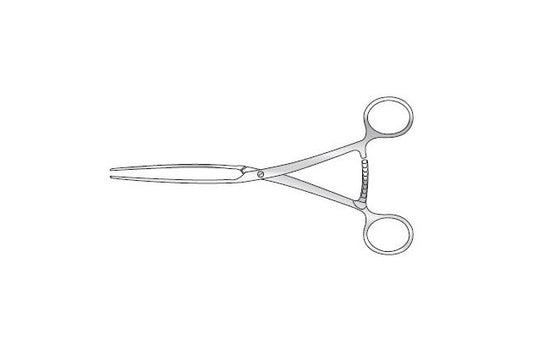
Post mortem-klemmer okkluderer og holder mage-tarmkanalen under obduksjon, slik at innholdet holdes inne mens prøven åpnes og undersøkes. Peak Surgicals leverer Lanes tarmklemme 7" (177 mm) rett (PS-P-0009, 27,50 $), en sperreutstyrt tarmklemme i tysk rustfritt stål, CE-merket og produsert under ISO 13485. Se hele spesifikasjonen i tabellen nedenfor.
Hvorfor Lanes mønster? «No-touch»-prinsippet
En tarmklemme eksisterer slik at kirurgens hånd aldri trenger å berøre det den holder, og dette prinsippet kommer direkte fra mannen mønsteret er oppkalt etter. Sir William Arbuthnot Lane, som arbeidet ved Guy's Hospital i London, introduserte «no-touch»-teknikken og designet en serie langhåndterte instrumenter spesielt for å minimere vevshåndtering. Tarmklemmen er en av dem, og flere av hans design er fortsatt i bruk i dag.
Klemmens kjever er lengdeveis riflet i stedet for tannet, slik at de lukkes mot tarmveggen med fordelt trykk i stedet for å penetrere den, og sperren holder lukkingen uten at hånden trengs. Lanes tarmklemme 7" (177 mm) rett (PS-P-0009, 27,50 $) er standardmønsteret, med rette kjever for okklusjon langs en tarmseksjon heller enn i en vinkel. Vi leverer fra MOQ 1.
Lengde og kjeveform i obduksjonsrommet
I obduksjonsrommet er kravet inneslutning snarere enn vevsbevaring. Mage-tarmkanalen klemmes før den skilles slik at innholdet ikke slipper ut i kroppshulen eller på bordet, noe som beskytter både prøven for undersøkelse og prosektoren som håndterer den.
7"-lengden er arbeidsstørrelsen for dette: lang nok til at håndtakene sitter utenfor hulrommet mens kjevene er nede i det, kort nok til å forbli kontrollerbar i et begrenset felt. Rette kjever egner seg for okklusjon langs et tarmløp, der et buet mønster bare ville vært nødvendig for å følge anatomi prosektoren ikke bevarer.
Materiale, reprosessering og sertifisering
Klemmen er smidd av tysk rustfritt stål og passivert for korrosjonsbestandighet over gjentatte sykluser. Inspeksjonspunktet er kasselåsen og sperren: lukk til den første tannen og bekreft at den holder uten å skli, sjekk deretter at de riflede kjeveflatene møtes langs hele lengden uten dagslys ved spissen. Post mortem-instrumenter blir mer tilsmusset enn operasjonsinstrumenter, så rengjør umiddelbart med en enzymatisk løsning med nøytral pH, børst inn i kasselåsen og riflene, skyll deretter med deionisert vann og tørk helt før autoklavering ved 134°C.
Dette er en gjenbrukbar klasse I-enhet, CE-merket og produsert under ISO 13485, med ett års produksjonsgaranti. Vi sender fra MOQ 1 med gratis frakt over 99 $, og OEM-produksjon er tilgjengelig for distributører. Bla gjennom hele utvalget av Post Mortem-instrumenter. Snakk med oss om OEM-vilkår.