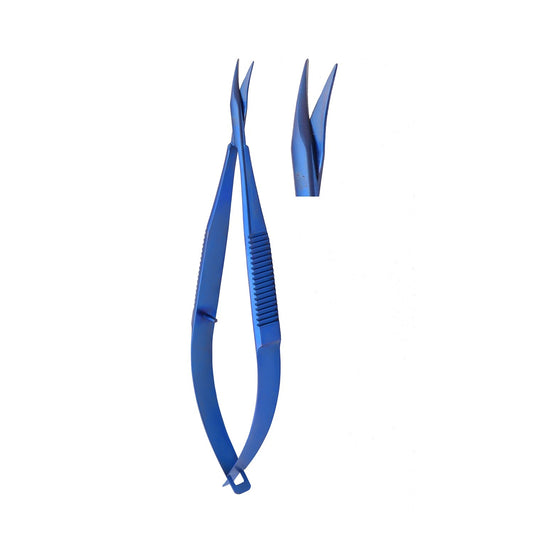
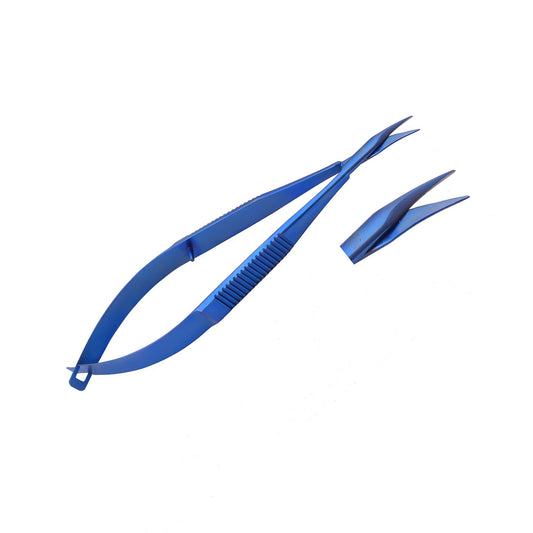
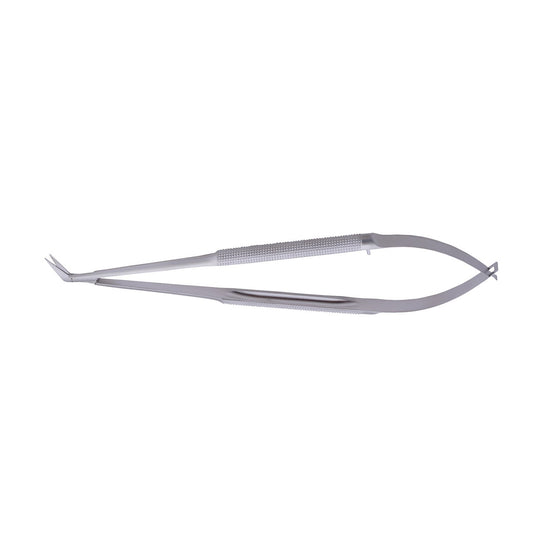
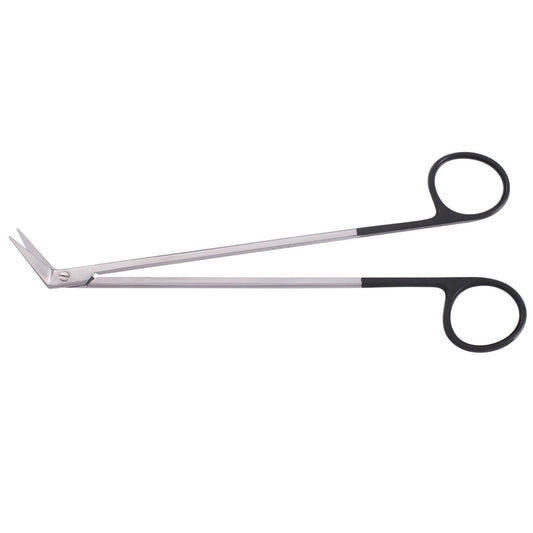
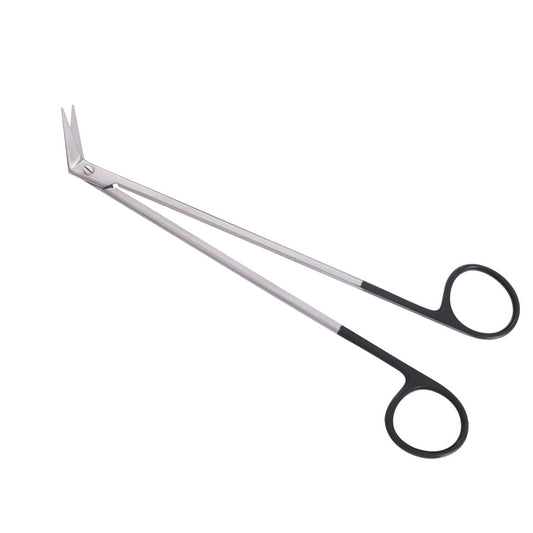
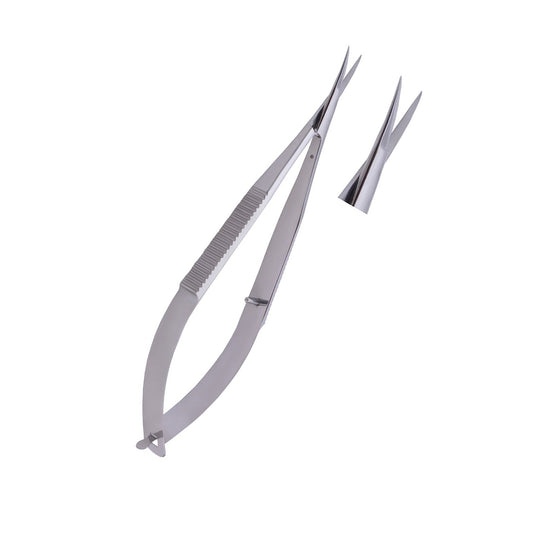
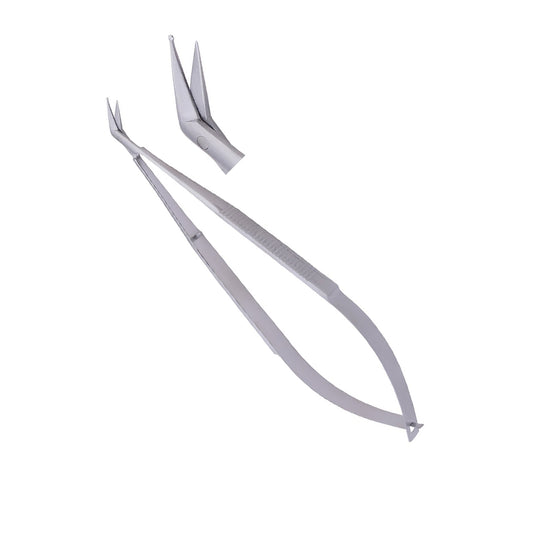
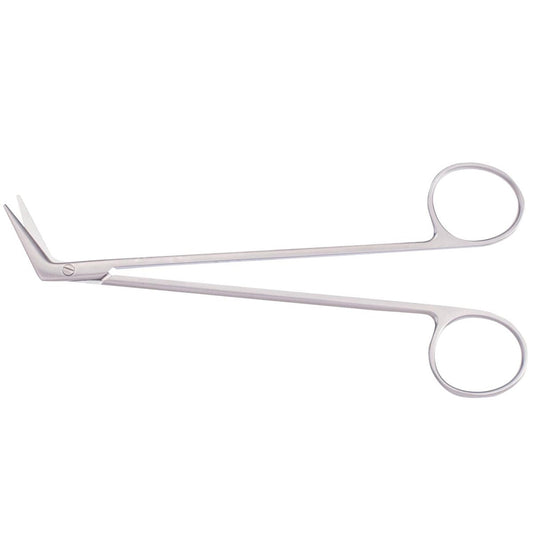
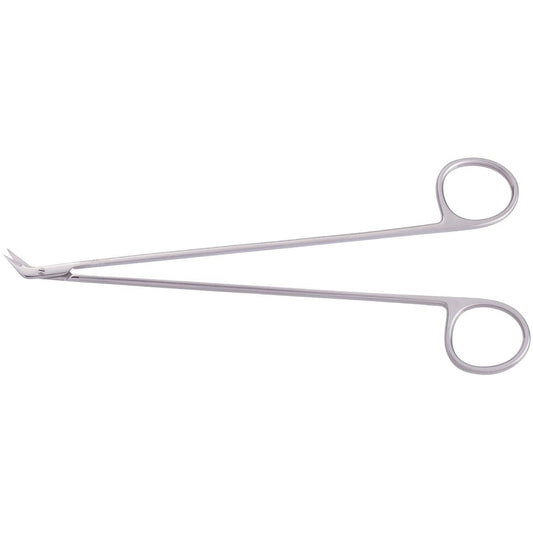
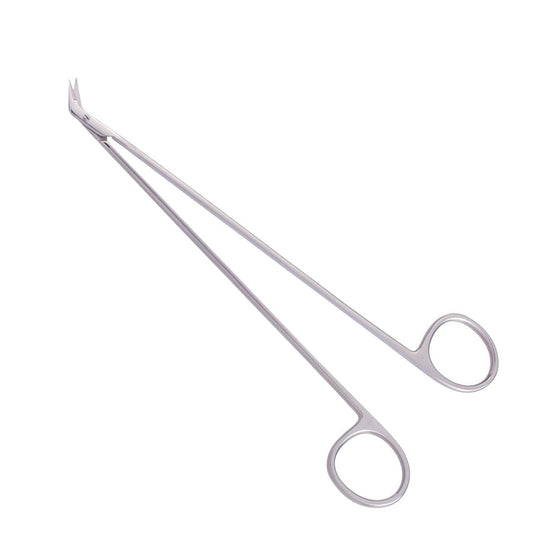
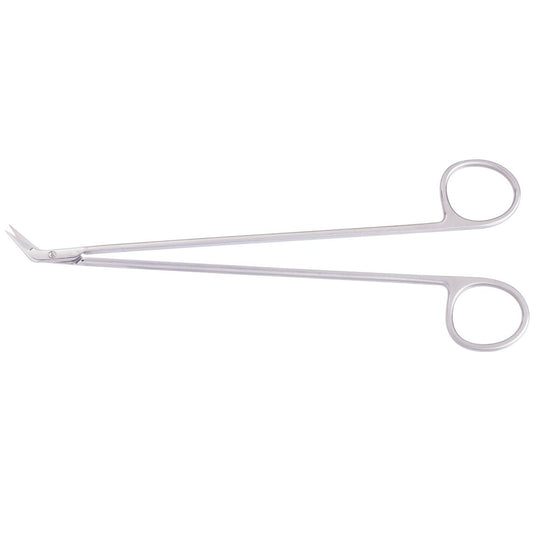
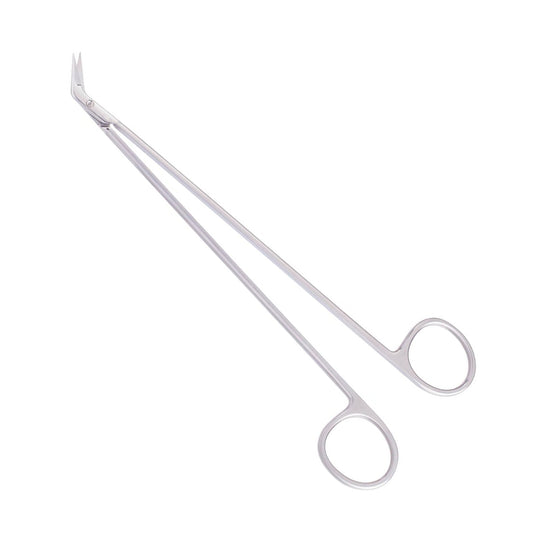
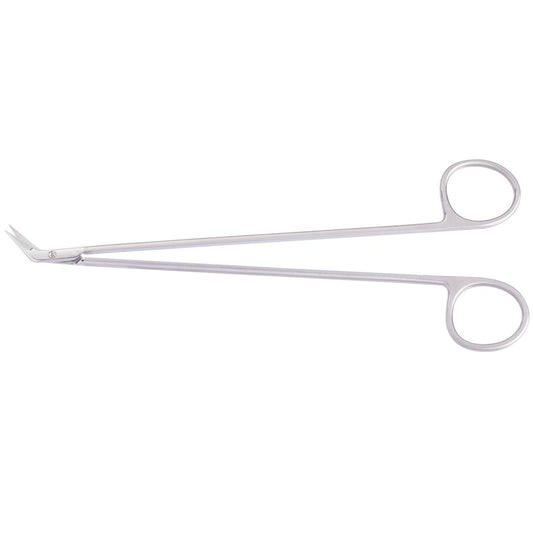
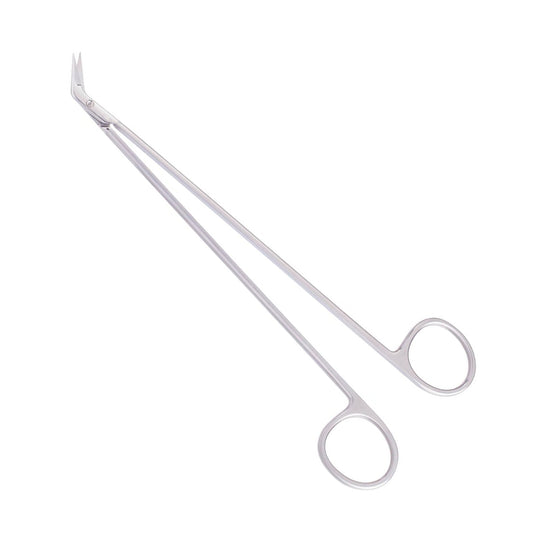
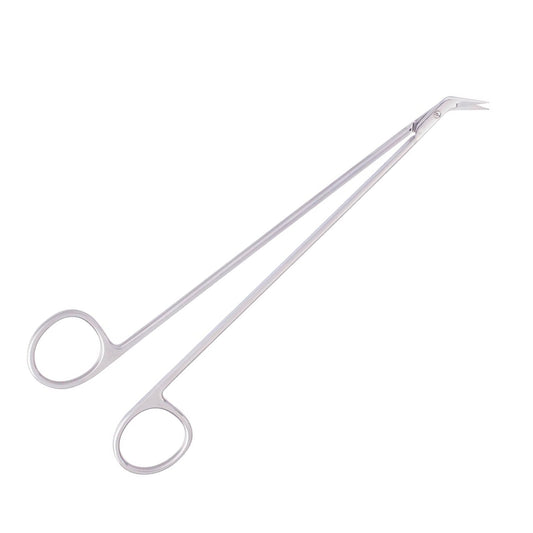
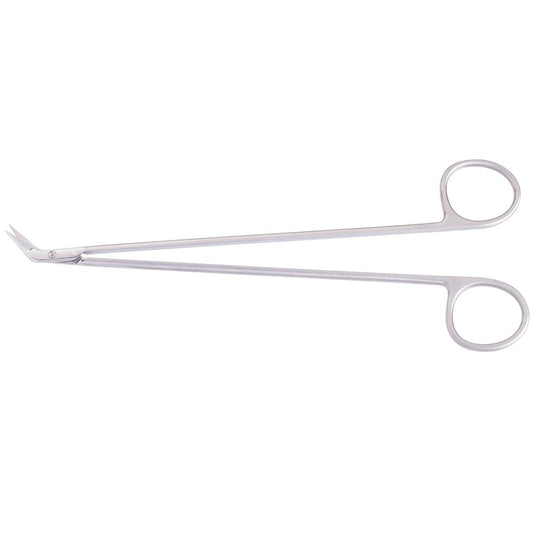
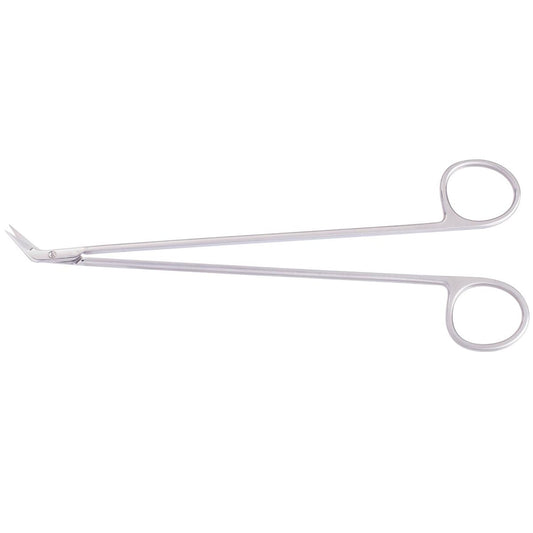
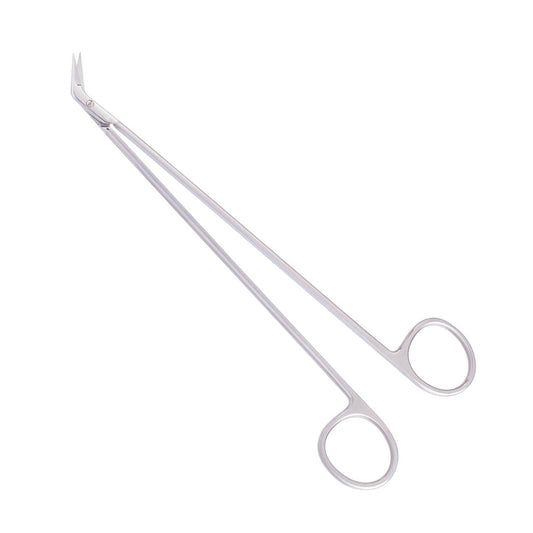
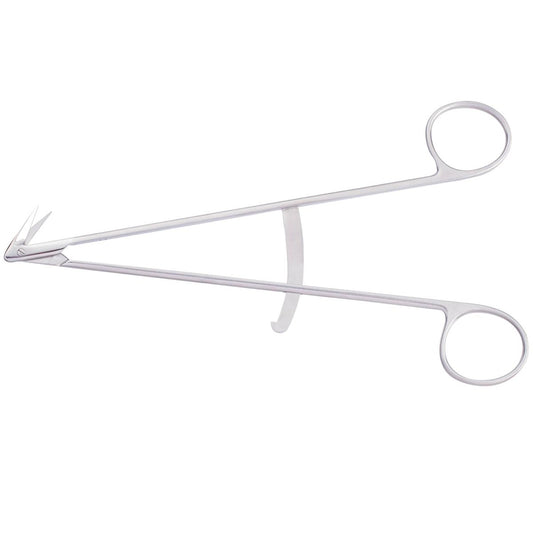
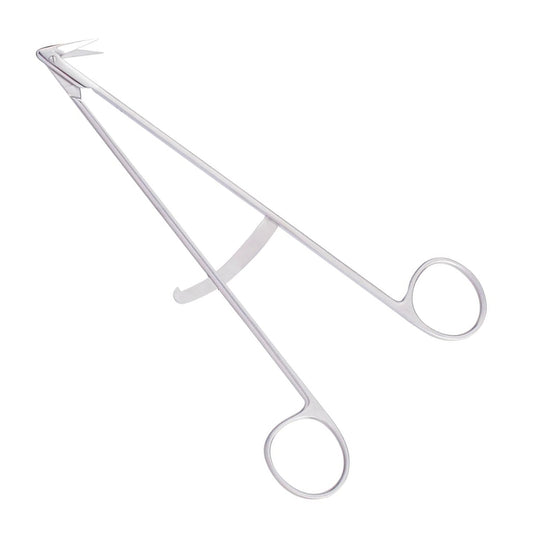
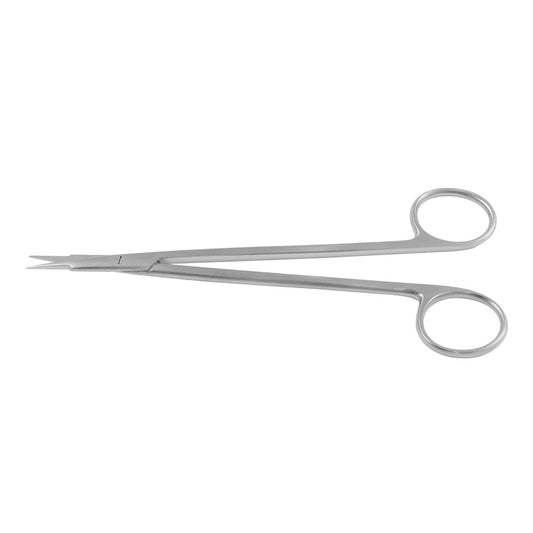
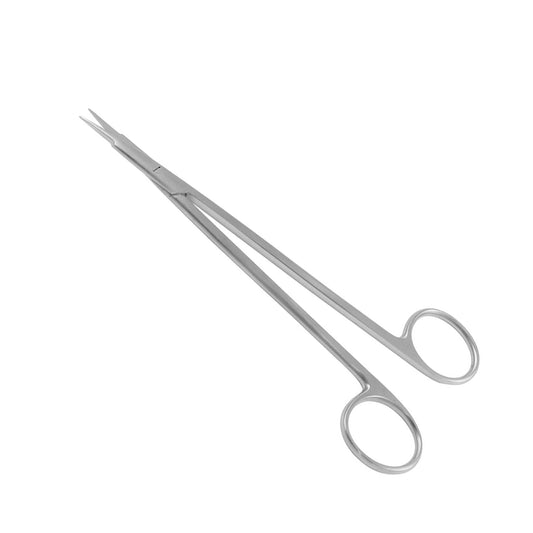
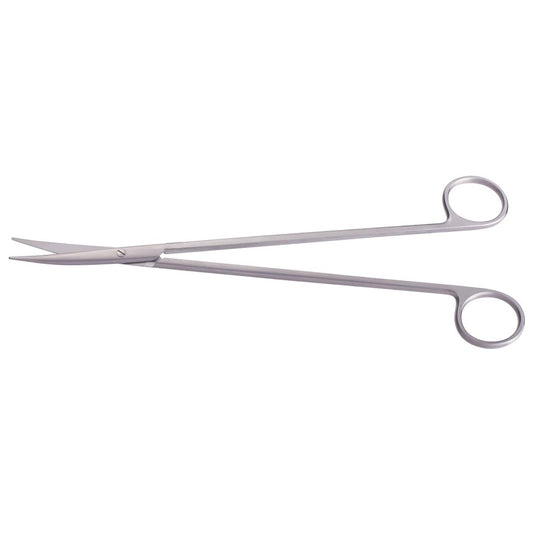
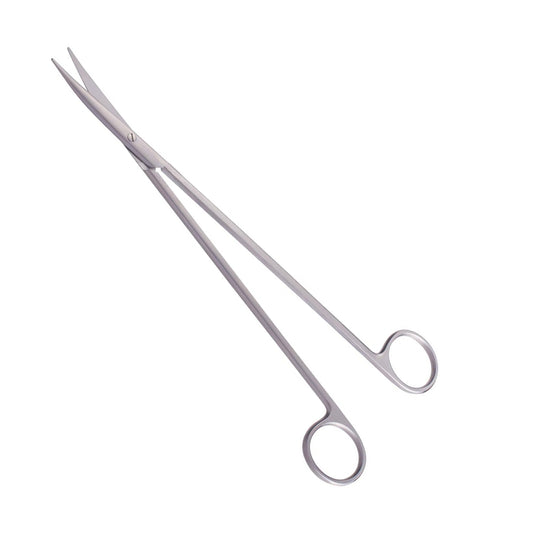
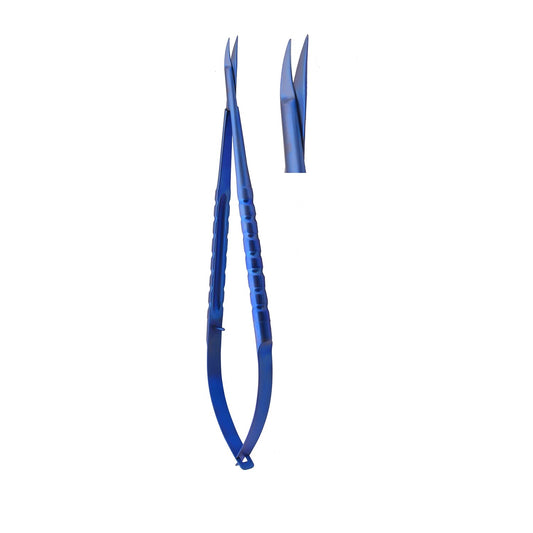
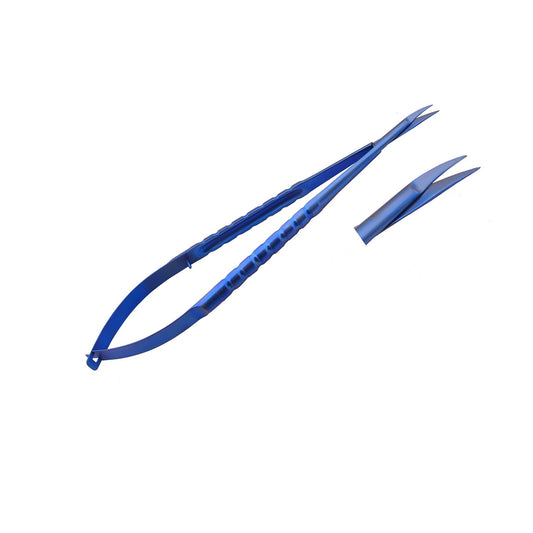
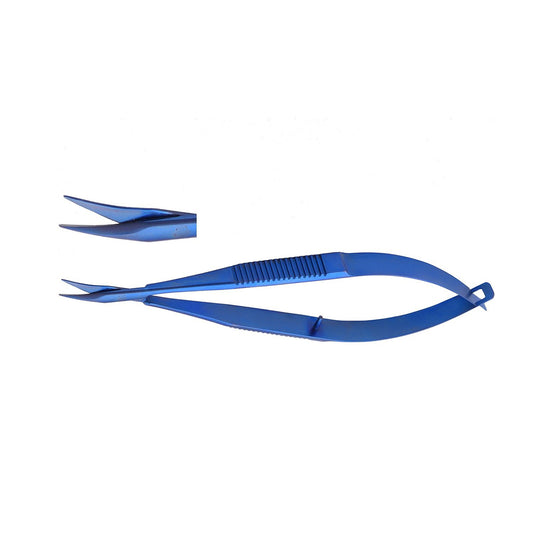
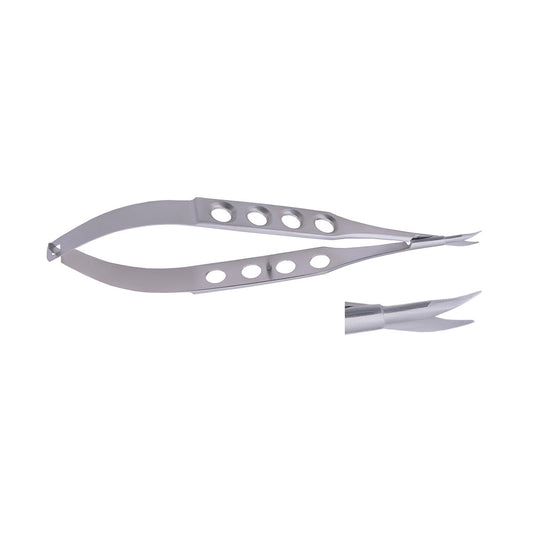
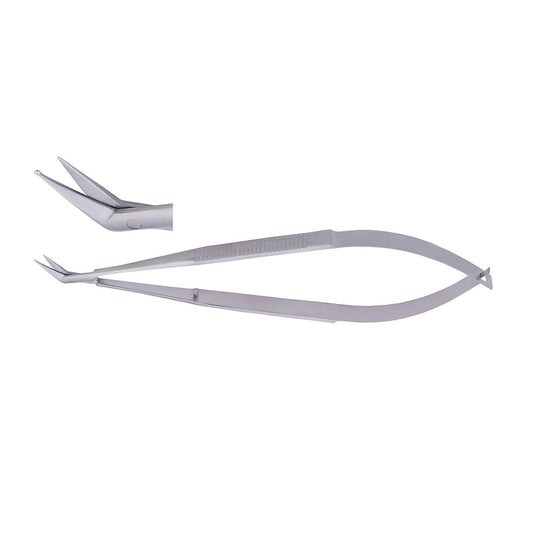
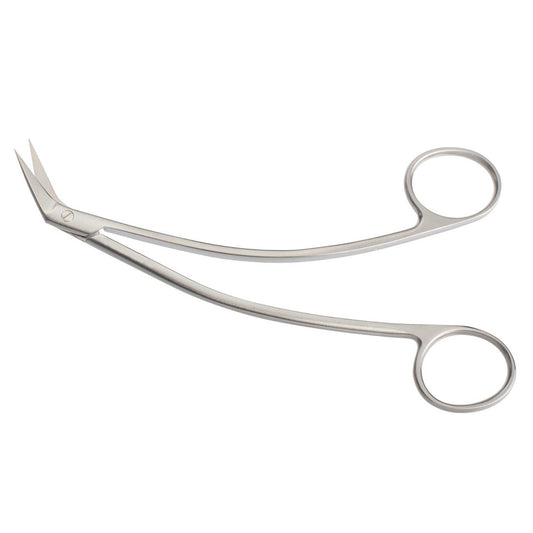
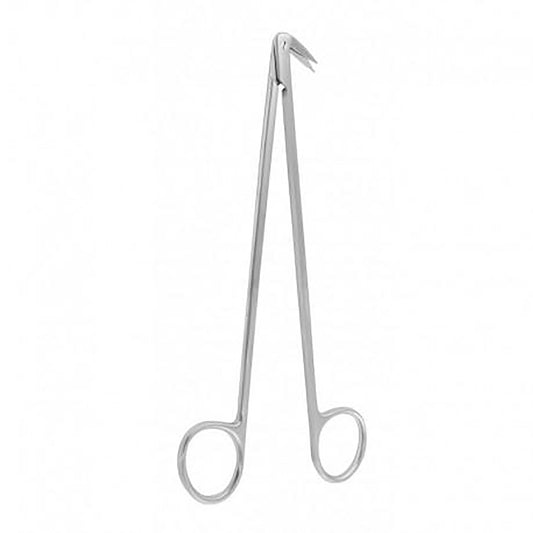
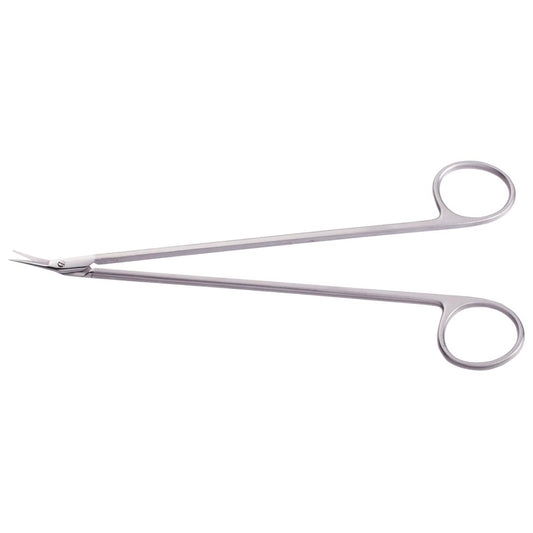
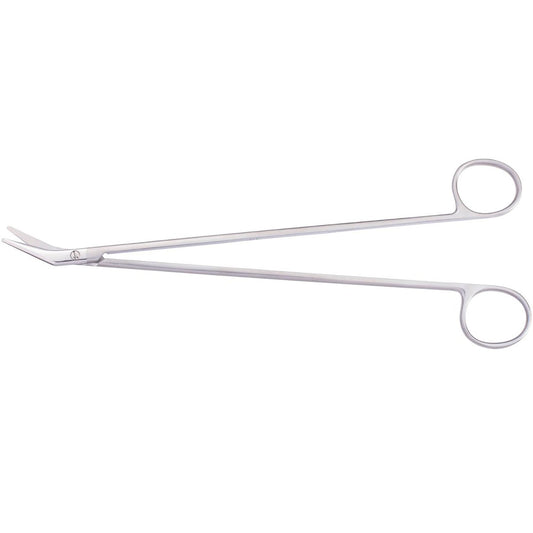
Mikrosakser er skjæreinstrumenter med fine blader som brukes til forlengelse av arteriotomi, fjerning av adventitia og kontrollert vevdeling i kar som er for små for standard sakser. Korte blader satt mot et langt skaft holder arbeidsenden synlig mens hånden holdes borte fra operasjonsfeltet. Peak Surgicals lagerfører 25 modeller fra $4,95 til $46,20.
Valget mellom dem handler sjelden om skarphet – alle modellene her skjærer. Det handler om hvor bladet sitter i forhold til kirurgens hånd når skaftet er inne i såret. En koronaranastomose bak hjertet krever en annen geometri enn et kar som nærmes rett forfra på overflaten. Modellene nedenfor er gruppert etter den logikken, ikke etter pris.
Hvordan bladvinkel styrer siktlinjen
Den avgjørende variabelen i mikrokirurgiske sakser er forholdet mellom blad og skaft. En rett modell holder de to kollineære, noe som passer for arbeid der kirurgen nærmer seg karet direkte og hånden sitter utenfor såret. Vinkle bladet og hånden roterer ut av siktlinjen mens spissen holder seg på målet – grunnen til at Potts-Smith-geometrien ble standard for arteriotomiforlengelse.
Bladlengden kompliserer dette. Korte blader reduserer buen spissen sveiper per enhet håndbevegelse, og konverterer grov håndbevegelse til fin spissbevegelse. Den mekaniske reduksjonen er det "mikro" beskriver. Det er et bevisst tap av hastighet i bytte mot kontroll. Reverskuttede modeller snur skjæreretningen, og kutter på lukkeslaget bort fra kirurgen i stedet for mot.
Mønstervalg etter prosedyretrinn
Navngitte mønstre koder for beslutninger tatt av kirurgene som designet dem. Potts-Smith-mønstre utvider en eksisterende arteriotomi – det butte nedre bladet glir inn i lumen uten å fange intima. Diethrich-mønstre (PS-6009, PS-6014) håndterer koronararteriearbeid der karet er lite og tilnærmingen skrå. Favloros buede skaft (PS-6008) eksisterer fordi CABG-grafting krever å nå rundt hjertet i stedet for over det.
Skaftlengden endres med dybden. Den 18 cm lange Potts-Smith (PS-6026) når felt som kortere mønstre ikke kan, på bekostning av tuppstabiliteten. Potts-Reynolds tenotomimønstre (PS-6038) krysser inn i generell fin disseksjon under saphenavenhøsting til $4,95. DeBakey vaskulære sakser (PS-6040) sitter på grensen mellom vaskulære mikrosakser og standard vaskulære instrumenter – tyngre enn et ekte mikromønster, lettere enn en Metzenbaum.
Titan kontra tysk rustfritt stål
Peak Surgicals tilbyr mikrokirurgiske sakser i både tysk rustfritt stål og titan. Titan 16 cm-mønstrene koster omtrent dobbelt så mye som stålekvivalentene – $44,00 rett og $46,20 buet, mot $19,80 for tilsvarende stål. Premiumprisen gir vektreduksjon og ikke-magnetisk oppførsel. Under et operasjonsmikroskop over en lang prosedyre slutter håndtretthet å være et komfortproblem og blir et nøyaktighetsproblem.
Stål holder en egg lenger og spretter mer forutsigbart ved leddet. For avdelinger som reprosesserer instrumenter daglig, forblir stål det foretrukne valget; titan fortjener sin plass i mikrokirurgiske suiter og MR-nære omgivelser. Låsende og ikke-låsende varianter finnes i begge – mikrokirurgiske sakser uten lås passer for kirurger som foretrekker kontinuerlig bladkontroll fremfor en fast posisjon. Tyngre mønstre finner du i kardiovaskulære sakser.
CE, ISO 13485 og samsvar
Hvert instrument her er CE-merket og produsert under Peak Surgicals' ISO 13485 kvalitetsstyringssystem ved vår Sialkot-fabrikk, smidd av tysk rustfritt stål og klassifisert som klasse I. Den klassifiseringen er viktig ved innkjøp: Klasse I gjenbrukbare kirurgiske instrumenter har dokumentasjonskrav som sykehusets forsyningsteam verifiserer før de legger til en leverandør.
Alle modeller er gjenbrukbare og validert for standard dampautoklavprosessering. Garantien er ett år med retur- og erstatningsservice. MOQ er ett stykke – nyttig når en kirurg ønsker å prøve ut et Potts-Smith saksemønster før en avdeling forplikter seg. Bestillinger over $99 sendes gratis, og OEM-merking er tilgjengelig for distributører som bygger egne merkevarer av kardiovaskulære mikrosakser.
Sammenligning av mikrosaksmønstre
| Mønster |
Modell |
Arbeidsfunksjon |
Primær bruk |
Pris |
| Potts Reynolds Tenotomi |
PS-6038 |
Fint tenotomiblad |
Fin disseksjon |
Fra $4,95 |
| Potts Smith |
PS-6027 |
Butt nedre blad |
Arteriotomiforlengelse |
$13,20 |
| Potts Type Arterie |
PS-6031 |
Vinklet spiss |
Arterieincisjon |
$13,20 |
| Favaloro Buet Skaft Koronar |
PS-6008 |
Buet skaft |
CABG-grafting |
$14,85 |
| Potts Smith Kutt |
PS-6019 |
Butt nedre blad |
Arteriotomiforlengelse |
Fra $15,40 |
| Potts Smith Flere Størrelser |
PS-6022 |
Butt nedre blad |
Flere karstørrelser |
Fra $15,40 |
| DeBakey Vaskulær |
PS-6040 |
Vaskulært blad |
Kardeling |
$16,50 |
| Potts Smith 18 cm |
PS-6026 |
Forlenget skaft |
Dybdefelttilgang |
$17,38 |
| DeBakey Potts |
PS-6027A |
Tyngre blad |
Vaskulær deling |
$18,48 |
| Diethrich Koronararterie |
PS-6009 |
Fint vinklet blad |
Koronar arteriotomi |
$18,70 |
| Diethrich Arterie |
PS-6014 |
Fint vinklet blad |
Generell arteriell |
$18,70 |
| Super Cut Potts-Smith |
— |
Mikrosagtannet kant |
Seig adventitia |
$19,80 |
| Potts Smith Revers |
— |
Revers skjær |
Kutting med bortoverslag |
$22,00 |
| Mikrokirurgi Titan 16 cm |
— |
Titan, rett |
Mikrokirurgi |
$44,00 |
| Mikrokirurgi Titan 16 cm Buet |
— |
Titan, buet |
Mikrokirurgi |
$46,20 |
Spesifikasjoner og innkjøpsvilkår
| Modellnumre |
PS-6008 til PS-6040 |
| Tilgjengelige mønstre |
25 |
| Prisområde |
$4,95 — $46,20 USD |
| Navngitte mønstre |
Potts-Smith, Potts-Reynolds, Diethrich, Favaloro, DeBakey, Super Cut |
| Materiale |
Tysk rustfritt stål; titan |
| Sterilisering |
Dampautoklav |
| Instrumentklassifisering |
Klasse I |
| Gjenbrukbar |
Ja |
| Sertifiseringer |
CE-merke, ISO 13485 |
| Garanti |
1 år |
| MOQ |
1 stk |
| OEM / Spesialbestillinger |
Tilgjengelig |
| Pakking |
Kartong |
| Frakt |
Gratis på bestillinger over $99 |
| Ettersalgsservice |
Retur og erstatning |
Ofte stilte spørsmål
Hvilket mikrosaksemønster passer til koronararterie bypassgrafting?
Favaloro buede koronarsakser (PS-6008) til $14,85 ble designet for CABG. Skaftets kurve lar hånden fjerne seg fra brystbenskanten mens bladet når anastomosen – et geometriproblem ingen rett mønster løser. Diethrich koronararteriesakser (PS-6009) til $18,70 håndterer deretter arteriotomien selv, det fine vinklede bladet er tilpasset småkalibre koronarkar som nærmes skrått. De fleste CABG-brett inneholder begge, siden ett instrument løser tilnærming og det andre løser kuttet. Der graftet krever dypere tilgang, forlenger Potts Smith sakser 18cm (PS-6026) rekkevidden på bekostning av tuppens stabilitet.
Hvordan skiller Potts-Smith og DeBakey vaskulære sakser seg?
Potts-Smith har ett butt nedre blad som glir inn i kark lumen uten å hekte intima, noe som gjør den til arteriotomi-forlengelsesinstrumentet. DeBakey vaskulære sakser (PS-6040) bruker tyngre blader dimensjonert for direkte kardeling snarere enn kontrollert forlengelse. Skillet er retningsbestemt: Potts-Smith kutter langs et kar, DeBakey kutter over det. DeBakey Potts (PS-6027A) sitter mellom de to, med Potts-geometri på et tyngre blad. Brett for perifere bypass inneholder vanligvis begge, siden arteriotomi og deling er separate stadier av samme prosedyre.
Hvorfor har Potts-Smith-mønstrene forskjellige modellnumre til lignende priser?
Potts Smith Cutting (PS-6019) og Potts Smith Multiple Sizes (PS-6022) starter begge på $15,40, men tjener forskjellige formål. PS-6022 leveres med flere bladkalibre, nyttig når karediameteren varierer i løpet av en enkelt prosedyre. PS-6019 er en fast konfigurasjon. Potts Smith (PS-6027) til $13,20 er grunnmodellen. Potts Smith 18cm (PS-6026) til $17,38 forlenger skaftet for tilgang til dype felt. Potts Smith Reverse til $22,00 snur skjæreretningen for kutting med bortoverslag. Prisene reflekterer antall konfigurasjoner og skaftlengde snarere enn bladkvalitet – alle mønstre er smidd av det samme tyske rustfrie stålet.
Når rettferdiggjør titan dobbel pris i forhold til tysk rustfritt stål?
Mikrokirurgiske titansakser 16 cm koster $44,00 rette og $46,20 buede, mot $13,20 til $22,00 for stålmønstre. Premiumprisen gir massereduksjon og ikke-magnetisk oppførsel. Ved mikroskoparbeid som varer over to timer, bremser redusert instrumentmasse målbart håndtretthet, og tretthet i den skalaen er et nøyaktighetsproblem snarere enn et komfortproblem. MR-nære suiter krever helt ikke-magnetiske instrumenter. For avdelinger med daglig reprosessering holder tysk rustfritt stål eggen lenger og fjærer mer forutsigbart ved leddet, noe som er grunnen til at de fleste kardiologiske teatre bruker stål og forbeholder titan til mikrokirurgiske tilfeller.
Er disse mikrosaksene autoklaverbare og gjenbrukbare?
Ja – hvert mønster er gjenbrukbart og validert for standard dampautoklavsykluser. Fine blader kan chippe mot tyngre instrumenter under brettlastingen, så tuppbeskyttere bør brukes på ethvert mikromønster som fraktes i et blandet brett. Ultralydrengjøring før autoklavering fjerner blod og vev fra leddet, der rester stivner leddet over gjentatte sykluser. Peak Surgicals leverer hvert mønster med ett års garanti og retur- og erstatningsservice.
Hva er sertifiserings-, bulk- og OEM-bestillingsvilkårene?
Alle instrumenter er CE-merket, produsert under ISO 13485, og klassifisert som Klasse I, med dokumentasjon tilgjengelig for kvalifisering av forsyningskjeden. MOQ er ett stykke over hele sortimentet, noe som lar en kirurg prøve et mønster før en avdeling forplikter seg til volum. Bestillinger over $99 sendes gratis. OEM-merking er tilgjengelig for distributører som bygger egne merkevarer av kardiovaskulære serier, og spesialbestillinger aksepteres mot spesifikasjon.