Votre panier est vide
Continuer les achatsVous possédez un compte ?
Connectez-vous pour payer plus vite.

Collection en vedette
Votre panier
Votre panier est vide
Continuer les achatsVous possédez un compte ?
Connectez-vous pour payer plus vite.
Collection en vedette

PEAK SURGICALS
SKU:AI-SNF-LR-2026
Impossible de charger la disponibilité du service de retrait


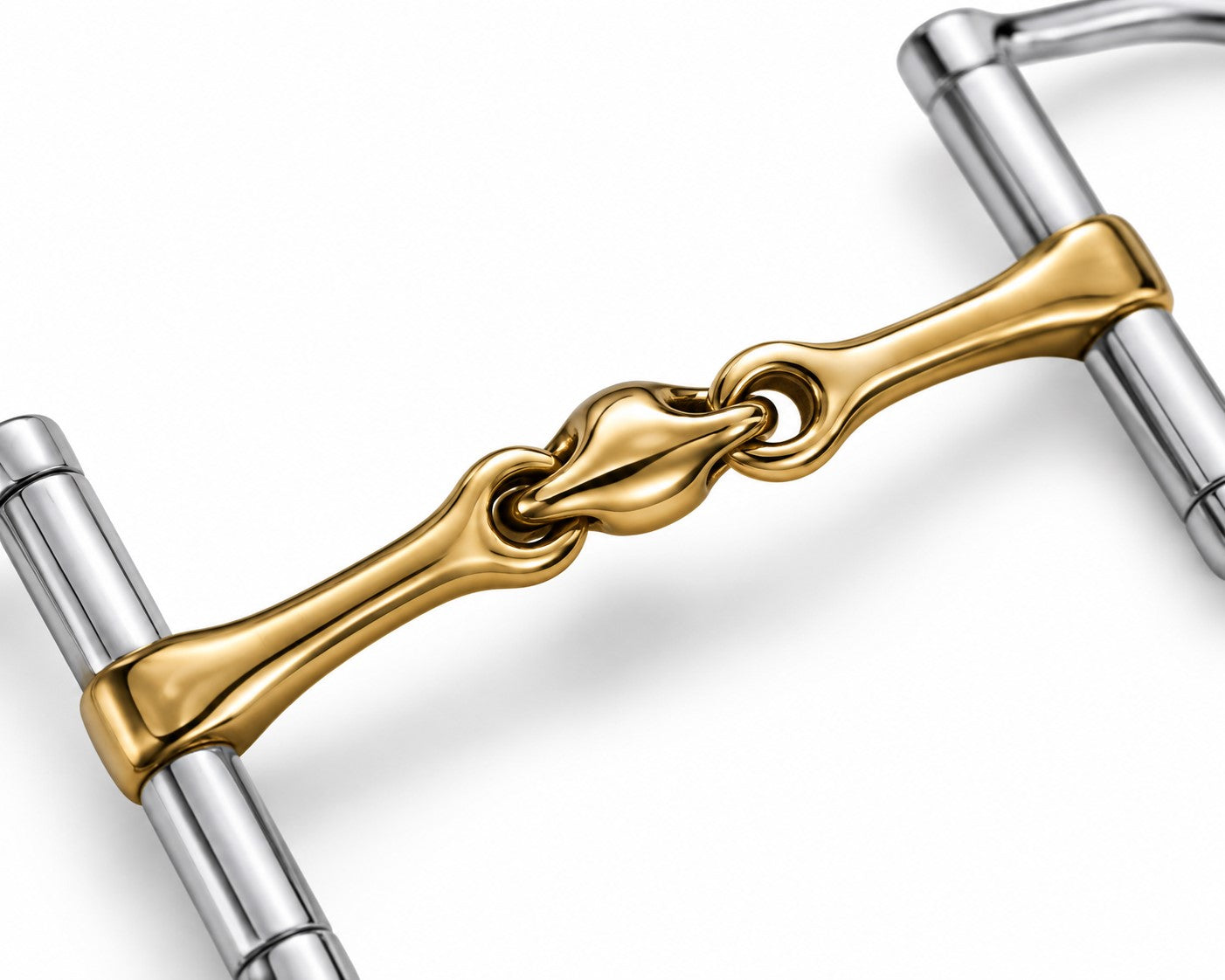
Le mors KK Ultra D-Ring (double articulation), SKU AI-SNF-LR-2025, est un mors équestre réutilisable fabriqué en métal poli avec un embout buccal à double articulation de forme anatomique pour une communication directe des rênes et un guidage latéral stable. Cette annonce couvre des largeurs de 5 pouces, 5 1/4 pouces, 5 3/4 pouces et 6 1/8 pouces, chacune construite avec un embout buccal de 15 mm d'épaisseur et des anneaux en D fixes. Le maillon central angulaire à 45 degrés est conçu pour reposer plus à plat sur la langue qu'un embout buccal simple conventionnel, tandis que la géométrie fixe des joues stabilise le mors dans la bouche du cheval et augmente le soutien latéral dans les virages et le travail en ligne droite. Les cavaliers, les entraîneurs et les acheteurs d'équipement utilisent ce modèle pour le travail sur le plat, l'apprentissage général, les transitions, les exercices latéraux, la préparation aux concours et les approches d'obstacles où un guidage supplémentaire au coin de la bouche est utile. Les anneaux en D aident à soutenir les chevaux qui déportent les épaules, sortent des virages ou perdent leur alignement à l'approche d'un obstacle. Sa construction est conçue pour une utilisation équestre répétée, un nettoyage simple après l'équitation et une organisation en tant que produit Shopify unique avec quatre variantes de largeur d'embout buccal.
Le mécanisme de fonctionnement de ce modèle repose sur l'interaction entre un embout buccal à double articulation et des anneaux en D fixes. Chaque branche de l'embout buccal est reliée au maillon central afin que le mors puisse s'articuler sans se fermer en un profil de casse-noisette plus pointu, généralement associé à un mors simple basique. Le maillon central angulaire à 45 degrés est destiné à reposer plus uniformément sur la langue, ce qui aide à répartir le contact sur la langue et les barres tout en maintenant la réactivité de l'embout buccal aux légers changements de rênes. Parce que les joues sont fixes plutôt que lâches, le mors reste plus stable aux lèvres et aux commissures des lèvres. Le côté droit vertical de chaque anneau en D crée également une limite latérale plus nette, de sorte que lorsque le cavalier demande un virage ou redresse le cheval, la joue aide à guider la tête et l'alignement des épaules. Le contact des rênes est transmis directement des anneaux à l'embout buccal sans effet de levier, ce qui rend l'action plus directe qu'un mors à branches. L'épaisseur de l'embout buccal de 15 mm offre un profil défini qui peut convenir aux chevaux ayant besoin de clarté sans le volume supplémentaire d'une barre plus épaisse. Ensemble, le centre de forme anatomique et les pièces latérales fixes créent une combinaison de stabilité, de soutien latéral et de communication précise.
En pratique, le mors est ajusté de manière à ce que l'embout buccal repose uniformément aux commissures des lèvres, avec une largeur suffisante pour éviter le pincement et une stabilité suffisante pour rester centré pendant le mouvement. Lors du travail sur le plat, le centre à double articulation aide le cavalier à maintenir un contact constant au pas, au trot, au galop, dans les cercles, les transitions et le travail latéral tel que l'épaule en dedans ou la cession à la jambe. Les anneaux en D fixes sont particulièrement utiles lorsqu'un cheval dérive vers l'extérieur dans les virages ou perd sa rectitude, car l'anneau offre un guidage latéral plus important qu'un modèle à anneaux libres. À l'approche d'une clôture, ce contact latéral supplémentaire peut aider à maintenir les épaules organisées et la ligne vers l'obstacle plus directe. Pour les séances d'entraînement, l'embout buccal favorise des demi-arrêts précis et des aides claires dans les virages tout en restant relativement doux sur la langue et les commissures lorsque le cavalier maintient des mains élastiques. En équitation générale, il peut convenir aux chevaux qui sont déstabilisés par un mouvement excessif des anneaux libres ou à ceux qui réagissent mieux à un point de contact stable. La sélection doit toujours être basée sur la conformation buccale, le niveau d'entraînement et la technique du cavalier, car aucun mors ne corrige l'inconfort dentaire, un mauvais ajustement ou des mains incohérentes.
Cette liste comprend quatre largeurs : 5 pouces, 5 1/4 pouces, 5 3/4 pouces et 6 1/8 pouces, toutes construites sur le même profil d'embout buccal de 15 mm. La taille de 5 pouces convient aux bouches plus étroites où un embout buccal plus long s'étendrait au-delà des lèvres et réduirait l'effet stabilisateur des anneaux en D. L'option de 5 1/4 pouces offre une augmentation modérée de la largeur pour les chevaux ayant besoin d'un peu plus d'espace aux commissures tout en conservant un soutien latéral proche. La taille de 5 3/4 pouces convient aux bouches plus larges qui nécessitent toujours la même action à double articulation et le même guidage de joue fixe. La largeur de 6 1/8 pouces convient aux bouches remarquablement larges où des options plus courtes comprimeraient les lèvres ou compromettraient un placement uniforme sur la langue et les barres. Pour chaque taille, l'épaisseur de 15 mm reste constante, de sorte que la principale variable d'ajustement est la largeur plutôt que le volume total de l'embout buccal. Le maillon central angulaire est le composant clé de contrôle du contact, aplatissant le profil central sur la langue, tandis que les anneaux en D sont la principale caractéristique de guidage, soutenant le contrôle latéral et aidant à maintenir le mors stable pendant les virages, le travail en ligne droite et les approches d'obstacles.
Le produit utilise une construction en métal poli pour les joues et l'embout buccal, avec une section centrale dorée et des anneaux en D argentés qui offrent des surfaces de contact lisses et une finition propre. Après l'équitation, la salive, les résidus d'aliments, la poussière de l'arène et l'humidité doivent être retirés avec de l'eau propre ou une méthode de nettoyage d'équipement appropriée, suivis d'un séchage complet avant le stockage. Les articulations centrales, les connexions des anneaux et les surfaces de l'embout buccal doivent être inspectées régulièrement pour détecter les bords rugueux, la distorsion ou le mouvement restreint, car ces zones affectent directement le confort et le contrôle. Il s'agit d'un article d'équipement équestre réutilisable plutôt que d'un dispositif médical chirurgical ou vétérinaire. Par conséquent, la stérilisation à la vapeur, le marquage CE des dispositifs médicaux, la certification ISO 13485 et les normes d'approvisionnement des dispositifs de la FDA ne s'appliquent pas à son utilisation normale. L'entretien de routine se concentre sur le nettoyage, le séchage et la vérification de l'ajustement et de l'intégrité mécanique avant la prochaine utilisation. À des fins de commercialisation, le produit est vendu sous la référence SKU AI-SNF-LR-2025 au prix de 75,90 $ avec quatre variantes de taille sélectionnables. Les conditions commerciales standard peuvent inclure une garantie d'un an, un MOQ d'une pièce, des options OEM ou de marque privée, et un support de retour ou de remplacement pour les distributeurs, les détaillants et les acheteurs finaux.
| SKU | AI-SNF-LR-2026 |
|---|---|
| Nom du produit | Mors D-Ring à double articulation (15 mm) |
| Prix | 64 USD |
| Variantes de taille/calibre | 5", 5 1/4", 5 3/4" et 6 1/8" |
| Catégorie d'instrument | Équipement équestre / Mors de cheval / Mors à anneaux en D |
| Procédure | Travail sur le plat, dressage général, transitions, exercices latéraux, préparation aux concours et approches d'obstacles |
| Matériau | Construction en métal poli avec un maillon central doré et des anneaux en D argentés |
| Finition | Finition polie avec un centre d'embout buccal doré et des joues argentées |
| Stérilisation | La stérilisation médicale n'est pas requise ; nettoyer après l'équitation et sécher soigneusement avant de ranger |
| Classification de l'instrument | Mors équestre réutilisable / composant d'équipement |
| Réutilisable | Oui |
| Certifications | Les exigences CE, ISO 13485 et FDA pour les dispositifs médicaux ne s'appliquent pas à ce produit équestre |
| Garantie | 1 an |
| MOQ | 1 pièce |
| OEM / Commandes personnalisées | Disponible pour les commandes de distributeurs et de marques privées |
| Service après-vente | Support de retour et de remplacement |
En quoi le KK Ultra D-Ring (double articulation) diffère-t-il d'un mors à anneaux libres ?
Le KK Ultra D-Ring (double articulation) utilise des joues fixes en forme de D au lieu d'anneaux circulaires libres. Cette conception de joue fixe maintient le mors plus stable dans la bouche et offre au cavalier plus de guidage latéral dans les virages et le travail en ligne droite. Un mors à anneaux libres permet plus de mouvement au niveau des joues et procure généralement une sensation plus mobile aux commissures des lèvres. Le maillon central angulaire du modèle KK Ultra repose également plus à plat sur la langue qu'un modèle simple basique. Les cavaliers choisissent souvent le modèle à anneaux en D lorsqu'ils souhaitent plus de soutien à l'approche des obstacles ou lorsque le cheval déporte l'épaule. Le choix entre les deux conceptions dépend de la façon de se déplacer du cheval et de la stabilité de la joue souhaitée par le cavalier.
Comment choisir les tailles disponibles ?
La largeur correcte doit être basée sur la mesure réelle de la bouche du cheval à la position normale du mors. Une option de 5 pouces convient aux bouches plus étroites, tandis que 5 1/4 pouces offre une augmentation modérée pour les chevaux ayant besoin d'un peu plus d'espace aux lèvres. La taille de 5 3/4 pouces convient aux bouches plus larges qui conviennent toujours à ce même modèle d'embout buccal. La largeur de 6 1/8 pouces est destinée aux bouches remarquablement larges où un mors plus court comprimerait les commissures ou empêcherait un placement uniforme sur la langue et les barres. Le KK Ultra D-Ring (double articulation) conserve la même épaisseur de 15 mm dans toutes les tailles, de sorte que la principale variable d'ajustement est la largeur plutôt que le volume. Un ajustement correct doit maintenir le mors centré, éviter le pincement et préserver l'effet stabilisateur des anneaux en D.
Les exigences CE, ISO 13485 et FDA pour les dispositifs médicaux s'appliquent-elles à ce produit ?
Le KK Ultra D-Ring (double articulation) est un produit d'équipement équestre plutôt qu'un dispositif médical ou chirurgical. Le marquage CE des dispositifs médicaux ne définit donc pas sa catégorie de produit normale. L'ISO 13485 est une norme de gestion de la qualité pour les dispositifs médicaux et n'est pas le cadre de certification pertinent pour un mors de cheval. Les exigences d'approvisionnement des dispositifs médicaux de la FDA ne s'appliquent pas non plus à l'utilisation équestre ordinaire. Les détaillants et les distributeurs doivent plutôt gérer les exigences applicables en matière de consommation, d'étiquetage, de matériaux et d'importation pour le marché sur lequel le produit est vendu. Les allégations de certification de dispositifs médicaux ne doivent pas être placées sur la liste comme s'il s'agissait d'équipement hospitalier.
Comment le maillon central angulaire à 45 degrés et les anneaux en D affectent-ils la communication des rênes ?
Le maillon central angulaire à 45 degrés aide la section centrale à reposer plus à plat sur la langue qu'un embout buccal simple conventionnel. Cette forme peut rendre le contact des rênes plus doux tout en permettant des aides claires et précises. Les anneaux en D fixes maintiennent les joues stables et créent un contact latéral plus direct contre le côté de la bouche lors des virages ou du redressement. Étant donné que les anneaux ne glissent pas librement comme les anneaux libres, le cavalier obtient un point de connexion plus stable pour le dressage et les approches d'obstacles. Le KK Ultra D-Ring (double articulation) combine donc un modèle de joue stable avec une articulation centrale de forme anatomique. Les cavaliers doivent toujours utiliser des aides de rênes proportionnées, car la conception soutient la communication mais ne remplace pas des mains et un entraînement corrects.
Comment les selleries, les détaillants et les cavaliers doivent-ils nettoyer et entretenir ce mors ?
Après chaque utilisation, l'embout buccal et les anneaux doivent être rincés ou essuyés pour éliminer la salive, les résidus alimentaires et la saleté. Les articulations centrales et les connexions des joues doivent être examinées attentivement car les pièces mobiles peuvent accumuler des débris ou s'user avec le temps. Une fois propre, le mors doit être soigneusement séché avant d'être rangé ou remis sur une bride. Les détaillants gérant la SKU AI-SNF-LR-2025 peuvent lister les quatre tailles comme variantes Shopify sur la même page produit et maintenir le prix de vente de 75,90 $. Les cavaliers et le personnel de sellerie doivent inspecter le KK Ultra D-Ring (double articulation) pour détecter les bords rugueux, le mouvement restreint, la déformation ou les dommages de surface avant utilisation. Le support commercial standard peut inclure un service de retour et de remplacement, ainsi que des options de commande à l'unité et d'approvisionnement en marque privée.


