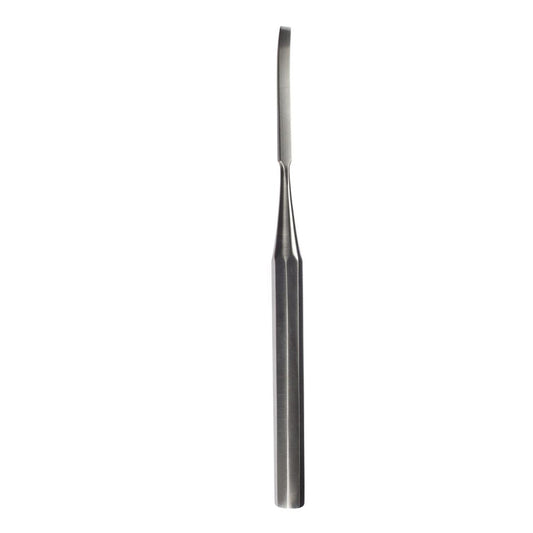
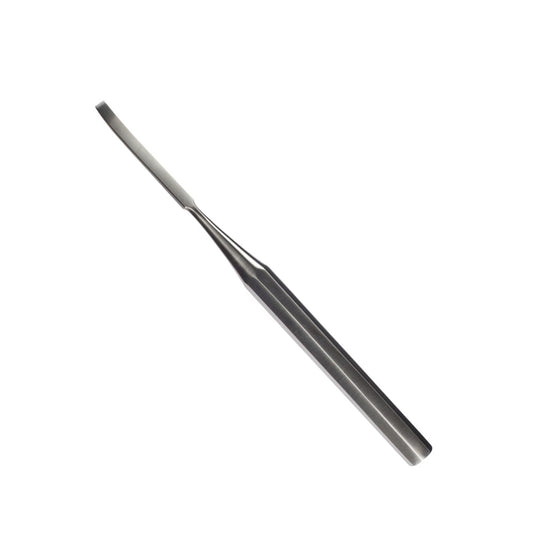
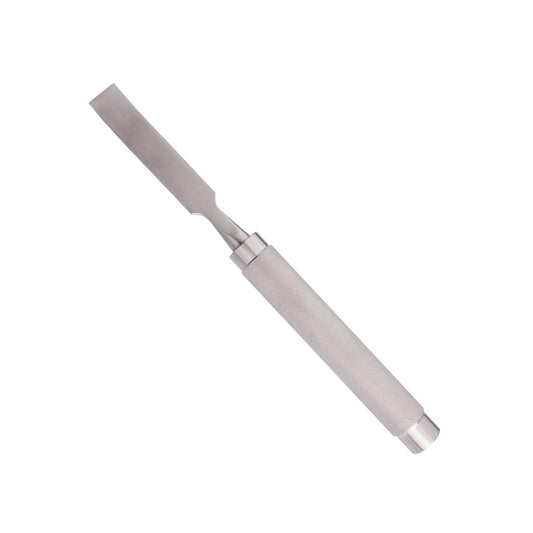
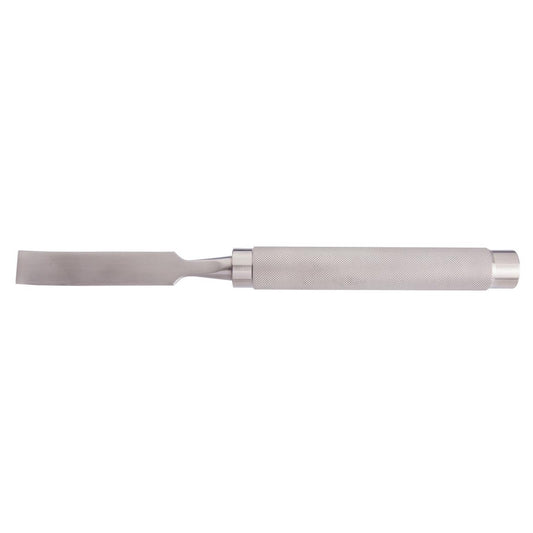
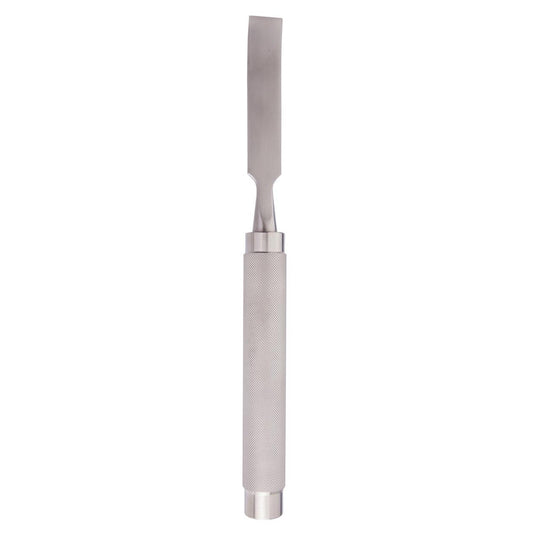
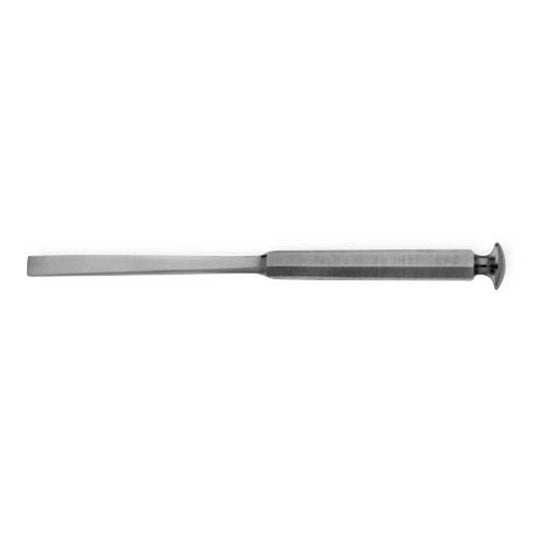
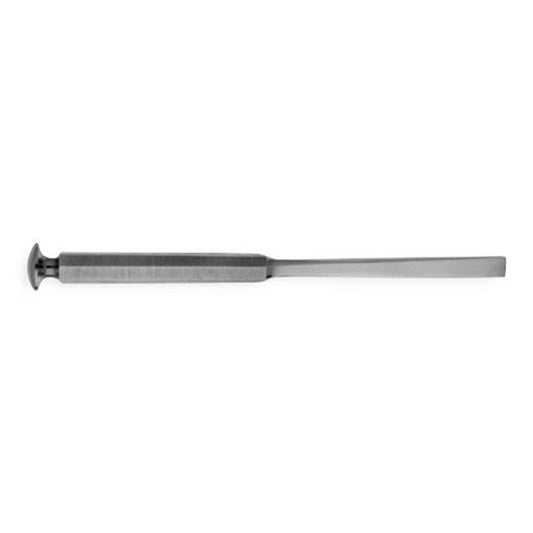
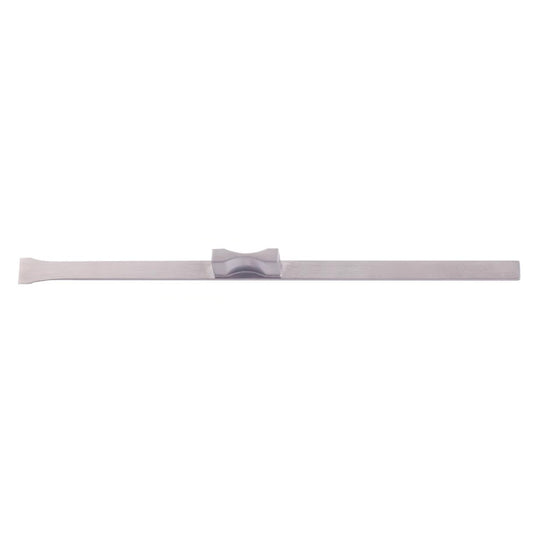
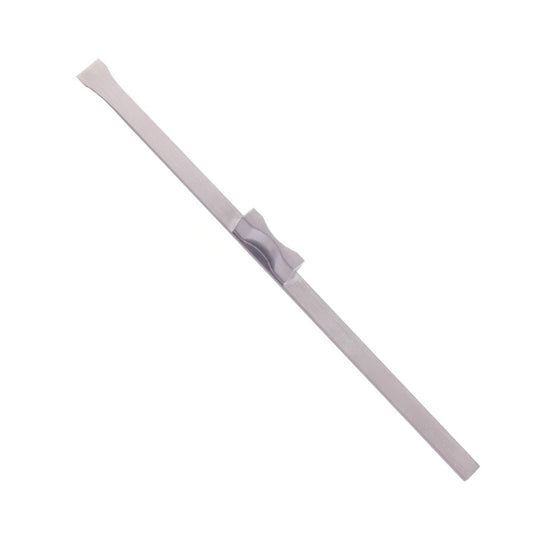
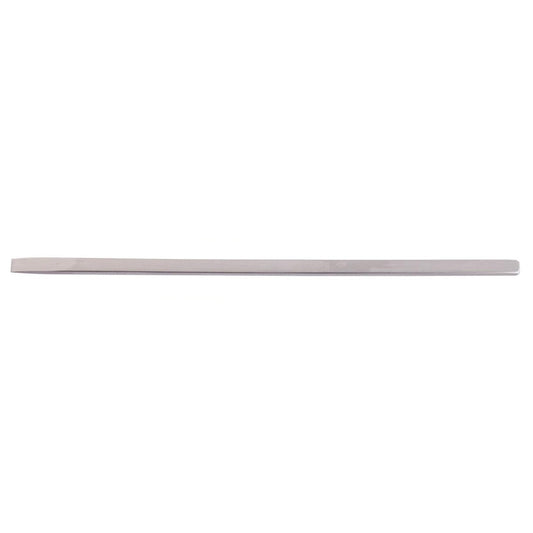
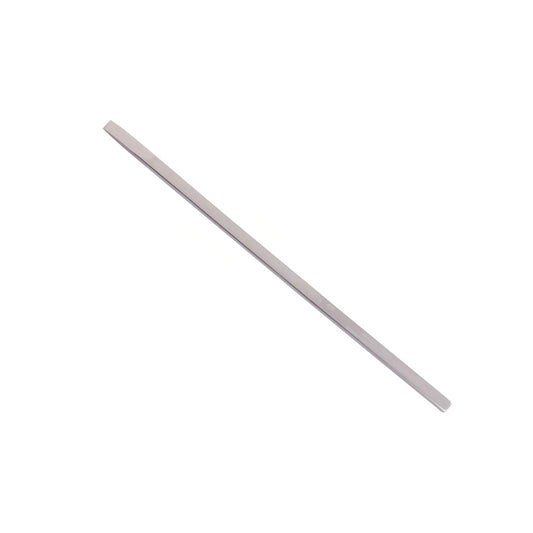
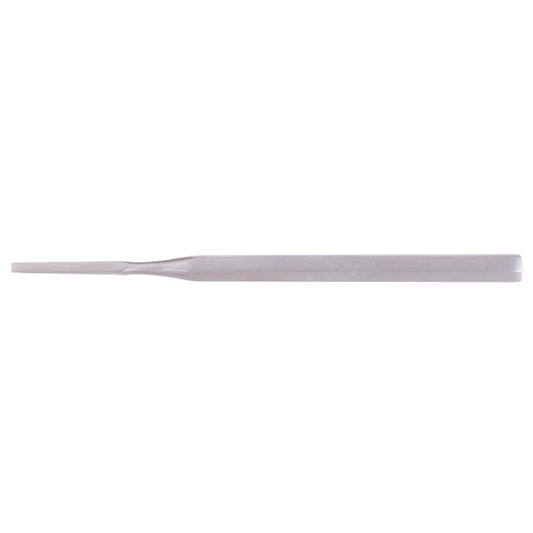
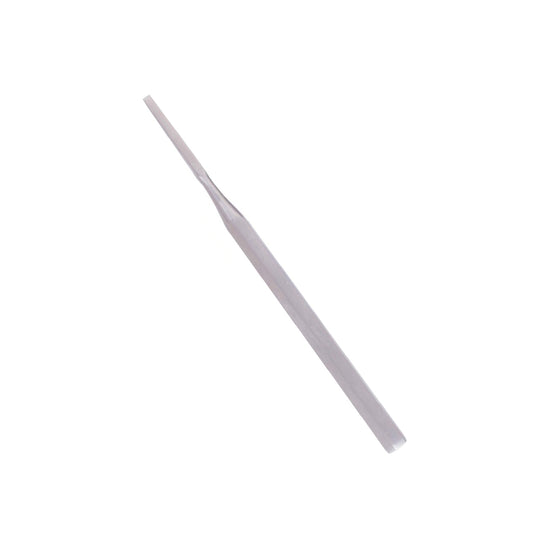
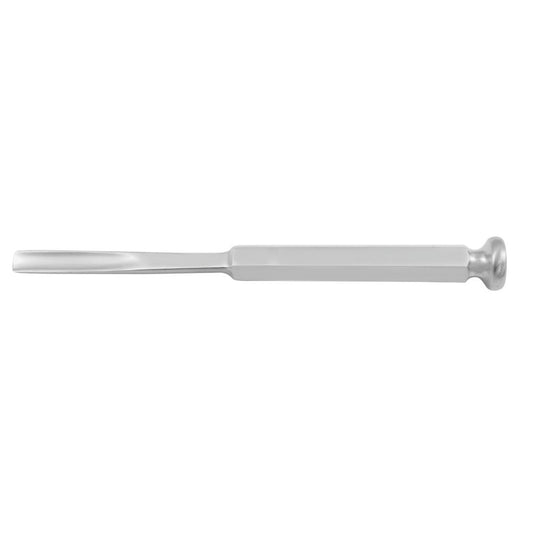
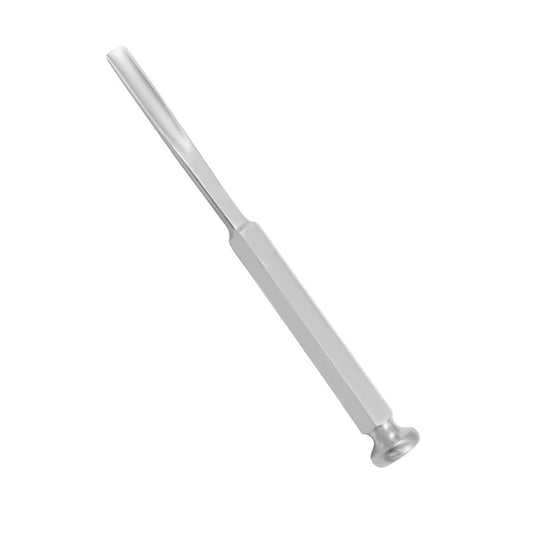
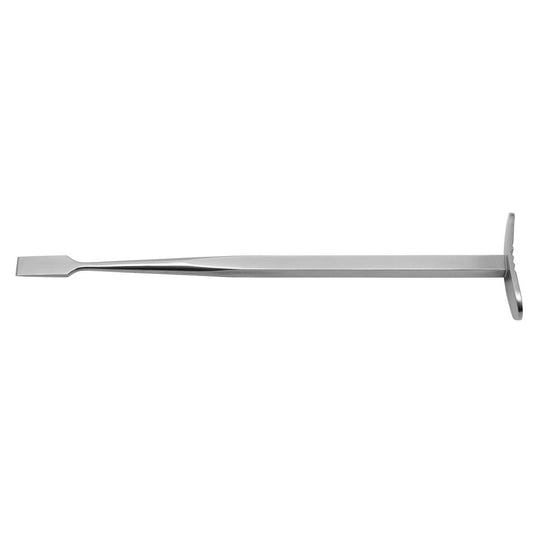
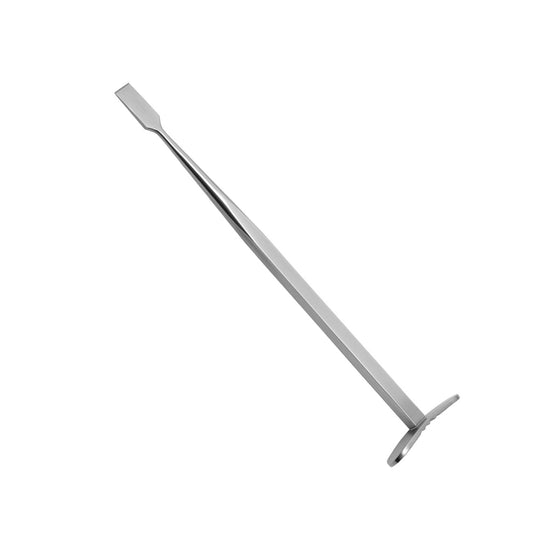
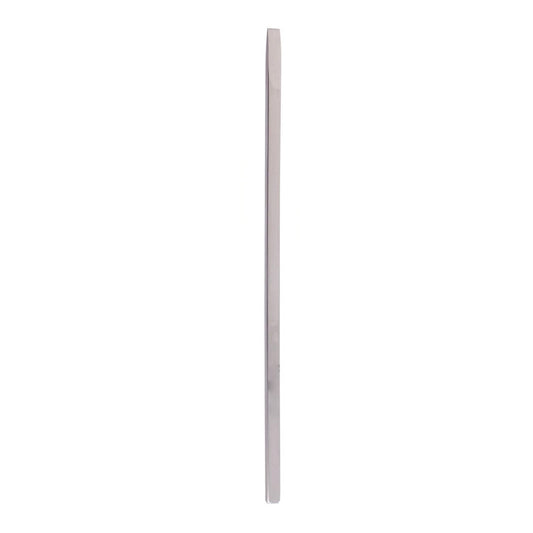
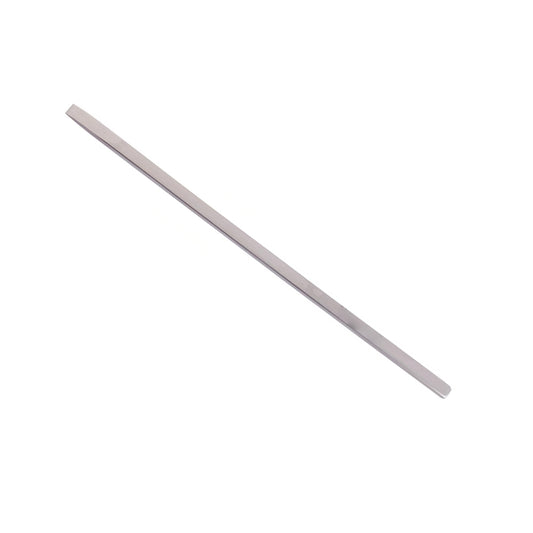
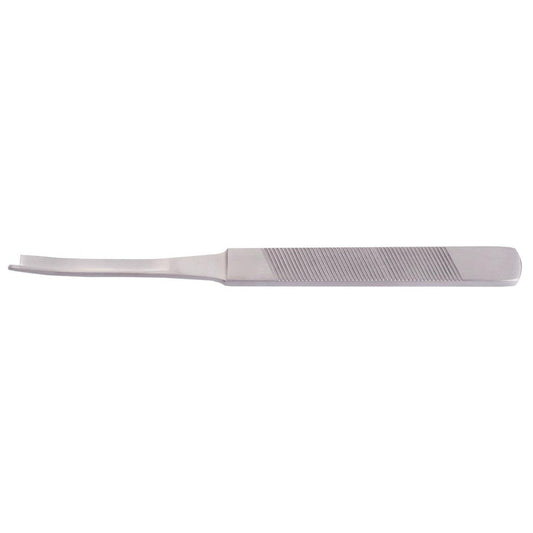
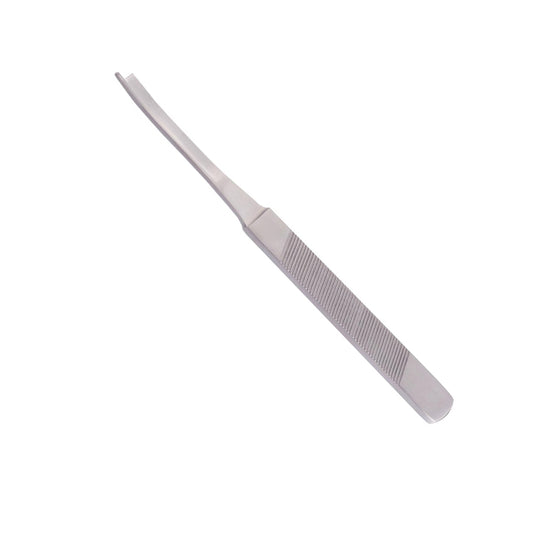
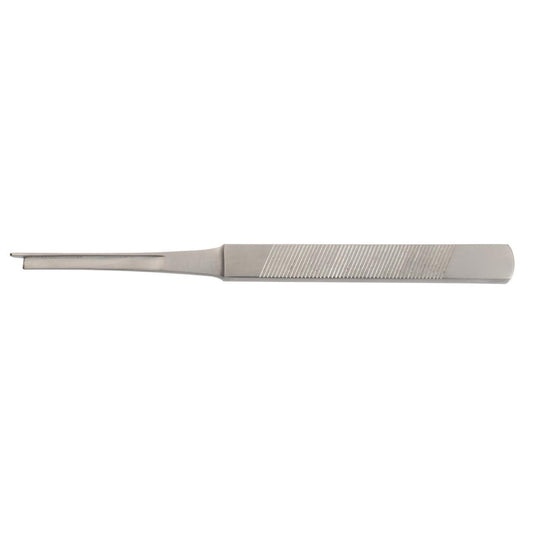
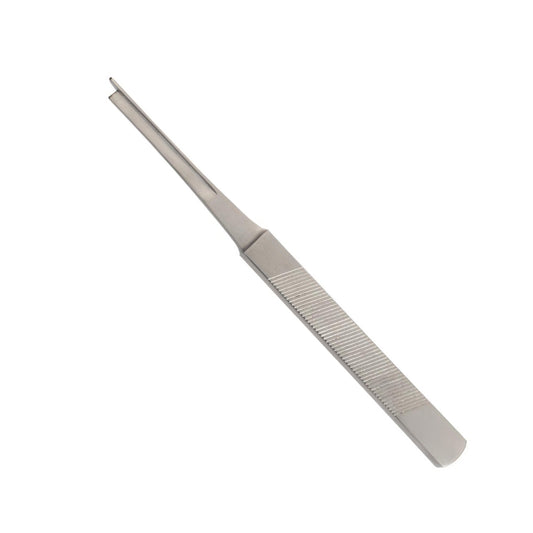
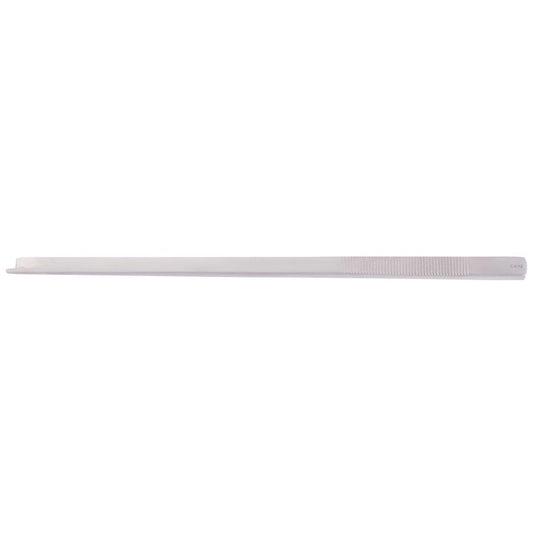
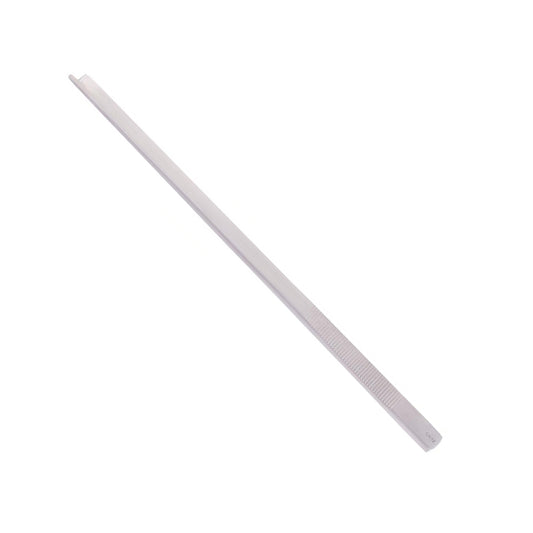
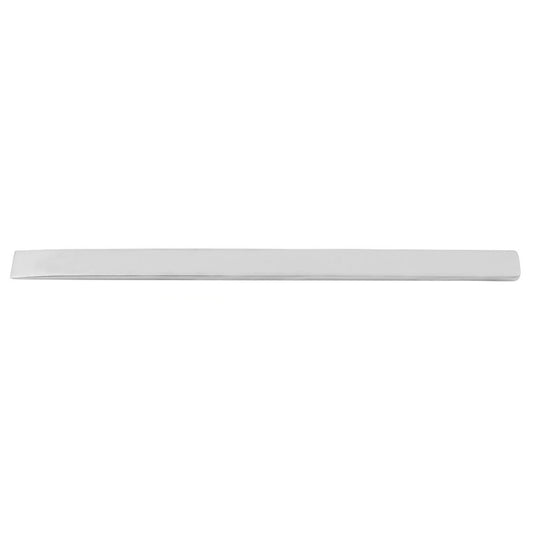
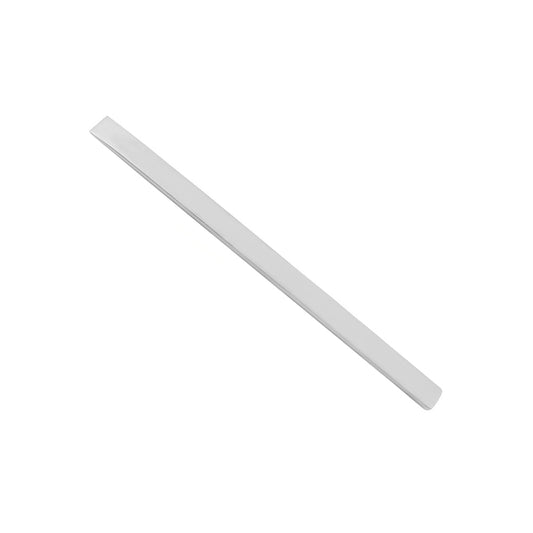
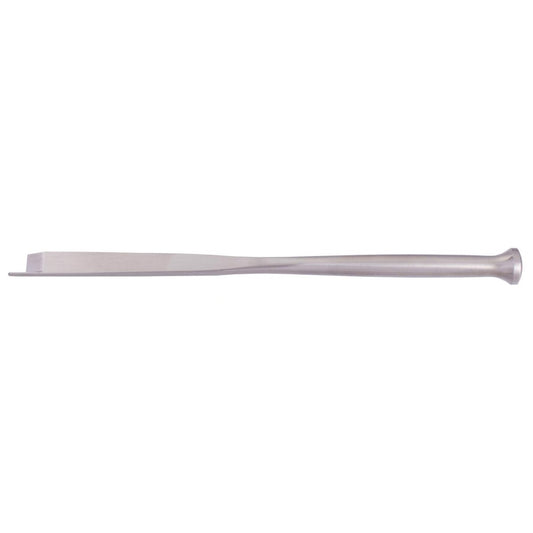
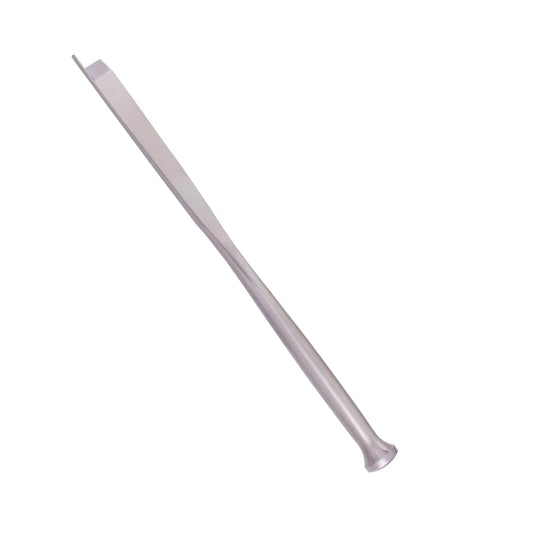
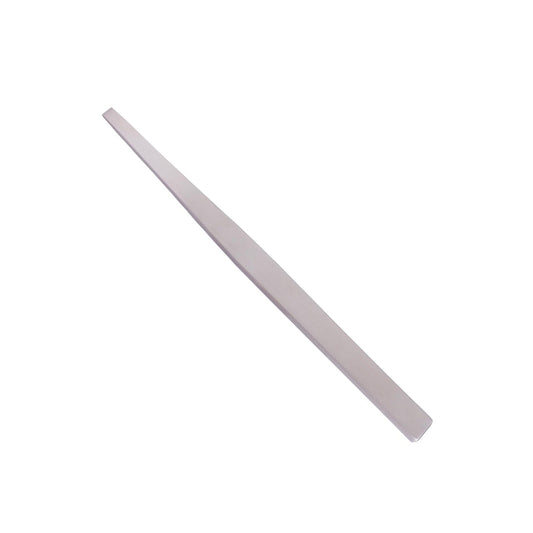
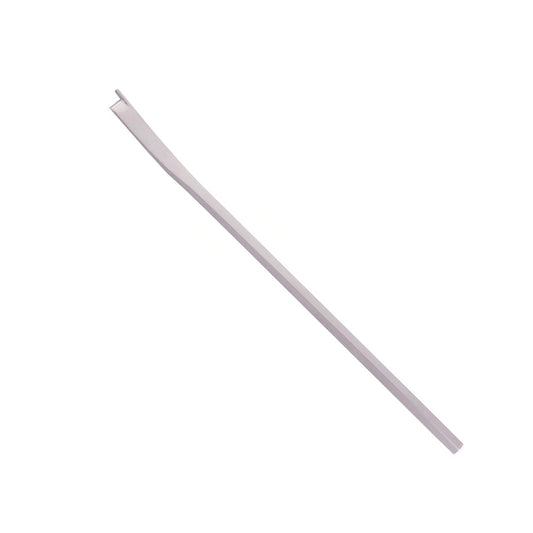
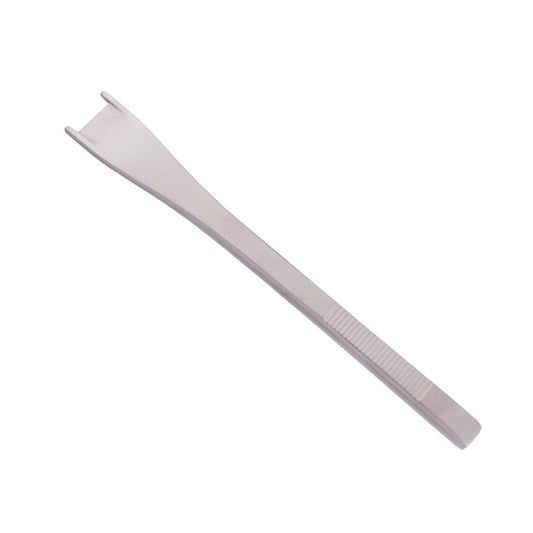
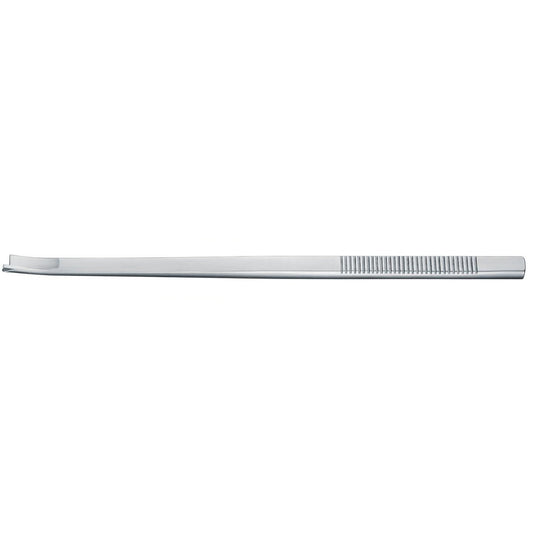
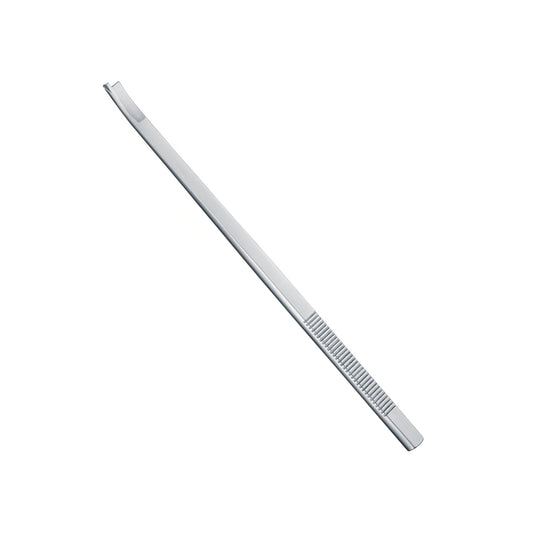
Osteotome und Meißel unterscheiden sich an der Schneide: Ein Osteotom ist beidseitig abgeschrägt, sodass es entlang der Knochenachse spaltet, während ein Meißel einseitig abgeschrägt ist und von der flachen Seite wegschneidet. Peak Surgicals liefert sechzehn Muster, Lambotte, Hoke, Cobb, Hibbs, Stille und Smith Peterson, aus deutschem Edelstahl, von 4,95 $ bis 22,00 $, jeweils mit einer Modellnummer versehen. Jedes Muster ist CE-gekennzeichnet und nach ISO 13485 gefertigt. Vergleichen Sie alle Muster in der Tabelle unten.
Welches Osteotom: Lambotte, Hoke oder Cobb?
Das Lambotte-Osteotom ist das lange Schaftmuster für dichten kortikalen Knochen bei Frakturreparatur und Osteotomie, Hoke-Osteotome sind kürzer für kontrolliertes Arbeiten in beengten Feldern, und Cobb-Osteotome dienen der spinalen und neurochirurgischen Freilegung. Schaftlänge und Klingenbreite sind die beiden Variablen, und die Knochendichte entscheidet, welche wichtiger ist.
Lambotte Osteotome (PS-3001A, ab 7,70 $) verfügen über die Reichweite und Masse, um mit Malletschlägen durch harten, kompakten Knochen zu treiben. Dieses Muster bevorzugen orthopädische Chirurgen für die Frakturreparatur, Gelenkrekonstruktion und die Schaffung von Platz für Implantate. Lambotte Mini Osteotome (PS-3002A, ab 7,70 $) weisen dieselbe Geometrie in Breiten von 4 mm bis 16 mm für feinere Schnitte auf. Hoke Osteotome (PS-OT-0710, ab 10,23 $) tauschen Länge gegen Kontrolle, wo das Feld flach ist. Cobb Osteotome (PS-OT-0092, 16,50 $) eignen sich für spinale Arbeiten, und Hibbs (ab 9,79 $), Stille Type (ab 11,00 $) und Smith Peterson (PS-3018A, ab 11,00 $) decken die allgemeine orthopädische Osteotomie ab. Wir liefern jedes Muster ab MOQ 1.
Fase, Hammer und Klingenbreite
Die Fase ist der ganze Unterschied. Eine doppelte Fase, das Osteotom, stellt einen symmetrischen Keil dar, sodass eine entlang des Schafts ausgeübte Kraft die Klinge gerade in den Knochen treibt und ihn entlang der vorgesehenen Ebene spaltet. Eine einfache Fase, der Meißel, lenkt zur abgeschrägten Fläche hin ab, was man möchte, wenn man Knochen von einer Oberfläche abträgt, anstatt ihn zu durchtrennen. Die Verwendung eines Osteotoms, wo ein Meißel hingehört, kerbt tiefer als beabsichtigt; das Gegenteil gleitet.
Dies sind malletbetriebene Instrumente, und das ändert die Spezifikation. Der Schaft muss den Aufprall ohne Biegung übertragen, und das Schlagende muss bei Hunderten von Schlägen einem Pilzeffekt widerstehen, weshalb die Klingenbreite eher für den Schnitt als für die Bequemlichkeit gewählt wird. Schmale Klingen ab 4 mm konzentrieren die Kraft für präzise Schnitte; breitere Klingen bis 16 mm und darüber verteilen sie für den Materialabtrag. Kleine Osteotome (PS-3003A, ab 7,70 $), Silber (PS-3005A, 7,70 $), Rubin (PS-3024A, ab 5,50 $) und Converse Meißel (PS-3014A, 4,95 $) decken das schmale Ende dieses Bereichs ab.
Wiederaufbereitung, Kantenintegrität und Zertifizierung
Diese Instrumente sind aus deutschem Edelstahl geschmiedet – korrosionsbeständig bei wiederholten Dampfautoklavzyklen und bewahren die Schneidengeometrie unter Aufprall, wo eine weichere Legierung nachgeben würde. Die Schneide ist nach jedem Zyklus der Inspektionspunkt: Eine verkerbte oder umgeschlagene Fase zerquetscht den Knochen, anstatt ihn zu schneiden, erzeugt Wärme und hinterlässt eine unregelmäßige Osteotomiefläche. Überprüfen Sie auch das Schlagende auf Pilzbildung, da ein verformtes Ende die Hammerkraft unvorhersehbar über den Schaft überträgt.
Jedes Instrument ist Klasse I, wiederverwendbar, CE-gekennzeichnet und nach ISO 13485 gefertigt, die Dokumentation, die ein Krankenhausversorgungsteam vor der Qualifizierung eines Lieferanten überprüft. Die Garantie beträgt ein Jahr mit Rückgabe und Ersatz, die Mindestbestellmenge ist 1 Stück, Bestellungen über 99 $ werden kostenlos in Kartonverpackung versandt, und OEM-Kennzeichnung ist für Distributoren verfügbar. Für konkave Klingenmuster siehe Knochenmeißel, Osteotome und Hohleisen; nasale und kraniofaziale Muster finden Sie unter Meißel für die plastische Chirurgie. Durchsuchen Sie alle orthopädischen Instrumente. Sprechen Sie mit uns über OEM- und Mengenbedingungen.