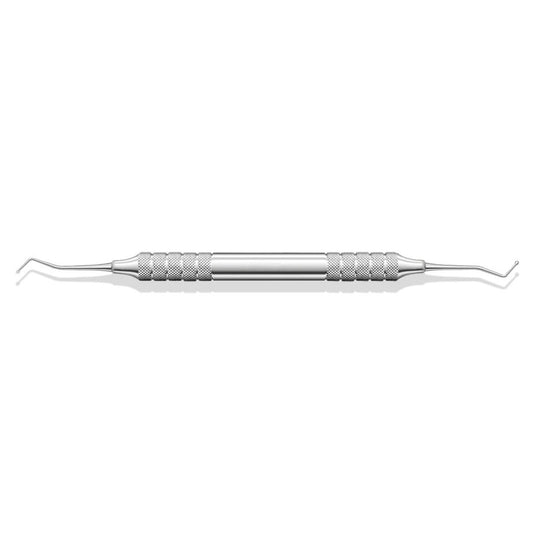
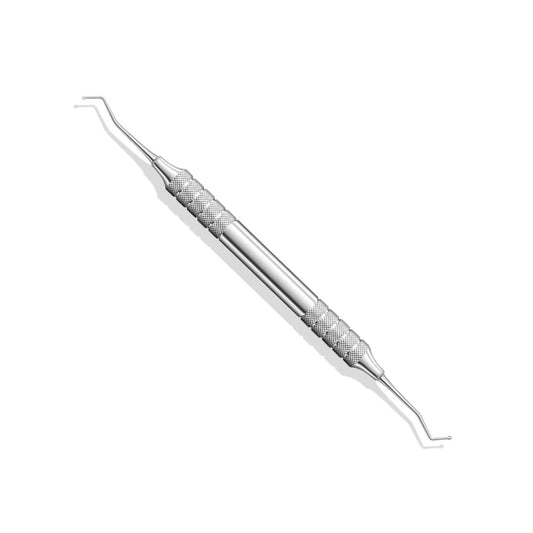
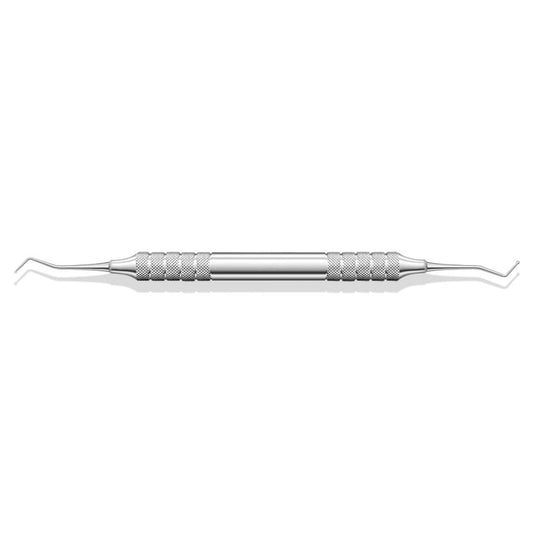
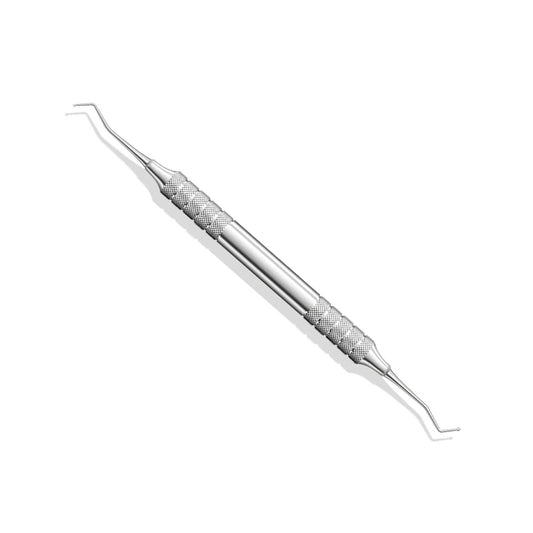
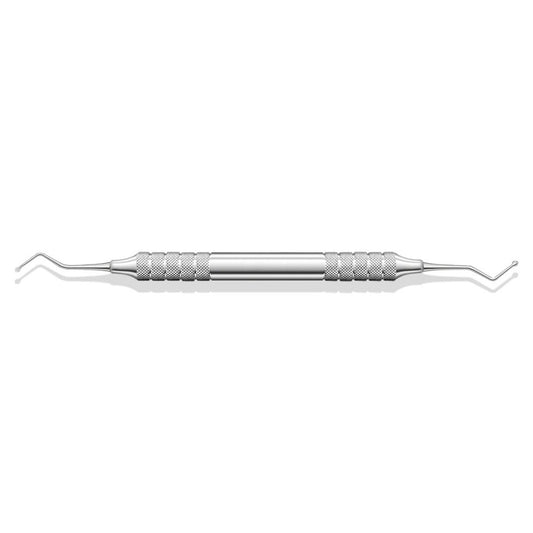
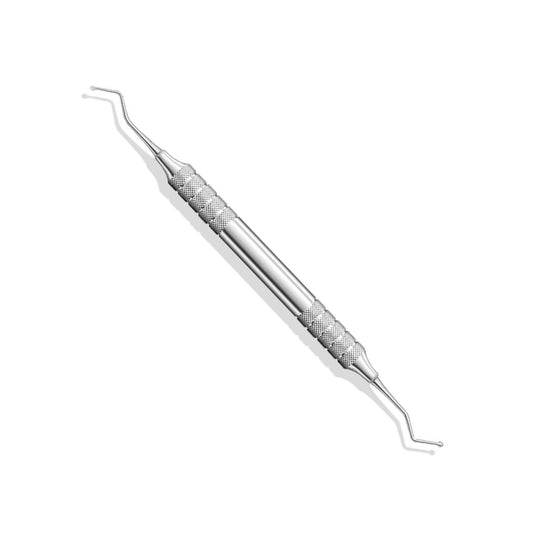
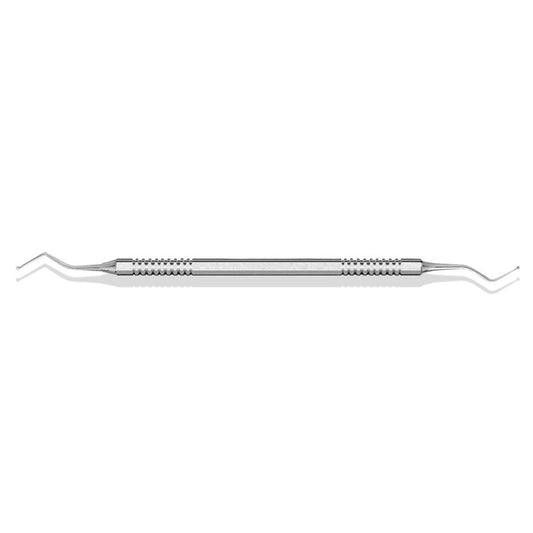
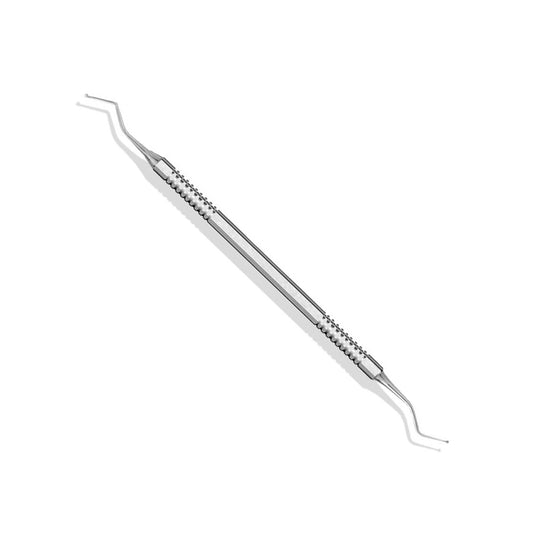
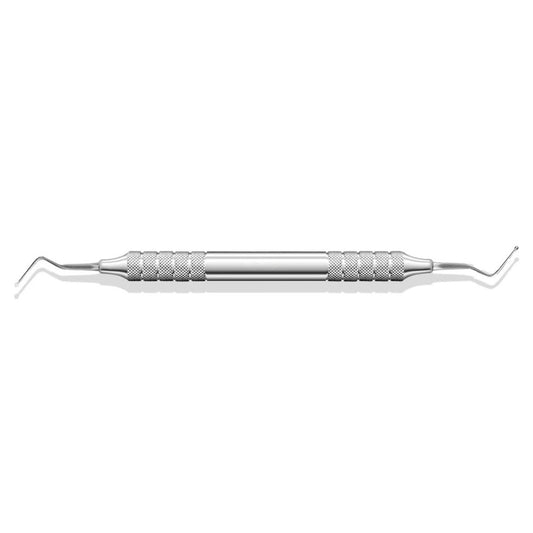
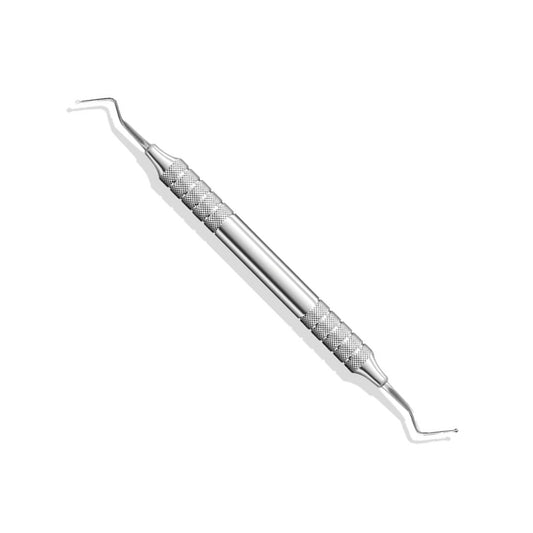
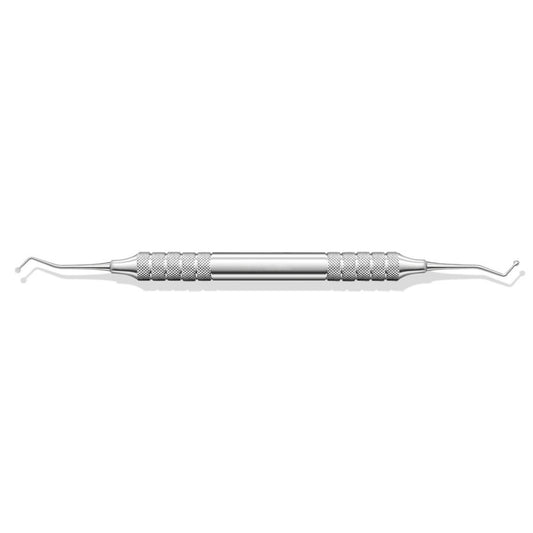
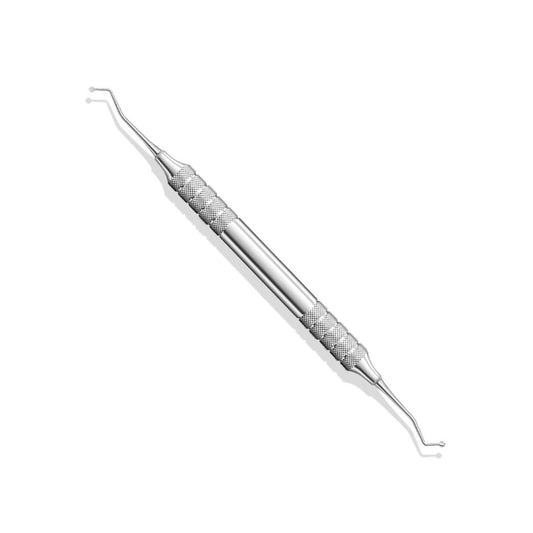
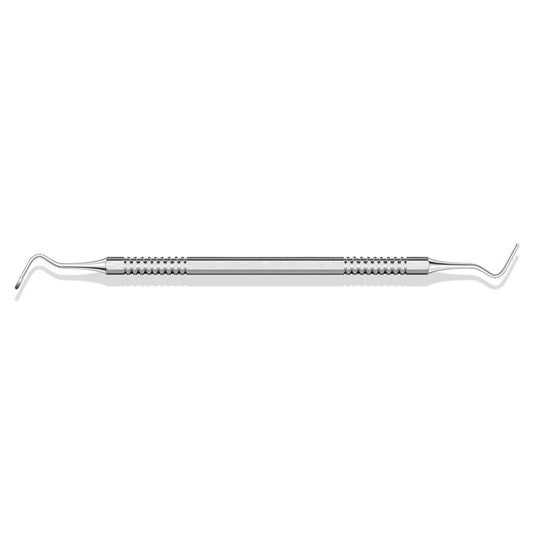
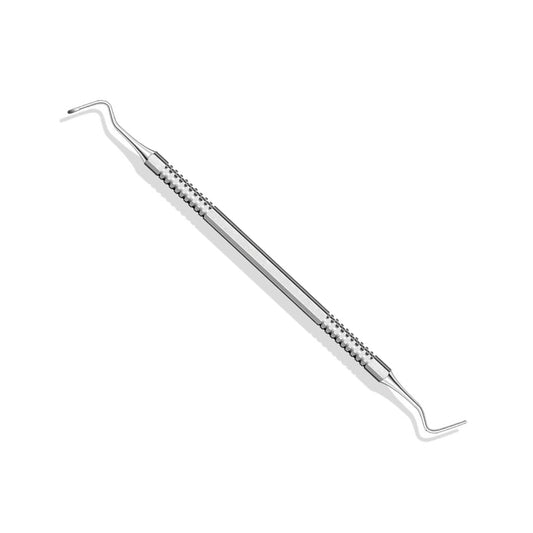
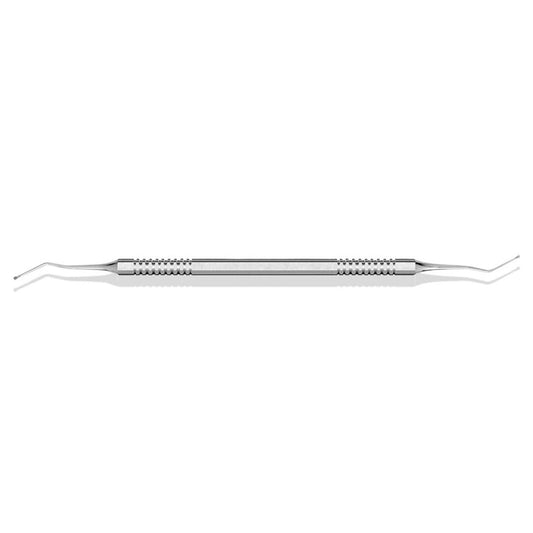
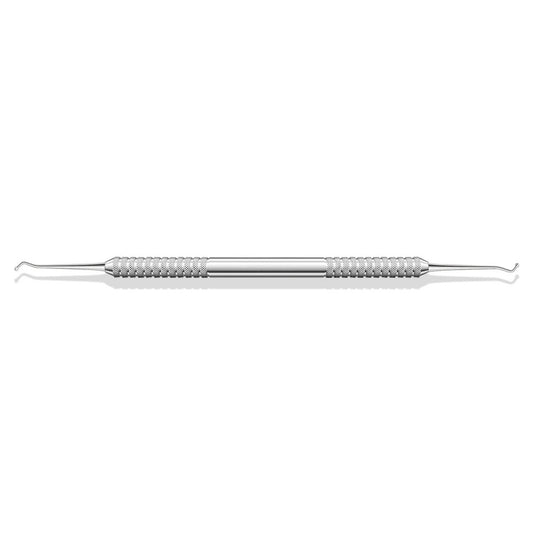
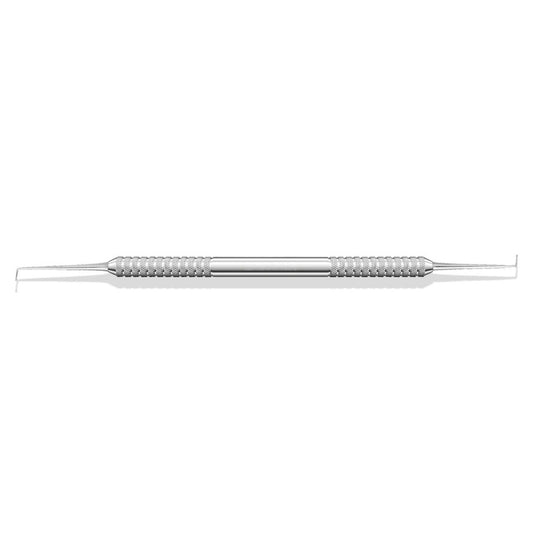
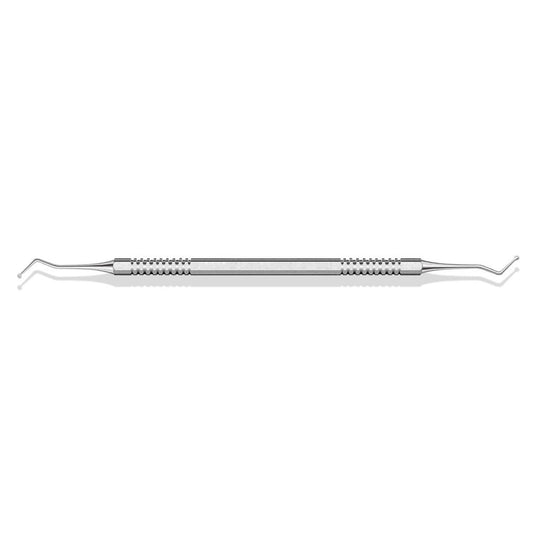
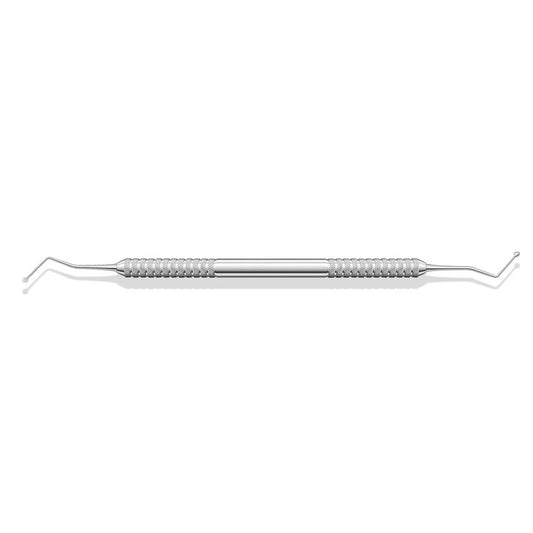
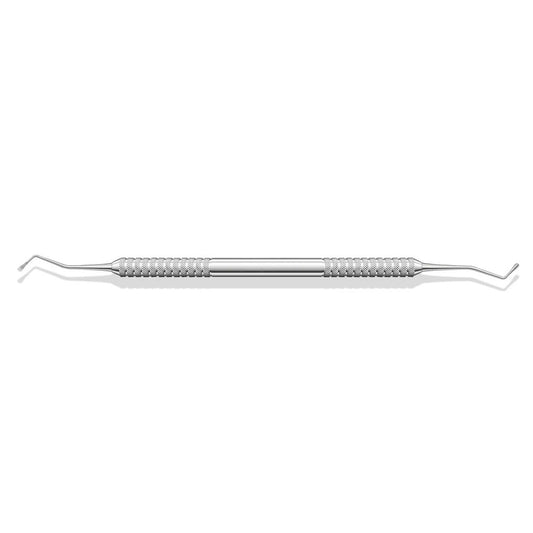
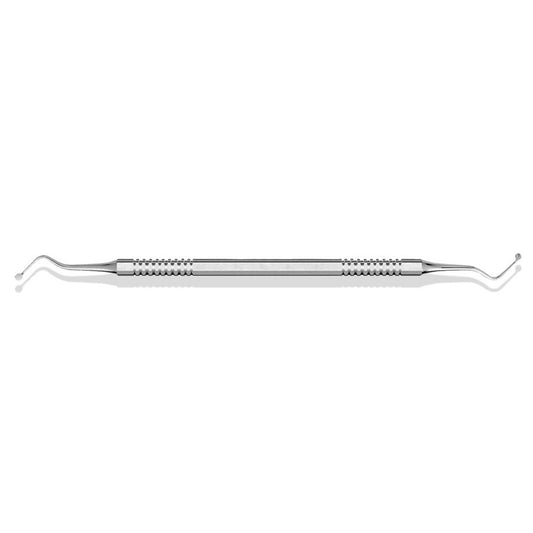
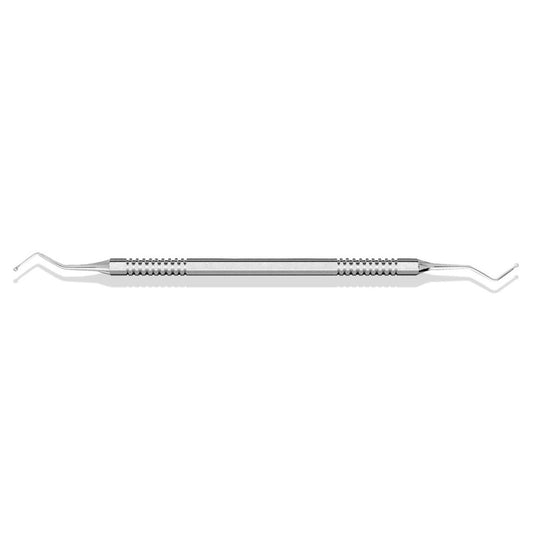
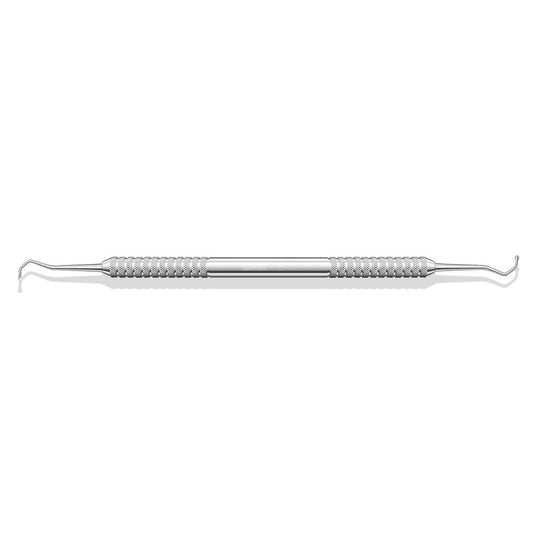
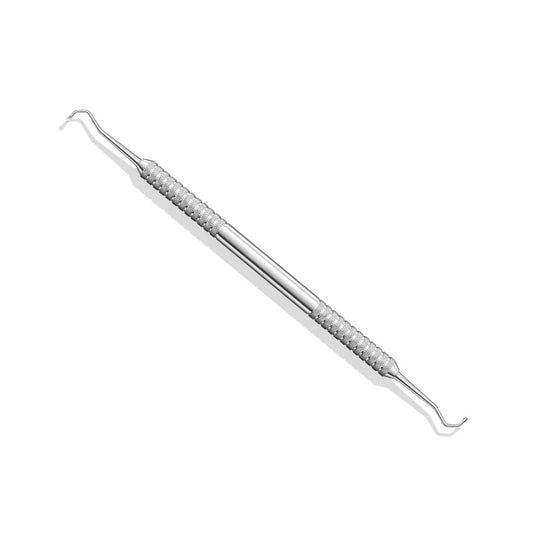
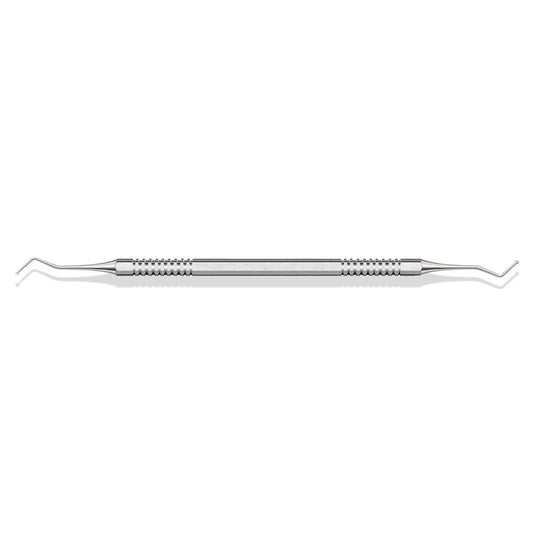
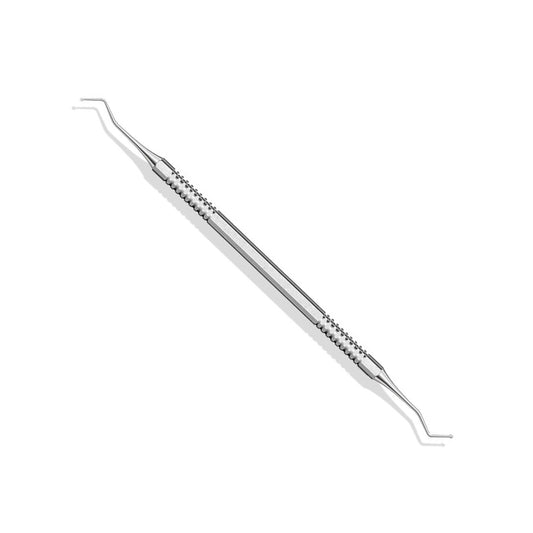
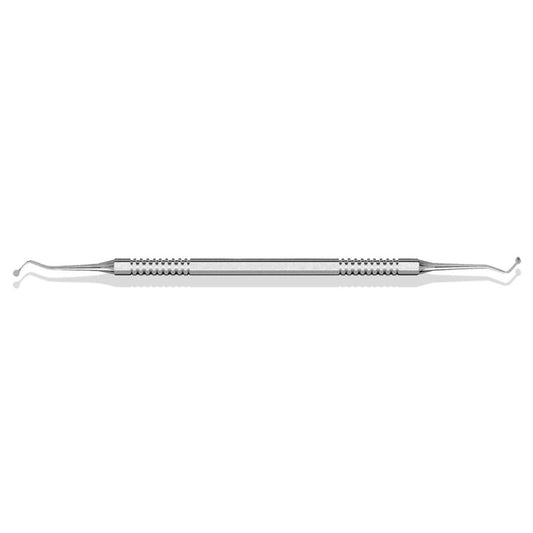
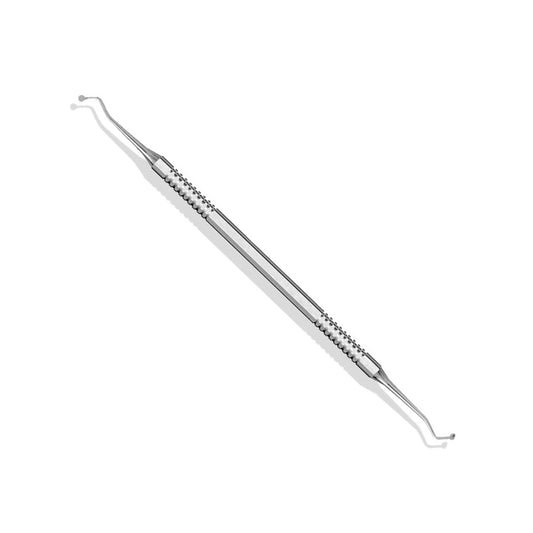
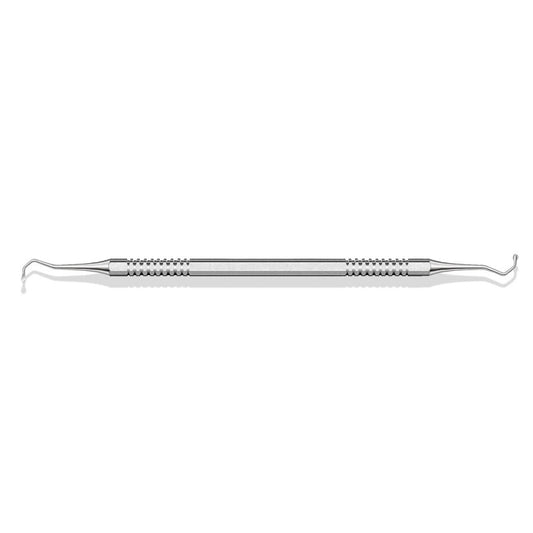
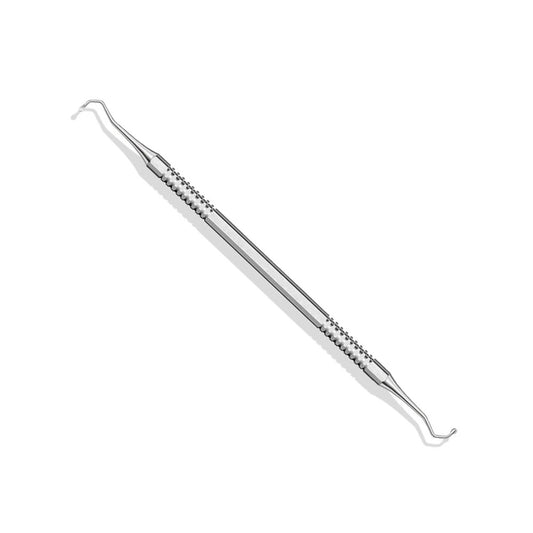
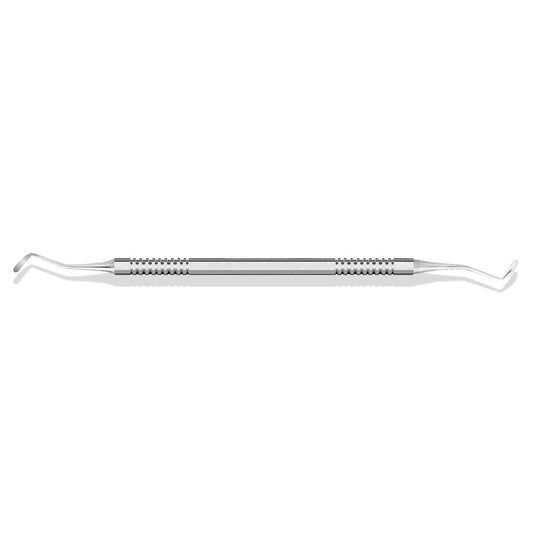
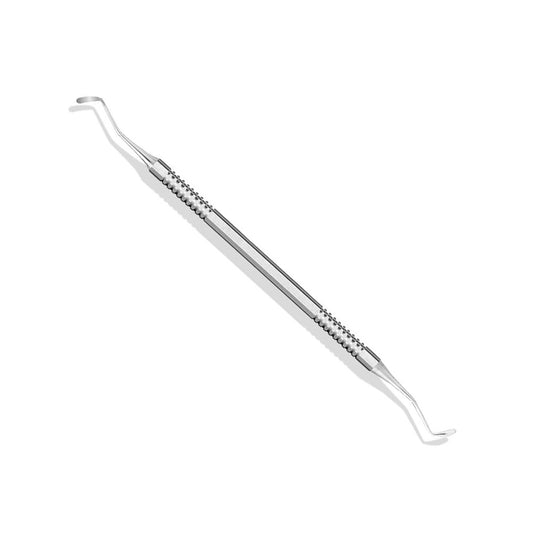
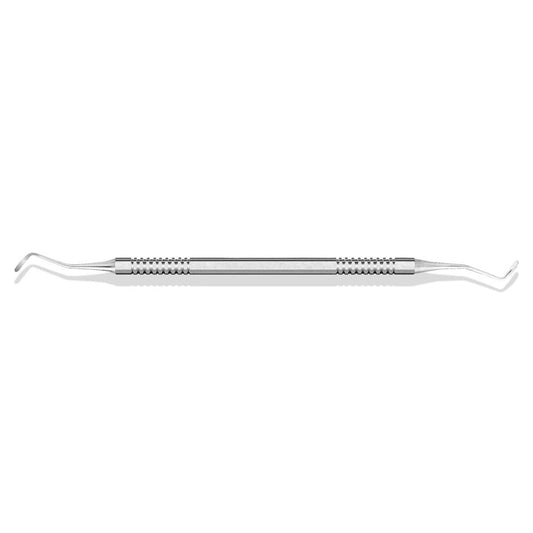
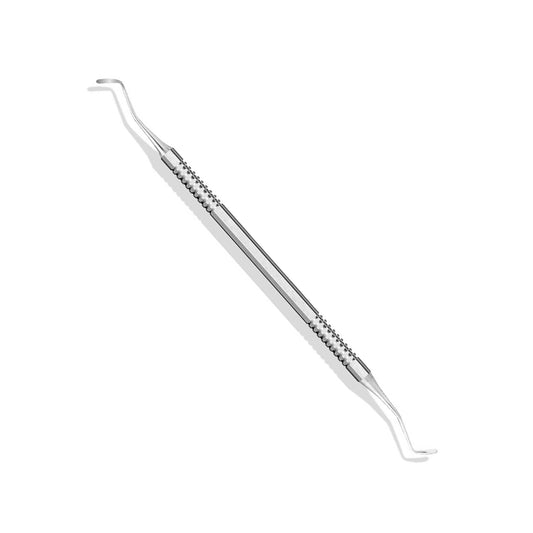
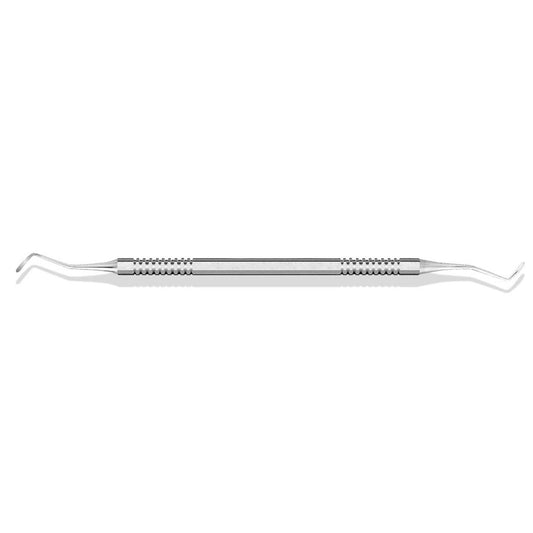
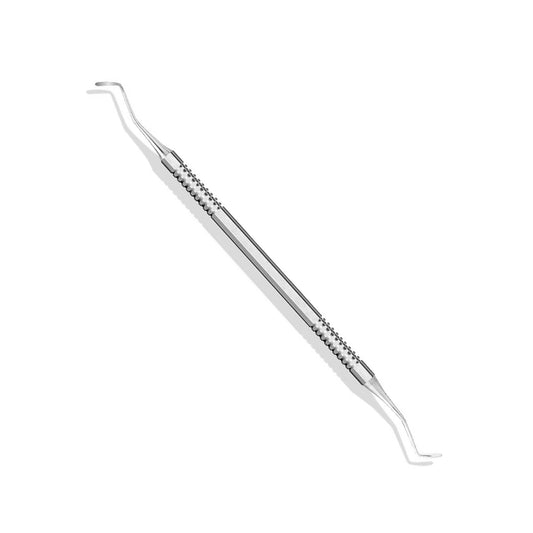
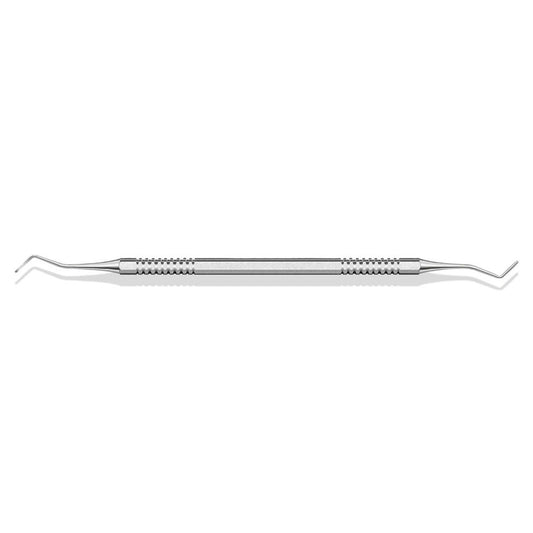
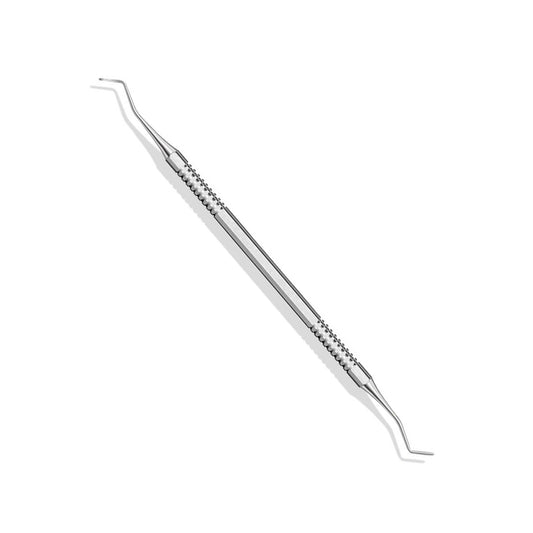
تظل حواف الأسنان (Dental excavators) باقية بعد ظهور السنابل الدوارة لسبب واحد: السنبلة لا يمكنها "الإحساس". توفر شركة Peak Surgicals 23 نمطاً من الحواف بمقاسات تتراوح بين 1.0 مم إلى 3.5 مم، وبأسعار تبدأ من 2.20 دولار، مصنوعة من الفولاذ الألماني المقاوم للصدأ وتحمل علامة المطابقة الأوروبية (CE) ومصنعة وفق معيار ISO 13485. قارن بين جميع الأنماط الـ 23 في الجدول أدناه.
لماذا لا تزال الأدوات اليدوية تحدد العمق
يختلف ملمس العاج المتسوس اللين عن العاج السليم عند استخدام أداة يدوية، وهذا الاختلاف هو الأساس الجوهري لعملية الحفر. فحافة الملعقة التي تُسحب عبر أرضية التجويف لا تواجه أي مقاومة تقريباً في الأنسجة منزوعة المعادن وتتوقف عند العاج السليم، لذا يعرف الطبيب أين تنتهي الإصابة دون الحاجة لرؤيتها. بينما تقوم السنبلة بإزالة كل ما تلمسه بنفس المعدل ولا تعطي مثل هذه الإشارة، ولهذا السبب تظل الحافة هي الأداة التي تحدد مدى عمق التحضير.
تلك التغذية الراجعة تكون بجودة الحافة التي توفرها. فالحافة الحادة والرقيقة للملعقة تنقل التغير في المقاومة مباشرة؛ أما الحافة المستديرة أو المهترئة فتحتاج إلى ضغط لتقوم بالقطع، والضغط يحجب الاختلاف نفسه الذي يحاول الطبيب استشعاره. هذه هي الأداة الوحيدة التي لا يعني فيها كون الحافة غير حادة أنها تعمل ببطء فحسب، بل إنها تعمل "عمياء". نحن نوفر كل نمط بحد أدنى للطلب يبلغ قطعة واحدة (MOQ 1).
ملعقة، أم ديسكويد-كليويد، أم فأس؟
شكل طرف العمل يحدد ما يمكن للحافة القيام به، وتغطي ثلاثة أشكال أعمال الترميم. تتميز الملعقة (Spoon) بطرف مقعر على شكل مغرفة مع حافة قطع تدور حول محيطها، وهي التي تقوم بغرف العاج المتسوس اللين وصقل جدران التجويف. يجمع ديسكويد-كليويد (Discoid-cleoid) بين قرص في أحد الطرفين ومخلب في الطرف الآخر: يقوم القرص بنحت محيطات الأملغم والحواف الجانبية، بينما يقوم الكليويد بصقل الحفر والميازيب الإطباقية. يحمل الفأس (Hatchet) شفرة مشطوفة ذات حافة في الطرف بدلاً من محيطها، وذلك لصقل الحافة السطحية للتجويف وأعمال المينا.
هندسة الساق هي المتغير الثاني وهي تتحكم في الوصول وليس في الأداء. الساق القصيرة والمباشرة تناسب أعمال الإطباق الروتينية والفئة الأولى (Class I)؛ بينما تصل الساق الطويلة المائلة إلى عنق السن (الفئة الخامسة Class V) أو الحواف تحت اللثوية التي لا يمكن للأداة القياسية الوصول إليها بدقة.
مقاس الطرف: للإزالة الكبيرة أو للتشطيب
يتم اختيار قطر الطرف بناءً على الإصابة ومدى قربها من لب السن. المقاسات الأكبر في هذه المجموعة، من حوالي 1.8 مم إلى 3.5 مم، تزيل العاج المتسوس بكفاءة وتناسب الإصابات الواسعة والصندوق القريب من الفئة الثانية (Class II) حيث قد يتطلب الطرف الصغير الكثير من الحركات. أما المقاسات الأصغر، 1.0 مم إلى 1.5 مم، فهي أدوات التشطيب: تعمل بالقرب من أرضية لب السن حيث تكون السيطرة أهم من السرعة، وتصل إلى التحضيرات الضيقة وحول زوايا الخطوط التي لا يمكن للوعاء الأكبر دخولها.
معظم الأنماط هنا مزدوجة الطرف، ولهذا السبب يدرج الجدول مقاسات مقترنة مثل 1.0 مم و2.1 مم، أو 1.5 مم و1.8 مم. إن اقتران قطرين في أداة واحدة يعني أن الانتقال من الإزالة الكبيرة إلى التشطيب يتم عبر تدوير اليد بدلاً من استبدال الأداة.
المواد وإعادة المعالجة والشهادات
كل نمط مصنوع من الفولاذ الألماني المقاوم للصدأ ومخمل لمقاومة التآكل عبر دورات متكررة. نقطة الفحص هي حافة القطع، التي يتم فحصها تحت التكبير: اسحب الحافة برفق عبر ظفر الإصبع أثناء ارتداء قفاز، ويجب أن تعلق الحافة بدلاً من الانزلاق، وابحث على طول المحيط عن بقع مسطحة حيث أصبحت الحافة مستديرة. نظراً لأن الأداة تُستخدم بالاستشعار، فإن الحافة الكليلة لا تكون واضحة في اليد حتى يضغط الطبيب بقوة أكبر مما تسمح به التقنية. نظف الأداة فوراً بمحلول إنزيمي متعادل الحموضة، مع تنظيف البقايا بفرشاة من الوجه المقعر قبل أن تجف، ثم اشطفها بالماء منزوع الأيونات وجففها تماماً قبل التعقيم بالبخار (الأوتوكلاف) عند 134 درجة مئوية.
هذه أجهزة قابلة لإعادة الاستخدام من الفئة الأولى، تحمل علامة CE ومصنعة وفق معيار ISO 13485، مع ضمان تصنيع لمدة عام واحد. نقوم بالشحن بحد أدنى للطلب قطعة واحدة مع شحن مجاني للطلبات التي تزيد عن 99 دولاراً، كما يتوفر إنتاج OEM والعلامات التجارية الخاصة للموزعين. راجع أدوات حفر قناة الجذر (Endodontic Excavators) لأنماط الوصول ذات الساق الطويلة، أو تصفح جميع أدوات ترميم الأسنان. تحدث إلينا بخصوص OEM وشروط الكميات.