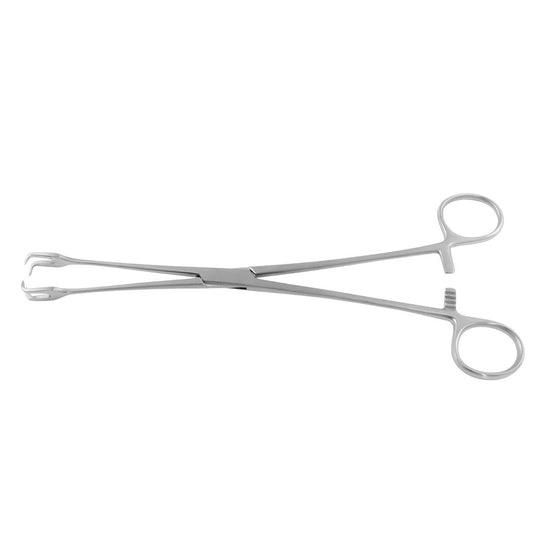
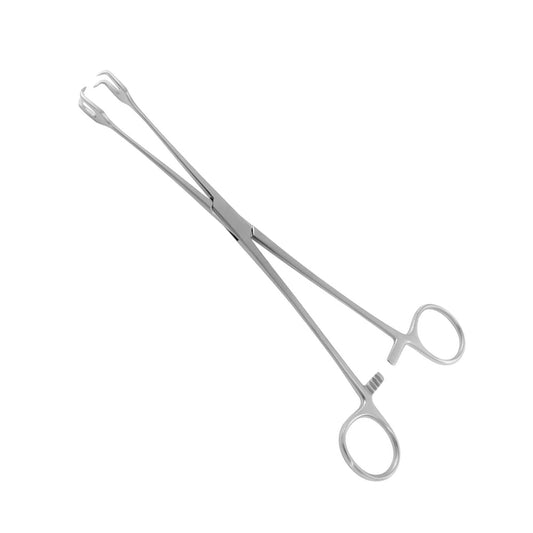
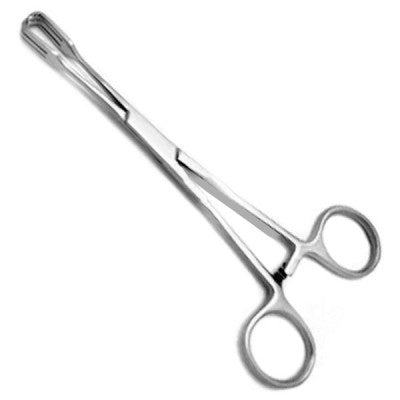
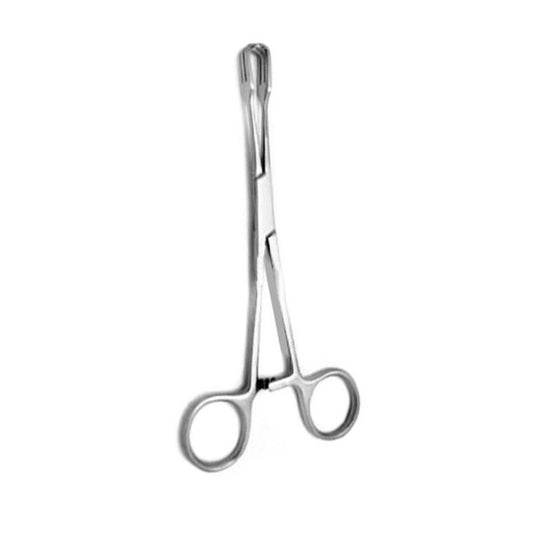
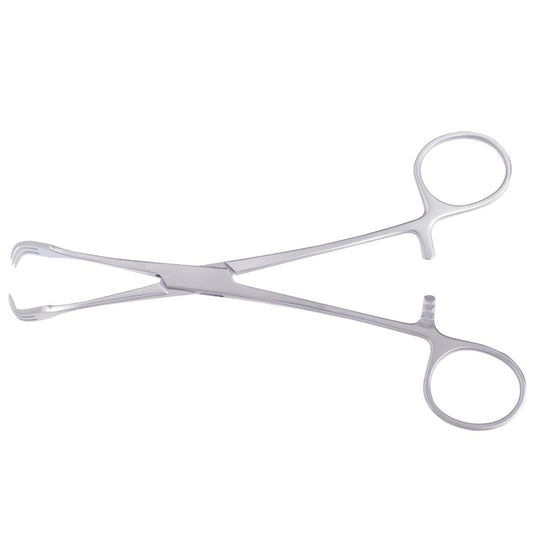
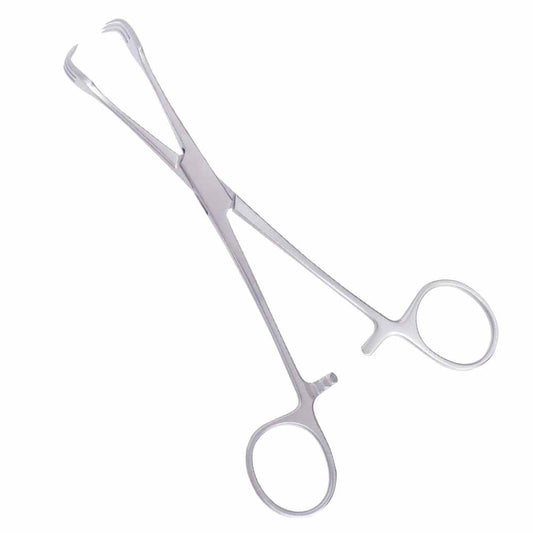
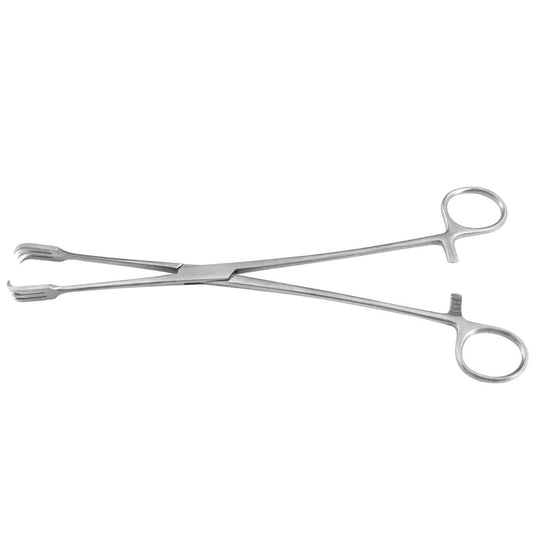
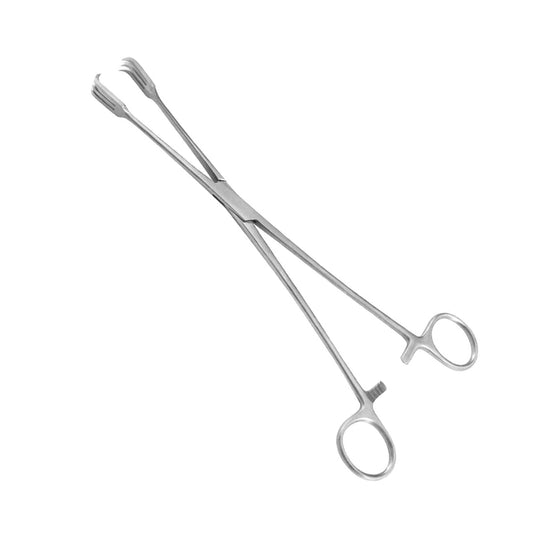
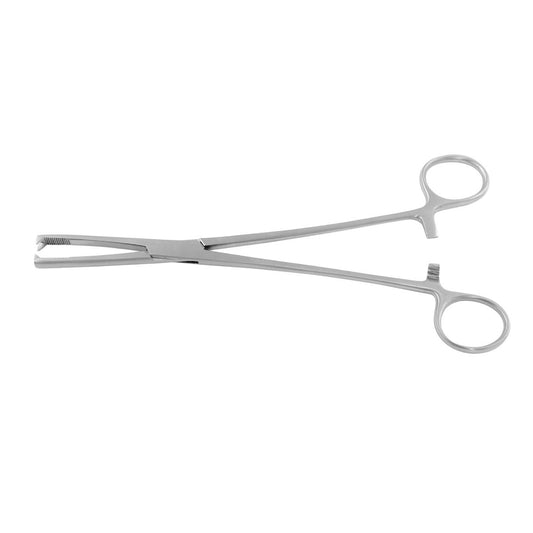
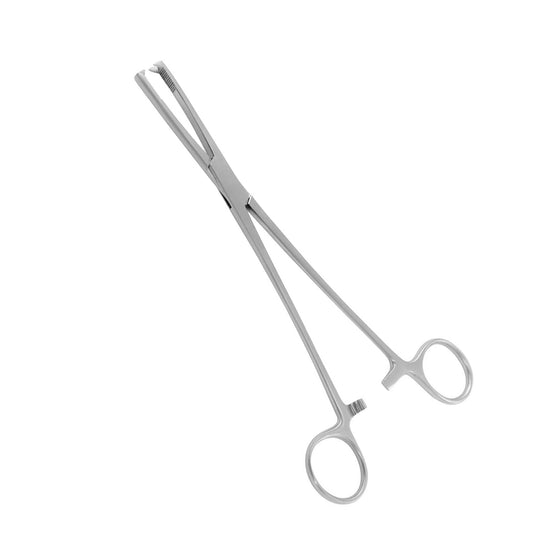
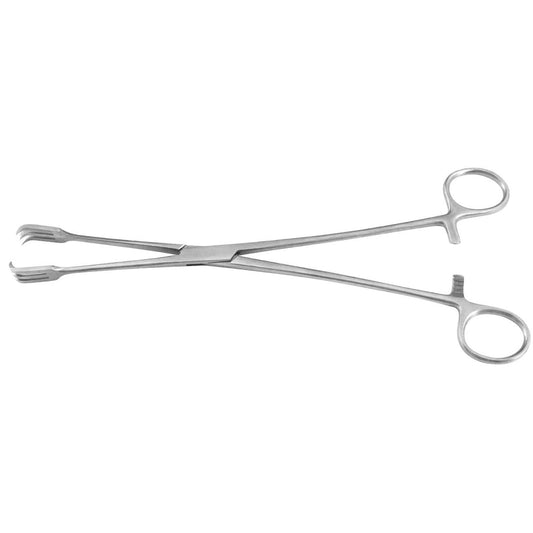
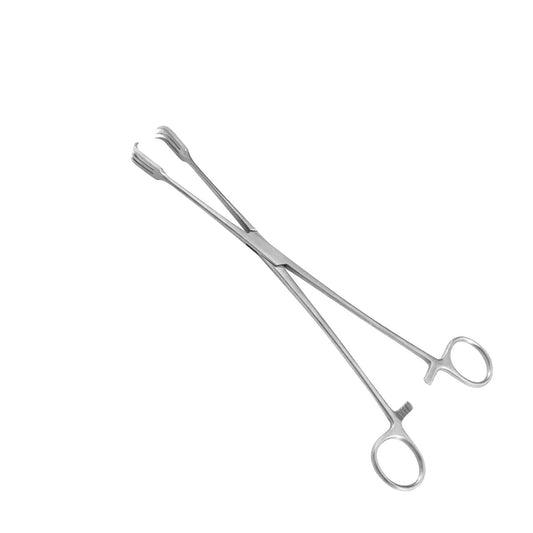
En vulsellumtång griper vävnad med två eller flera motstående rader av inåtvända tänder, vilket ger ett bredare, säkrare grepp om livmoderhalsen eller livmodern än vad ett enpunktsinstrument uppnår. Peak Surgicals levererar fyra modeller, Schroeder, Gordon, Jacob och Henrotin, i tyskt rostfritt stål, från 6,05 dollar till 27,50 dollar. Var och en är CE-märkt och byggd enligt ISO 13485. Jämför alla fyra modellerna i tabellen nedan.
Vulsellum eller tenaculum: Vad de extra tänderna ändrar
En vulsellumtång har två eller flera rader av motstående tänder, 2×2 eller 3×3, som griper vävnad över en bredare yta, medan en tenaculum använder en enda vass spets som förankras på en punkt; vulsellumen byter precision mot hållkraft, vilket är anledningen till att den väljs där greppet måste överleva långvarig dragkraft under ett längre ingrepp. Detta är den distinktion som köpare oftast frågar om, och den avgör vilket instrument som ska finnas på brickan.
Schroeder livmodervulsellumtång (PS-1718, 6,05 dollar) har 2×2 inåtvända spetsar och finns i raka eller böjda profiler, den modell som de flesta gynekologibrickor standardmässigt har, används för att hålla livmoderhalsen stilla under kolposkopi, cervikal biopsi och hysterektomi, och för att manipulera livmodern under kejsarsnitt och postpartumprocedurer. Gordon livmodervulsellumtång (PS-1720, 27,50 dollar) går upp till 3×3 spetsar över ett 8 mm brett grepp för ett fastare grepp på tätare eller mer rörlig vävnad. Jacob livmodervulsellumtång (från 16,50 dollar, PS-1721) och Henrotin livmodervulsellumtång (16,50 dollar, PS-1722) avrundar sortimentet med sina egna spetskonfigurationer för samma kärnuppgift. Vi levererar alla modeller vid MOQ 1.
Antal spetsar, spärrhake och ringhandtag
Antalet spetsar är den specifikation som avgör hur mycket vävnad käftarna faktiskt greppar. Ett 2×2-mönster som Schroeder koncentrerar greppet till fyra punkter, tillräckligt för de flesta cervikala och uterina manipulationer utan överdriven vävnadsskada. Ett 3×3-mönster som Gordon sprider greppet över sex punkter och håller en större vävnadsyta för fall där ett mindre grepp riskerar att glida under dragkraft, tätare vävnad, eller där instrumentet måste hålla position under ett längre steg i proceduren.
Spärrfunktionen som är vanlig för dessa mönster håller käftarna stängda när de väl är engagerade, vilket frigör kirurgens händer på samma sätt som det gör med en tenaculum, kirurgen behöver inte upprätthålla grepptryck under hela proceduren. Fingerringhandtagen ger den hävstångseffekt som behövs för att stänga spärren mot vävnadsmotstånd. Raka och böjda skaftalternativ finns av samma anledning som skaftkurvan är viktig på andra ställen inom gynekologisk instrumentering: en böjd profil når runt anatomi eller förbättrar siktlinjen där ett rakt skaft skulle blockera den.
Återbehandling, tandintegritet och certifiering
Dessa tänger är smidda av tyskt rostfritt stål, korrosionsbeständiga genom upprepade autoklavcykler och bibehåller tandjusteringen där ett mjukare instrument skulle rundas av under dragkraft. Spetsarna och spärren är inspektionspunkterna: tänder som har blivit slöa eller böjda greppar inte längre vävnaden säkert, och en spärr som inte längre håller tvingar kirurgen att upprätthålla grepptryck under hela proceduren. Kontrollera båda före varje användning, och ultraljudsrengör före autoklavering så att vävnadsrester inte förstyvar spärren över cyklerna.
Varje instrument är klass I, återanvändbart, CE-märkt och byggt enligt ISO 13485, den dokumentation som ett sjukhusförsörjningsteam verifierar innan en leverantör kvalificeras. Garanti är ett år med retur och ersättning, MOQ är 1 stycke, beställningar över 99 dollar skickas gratis i kartongförpackning, och OEM-märkning är tillgänglig för distributörer. För enhällig cervikal gripning se tenaculumtänger; bläddra bland alla gynekologiska instrument. Kontakta oss för OEM- och volymvillkor.