
Uitgelichte collectie
Je winkelwagen
Uitgelichte collectie

PEAK SURGICALS
SKU:ps-si-0091
Kan beschikbaarheid voor afhalen niet laden


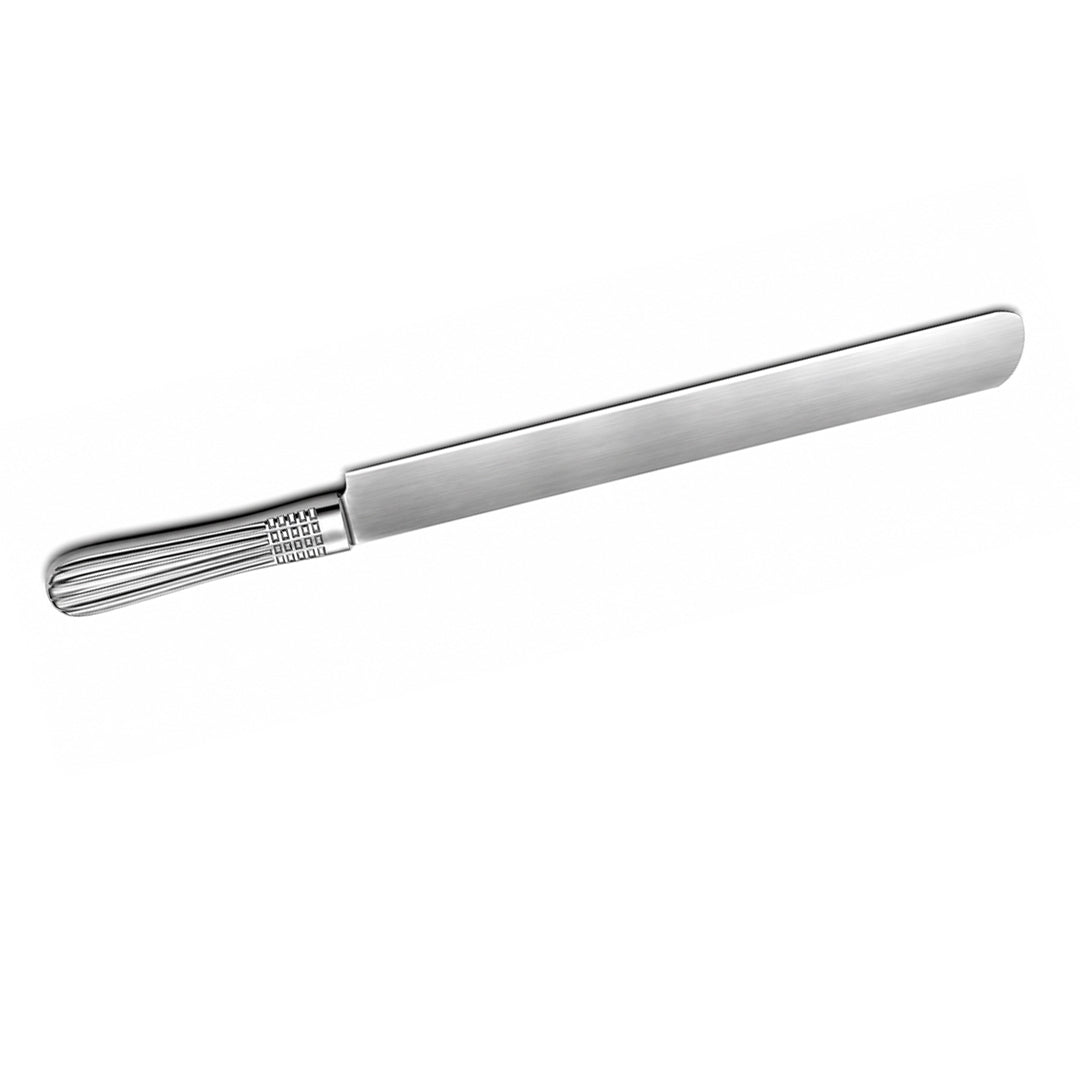
The Long Specimen Dissecting Knife is a specialized post-mortem instrument designed for long, continuous cuts through soft-tissue specimens during autopsy and gross pathology examinations. Its broad, straight blade features a rounded distal end and an elongated textured metal handle. The extended cutting surface supports controlled anatomical sectioning and preparation of larger tissue samples for macroscopic examination. This instrument is intended for forensic pathologists, anatomical pathology professionals and trained autopsy personnel working in mortuaries, medical examiner facilities and pathology laboratories.
The broad cutting blade provides an extended working edge for preparing long tissue sections. Its straight profile supports continuous cutting movements through soft anatomical specimens, helping the operator produce sections suitable for gross examination. The rounded distal end differs from the sharply pointed configuration of conventional surgical scalpels. This pattern is intended for soft-tissue sectioning rather than bone cutting.
The knife features an elongated metallic handle with longitudinal grooves and raised gripping details. The textured surface provides a defined hand-contact area for controlling blade direction during dissection. A rigid transition connects the handle to the broad working blade. The illustrated silver metallic construction provides accessible surfaces for inspection and cleaning after pathology laboratory use.
Long specimen dissecting knives are used for preparing tissue sections during post-mortem examinations, anatomical dissection and gross pathological investigation. The extended blade is particularly relevant when sectioning larger soft-tissue specimens that require a continuous cutting stroke. Anatomical and forensic pathologists use these instruments to expose internal tissue structures, examine macroscopic abnormalities and prepare representative specimens for subsequent laboratory analysis.
| Specification | Details |
|---|---|
| Product Name | Long Specimen Dissecting Knife |
| Instrument Type | Autopsy and Specimen Dissecting Knife |
| Blade Configuration | Long, Broad, Straight Blade |
| Distal Blade Profile | Rounded End |
| Material | Stainless Steel Pattern |
| Handle Design | Elongated Textured Metal Handle |
| Grip Pattern | Longitudinal Grooves and Raised Textured Sections |
| Surface Appearance | Silver Metallic Finish |
| Operating Method | Manual |
| Quantity | 1 Piece |
| Primary Application | Long Specimen Sectioning and Soft-Tissue Dissection |
| Specialty | Forensic Pathology / Anatomical Pathology |
| Product Category | Post Mortem Instruments |
| Brand | PEAK SURGICALS |
Inspect the cutting edge, blade surface and handle connection for wear, corrosion or deformation before use. Following autopsy procedures, remove biological residue and clean the instrument according to the manufacturer's validated reprocessing instructions and the pathology facility's decontamination protocols. Protect the cutting edge from mechanical damage during storage and handling.
What is a Long Specimen Dissecting Knife used for?
It is designed for preparing long sections of soft-tissue specimens during autopsy, anatomical dissection and gross pathology examination. Its extended blade supports continuous cutting movements across larger anatomical samples.
How does a long specimen knife differ from a conventional autopsy knife?
A long specimen dissecting knife has an extended cutting blade intended for continuous tissue sectioning. Conventional autopsy knives are available in several shorter and broader patterns for general tissue dissection and organ examination.
Why does the instrument feature a rounded blade end?
The rounded distal profile provides a different working geometry from pointed scalpels. The extended straight cutting edge is the primary feature used for long specimen sectioning.
Where is this instrument commonly used?
Long specimen dissecting knives are used in forensic pathology departments, medical examiner facilities, anatomical laboratories, mortuaries and gross pathology examination areas.
Explore the Post Mortem Autopsy Dissection Kit – 19 Pcs and browse the Post Mortem Instruments Collection at PEAK SURGICALS for additional anatomical and forensic dissection instruments.


