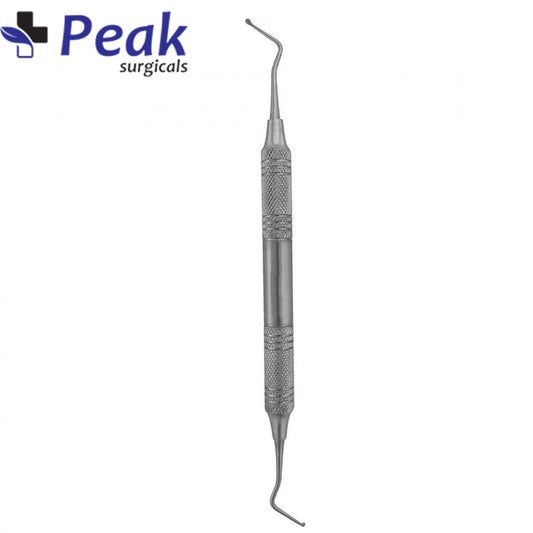
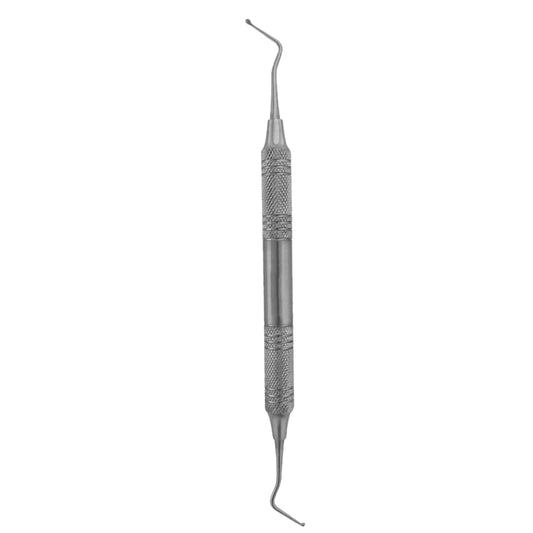
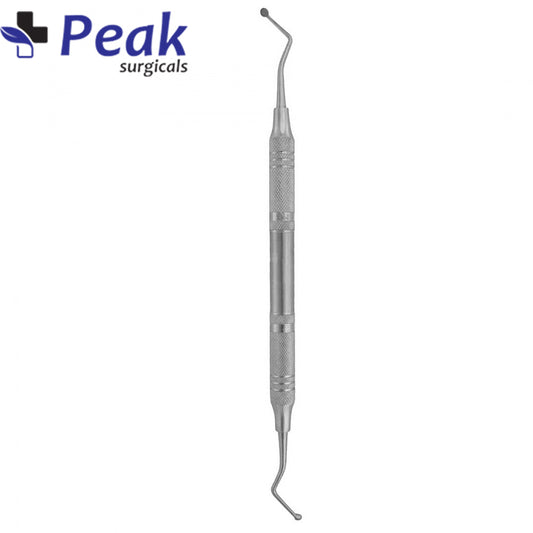
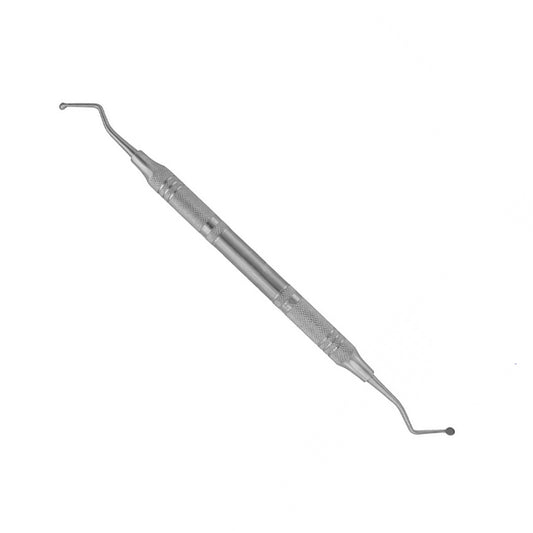
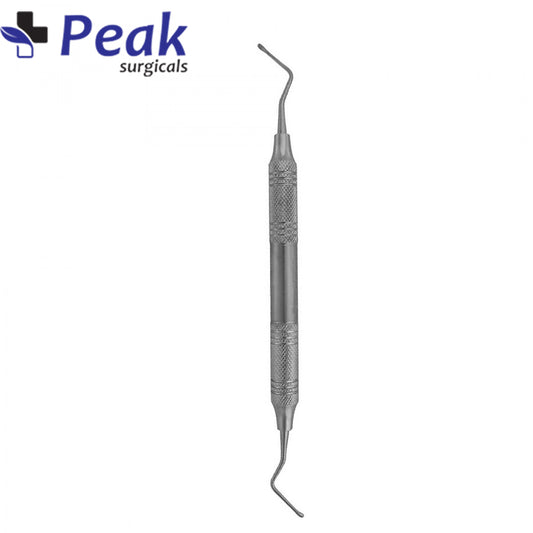
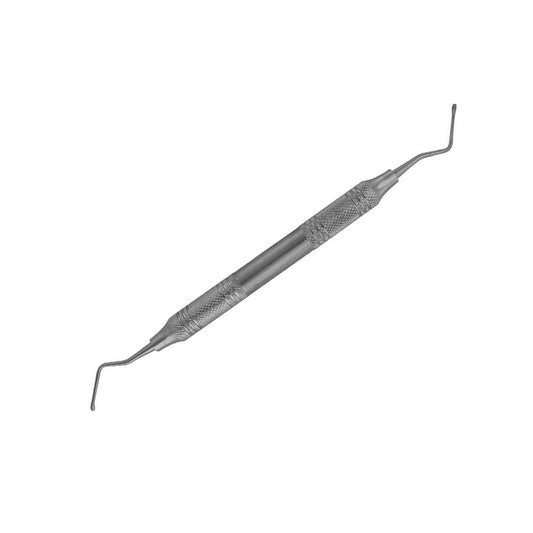
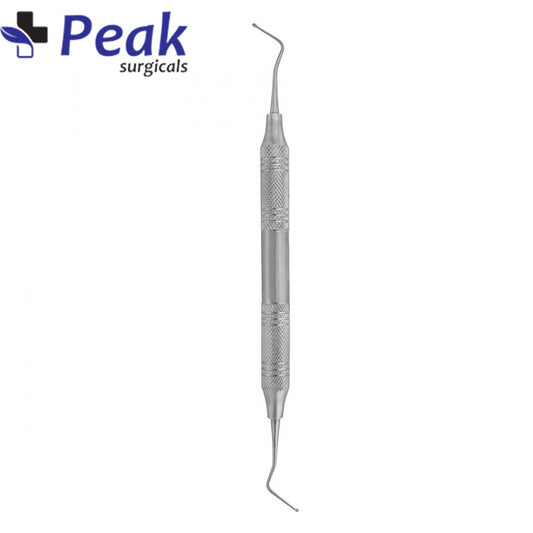
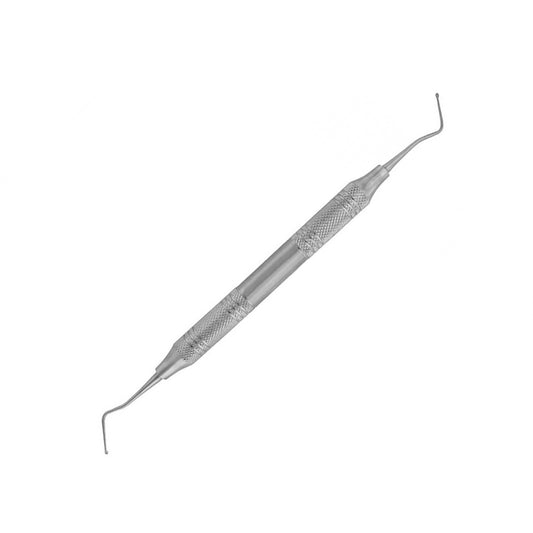
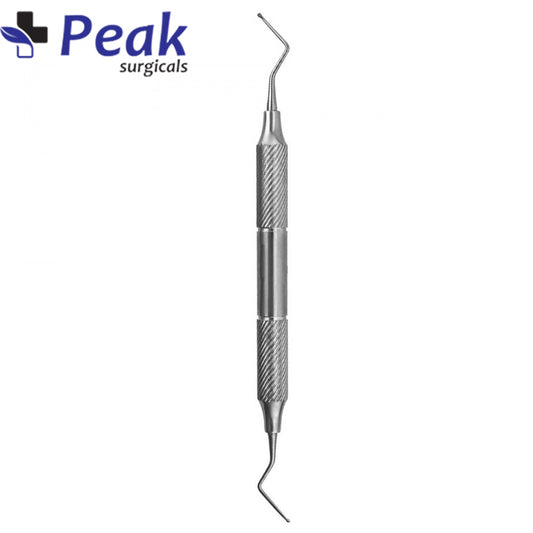
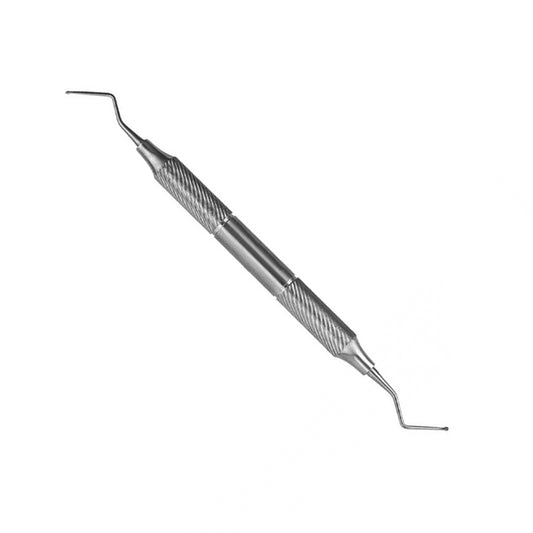
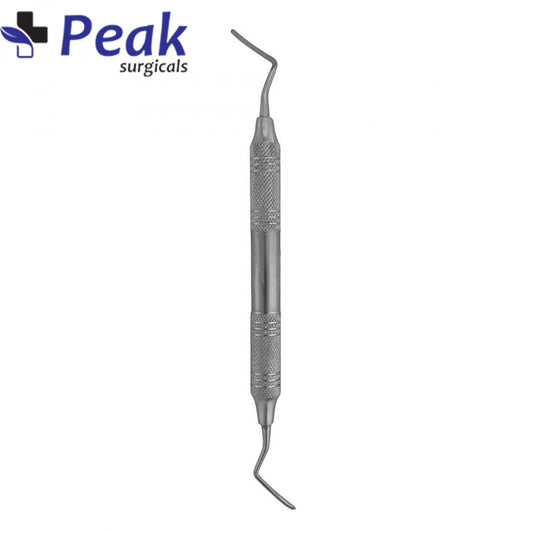
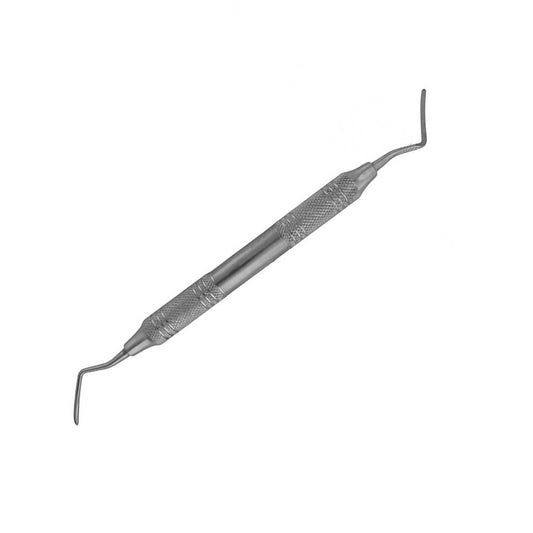
Endodontische excavatoren hebben een lepelvormig blad op een extra lange terminale schacht, die de pulpakamerbodem en de kanaalopeningen bereikt die een restauratieve excavator niet kan bereiken. Peak Surgicals levert vijf patronen: 31L, 31W, 32L, Glick en een 2 mm lange lepel met lange schacht, dubbelzijdig in Duits roestvrij staal, van €6,60 tot €11,00. Elk is CE-gemarkeerd en gebouwd onder ISO 13485. Vergelijk alle vijf patronen in het onderstaande raster.
Welke excavator: 31L, 31W, 32L of Glick?
De 31L bereikt de pulpakamers van de voortanden en premolaren, de 31W heeft een breder blad voor grotere hoeveelheden vuil, de 32L reikt het verst voor mandibulaire molaren en maxillaire achterste tanden, en het Glick-patroon combineert een lepeluiteinde met een plugger voor het plaatsen van tijdelijk materiaal. Schachtlengte en bladbreedte zijn de twee variabelen, en de tandpositie bepaalt beide.
Endo Excavator 31L (PS-D-130, €11,00) is geschikt voor standaard toegang tot debridering van de pulpakamer en verfijning van de kanaalopeningen waar het bereik matig is. De 31W (PS-D-131, €11,00) ruilt bereik in voor bladbreedte, waardoor meer necrotisch weefsel per keer wordt verwijderd in een open kamer. De 32L (PS-D-132, €11,00) is het diepe toegangspatroon, gebouwd voor distale laesies in mandibulaire molaren waar een kortere schacht tegen de tegenoverliggende boog stuit. De Glick Endo Excavator (PS-D-128, €6,60) werkt anders: het dubbele uiteinde combineert excavatie met een pluggeroppervlak voor het condenseren van tijdelijk restauratief materiaal, zodat toegang en afsluiting met één instrument plaatsvinden. De 2 mm lange lepel met lange schacht (PS-D-133, €6,60) dekt algemene reiniging. Wij leveren elk met een minimale bestelhoeveelheid (MOQ) van 1.
Endodontisch of Restauratief: Waarom de schacht verschilt
Een restauratieve excavator verwijdert cariës van een caviteitsbodem een paar millimeter onder het glazuuroppervlak. Een endodontische excavator werkt aan de onderkant van een toegangscaviteit, vaak 15 mm of meer van het occlusale oppervlak, en de terminale schacht is verlengd en specifiek voor die diepte gebogen. Het gebruik van een restauratief patroon voor endodontische toegang betekent dat de handgreep de tegenoverliggende tanden hindert voordat het blad de kamerbodem bereikt.
Het blad gedraagt zich ook anders. Het concave lepelfront is ontworpen om te scheppen, onder vuil te haken en omhoog te tillen, in plaats van over het dentine te schrapen. Lichte exploratieve druk lokaliseert pulphoorntjes en kanaalopeningen zonder perforatierisico; zware laterale druk op een lange schacht is hoe punten vervormen. Voor het verwijderen van cariës en caviteitspreparatie zijn de kortere patronen in ons restauratieve excavatoren assortiment het juiste instrument. Voor de complete endodontische set, zie endodontische instrumenten.
Herverwerking, scherptebehoud en certificering
Deze excavatoren zijn gesmeed uit Duits roestvrij staal, gevormd en geslepen om een werkende rand te behouden door herhaalde cycli. Scherptebehoud is de belangrijkste specificatie voor een handinstrument dat tegen dentine wordt gebruikt: een botte lepel stopt met het verwijderen van vuil en begint het te polijsten. Inspecteer het blad op vervorming na elke autoclaafcyclus en reinig ultrasoon voordat u steriliseert, zodat dentinevuil en tijdelijk materiaal niet op het concave oppervlak vastbakken.
Elk instrument is Klasse I, herbruikbaar, CE-gemarkeerd en gebouwd onder ISO 13485 – de documentatie die een tandheelkundig leveringsteam controleert voordat een leverancier wordt gekwalificeerd. De garantie is één jaar met retour en vervanging, de minimale bestelhoeveelheid (MOQ) is 1 stuk, bestellingen boven $99 worden gratis verzonden in kartonnen verpakking, en OEM-markering is beschikbaar voor distributeurs. Gerelateerde patronen bevinden zich in wortelkanaalpluggers en endodontische kits, of blader door alle tandheelkundige instrumenten. Neem contact met ons op voor OEM- en volumevoorwaarden.