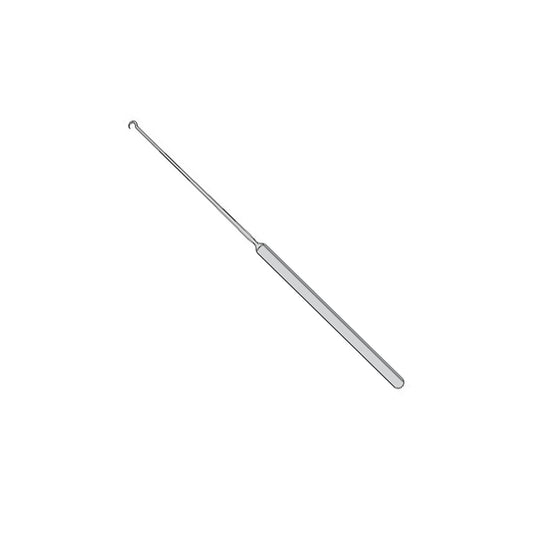
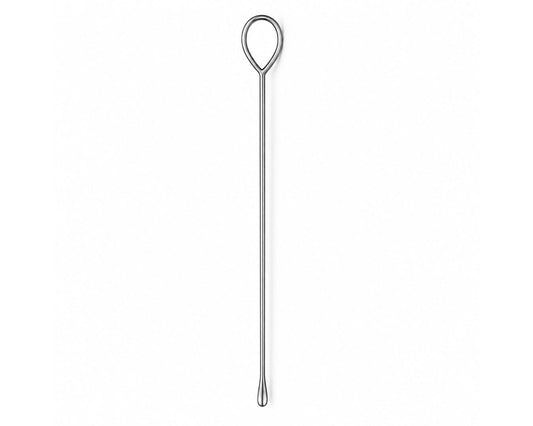
A hook and a probe answer different questions in the same canal: one finds what is there, the other gets behind it and brings it out. Peak Surgicals stocks four ENT hook and probe patterns from 140mm to 191mm, in German stainless steel and CE marked and built under ISO 13485. Compare every pattern in the grid below.
The Probe Goes In First
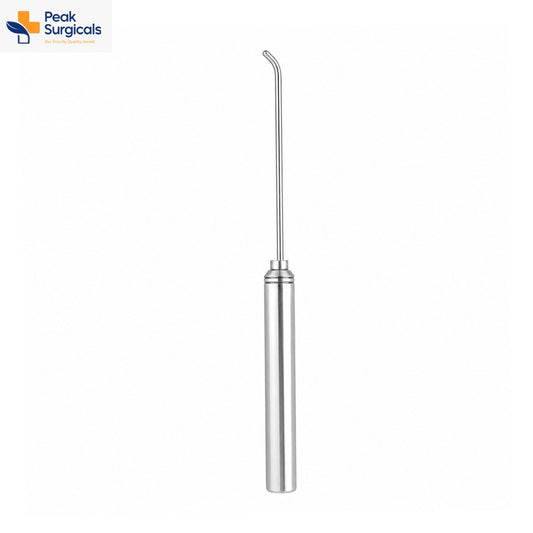
A probe goes in first. The external auditory canal is narrow, curved and lined with skin that sits directly on bone in its inner third, and an instrument passed into it works largely by feel with a limited view down an otoscope. A flattened, blunt probe tip explores that space and reports what is in it: how far the obstruction sits, whether it is soft or hard, and whether there is a gap behind it. Cawthorne Probe 140mm carries that flattened tip.
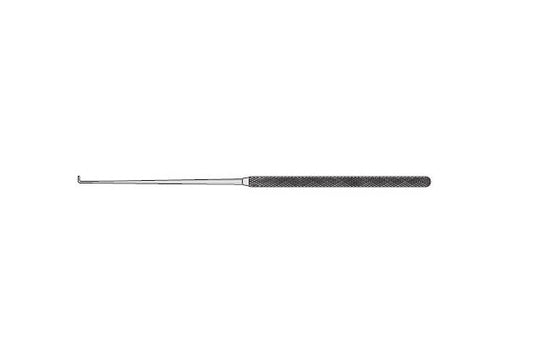
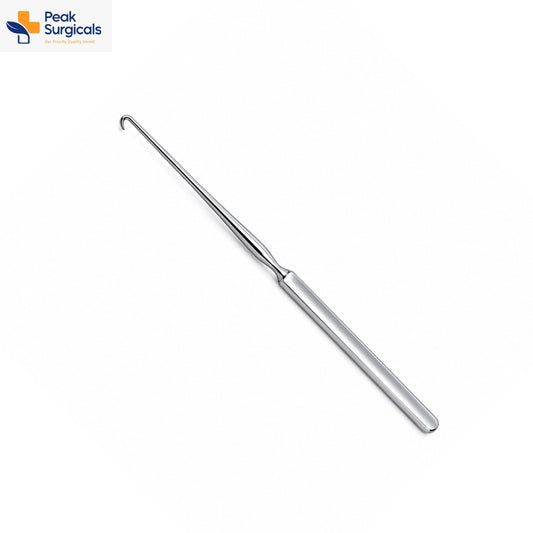
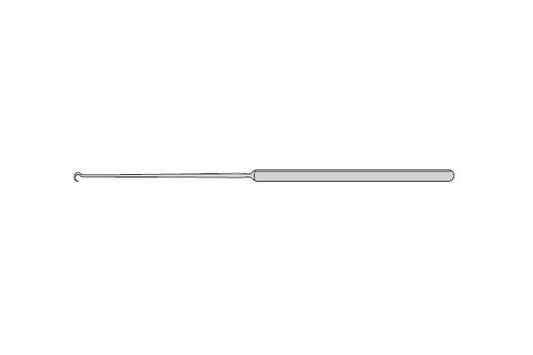
A hook does the second job. Once a gap behind the object is confirmed, the hook is passed beyond it, turned, and drawn back so the object comes out ahead of the tip rather than being pushed further in. That sequence is why both instruments exist: hooking blind, without first establishing there is a space behind, is how a cerumen plug or a foreign body gets driven deeper. Cawthorne Cerumen Hook 143mm and Hartmann Hook 140mm cover that step. We supply every pattern at MOQ 1.
Tip Profile and Working Length
Tip profile decides where a hook can be used. A blunt hook engages by shape alone, catching behind an object without penetrating it, which is what the ear canal requires: the skin there is thin, tightly adherent and bleeds readily, and a sharp tip that catches the wall instead of the object causes trauma in a space that is difficult to see into. A sharp hook holds more positively and belongs where the tissue can tolerate a point.
Length follows the working depth. At 140mm to 143mm the shorter patterns keep the hand close to the meatus, which is what canal work needs when the operator is looking down an otoscope. St Barts Hook at 178mm and the 191mm flat-handled pattern give more reach for nasal and wider surgical fields. Buyers should confirm tip configuration, hook angle and working-end dimensions against the catalogue before ordering.
Material, Reprocessing and Certification
Every pattern is forged from German stainless steel and passivated for corrosion resistance across repeated cycles. The inspection point is the working end under magnification, and it matters here more than on most instruments because these tips work against thin, adherent skin: check the hook tip for burring or a raised edge, since an instrument that has developed a sharp corner will catch the canal wall rather than the object, and check probe tips for flattening or deformity that would change how the tip reads what it touches. Sight along the shaft to confirm it is true. Clean immediately with a neutral-pH enzymatic solution, working around the hook curve where debris collects, then rinse with deionised water and dry fully, following the reprocessing instructions supplied.
These are Class I reusable devices, supplied non-sterile, CE marked and built under ISO 13485, with a one-year warranty. We ship at MOQ 1 with free shipping over $99. See ENT Surgical Instruments for the full range, or browse all Surgical Instruments.