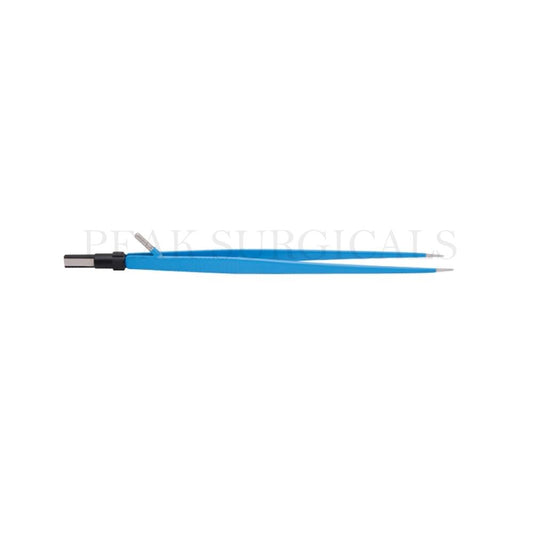
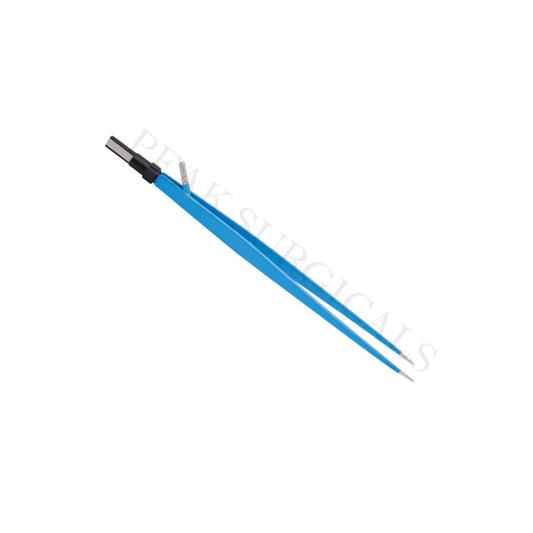
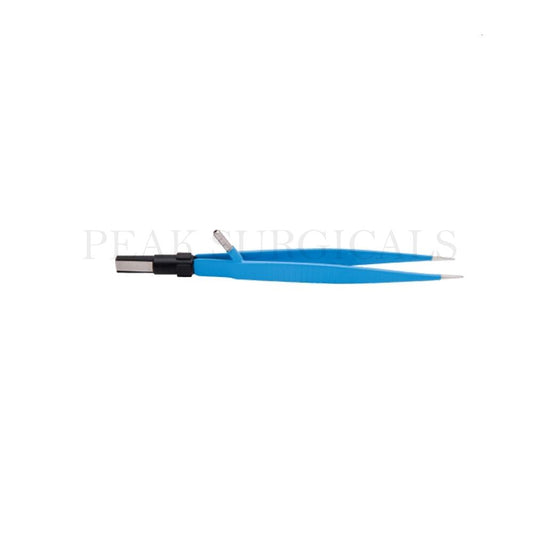
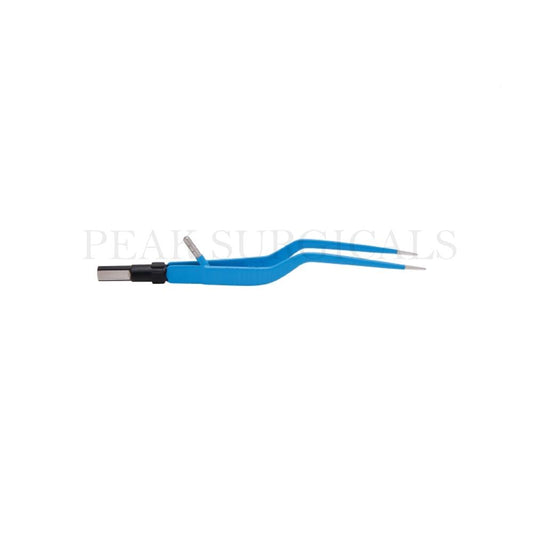
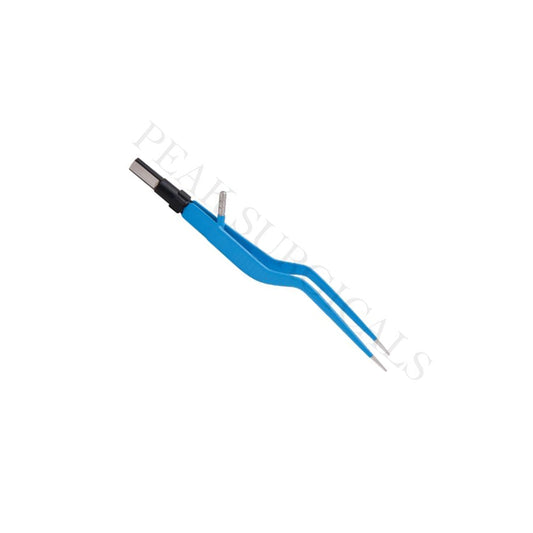
Drėkinamieji bipoliniai pincetai koaguliacijos metu nukreipia fiziologinį tirpalą per kotelį iki galiukų, aušindami juos sąlyčio vietoje, kad apanglėjęs audinys nepriliptų prie elektrodo. „Peak Surgicals“ tiekia tris Europinio kaiščio modelius – tiesius ir bajonetinius, kurių galiukai yra 0,3, 0,5, 1,0, 1,5 ir 2,0 mm, kainuojančius nuo 44,00 USD iki 68,20 USD. Kiekvienas iš jų yra pažymėtas CE ženklu ir pagamintas pagal ISO 13485 standartą. Palyginkite visus tris modelius žemiau esančioje lentelėje.
Kodėl reikia drėkinti: šašas, pakartotinis kraujavimas ir terminis plitimas
Fiziologinio tirpalo drėkinimas aušina pinceto galiukus koaguliacijos metu, mažindamas šašo susidarymą, kad sukoaguliuotas audinys nenutrūktų, kai instrumentas pakeliamas – tai yra mechanizmas, sukeliantis pakartotinį kraujavimą naudojant sausus bipolinius galiukus. Problema gerai dokumentuota: apanglėjęs audinys prilimpa prie elektrodo, o jį pašalinus, ištraukiant instrumentą, tiek iš naujo atidaroma kraujagyslė, tiek traumuojamas aplinkinis laukas.
Aušinimas turi antrinį efektą. Vėsesnis galiukas perduoda mažiau šilumos į šonus, todėl koaguliacija išlieka ten, kur buvo numatyta – dėl tos pačios priežasties bipolinis metodas pasirenkamas vietoj monopoliarinio dirbant arti nervų ar kraujagyslių. Drėkinimas taip pat palaiko matomą lauką, išplaudamas kraują iš sąlyčio taško, o ne palikdamas chirurgui koaguliuoti per jį. Galiuko dydis yra trečiasis kintamasis: 0,3 mm mikrochirurginiam ir neurochirurginiam darbui, kur koaguliacijos riba matuojama milimetro dalimis, 1,0–2,0 mm – kur audinio masė reikalauja platesnio sąlyčio paviršiaus. Tiekiame kiekvieną variantą su mažiausiu užsakymo kiekiu (MOQ) 1.
Tiesus ar bajonetinis, ir kodėl svarbus europinis kaištis
Du kotelių profiliai sprendžia dvi prieigos problemas. Europiniai drėkinamieji bipoliniai pincetai (PS-1046, 50,60 USD) ir tiesūs modeliai (PS-1047, 68,20 USD) turi darbinius galiukus, suderintus su koteliu, tiesiu, trumpiausiu keliu, geriausiai tinka atviram ir negiliam laukui. Europiniai drėkinamieji bajonetiniai bipoliniai pincetai (PS-1044, 44,00 USD) turi šoninį kotelį, todėl ranka ir kotelis lieka laisvi nuo matymo linijos giliame ar siaurame koridoriuje. Tai yra visa bajoneto egzistavimo priežastis, ir todėl gilus neurochirurginis ir transsfenoidinis darbas dažniausiai atliekamas su juo.
Europinis pavadinimas yra jungties standartas, o ne stilius. Europinio kaiščio pincetai jungiasi su generatoriais, laiduotais pagal tą standartą; USA kaiščio instrumentas neteisingai įsitaisys europinio kaiščio lizde. Prieš užsakant patikrinkite generatoriaus jungtį, tai yra dažniausia pirkimo klaida bipoliniams instrumentams. USA kaiščio atitikmenis Scoville Greenwood, Jansen, Hardy, Gerald ir Cushing modeliuose žr. USA drėkinamieji bipoliniai pincetai.
Perdirbimas, izoliacija ir sertifikavimas
Drėkinimo kanalas yra šiems instrumentams unikalus perdirbimo taškas: jis turi būti praplautas po kiekvieno naudojimo, nes fiziologinio tirpalo likučiai, išdžiūvę siauroje ertmėje, blokuoja srautą ir panaikina aušinimą, kuriam pincetai buvo įsigyti. Ultragarso valymas prieš autoklavavimą išvalo galiukus; izoliacija turi būti reguliariai tikrinama, nes pažeista danga nukreipia srovę į audinius, kurių ji niekada neturėjo pasiekti.
Kiekvienas modelis yra daugkartinio naudojimo, pagamintas iš vokiško nerūdijančio plieno, pažymėtas CE ženklu ir pagamintas pagal ISO 13485. Garantija yra vieneri metai su grąžinimu ir pakeitimu, minimalus užsakymo kiekis (MOQ) yra 1 vnt., užsakymai virš 99 USD pristatomi nemokamai kartoninėje dėžutėje, o OEM ženklinimas galimas platintojams. Dėl nedrėkinamų modelių žr. europinius bipolinius pincetus, dėl atsparių šašams galiukų žr. nelimpančius bipolinius pincetus, arba naršykite visą elektrochirurginių instrumentų asortimentą. Susisiekite su mumis dėl OEM ir didmeninių sąlygų.