정형외과 기구 - 임플란트 플레이트

8개 제품

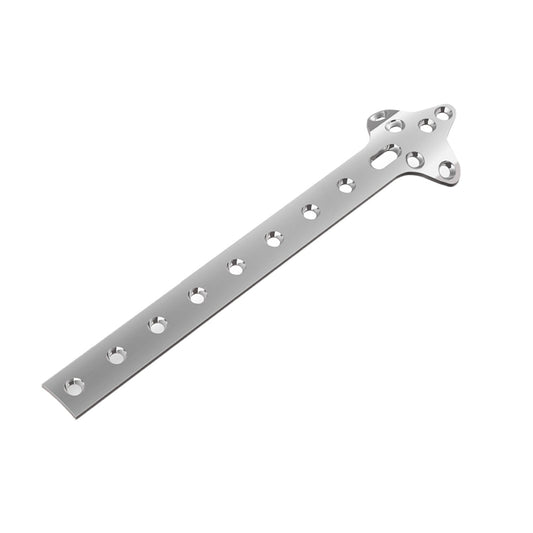
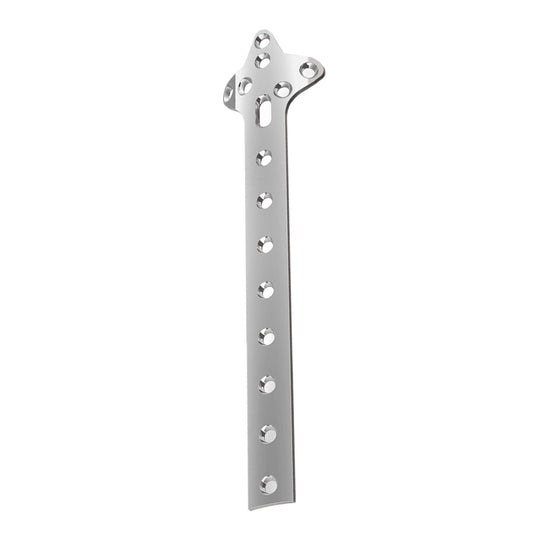
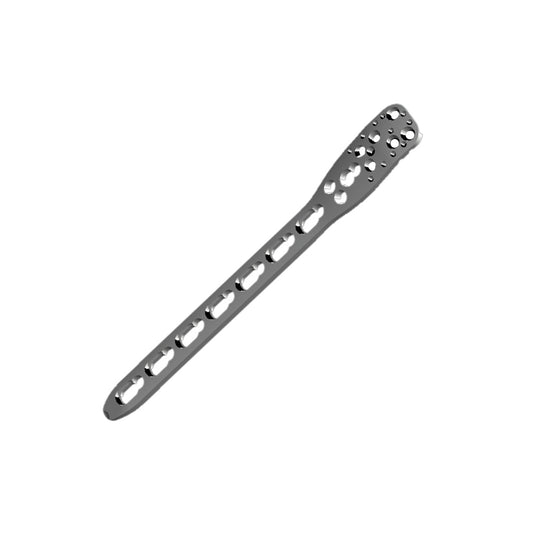
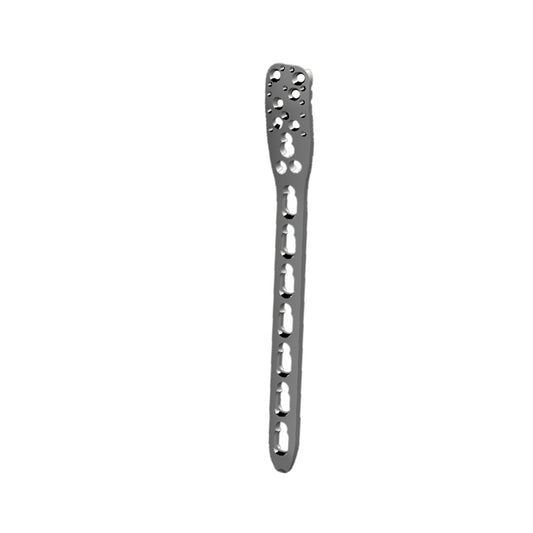
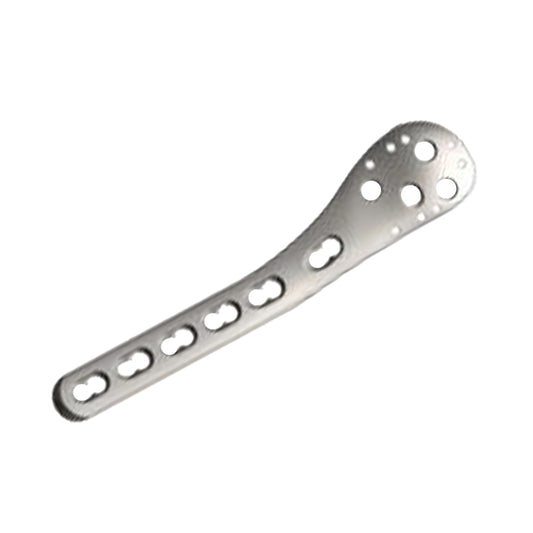
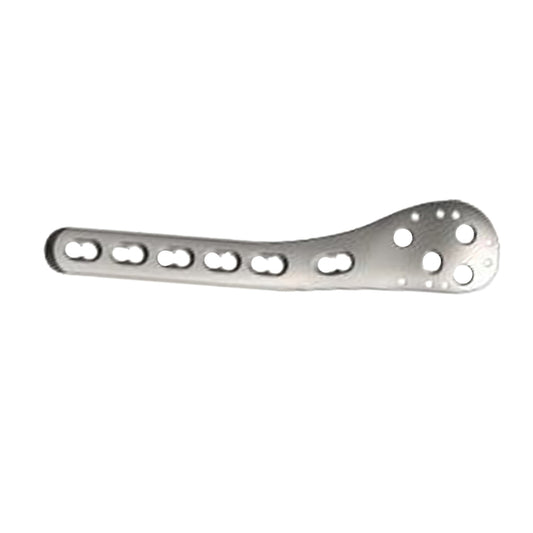
An orthopedic locking plate does not hold bone by pressing against it. The screws thread into the plate itself, so plate and screws become one rigid construct and the fixation no longer depends on friction between metal and cortex. Peak Surgicals supplies eight anatomical locking plate designs for the clavicle, humerus and metaphyseal regions, in hole counts from 3 to 17. Compare the full range in the grid below.

Locking or Compression? The Mechanism Is Different

The difference from a conventional plate is mechanical, and it changes what the construct can do. A compression plate is drawn down onto the cortex and the screws pull it there; the hold comes from the friction that pressure creates, and it also comes at the cost of compressing the periosteum underneath. A locking screw threads into a threaded hole in the plate instead, fixing the angle between them, so the plate can sit slightly off the bone and every screw is locked into the same rigid frame.

That matters most where a conventional construct is weakest. In osteoporotic bone or in metaphyseal cancellous bone near a joint, a screw pulling against soft trabecular bone can loosen on its own; in a locked construct, load is shared across every screw in the plate rather than concentrated on the one under most stress. The result behaves less like a plate on bone and more like an internal fixator.

Anatomical Pre-Contouring by Site

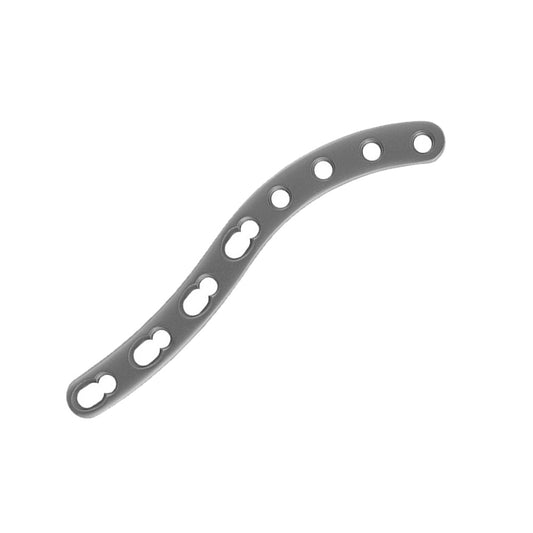
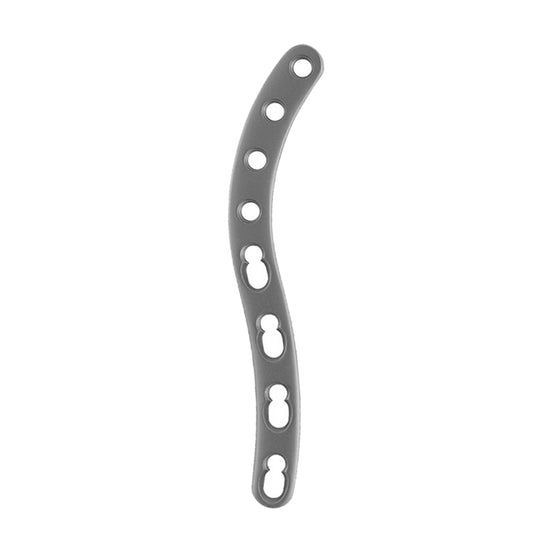
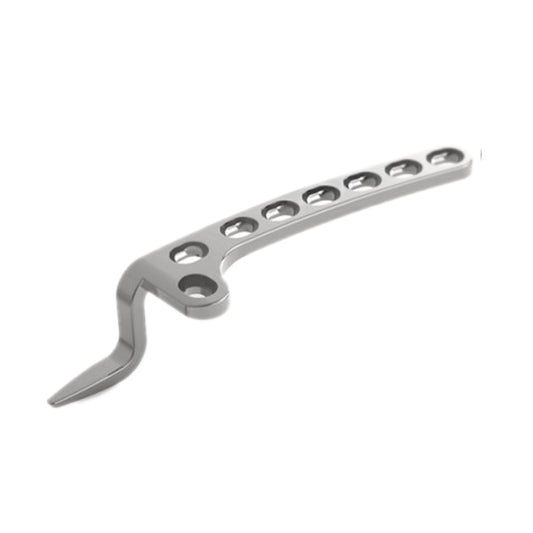
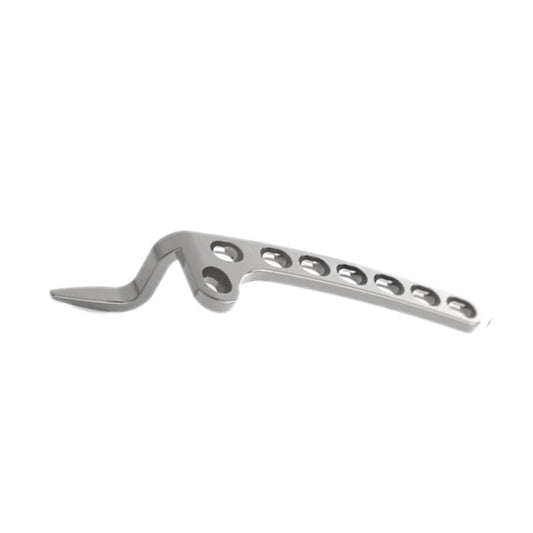
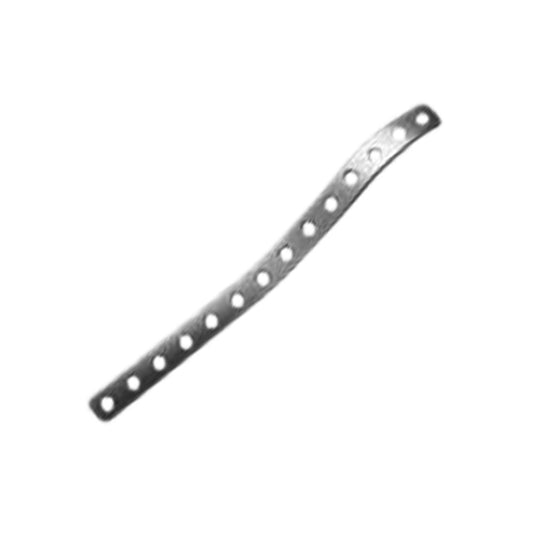
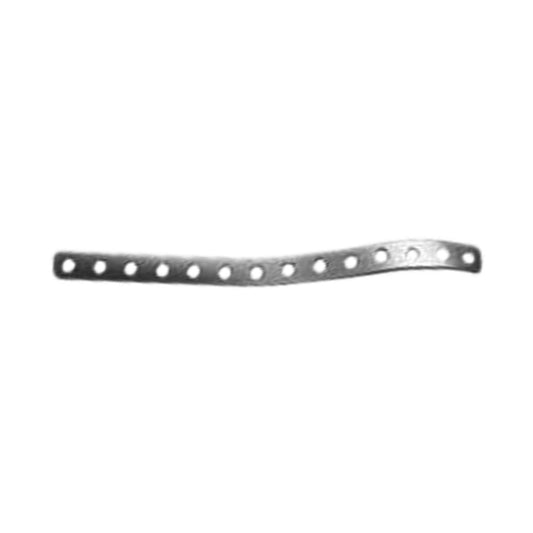
Anatomical pre-contouring is the second variable. A plate shaped to the bone it will sit on needs less intraoperative bending, and every bend a surgeon puts into a plate is a bend that alters its mechanical behaviour and takes time under anaesthesia. Locking Clavicle S Plate follows the clavicle's own S curve, and Locking Clavicle Hook Plate adds the subacromial hook used for distal clavicular and acromioclavicular fixation.

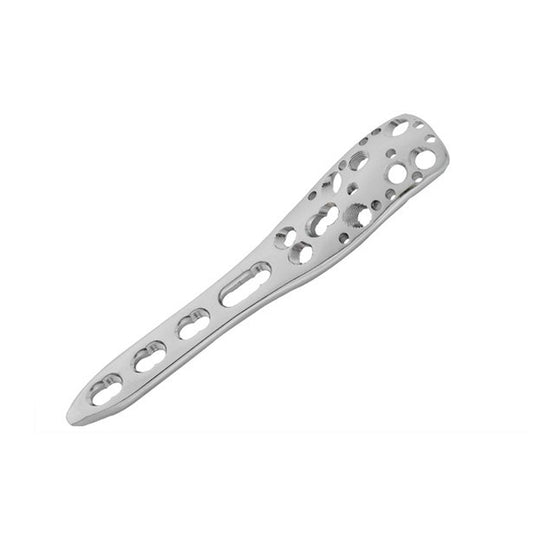
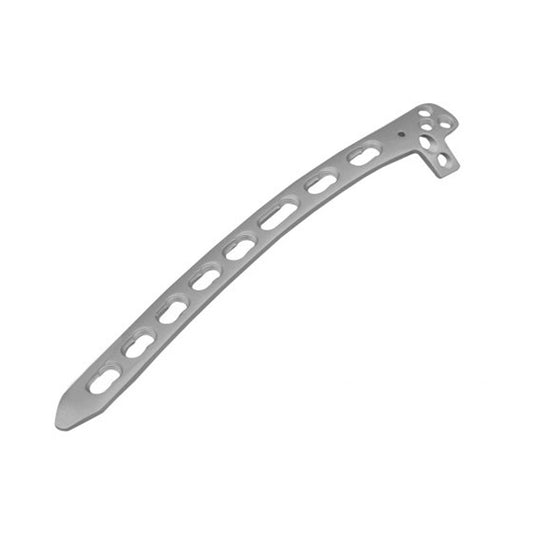
Proximal Humerus Locking Plates are supplied in narrow, flat and cobra-head configurations for the different shoulder patterns, and Lateral Distal Humerus Locking Plates cover the elbow, with a hooked version for the more distal fractures. Cloverleaf Locking Plate carries the broad multi-hole head used for metaphyseal fixation where several screws must converge in a small block of bone.

Hole Count, and What to Confirm Before Ordering

Hole count is chosen against the fracture, not the bone. The plate has to span the fracture with enough screws on each side to control it, so a simple pattern in a long segment may need fewer holes than a comminuted one over a shorter span. The ranges here run from 3 to 14 holes on the Cloverleaf, 4 to 14 on the proximal humerus plates, 5 to 17 on the hooked distal humerus plate, and 4 to 12 on the clavicle patterns.

Two specifications sit outside the grid and should be confirmed against the catalogue before ordering: the implant material, since stainless and titanium alloys behave differently in imaging and in long-term implantation, and the left or right configuration, because anatomical plates for the clavicle and humerus are sided.

Specifications and Documentation

These plates are manufactured under an ISO 13485 quality management system. Because they are implantable devices rather than reusable instruments, the specifications that matter at purchase are different from those on a surgical instrument, and buyers should confirm each of the following against the product documentation before ordering: the exact implant alloy and grade; whether the implant is supplied sterile or non-sterile, and the validated sterilization method if the latter; the applicable regulatory clearance or certification for the intended market; lot and batch traceability arrangements; the compatible screw system and diameter; and the left or right configuration where the pattern is sided.

We supply at MOQ 1 with free shipping over $99, and OEM production is available for distributors. See Orthopedic Instruments for the full catalogue. Talk to us about implant specifications and volume terms.