
PEAK SURGICALS
SKU:PS-S-0004
受取状況を読み込めませんでした


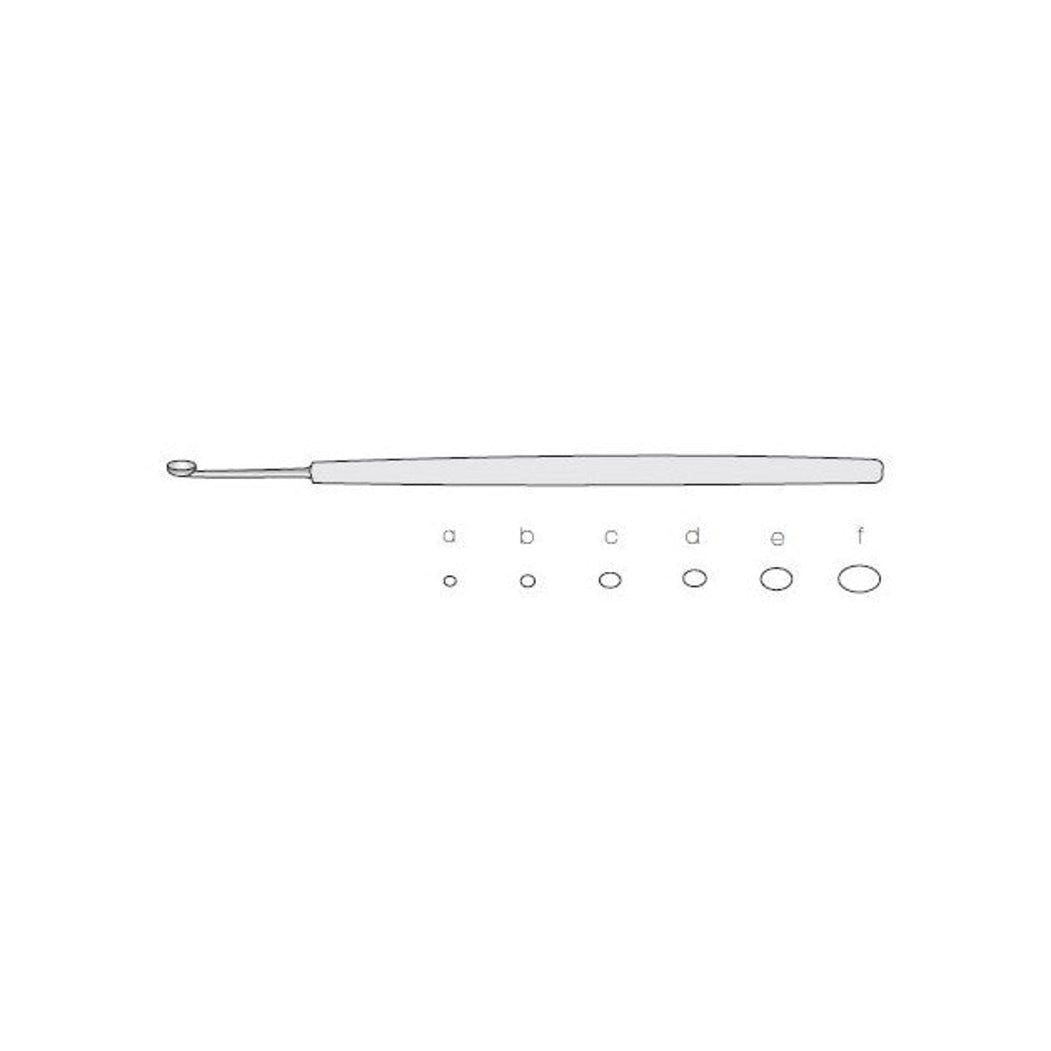
Efficient and controlled evacuation of tarsal cyst contents. The Chalazion Sharp Spoon (also known as a Chalazion Curette) is a specialized ophthalmic instrument engineered for the thorough removal of meibomian gland secretions and granulomatous tissue. Featuring a sharp-edged, circular basin, this instrument acts as a mechanical necessity for performing effective curettage following an eyelid incision. The streamlined design and variety of spoon diameters allow the practitioner to navigate the sensitive anatomy of the tarsal plate with high tactile sensitivity, ensuring a clean surgical site and reducing the likelihood of cyst recurrence.
[Add to Cart – Professional Ophthalmic Series]
The Chalazion Sharp Spoon is a fundamental component of the minor ophthalmic surgical tray. In the treatment of a chalazion, where conservative methods have failed, this curette is used after the eyelid has been stabilized with a chalazion clamp and incised. Its primary function is to reach into the tarsal gland and physically clear the blockage that causes inflammation.
Designed for the rigorous requirements of busy eye clinics and ambulatory surgery centers, these spoons are fully autoclavable and built for clinical longevity. Their functional simplicity makes them a trusted tool for ophthalmologists, dermatologists, and medical residents. By providing a clean, empty cavity, the sharp spoon supports faster healing and a more predictable clinical outcome for the patient.
Feature Details
Material Premium Surgical-Grade Stainless Steel
Sizes Available : Small, Medium, Large (Various diameters)
Tip Style Circular / Oval Sharp Spoon
Handle Type Solid / Textured for Grip
Maintenance Fully Autoclavable / Reusable
Primary Use Cases:
Q: Why do I need a "sharp" spoon instead of a blunt one?
A: A sharp edge is necessary to effectively debride the thickened, often fibrous lining of a chronic chalazion. A blunt spoon may only remove the softest material, leaving behind the capsule, which can lead to recurrence.
Q: How do I select the right size?
A: Generally, the spoon should be slightly smaller than the diameter of the cyst. Using a spoon that is too large can put unnecessary pressure on the incision edges, while one too small may increase procedure time.
Q: Can these be used for other types of cysts?
A: While specifically designed for meibomian glands, they are frequently used for other small cutaneous cysts or abscesses on the face and neck, where precision is required.
Q: How do I maintain the sharpness of the edge?
A: Avoid contacting other metal instruments during cleaning and sterilization. Use specialized instrument trays with silicone mats to prevent the tips from striking hard surfaces.


