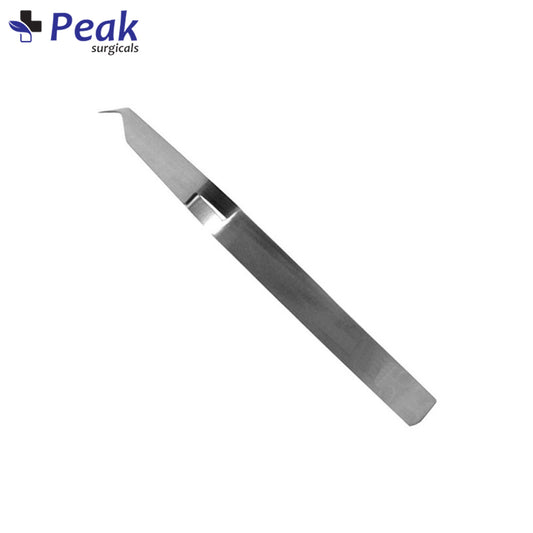
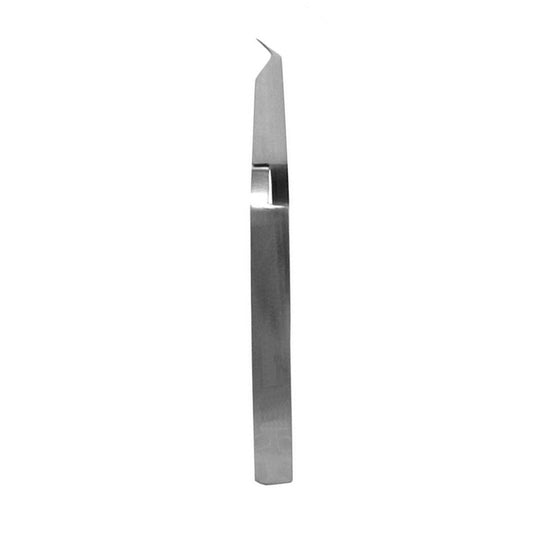
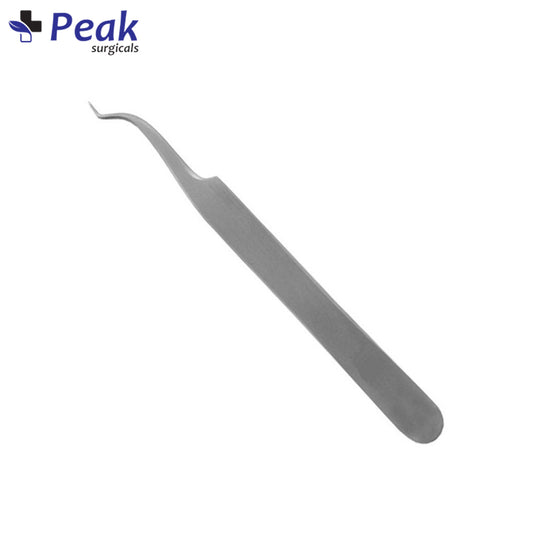
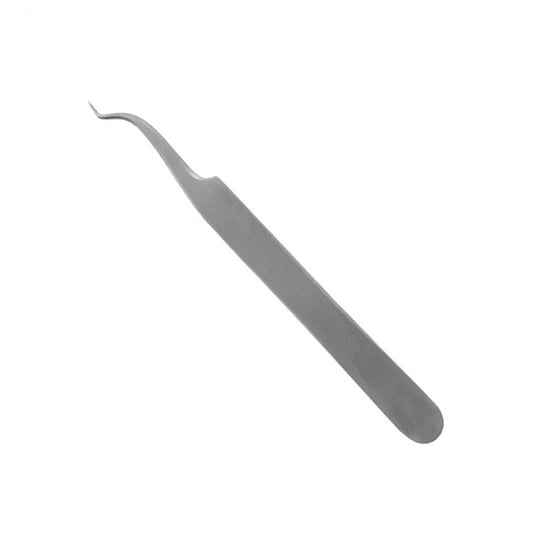
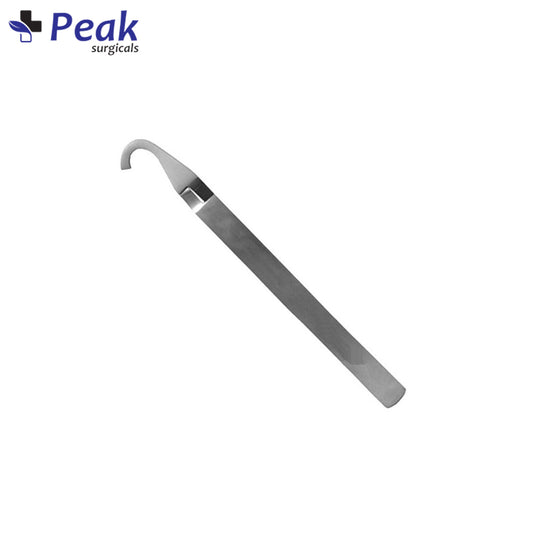
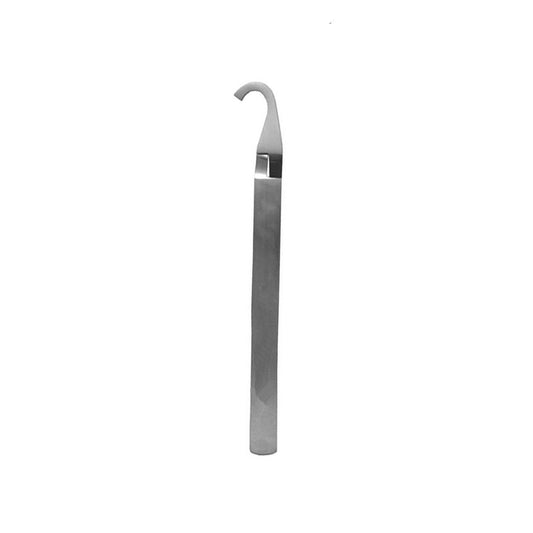
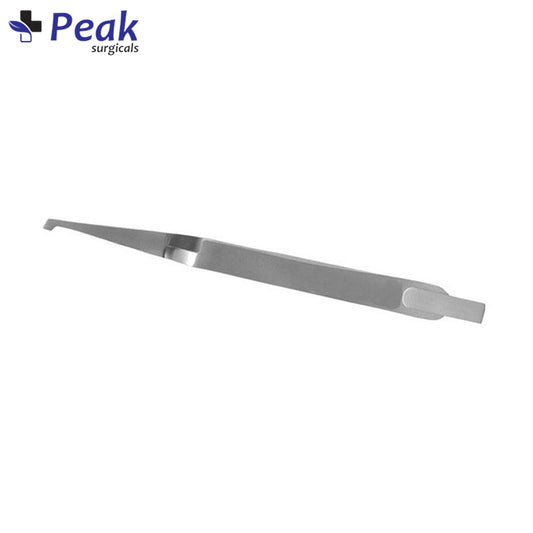
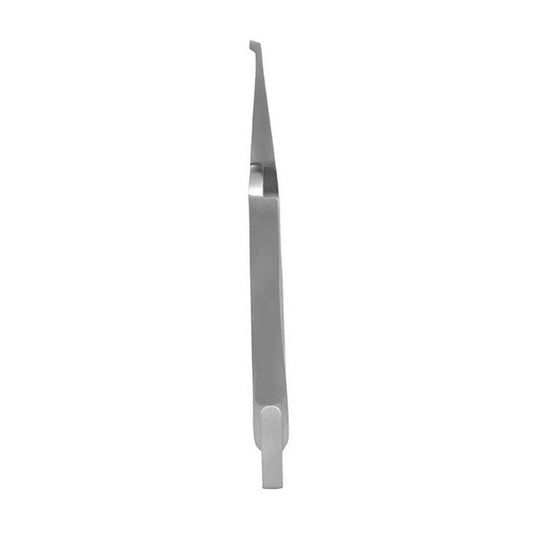
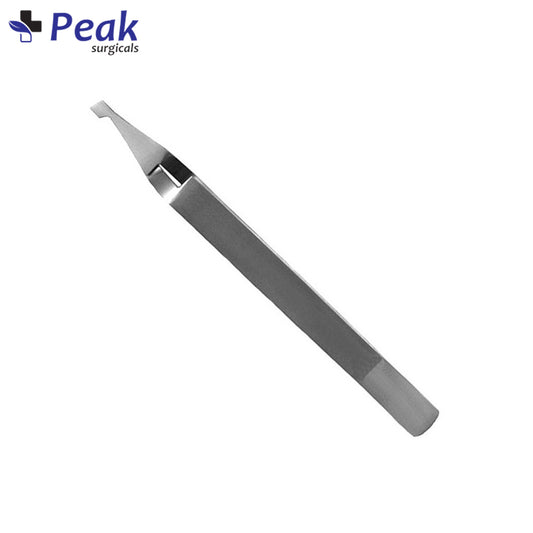
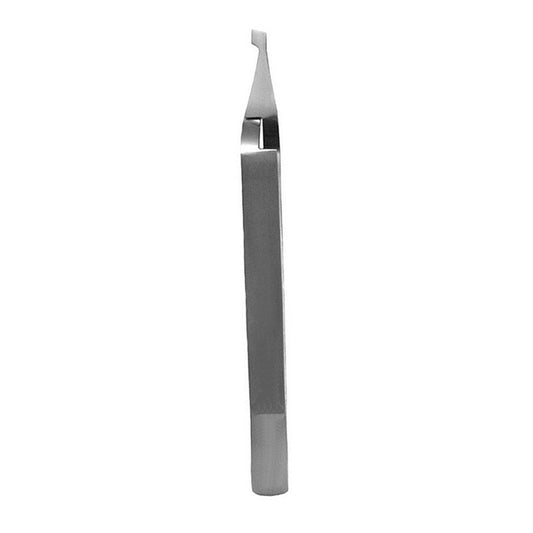
Orthodontic bracket tweezers carry a reverse-action mechanism the jaws close when the handle is released rather than squeezed so the bracket stays gripped without continuous finger pressure while it's positioned and bonded. Peak Surgicals supplies five patterns: posterior, anterior, buccal tube and lingual in stainless steel, from $11.00 to $16.50. Each is CE marked and built under ISO 13485. Compare all five patterns in the grid below.
Which Tweezer: Posterior, Anterior, Buccal Tube, or Lingual?
Posterior tweezers carry a slim, angulated tip for access to molar and premolar regions, anterior tweezers run a smaller tip for the visible front teeth, buccal tube tweezers use a curved body that approaches the molar surface horizontally, and lingual instruments are shaped for the tongue-side approach a standard tweezer cannot reach. Tooth position, not bracket size, is what decides which pattern belongs in hand.
Posterior Bonding Tweezers (PS-D-147, $11.00) hold and manoeuvre brackets into the posterior region with the reduced visibility that area presents. Anterior Bonding Tweezers with Slot Aligner (PS-D-146, $16.50) carry a rectangular serrated tip for firm bracket grasp a simple flip to the other end lets the same instrument precisely align and position the bracket, so one tool covers grip and placement. Keat Buccal Tube Tweezers (PS-D-149, $11.00) carry a thin, contoured tip built to approach the buccal molar surface horizontally, gripping and pressing the tube into its final position. Curved Direct Bond Instrument (PS-D-148, $11.00) is shaped for lingual bracket placement, and Direct Bond Bracket Holder (PS-D-145, $11.00) rounds out general direct-bond handling. We supply every pattern at MOQ
Reverse Action, Flip-to-Align and Why Bonding Accuracy Matters
The reverse-action mechanism is what makes these tweezers different from a general dental tweezer: releasing the handle closes the jaws on the bracket, and squeezing opens them to release a grip that holds without fatigue through the seconds a bracket needs to sit precisely before curing. Several patterns pair that grip with a second function at the opposite end, letting the practitioner flip the instrument to fine-align the bracket's position without switching tools.
That precision matters because bonding position is unforgiving once cured. A tube placed even 1.0mm too far gingivally or occlusally introduces torque and vertical discrepancies that later require compensatory wire bending or full repositioning — a correction that costs far more chair time than getting placement right the first time. Moisture or salivary contamination during the bonding sequence is the most frequent cause of premature debonding, capable of dropping shear bond strength below the clinical threshold, which is why a secure, steady grip during positioning and cure matters as much as the adhesive itself.
Reprocessing, Tip Integrity and Certification
The tip and reverse-action spring are the inspection points on these instruments: a tip that has bent or lost its serration no longer grips the bracket securely, and a spring that has weakened releases grip before the practitioner intends it to. Check both before each use, and ultrasonic-clean before autoclaving so bonding resin residue does not build up on the working tip.
Every instrument is Class I, reusable, CE marked and built under ISO 13485 the documentation a dental supply team verifies before qualifying a vendor. Warranty is one year with return-and-replacement, MOQ is 1 piece, orders over $99 ship free in carton box packing, and OEM marking is available for distributors. For the broader orthodontic range see orthodontic instruments; browse all dental instruments. Talk to us about OEM and volume terms.