


Medical Instruments: Names, Pictures & Uses
Medical instruments range from everyday scissors and forceps to specialised tools used in bone, ear and eye procedures. This guide lists the names of common medical instruments with pictures and uses, and every instrument photo shows a real product from the Peak Surgicals range of medical instruments.
Medical instruments are tools used by healthcare professionals to cut, grasp, clamp, retract, suture, measure, suction or otherwise assist during clinical and surgical procedures.
Below you will find 13 common instruments explained one by one, a quick reference list, and an overview of how instruments are grouped by function and by specialty, from surgical and dental to orthopedic, ENT and veterinary instruments. The guide finishes with practical points on choosing, caring for and reprocessing reusable instruments.
Common Medical Instruments: Names, Pictures & Uses
The instruments below appear across many specialties. Each entry shows a real instrument, explains what it does and notes how patterns differ, because the exact use of any instrument depends on its pattern, size and working end.
Common medical instruments include surgical scissors, hemostatic forceps, surgical forceps, needle holders, retractors, specula, curettes, elevators, rongeurs, suction tubes, cannulas, osteotomes and calipers.
Surgical Scissors
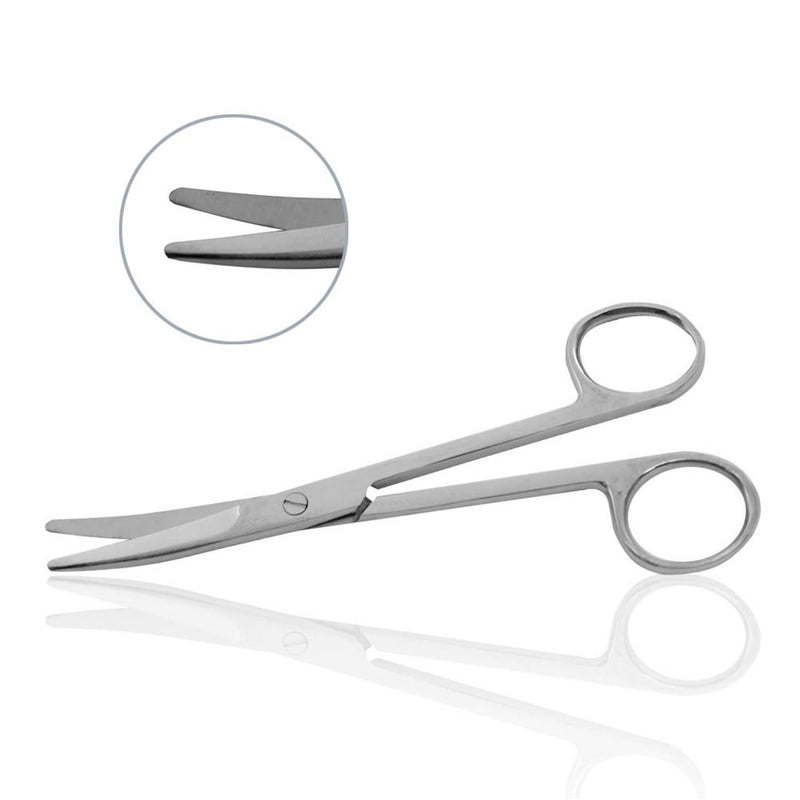
Surgical scissors are cutting instruments used to cut or dissect tissue and to cut sutures, dressings and other materials. Patterns differ in blade length, blade weight, curvature and tip shape, and those differences decide the job. Mayo scissors, shown here, are a heavier pattern generally associated with tougher tissue: curved Mayo blades suit dissection, while straight versions are often used to cut sutures. Finer patterns such as Metzenbaum scissors are used for more delicate tissue, and iris scissors for very fine work. For a pattern-by-pattern comparison, see our guide to types of surgical scissors.
Function category: Cutting & Dissecting
Hemostatic Forceps
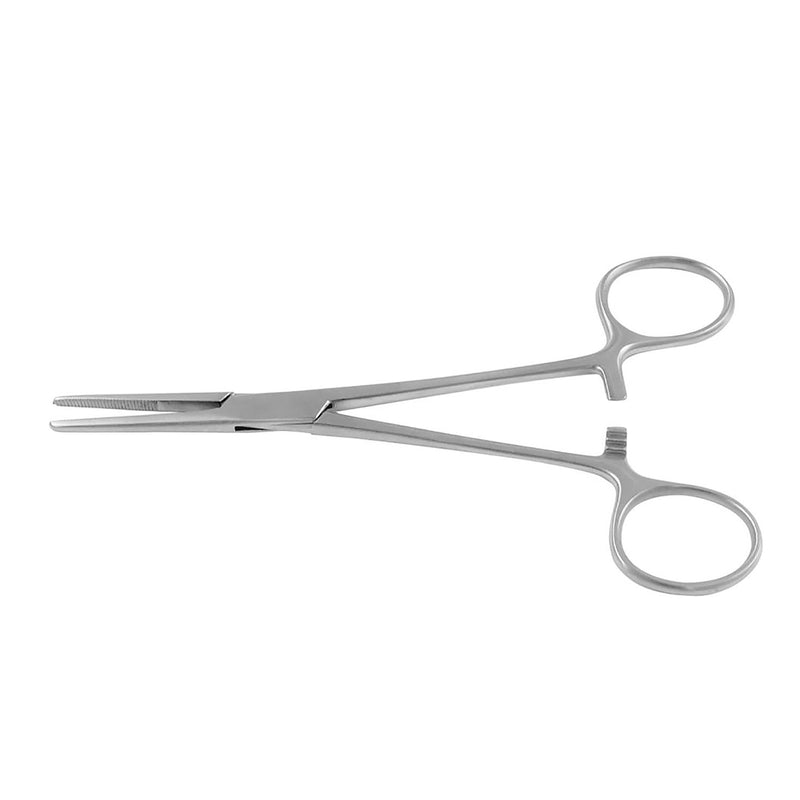
Hemostatic forceps, often called hemostats or artery forceps, are ring-handled clamping instruments with a ratchet lock. They are used to clamp blood vessels or tissue temporarily, and the ratchet keeps the jaws closed without the user maintaining a grip. Patterns vary by size, jaw length, straight or curved jaws and serration pattern. The Kelly forceps shown here is a medium-sized pattern with transverse serrations on the distal part of the jaws, while the similar Crile pattern is serrated along the full jaw and Mosquito forceps are smaller for fine vessels. Our guide to types of hemostats compares these patterns in detail.
Function category: Clamping & Occluding
Surgical Forceps
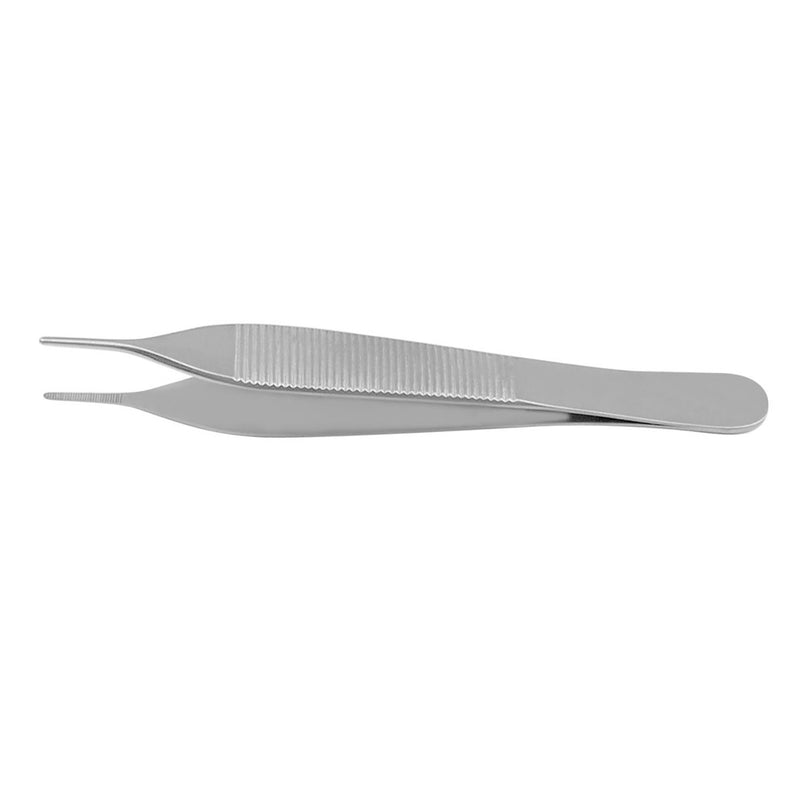
Surgical forceps is a broad name for instruments that grasp and hold. Many are thumb forceps: non-locking, spring-action instruments held like a pencil and used to hold tissue, dressings or suture material. The Adson forceps shown here has broad, ridged thumb grips that narrow to fine tips, a design generally used for delicate handling of tissue such as skin during suturing. Adson forceps are made with teeth, which grip tissue more securely, or with serrated tips. Other families include dressing forceps, tissue forceps and specialty patterns for dental, ophthalmic and ENT work. Compare patterns in the surgical forceps collection.
Function category: Grasping & Holding
Needle Holder
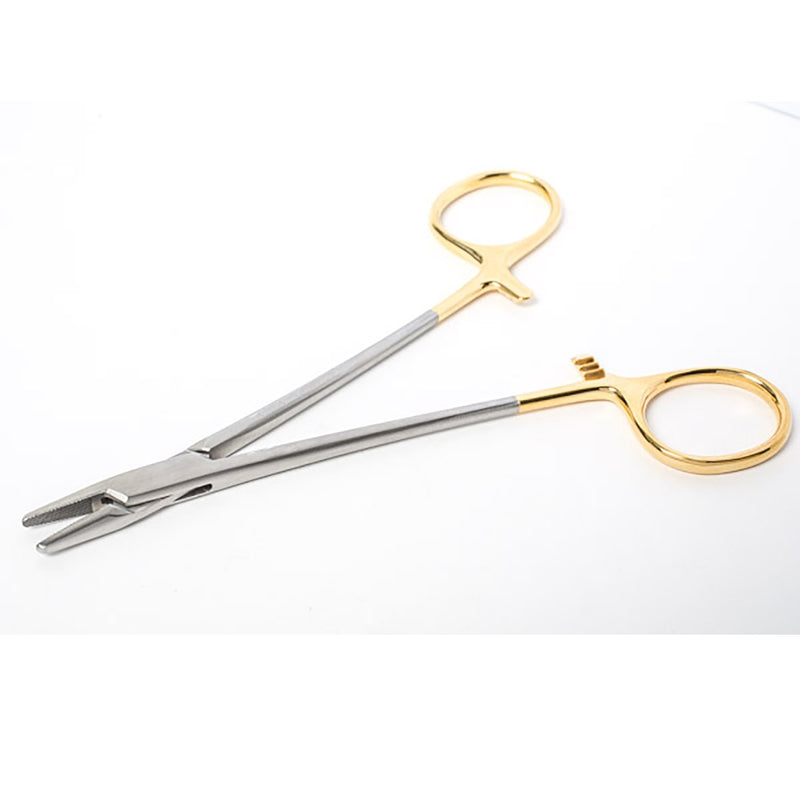
A needle holder, also called a needle driver, grips a curved suture needle so it can be passed through tissue with control. Most general patterns resemble hemostatic forceps, with ring handles and a ratchet lock, but have shorter, stronger jaws with a crosshatched grip surface that holds the needle without letting it turn. The Mayo-Hegar needle holder shown here is one of the most widely used general patterns. Needle holders vary in length, jaw width and fine or heavy jaw design to suit different needle sizes, and some patterns use tungsten carbide jaw inserts for added wear resistance. Explore the full range of needle holders.
Function category: Suturing
Retractor
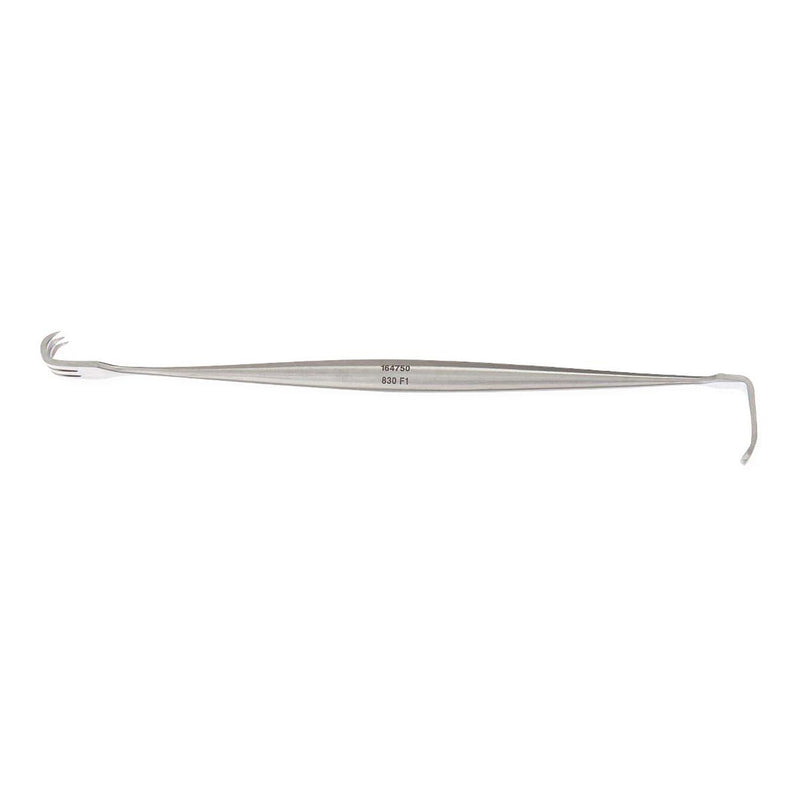
Retractors hold back skin, muscle or other tissue so the working area stays visible and accessible. They fall into two broad groups: handheld retractors, which an assistant holds in position, and self-retaining retractors, which stay open on their own. The Senn retractor shown here is a small, double-ended handheld pattern, with a three-pronged rake at one end and a flat, bent blade at the other, and is typically used for small or superficial incisions. Larger procedures use bigger blades and self-retaining designs. Browse retractors and spreaders for handheld and self-retaining options.
Function category: Retracting & Exposing
Speculum
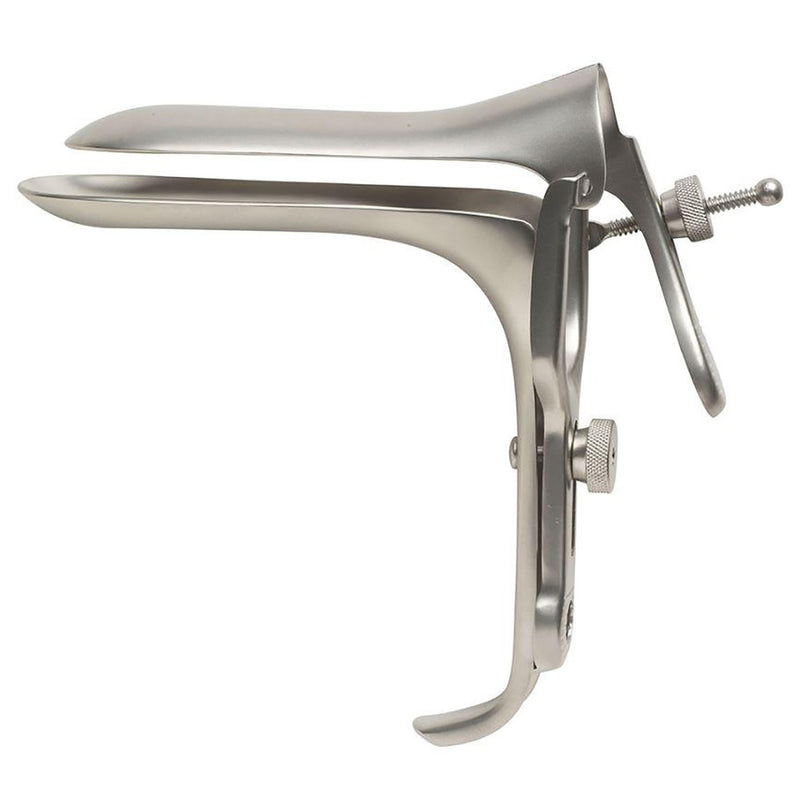
A speculum opens or holds apart the walls of a body cavity or canal so it can be examined or accessed. Designs vary by specialty: vaginal specula are used in gynecological examination, nasal and ear specula in ENT, and eye specula in ophthalmic procedures. The Graves vaginal speculum shown here is a bivalve design with two blades that open and are held in position by an adjustment mechanism. Graves specula are generally made in several blade sizes, and the related Pederson pattern has narrower blades. See the vaginal specula collection for available patterns.
Function category: Retracting & Exposing
Curette
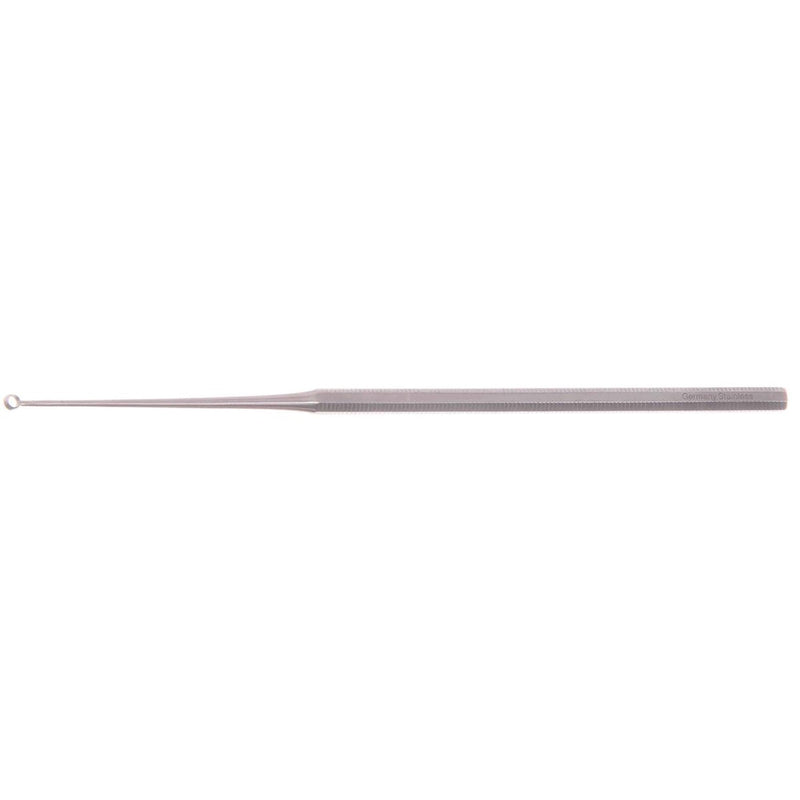
A curette has a small scoop, loop or ring at the working end and is used to scrape or remove material from a surface or cavity. Curettes exist in almost every specialty, including uterine curettes in gynecology, bone curettes in orthopedics, periodontal curettes in dentistry and ear curettes in ENT. The Buck ear curette shown here is a slender otologic pattern with a small working tip, generally used to remove cerumen or debris from the ear canal. Curettes vary by tip size, sharp or blunt edge and shaft angle. Browse ENT curettes for ear curette patterns.
Function category: Scraping & Elevating
Elevator
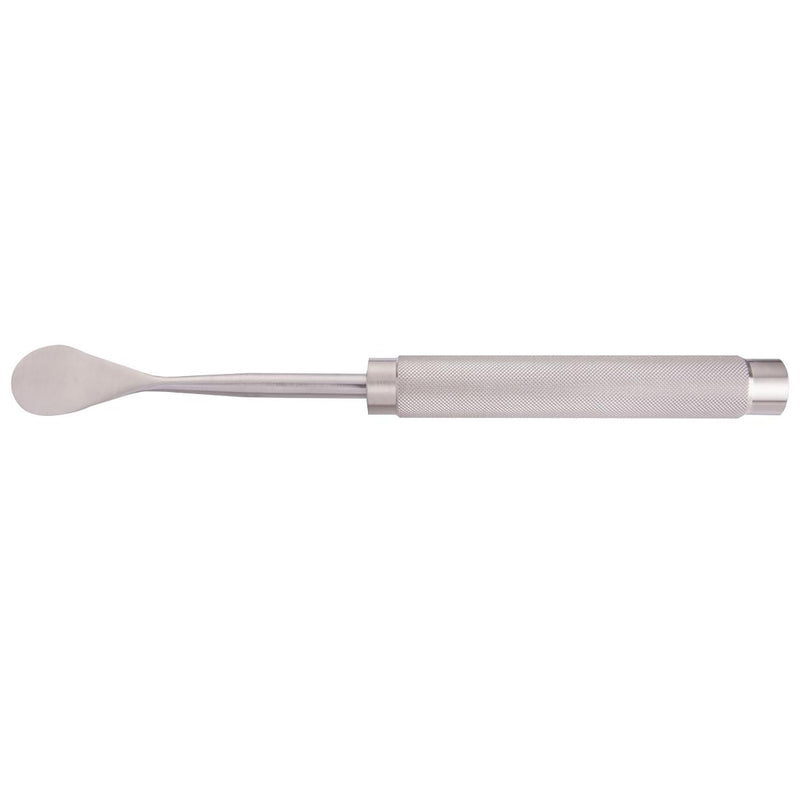
Elevators lift, separate or loosen one structure from another. In orthopedic and spinal surgery, periosteal elevators lift periosteum and soft tissue away from bone, while in dentistry, elevators loosen teeth or root fragments before extraction. The Cobb Dawson elevator shown here has a broad, flat blade on a long shank with a cylindrical handle, a design associated with separating soft tissue from bone in spinal procedures. Elevators differ in blade width, blade shape and edge sharpness. Explore bone elevators and raspatories.
Function category: Scraping & Elevating
Rongeur
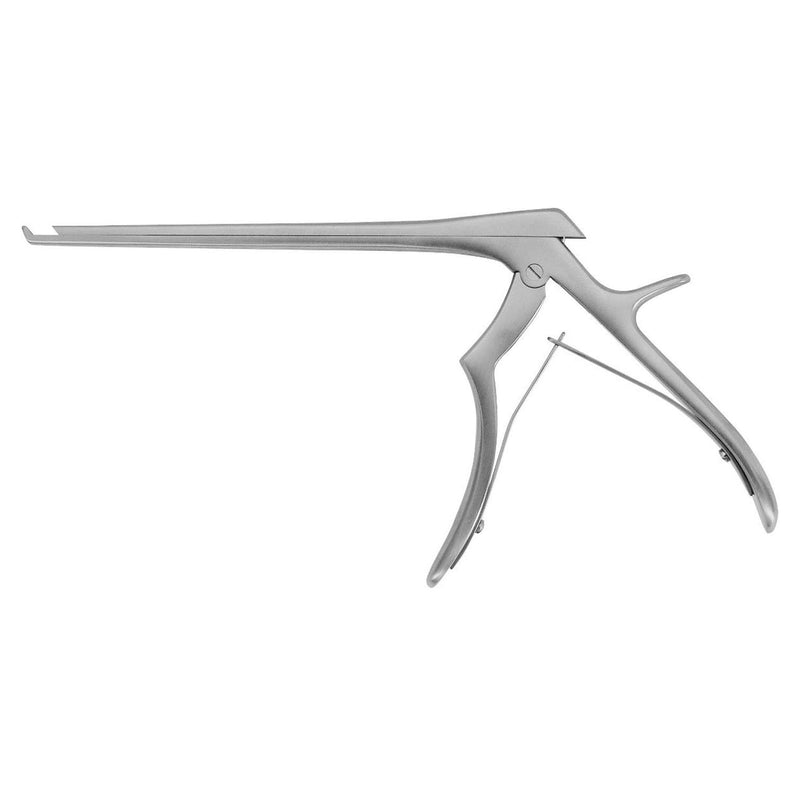
A rongeur is a heavy-duty biting instrument used to remove bone or dense tissue in small pieces. Standard bone rongeurs have scoop-shaped jaws operated by spring handles. The Kerrison rongeur shown here works differently: a long shaft ends in a thin footplate that is placed beneath the edge of the bone, and squeezing the handle drives a cutting punch against the footplate to take a controlled bite. Kerrison patterns are commonly used in spinal and neurosurgical procedures and are made in different bite widths and cutting angles. See the Kerrison rongeur collection.
Function category: Bone & Orthopedic Work
Suction Tube
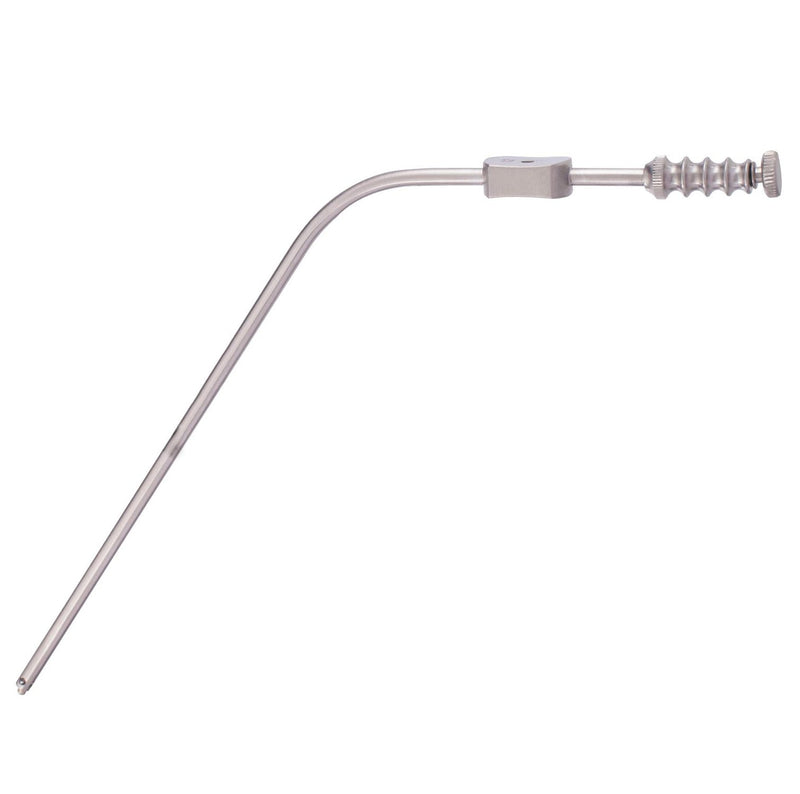
Suction tubes connect to suction tubing to remove blood, irrigation fluid and other fluids, keeping the working area clear. Patterns differ in length, diameter, angle and tip design. The Baron suction tube shown here is a fine, angled pattern with a finger-controlled vent: covering the vent increases suction at the tip, and uncovering it reduces suction. Fine angled patterns such as Baron and Frazier are commonly used in ENT and other delicate procedures, while wider patterns such as Yankauer are used where larger volumes need clearing. Browse ENT and surgical suction tubes.
Function category: Suction & Irrigation
Cannula
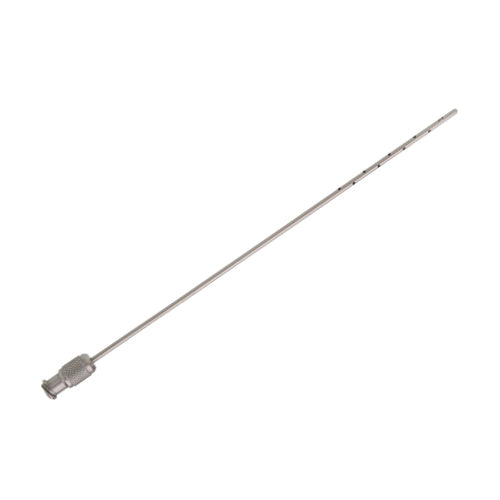
A cannula is a hollow tube inserted into the body or a surgical site for access, infusion, irrigation or aspiration, depending on its design. Cannulas are used across many specialties, from fine irrigating cannulas in ophthalmic surgery to larger aspiration cannulas in plastic surgery. The Entner cannula shown here is a liposuction cannula: a long, slender tube with several side openings near the distal end and a connector at the handle end for an aspiration system. Cannulas vary by length, diameter, tip shape and the number and position of their ports. Explore liposuction cannulas.
Function category: Suction & Irrigation
Osteotome
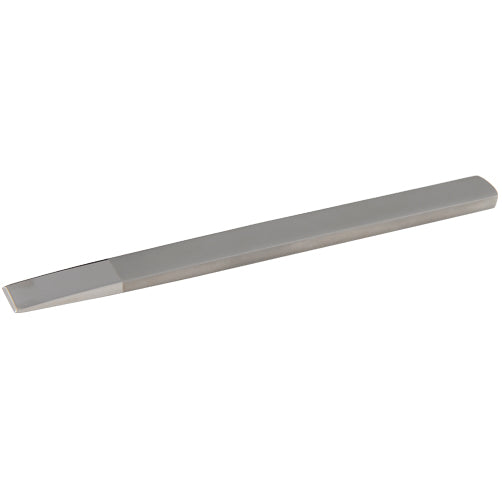
An osteotome is a chisel-like instrument used with a mallet to cut or shape bone. The main difference from a bone chisel is the cutting edge: an osteotome is bevelled on both sides, a chisel is bevelled on one side, and a gouge has a curved, scoop-shaped blade. The Lambotte mini osteotome shown here is a straight, flat, narrow pattern suited to smaller-scale bone work. Osteotomes are selected by blade width, length and weight. Browse bone chisels, osteotomes and gouges.
Function category: Bone & Orthopedic Work
Caliper
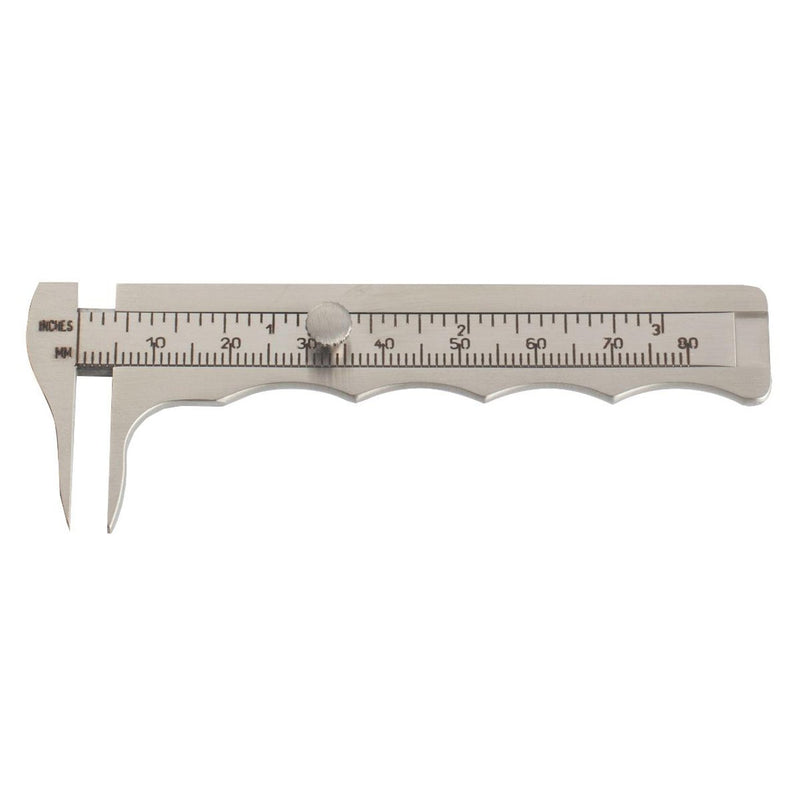
A surgical caliper measures distances or dimensions during a procedure or at the planning stage. Most designs use two measuring arms that open against a graduated scale, so a measurement can be taken and read directly from the instrument. The Jameson caliper shown here is a sliding caliper with curved measuring jaws. Calipers of this type are used where small, precise measurements matter, such as in ophthalmic and plastic surgery. Browse ophthalmic calipers for more measuring instruments.
Function category: Probing & Measuring
Quick Medical Instruments List
Use this list of medical instruments as a quick reference to the names, function categories and general uses covered above.
| Instrument | Function Category | General Use |
|---|---|---|
| Surgical Scissors | Cutting & Dissecting | Cutting or dissecting tissue and cutting sutures, depending on pattern |
| Hemostatic Forceps | Clamping & Occluding | Temporary clamping of vessels or tissue |
| Surgical Forceps | Grasping & Holding | Grasping and holding tissue or materials |
| Needle Holder | Suturing | Holding and controlling suture needles |
| Retractor | Retracting & Exposing | Holding tissue back to expose the working area |
| Speculum | Retracting & Exposing | Opening a cavity or canal for examination or access |
| Curette | Scraping & Elevating | Scraping or removing material |
| Elevator | Scraping & Elevating | Lifting or separating tissue, or loosening teeth |
| Rongeur | Bone & Orthopedic Work | Removing bone in small bites |
| Suction Tube | Suction & Irrigation | Removing fluid from the working area |
| Cannula | Suction & Irrigation | Access, infusion, irrigation or aspiration, depending on design |
| Osteotome | Bone & Orthopedic Work | Cutting or shaping bone with a mallet |
| Caliper | Probing & Measuring | Measuring distances and dimensions |
Medical Instruments by Function
Medical instruments can be grouped by function or by specialty, including surgical, dental, orthopedic, ENT, ophthalmic, gynecological and veterinary instruments. Grouping by function is useful when you know what an instrument does but not its exact name.
Cutting & Dissecting
Scissors, scalpels and dissectors divide or separate tissue. Blade shape, tip style and weight determine whether a pattern suits heavier tissue, delicate dissection or cutting sutures.
Grasping & Holding
Thumb forceps, tissue forceps and dressing forceps hold tissue or materials. Tip designs range from smooth and serrated to toothed patterns that grip more firmly.
Clamping & Occluding
Hemostatic forceps and clamps compress vessels or tissue and stay closed with a ratchet. Jaw length, curvature and serration pattern differ between designs.
Retracting & Exposing
Retractors, specula and spreaders move tissue aside or open a cavity so the area can be seen and reached. Designs are either handheld or self-retaining.
Suturing
Needle holders grip suture needles while the needle is passed through tissue. Jaw size and strength are generally matched to the size of the needle.
Scraping & Elevating
Curettes scrape or remove material, and elevators lift or loosen structures such as periosteum, soft tissue or teeth.
Probing & Measuring
Probes explore wounds, tracts or cavities, and calipers or rulers take measurements. Many dental probes carry markings for measuring depth.
Suction & Irrigation
Suction tubes and cannulas remove fluid from a site or deliver fluid to it. Tip diameter, length and vent design influence how they perform.
Bone & Orthopedic Work
Rongeurs, osteotomes, chisels, gouges, bone-holding forceps and mallets cut, shape, remove or hold bone during orthopedic and related procedures.
Types of Medical Instruments by Specialty
The types of medical instruments a clinician uses depend heavily on specialty. The same instrument families appear in many fields, but each specialty relies on its own sizes, patterns and working ends.
Surgical Instruments
General surgical instruments cover the core families used in many procedures: scissors, forceps, hemostats, needle holders, retractors, probes and suction tubes, along with basic surgery sets. Browse surgical instruments.
Dental Instruments
Dental instruments include mirrors, explorers and periodontal probes for examination, extraction forceps and elevators, scalers and curettes, restorative and endodontic instruments, and orthodontic pliers. Explore dental instruments.
Orthopedic Instruments
Orthopedic instruments are designed for work on bones and joints. Common groups include bone-holding forceps, rongeurs, osteotomes and chisels, bone elevators, bone retractors, mallets, drills and procedure-specific instrument sets. See orthopedic instruments.
ENT Instruments
ENT instruments serve ear, nose and throat procedures. They include aural forceps and ear curettes for the ear, nasal specula, septal elevators and ethmoid forceps for the nose and sinuses, and laryngoscopes, mouth gags and tonsil instruments for the throat. Browse ENT instruments.
Ophthalmology Instruments
Ophthalmic procedures rely on very fine instruments, including micro forceps, micro scissors, needle holders, eye specula, hooks, lens loops and calipers, with some patterns available in titanium. Explore ophthalmology instruments.
Gynecology Instruments
Gynecology instruments include vaginal specula, uterine sounds, dilators and curettes, tenaculum and vulsellum forceps, biopsy punch forceps and gynecology retractors. See gynecology instruments.
Plastic Surgery Instruments
Plastic surgery instruments include liposuction cannulas, breast retractors and dissectors, rhinoplasty instruments, skin graft knives, measuring and marking instruments, and facelift sets. Browse plastic surgery instruments.
Cardiovascular Instruments
Cardiovascular instruments are designed for work on the heart and blood vessels, including vascular clamps, fine dissecting forceps, micro scissors, needle holders, rib spreaders and rib shears. Explore cardiovascular instruments.
Veterinary Instruments
Veterinary instruments adapt surgical and dental patterns for animal care, including small animal surgical instruments, veterinary dental elevators and extraction forceps, and orthopedic instruments for larger animals. See veterinary instruments.
Electrosurgical Instruments
Electrosurgical instruments connect to an electrosurgical generator to cut or coagulate tissue. The range includes bipolar forceps in standard, non-stick and irrigation designs, monopolar forceps, and electrosurgical pencils and electrodes. Browse electrosurgical instruments.
Proctology Instruments
Proctology instruments are used for examination and procedures involving the anal canal and rectum, including proctoscopes, anal retractors, clamps and grooved directors. Explore proctology instruments.
Hair Transplant Instruments
Hair transplant instruments support follicular unit extraction and graft handling, including FUE punches, fine extracting forceps, towel clamps and complete hair transplant instrument sets. See hair transplant instruments.
Post Mortem Instruments
Post mortem instruments are built for autopsy and forensic examination, including post mortem saws, shears, bone cutting forceps, dissecting forceps, scissors, probes, chisels and mallets. Browse post mortem instruments.
Medical Instruments in Different Clinical Settings
Instrument requirements vary by specialty, procedure and facility, so no single list applies everywhere. The settings below show how the same instrument families are used in different ways.
Operating Room
General surgical procedures typically draw on core instruments such as scalpels, scissors, thumb forceps, hemostatic forceps, needle holders, retractors and suction tubes, usually organised into procedure sets.
Dental Practice
Routine dental care centres on examination instruments such as mirrors, explorers and probes, supported by scalers and curettes, restorative instruments and, for oral surgery, extraction forceps and elevators.
Orthopedic and Spinal Procedures
Bone work calls for heavier instruments, including bone-holding forceps, rongeurs, osteotomes, elevators and mallets, often alongside procedure-specific instrument sets.
ENT and Ophthalmic Procedures
These specialties work in small, delicate anatomy, so instruments are finer and often angled or bayonet-shaped, including ear curettes, fine suction tubes, micro forceps and calipers.
Veterinary Practice
Veterinary clinics use many general surgical patterns alongside instruments sized for different species and veterinary-specific dental instruments.
How to Choose a Medical Instrument
Choosing the right instrument starts with the procedure and then narrows down to pattern and design details.
Specialty and Procedure
Start with where and how the instrument will be used. A pattern designed for delicate ophthalmic tissue will not suit heavy orthopedic work, and the reverse is also true.
Pattern Name
Pattern names such as Kelly, Adson or Kerrison describe a specific, recognised design. Matching the pattern name on a procedure list or tray card is the most reliable way to reorder the same instrument.
Size and Working End
Check overall length, jaw or blade length, tip width and bite size. The working end, whether toothed, serrated, smooth, sharp or blunt, determines how the instrument interacts with tissue.
Straight or Curved, Locking or Non-Locking
Curved instruments can help reach around structures, while straight patterns suit direct lines of work. Ratchet locks hold the jaws closed without a constant grip, and non-locking instruments give continuous fingertip control.
Reusability, Material and Reprocessing
Confirm whether an instrument is reusable or single-use, what it is made from and whether it is compatible with your facility's cleaning and sterilization process. Check the individual product page for material and care information.
Materials and Reusability
Most reusable medical instruments are made from surgical-grade stainless steel, chosen for strength, corrosion resistance and the ability to withstand repeated cleaning and sterilization. Some instruments use other materials for specific purposes: titanium is lighter and non-magnetic and is common in fine ophthalmic and microsurgical instruments, while tungsten carbide inserts are added to the jaws or blades of some needle holders, forceps and scissors for wear resistance.
For a closer look at what these instruments are made of, see our guide to surgical instrument materials.
Not every instrument is reusable. Some items, such as certain ophthalmic instruments and bipolar forceps, are designed for single use, so always check the product information before reprocessing an instrument.
Peak Surgicals instruments are manufactured from medical-grade materials, including German-forged stainless steel where specified, with material details listed by product. Quality processes follow ISO 13485 requirements, CE marking applies to applicable products, and instruments are inspected before dispatch.
Cleaning, Inspection & Sterilization
Reusable instruments need consistent reprocessing to stay safe and functional. The exact steps depend on the instrument, its material and the facility, so always follow the manufacturer's instructions for use (IFU) and the facility's validated protocols.
Cleaning
Remove visible soil promptly after use and do not allow blood or debris to dry on the instrument. Open hinged instruments so joints, serrations and ratchets can be cleaned thoroughly, and use cleaning agents compatible with the instrument's material.
Inspection
Before packaging, check each instrument for cracks, corrosion, pitting or surface damage. Confirm that jaws and tips align, ratchets engage and release smoothly, cutting edges are sharp and joints move freely. Instruments that fail inspection should be removed from use for repair or replacement.
Drying and Sterilization
Dry instruments thoroughly before packaging and sterilization. The sterilization method and cycle parameters must follow the IFU and the facility's validated process; no single setting applies to every instrument.
Unless stated on the individual product page, Peak Surgicals instruments are supplied non-sterile and must be cleaned and sterilized before clinical use according to the facility's validated protocols.
Medical Instruments vs Surgical Instruments
The two terms are often used interchangeably, but they are not the same. Surgical instruments are a subset of medical instruments designed for use during surgical procedures, such as scalpels, surgical scissors, hemostatic forceps and needle holders. Medical instruments is the broader term: it also covers instruments used for examination, diagnosis and specialty care outside the operating room, such as specula, ear curettes, dental mirrors, probes and measuring instruments.
In practice, many instruments belong to both groups. A speculum may be used in a routine examination or during a procedure, and forceps appear in clinics as well as operating rooms. That overlap is why this guide covers core surgical instruments first and then the wider range of medical specialties.
Frequently Asked Questions
What are the 10 instruments used in the hospital?
There is no official list of ten, because instruments vary by department and procedure. Ten instruments found across many hospital settings are scalpels, surgical scissors, thumb forceps, hemostatic forceps, needle holders, retractors, specula, suction tubes, curettes and probes. Specialist departments add their own patterns, such as rongeurs in orthopedics or micro forceps in ophthalmology.
What are 50 common surgical instruments?
No standard list of 50 exists, because a surgical set depends on the specialty and the procedure. Most general sets are built from the same families: scalpels and scissors for cutting, thumb and tissue forceps for grasping, hemostatic forceps and clamps, needle holders, retractors and suction tubes. Counting the named patterns within each family produces a much longer list, and our guides to types of surgical scissors and types of hemostats cover two of these families pattern by pattern.
What are the names of all medical instruments?
No complete list covers every medical instrument, because each specialty has its own instruments and many are made in several named patterns and sizes. The practical starting point is the 13 core instruments shown in this guide, followed by the specialty groups above, from dental and orthopedic to ENT, ophthalmic and veterinary instruments.
What equipment is used in OT?
An operating theatre (OT) uses both equipment and instruments. Equipment means larger items such as the operating table, surgical lights, anesthesia machines and patient monitors. Instruments are the handheld tools used at the operating site, such as scalpels, scissors, forceps, hemostats, needle holders, retractors and suction tubes, which are usually organised into procedure sets.
How many tools are used in surgery?
There is no fixed number. A minor procedure may need only a small set of instruments, while complex procedures can use several instrument trays. The count depends on the procedure, the surgeon's preferences and the facility's standard sets, which is also why instruments are counted before and after surgery.
What is the most common surgical tool?
No single instrument is officially the most common, but a few appear in most general surgical sets: scalpels, scissors, thumb forceps, hemostatic forceps and needle holders. Their exact patterns and sizes change with the procedure.
Where can I buy medical instruments online?
Professional buyers can order medical instruments online from Peak Surgicals, where instruments are grouped by specialty and product pages list patterns, sizes and material details. Bulk orders and quotation requests can be sent through the contact page.
Explore Medical Instruments at Peak Surgicals
Knowing the names, pictures and uses of common instruments makes it easier to choose the right pattern for each procedure. Explore the full range of Peak Surgicals medical instruments, or go straight to surgical instruments, dental instruments, orthopedic instruments, ENT instruments and ophthalmology instruments.
Instruments are supplied non-sterile unless stated on the individual product page.