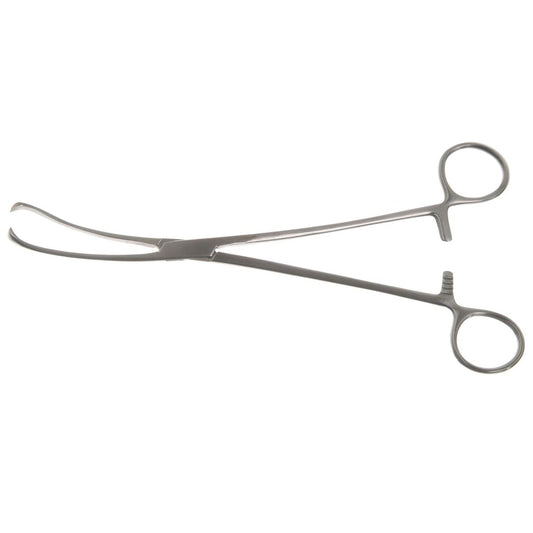
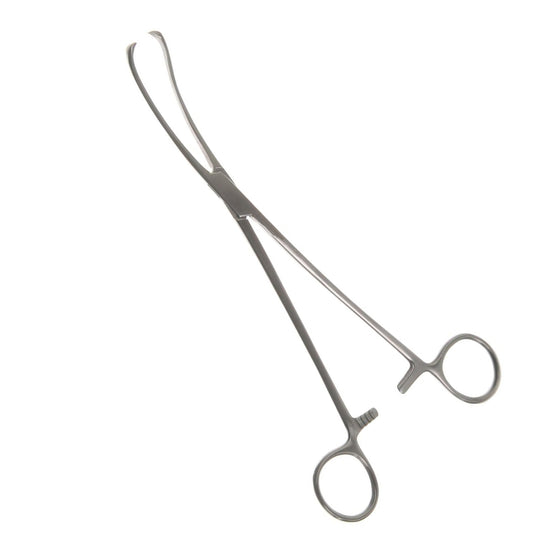
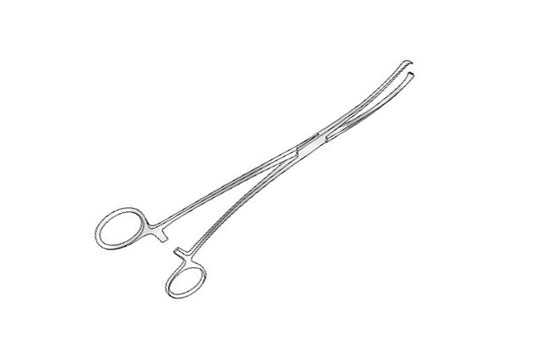
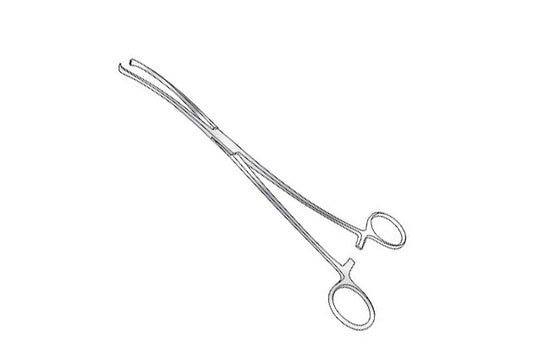
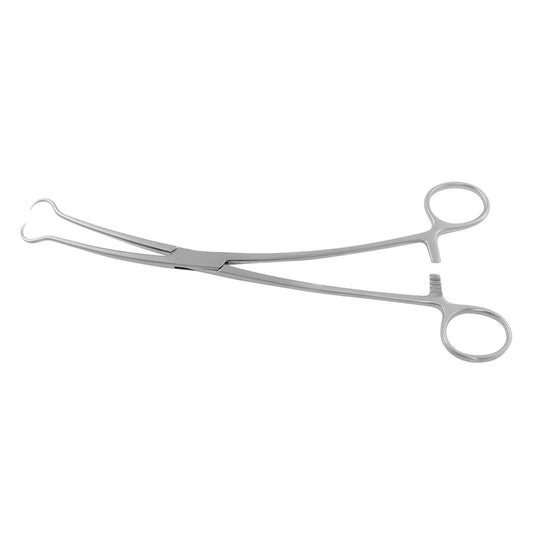
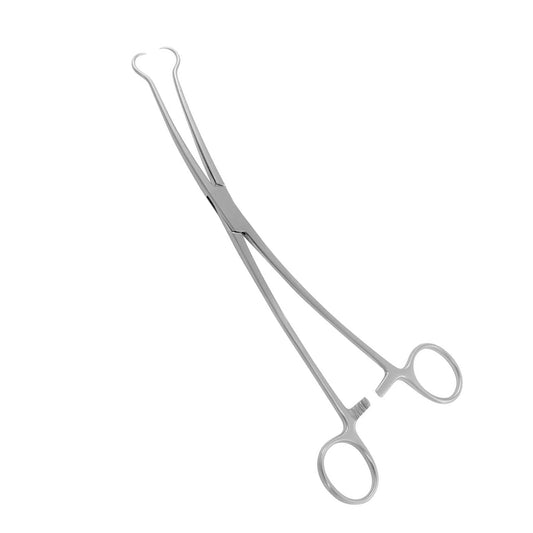
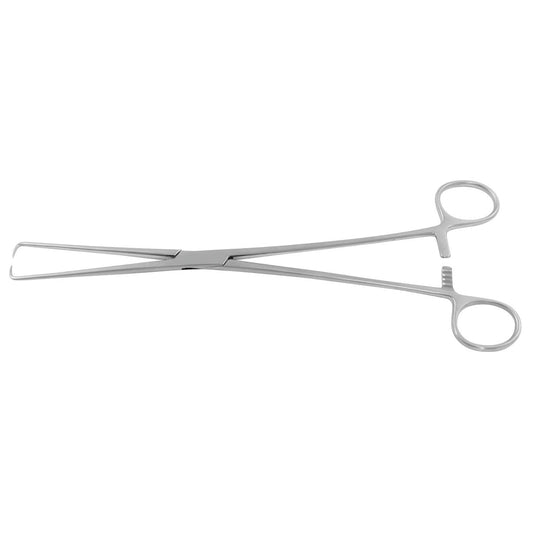
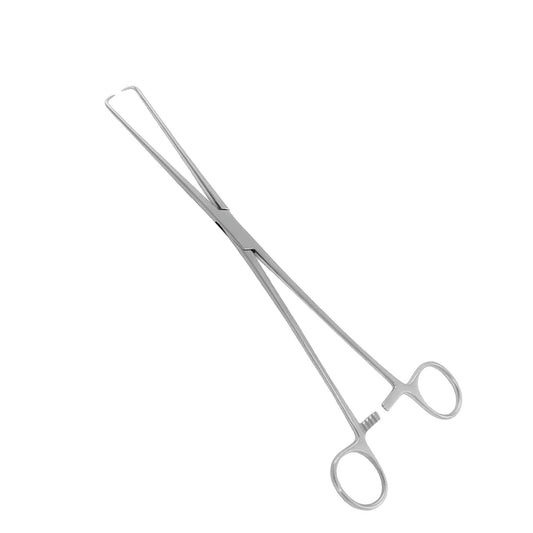
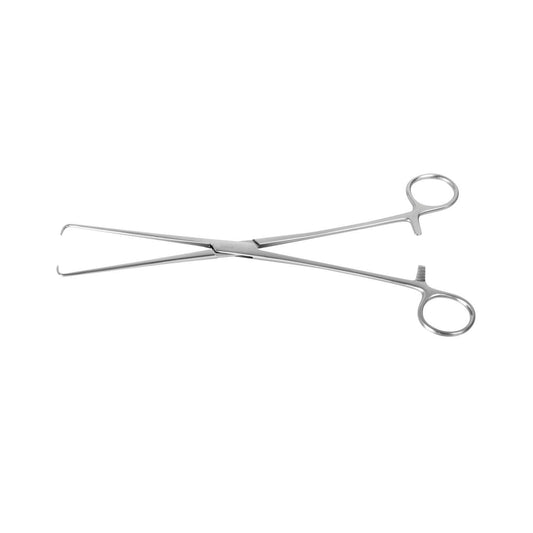
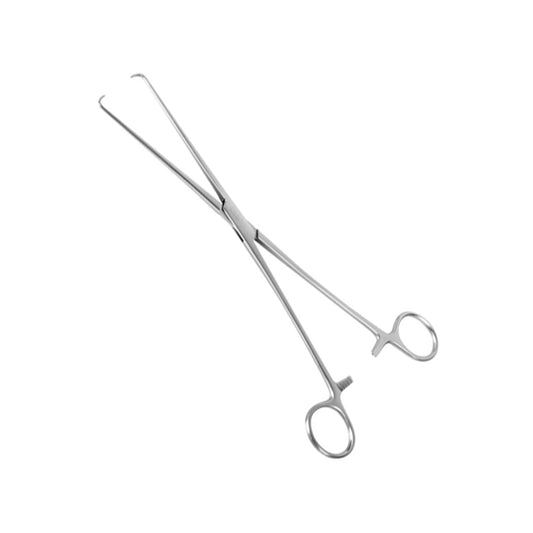
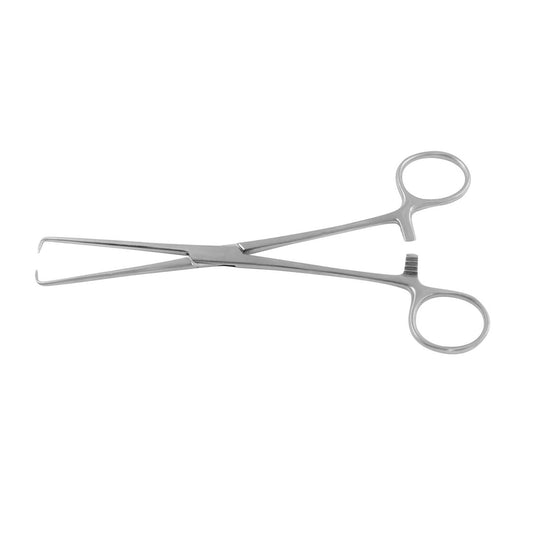
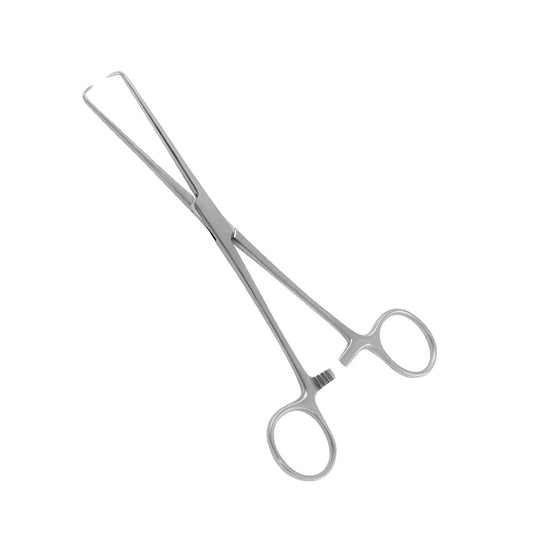
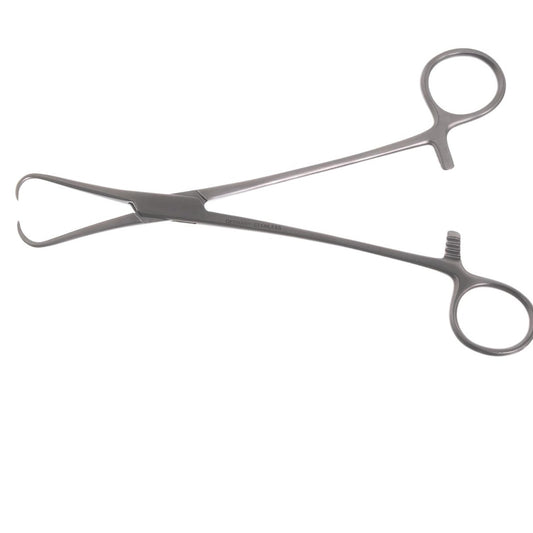
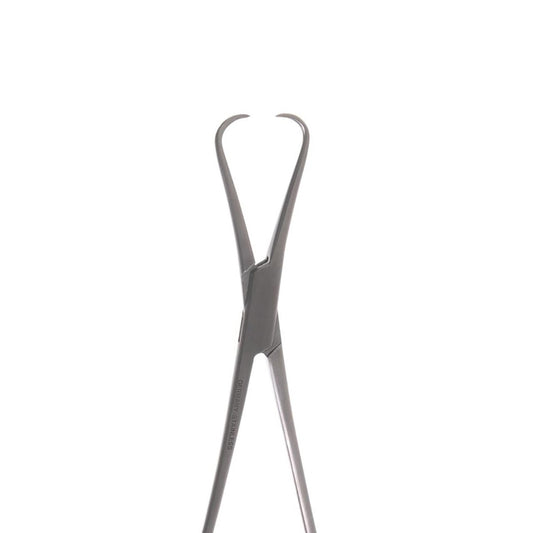
A tenaculum fogók egyetlen éles ponttal fogják meg a méhnyakat, stabilan tartva azt húzás alatt, amíg a sebész dolgozik, ez a pont különbözteti meg a tenaculumot a szélesebb pofájú bilincstől. A Peak Surgicals hét mintát kínál, Teale, Skene, Duplay, Braun, Barrett és Adair, német rozsdamentes acélból, 11,00 és 35,20 dollár között. Mindegyik CE jelöléssel rendelkezik és ISO 13485 szabvány szerint készül. Hasonlítsa össze mind a hét mintát az alábbi rácsban.
Melyik Tenaculum: Egyenes, Ívelt vagy S-alakú?
Az egyenes minták, mint a Braun és az Adair, közvetlenül elérik a méhnyakot, a Skene minta oldalra ível a laterális hozzáféréshez, a Duplay minta S-alakú dupla íve pedig olyan anatómiai részeket is elér, amelyeket egy egyenes műszer nem tudna, a szárgeometria a megközelítéshez van kiválasztva, nem a fogáshoz. Mindegyik ugyanazt a működési elvet követi: egyetlen éles fog beakad a méhnyakba, és egy racsnis gyűrűs fogantyú tartja a fogást folyamatos kézi nyomás nélkül.
A Braun méh tenaculum (PS-1708, 19,80 $) és az Adair méh tenaculum (PS-1713, 13,20 $) egyenes szárakkal rendelkezik a méhnyak közvetlen eléréséhez hiszterektómia és általános méhmanipuláció során. A Skene méh tenaculum (PS-1711, 16,50 $) oldalra ível, a fogat olyan helyre pozicionálva, ahol egy egyenes megközelítés akadályozná a környező szöveteket. A Duplay méh tenaculum (PS-1714, 22,00 $) kettős ívet tartalmaz, amely olyan szögből éri el a méhnyakat, amelyet sem az egyenes, sem az egyenesen ívelt minták nem tudnak kezelni. A Barrett méh tenaculum (PS-1710, 11,00 $) és a Teale tenaculum (PS-1717, 16,50 $) a rutin megfogást lefedi a tartomány alsó végén, míg a Lowa Tenaculum 26 cm (PS-GS-0017, 35,20 $) meghosszabbítja az elérést a mélyebb hozzáféréshez. Minden mintát MOQ 1-nél szállítunk.
Egyfogú, Racsnis és Miért Fontos a Fogás?
A tenaculum egyetlen éles foga szándékos, nem kompromisszum. A szélesebb, több fogú bilincsek nagyobb szövetfelületen osztják el a fogást és kíméletesebbek, de nem tudják elérni azt a precíz, biztos pontmegtartást, amit egy tenaculum nyújt a méhnyakon, a struktúrát stabilan kell tartani tartós húzás alatt, amíg a kezek máshol dolgoznak, és egyetlen bekapcsolt pont ellenáll a csúszásnak, ellentétben egy laposabb fogással.
A racsnis zár a tervezés második fele. Amint a fog bekapcsolódik és a racsni záródik, a tenaculum tartja a fogást anélkül, hogy a sebésznek kézzel kellene nyomást gyakorolnia, felszabadítva mindkét kezét a tágítás, a küret vagy az eljárás következő lépéséhez. Az állkapocs íve ezután követi a megközelítési szöget: egy egyenes tengely akkor működik, ha a méhnyak közvetlenül hozzáférhető, míg az ívelt és dupla ívelt minták olyan esetekre szolgálnak, amikor a közvetlen hozzáférést anatómia vagy korábbi bemetszés akadályozza. A tengelygeometria megválasztása a megközelítéshez, ahelyett, hogy minden esetben egyetlen mintát alkalmaznánk, az különbözteti meg a jól felszerelt tálcát az improvizáltól.
Újrafeldolgozás, Fog integritása és tanúsítás
Ezek a fogók német rozsdamentes acélból készülnek, ismételt autoklávozási ciklusok során is korrózióállóak, és megtartják az egyetlen fog élét, ahol egy puhább műszer lekerekedne. A fog és a racsni az ellenőrzési pontok: egy tompa vagy meghajlott fog elcsúszik a szöveten ahelyett, hogy megfogná, és egy olyan racsni, amely már nem tartja a fogást, arra kényszeríti a sebészt, hogy az egész eljárás alatt fenntartsa a fogásnyomást. Ellenőrizze mindkettőt minden használat előtt, és ultrahangos tisztítás után autoklávozza, hogy a szövetmaradványok ne merevítsék meg a racsnit a ciklusok során.
Minden műszer I. osztályú, újrahasználható, CE-jelöléssel ellátott és ISO 13485 szabvány szerint készült, ez a dokumentáció, amelyet a kórházi ellátó csapat ellenőriz, mielőtt egy beszállítót minősítene. A garancia egy év visszaküldéssel és cserével, a MOQ 1 darab, a 99 dollár feletti megrendeléseket ingyenesen szállítjuk kartondobozos csomagolásban, és az OEM jelölés elérhető a forgalmazók számára. A szélesebb méhfogó mintákhoz lásd nőgyógyászati méhfogók; böngésszen az összes nőgyógyászati műszer között. Beszéljen velünk az OEM és a mennyiségi feltételekről.