Giỏ hàng của bạn đang trống
Tiếp tục mua sắmBạn đã có tài khoản?
Đăng nhập để thanh toán nhanh hơn.

Bộ sưu tập nổi bật
Giỏ hàng của bạn
Giỏ hàng của bạn đang trống
Tiếp tục mua sắmBạn đã có tài khoản?
Đăng nhập để thanh toán nhanh hơn.
Bộ sưu tập nổi bật

PEAK SURGICALS
SKU:PI-006
Không thể tải khả năng nhận hàng tại cửa hàng


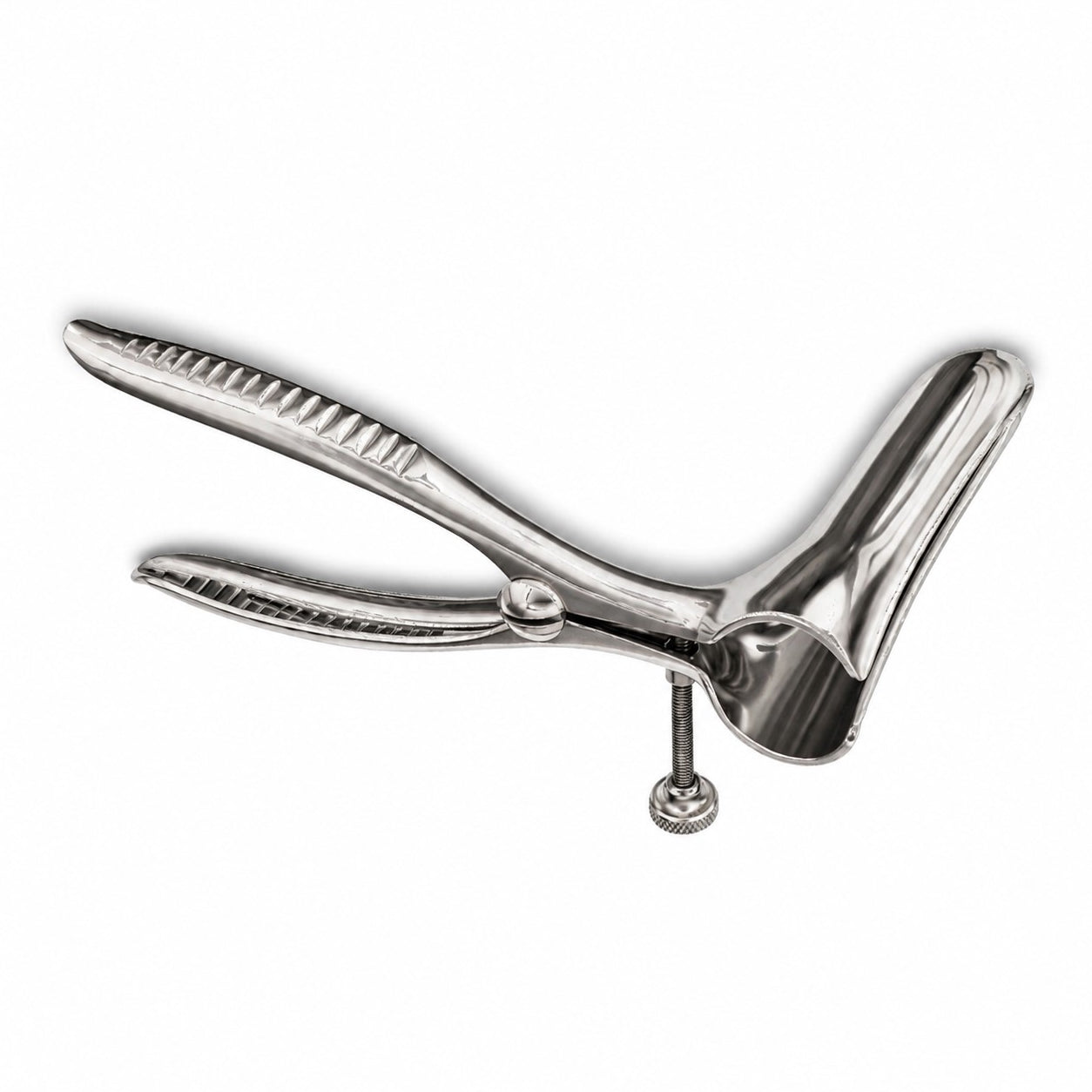
Sims Rectal Speculum, SKU PI-006, is a reusable manual proctology retractor manufactured from German stainless steel for controlled separation of the anal canal and exposure of the distal rectal wall and mucosa. It is supplied in two 3 1/2 inch x 5/8 inch (77 x 17 mm) blade configurations: a solid blade for broad surface retraction and a fenestrated blade that reduces metal mass while preserving the working contour and permitting visual reference through the opening. The long curved blade is introduced under direct control and used to displace one wall of the canal while the opposite side remains accessible for examination or instrumentation. The broad handle provides leverage for gradual elevation, directional adjustment, and withdrawal without a ratchet or self-retaining mechanism. Colorectal surgeons, general surgeons, gastroenterology procedure teams, and proctologists use this pattern during anorectal examination, proctoscopy-assisted inspection, hemorrhoid assessment, anal fissure evaluation, fistula workup, distal rectal lesion inspection, biopsy access, and operative exposure during minor anorectal procedures. It is suited to hospital operating rooms, colorectal clinics, ambulatory surgery centers, and procedure rooms where controlled manual retraction is required.
The Sims pattern produces exposure through a single elongated retractor blade rather than paired expanding jaws. Its gently curved working profile follows the anorectal axis and allows the operator to engage the canal wall, then draw tissue away from the visual field with measured hand pressure. The 77 x 17 mm blade dimensions provide a narrow but sufficiently broad contact surface for localized wall displacement without occupying the entire lumen. The solid version presents a continuous metal surface that distributes force across the engaged tissue, while the fenestrated version incorporates an opening through the blade to reduce bulk and preserve a line of sight around the retracted segment. The handle is positioned outside the working channel and functions as the principal control feature, giving the surgeon leverage to elevate, rotate, or angle the blade as exposure requirements change. Because there is no ratchet, lock, pivoted bivalve, or screw mechanism, retraction is entirely manual and can be adjusted instantly as the examination progresses. The rounded edges and polished working surface are intended to minimize focal catching as the instrument is positioned. This geometry is useful when the clinician needs unilateral retraction while leaving the opposite side of the canal available for inspection, suction, swabbing, biopsy instruments, or minor operative maneuvers.
During anorectal examination, the Sims Rectal Speculum is introduced with lubrication and under direct control after the anal canal has been gently opened. The blade is placed against the wall requiring displacement, and the handle is elevated or rotated until the mucosa, dentate-line region, hemorrhoidal cushions, fissure margin, fistulous opening, or distal rectal lesion becomes visible. In hemorrhoid assessment, unilateral retraction can improve inspection of individual columns and associated mucosal prolapse without filling the lumen with a tubular scope. For anal fissure evaluation, the blade can hold one side away while the surgeon examines the fissure base, sentinel tissue, or sphincter region. During fistula workup, the same exposure can help identify an internal opening before probing or definitive treatment. In minor anorectal surgery, the device may support access during biopsy, local lesion excision, suture placement, hemostatic control, or postoperative wound inspection when direct wall retraction is needed. The operator can reposition the blade sequentially around the circumference rather than expanding the entire canal at once. This manual approach is particularly useful when exposure must be directed to a specific quadrant and adjusted continuously according to tissue tension, patient anatomy, and the next procedural step.
Two blade configurations are available, each measuring 3 1/2 inches x 5/8 inch (77 x 17 mm). The solid blade is selected when the clinician wants a continuous retraction surface across the engaged rectal or anal wall. Its uninterrupted face distributes contact over the full blade width and can be useful during routine examination, hemorrhoid exposure, fissure inspection, or local operative access where a firm broad surface is preferred. The fenestrated blade retains the same external dimensions but incorporates an opening through the working portion. That aperture reduces the amount of metal occupying the field and can provide additional visual reference around the retracted tissue while maintaining the blade perimeter required for wall displacement. Because both options share the same length and width, selection is based on preferred blade surface rather than reach. The 77 mm working length provides access beyond the immediate anal verge into the distal rectal region, while the 17 mm width allows focused retraction without creating the wider separation associated with a bivalve speculum. The handle remains identical in function for both versions, providing manual control over insertion depth, retraction force, rotation, and withdrawal. Hospitals and clinics can therefore stock either configuration according to surgeon preference or maintain both for different examination and operative workflows.
German stainless steel provides the stiffness needed for controlled rectal wall retraction while supporting repeated cleaning, disinfection, and steam sterilization. A smooth polished finish reduces surface drag during insertion and helps sterile-processing staff remove blood, mucus, lubricant, and tissue residue from the blade and handle. Reprocessing should begin promptly after use with removal of visible soil, thorough washing of the working surfaces and handle recesses, rinsing, complete drying, and visual inspection before packaging. Particular attention should be given to the fenestrated opening when that variant is used, because edges and internal contours must remain free of retained debris. The blade should also be checked for bending, roughness, edge damage, or loss of alignment before it returns to the sterile set. The reusable stainless-steel construction is compatible with validated hospital steam-autoclave workflows for manual surgical instruments. CE marking supports applicable medical-device conformity documentation, while ISO 13485 identifies the quality-management system governing controlled manufacture, traceability, and documentation. For United States purchasing, FDA-compliant procurement requires the relevant supplier, device, labeling, import, and establishment records applicable to the transaction. Peak Surgicals supports institutional and distributor ordering with a one-year warranty, single-piece MOQ, OEM or private-label supply, and return or replacement after-sale service.
| SKU | PI-006 |
|---|---|
| Product Name | Sims Rectal Speculum |
| Price | $19.80 USD |
| Size/Gauge Variants | Solid Blade 3 1/2" x 5/8" (77 x 17 mm); Fenestrated Blade 3 1/2" x 5/8" (77 x 17 mm) |
| Instrument Category | Proctology Instruments / Rectal Speculums and Retractors |
| Procedure | Anorectal examination, hemorrhoid assessment, anal fissure inspection, fistula evaluation, distal rectal lesion exposure, biopsy access and minor anorectal surgery |
| Material | German stainless steel |
| Finish | Mirror-polished finish |
| Sterilization | Reusable and compatible with validated steam-autoclave processing |
| Instrument Classification | Reusable manual rectal speculum and anorectal retractor |
| Reusable | Yes |
| Certifications | CE marked, ISO 13485 quality system, FDA-compliant procurement documentation |
| Warranty | 1 year |
| MOQ | 1 piece |
| OEM / Custom Orders | Available for hospitals, distributors and private-label procurement |
| After-Sale Service | Return and replacement support |
How does the Sims Rectal Speculum differ from a Pratt Rectal Speculum?
The Sims Rectal Speculum uses a manually controlled single blade to retract one wall of the anal canal or distal rectum. A Pratt Rectal Speculum uses opposing blades that separate through a mechanical opening action to create bilateral exposure. The Sims pattern therefore leaves more of the lumen free for direct inspection and instrumentation while the operator controls retraction continuously by hand. The Pratt design provides broader symmetrical spreading when wider circumferential exposure is required. Sims is particularly useful for quadrant-specific visualization, local lesion inspection, fissure evaluation, or procedures where unilateral displacement is sufficient. Instrument choice depends on whether the surgeon requires focused manual retraction or mechanically maintained bilateral dilation.
When should the solid blade or fenestrated 77 x 17 mm blade be selected?
Both Sims Rectal Speculum configurations measure 3 1/2 inches x 5/8 inch, or 77 x 17 mm, so they provide the same nominal reach and width. The solid version gives the surgeon a continuous surface for broad contact against the anal or distal rectal wall. This can be useful during hemorrhoid exposure, fissure inspection, postoperative review, or local excision where firm wall displacement is preferred. The fenestrated option incorporates an opening through the working section, reducing the amount of metal within the field while maintaining the external retraction contour. Its aperture can also provide additional visual reference around the engaged mucosa. Selection is therefore based primarily on surgeon preference and the type of exposure required rather than a difference in blade dimensions.
What do CE, ISO 13485 and FDA requirements mean for this instrument?
The Sims Rectal Speculum is supplied within Peak Surgicals' CE and ISO 13485 procurement framework. CE marking supports applicable medical-device conformity documentation for regulated markets. ISO 13485 identifies the quality-management system governing controlled manufacture, traceability, documentation, and supplier processes. FDA procurement context for United States buyers relates to applicable establishment, device, labeling, import, and distribution requirements. Hospitals and distributors should maintain these records within their vendor qualification and purchasing documentation. These regulatory elements serve different functions and should be managed accordingly during institutional procurement.
How is the manual handle used to control rectal wall retraction?
The Sims Rectal Speculum does not use a ratchet, screw lock, or self-retaining mechanism. The surgeon controls exposure directly through the external handle while the curved blade engages the selected wall. Elevating the handle increases displacement, while subtle rotation changes the direction and quadrant of retraction. The instrument can be relaxed immediately if tissue tension becomes excessive and can then be repositioned without releasing a mechanical lock. During circumferential assessment, the blade may be moved sequentially to different areas of the canal while the opposite side remains available for visualization or accessory passage. This manual mechanism gives the operator continuous control over depth, force, angle, and withdrawal throughout the examination.
How should hospitals clean and sterilize the Sims Rectal Speculum?
The Sims Rectal Speculum should enter a validated reusable-instrument reprocessing pathway after each procedure. Blood, mucus, lubricant, and visible tissue residue should be removed promptly before the instrument is thoroughly washed and rinsed. Sterile-processing staff should inspect the curved blade, handle junction, polished surfaces, and the opening of the fenestrated version for retained debris or mechanical damage. After complete drying, the device can be packaged and processed through a validated steam-autoclave cycle suitable for reusable stainless-steel surgical instruments. The blade should be checked for deformation, rough edges, corrosion, or altered alignment before returning to clinical inventory. Procurement teams should retain SKU PI-006, warranty, certification, supplier, and ordering records for traceable stock management.


