PEAK SURGICAL
SKU(재고 관리 코드):PS-9506
픽업 사용 가능 여부를 로드할 수 없습니다.
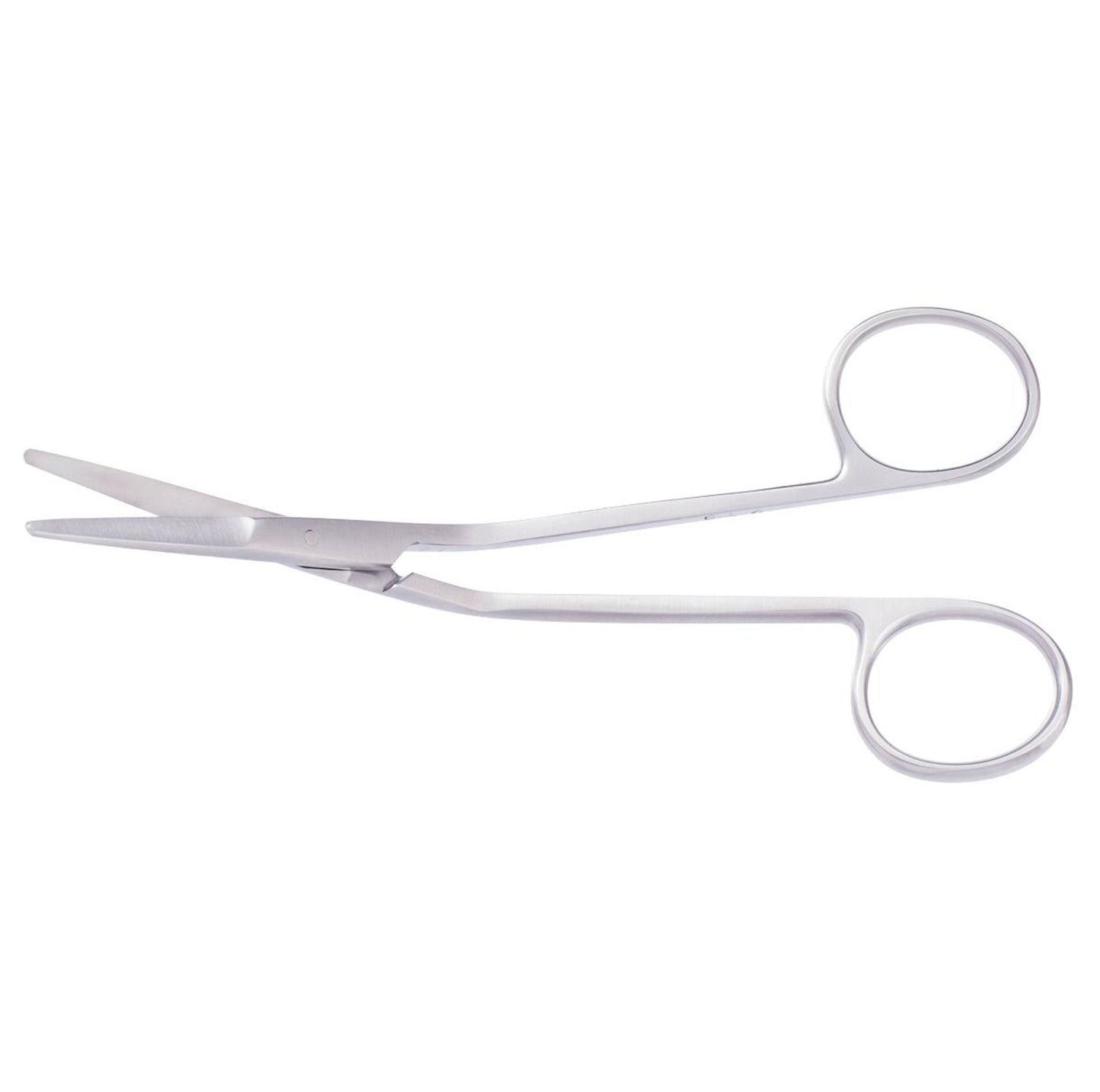
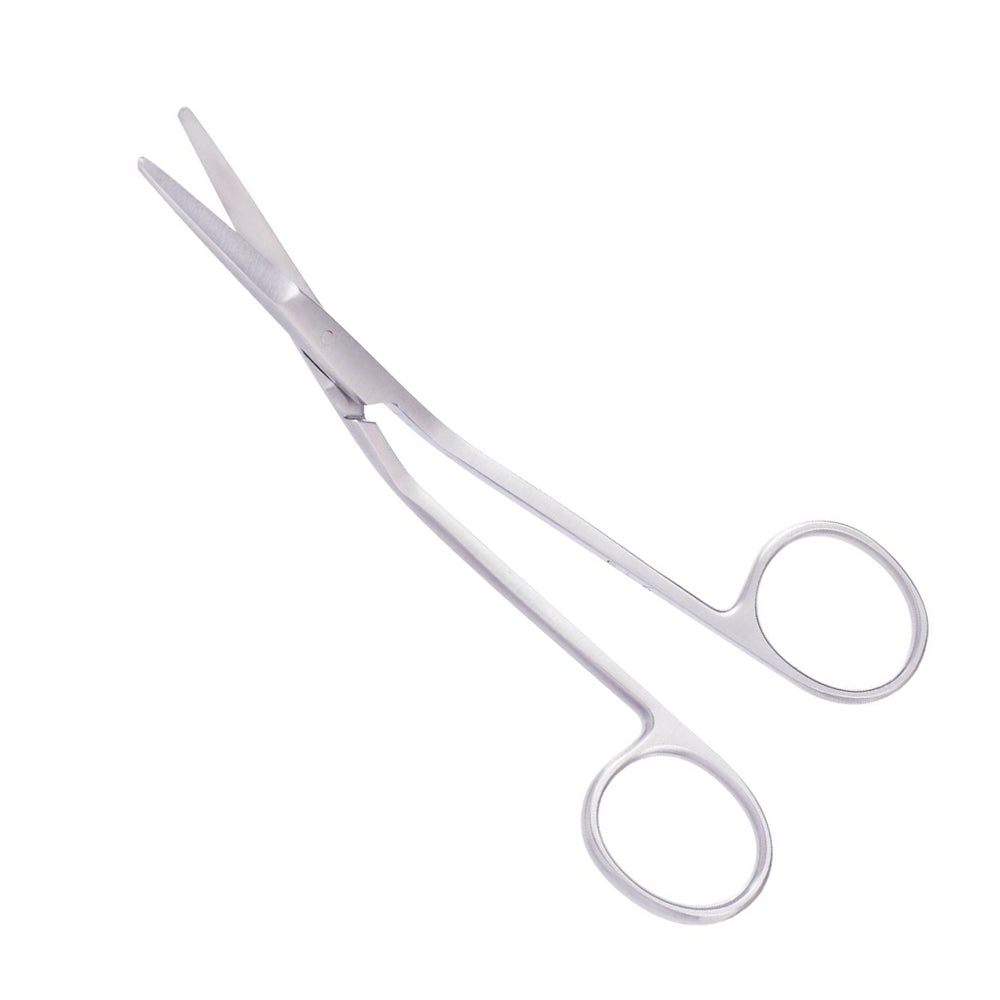
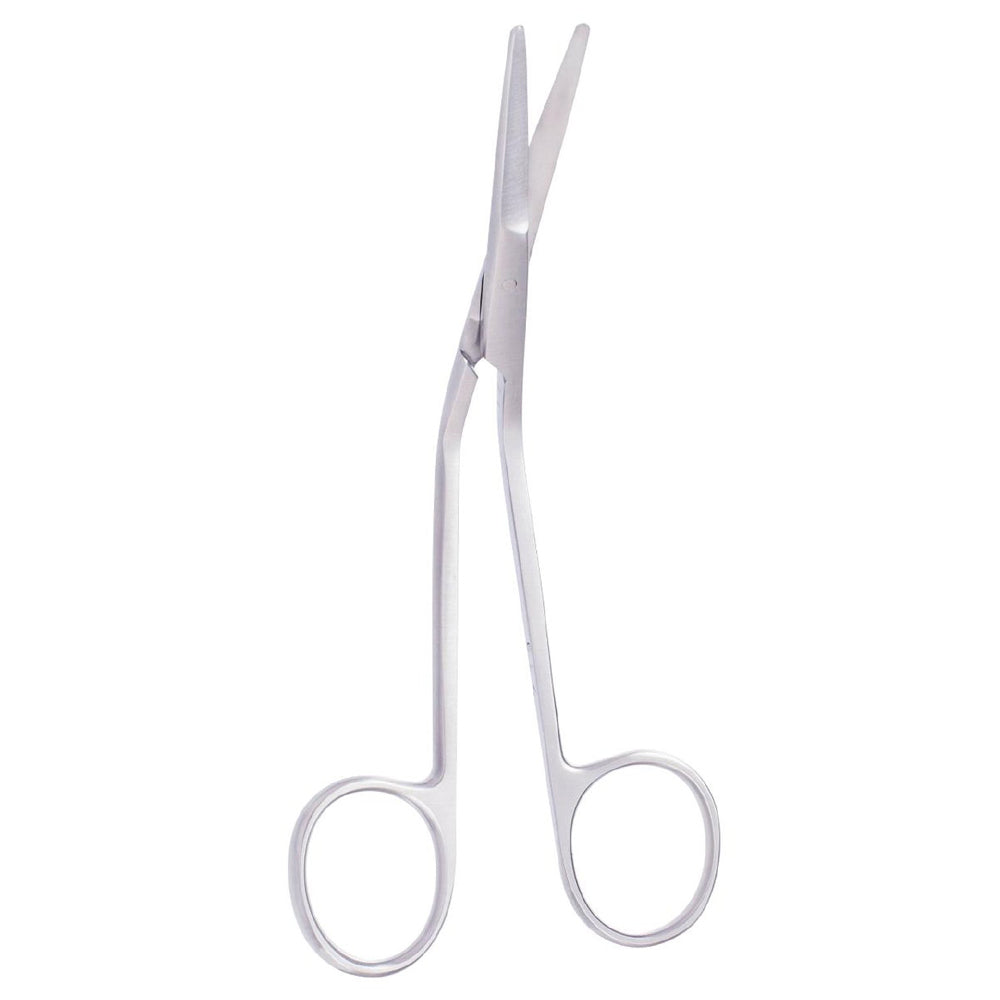
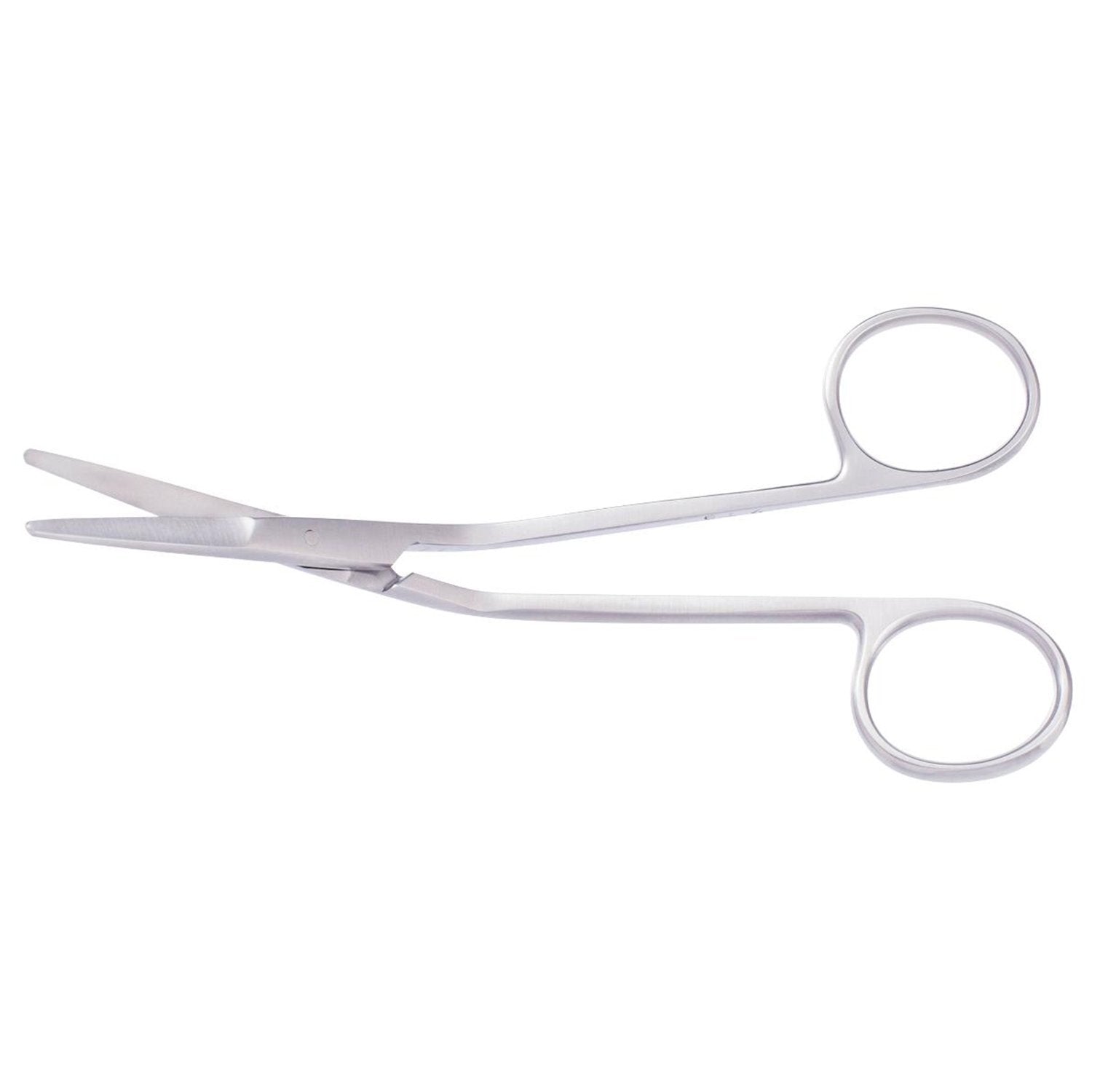
The Fomon Angular Scissors from Peak Surgicals (SKU: PS-9506) are a 5.25-inch (13.35cm) German stainless steel rhinoplasty scissor designed for cutting cartilage, soft tissue, and mucosal flaps within the confined nasal cavity, where the angled blade geometry — set at an offset angle from the shaft rather than continuing the shaft's straight axis — allows the cutting edge to align with the surgical plane inside the nose while the handle remains outside the nostril at a workable angle for the surgeon's hand. The Fomon pattern, developed as part of the instrumentation associated with Samuel Fomon's foundational contributions to modern rhinoplasty technique, addresses a specific access problem in nasal surgery: a straight scissor introduced through the nostril forces the surgeon's hand into an awkward, often visually obstructing position relative to the nasal tip and septum, while the Fomon's angled blade allows the cutting tip to engage tissue along the natural axis of the nasal cavity while the handle is held at a more lateral, visually unobstructed angle. It is used by plastic surgeons, otolaryngologists, and facial plastic surgeons in operating theatres during rhinoplasty, septoplasty, and nasal reconstructive procedures, available in satin, dull, and mirror finishes, reusable, autoclave compatible, and supplied under CE Mark, ISO 13485, and FDA certification.
The defining design feature of the Fomon Angular Scissors is the angled relationship between the blade and the shaft — rather than the blades continuing in a straight line from the handle, the cutting tips are set at an offset angle, redirecting the cutting plane relative to the direction the handle is held. This geometry exists because the nasal cavity is a confined, narrow space accessed through the nostril at an angle determined by the nasal aperture and the columella, and a straight instrument introduced through this aperture places the surgeon's hand directly in front of the face, obstructing the view of the nasal tip and dorsum and limiting the range of motion available within the cavity. The Fomon's angled blade allows the surgeon to introduce the instrument through the nostril with the handle held more laterally and inferiorly, out of the direct line of sight to the surgical field, while the angled blade tip reaches the upper lateral cartilage, septal cartilage, mucoperichondrial flap, or soft tissue at the correct cutting angle. This is particularly important during septal cartilage resection and reshaping, where precise, controlled cuts along the cartilage plane are required without the bulk of a straight-shafted instrument crowding the narrow working corridor between the septum and the lateral nasal wall.
The Fomon Angular Scissors are used at several distinct steps in nasal surgery where angled access to cartilage and soft tissue is required. In rhinoplasty, the scissors are used for cartilage trimming and reshaping of the upper lateral cartilages, lower lateral cartilages, and septal cartilage during dorsal hump reduction, tip refinement, and cartilage graft harvesting — the angled blade allows precise incremental cuts along the cartilage surface without disturbing the surrounding soft tissue envelope. In septoplasty, the scissors are used to incise and mobilise the mucoperichondrial flap from the underlying septal cartilage and bone, and to trim deviated cartilage segments after they have been elevated from the perichondrium — the angled access is essential here because the septal working field is bounded on both sides by the nasal cavity walls, leaving minimal room for straight instrument manipulation. In nasal reconstructive surgery, the scissors are used for soft tissue dissection and cartilage graft shaping when harvesting septal, conchal, or costal cartilage for structural grafting in revision rhinoplasty or post-traumatic nasal reconstruction. The fine blade tips also support precise dissection along tissue planes during open and closed rhinoplasty approaches, where the angled geometry reduces tissue trauma compared to a straight scissor forced into an unnatural cutting angle.
The Fomon Angular Scissors are manufactured from German stainless steel, providing the blade edge retention, corrosion resistance, and dimensional stability required for precise cartilage and soft tissue cutting through repeated use and sterilization cycles. Edge sharpness is particularly important for an angled cartilage scissor — a dull or imprecisely ground blade requires increased cutting force, which transmits unwanted movement to the surrounding nasal soft tissue and cartilage framework during the fine dissection steps of rhinoplasty. The instrument is available in satin, dull, and mirror surface finishes — satin and dull finishes reduce glare under the operating headlight or loupe magnification commonly used in rhinoplasty surgery, while mirror finish provides maximum corrosion resistance and ease of visual inspection. All three finishes are compatible with steam autoclave sterilization. The 5.25-inch (13.35cm) overall length is sized for the confined working depth of the nasal cavity, providing sufficient reach to the septum and upper lateral cartilage from the nostril without the excess length of a general surgical scissor that would be unwieldy in the narrow nasal working field.
The Fomon Angular Scissors are manufactured under CE Mark, ISO 13485, and FDA compliant quality standards. ISO 13485 certification confirms Peak Surgicals operates a documented quality management system covering German stainless steel material traceability, blade angle and edge geometry dimensional tolerancing, and manufacturing process controls for reusable rhinoplasty and nasal surgery instruments. CE Mark confirms conformity with EU MDR requirements for reusable non-powered surgical instruments. FDA compliance supports procurement for US plastic surgery centres, otolaryngology departments, and facial plastic surgery practices requiring verified regulatory documentation. Class I instrument classification, 1-year warranty, OEM availability, and MOQ of 1 piece support both institutional rhinoplasty instrument tray procurement and individual surgeon replacement ordering.
| SKU | PS-9506 |
|---|---|
| Product Name | Fomon Angular Scissors |
| Price | $6.16 USD |
| Size | 5.25" (13.35cm) |
| Instrument Type | Angled-blade rhinoplasty and nasal surgery scissor |
| Instrument Category | Plastic Surgery / ENT — Rhinoplasty and Septal Surgery Instruments |
| Procedure | Rhinoplasty (cartilage trimming and reshaping), septoplasty (mucoperichondrial flap and cartilage trimming), nasal reconstructive surgery (cartilage graft shaping) |
| Material | German Stainless Steel |
| Finish | Satin / Dull / Mirror (specify on order) |
| Sterilization | Steam autoclave compatible |
| Instrument Classification | Class I |
| Reusable | Yes |
| Rust Free | Yes |
| Certifications | CE Mark, ISO 13485, FDA |
| Warranty | 1 Year |
| MOQ | 1 Piece |
| OEM / Custom Orders | Available |
| Packing | Carton Box |
| After-Sale Service | Return and Replacement |
What surgical procedures require the Fomon Angular Scissors?
The Fomon Angular Scissors are used in rhinoplasty for trimming and reshaping the upper lateral cartilages, lower lateral cartilages, and septal cartilage during dorsal hump reduction, nasal tip refinement, and cartilage graft harvesting from the septum. They are used in septoplasty for incising and mobilising the mucoperichondrial flap away from the underlying deviated septal cartilage and bone, and for trimming the cartilage once it has been exposed and elevated. They are also used in nasal reconstructive surgery and revision rhinoplasty for shaping septal, conchal, or costal cartilage grafts used to rebuild structural support in the nose. The common requirement across all these procedures is cutting access within the confined nasal cavity, where the angled blade design allows the surgeon to work effectively without a straight instrument crowding the narrow surgical corridor.
Why is the blade angled rather than straight, and how does this improve surgical access?
The nasal cavity is accessed through the nostril at a fixed anatomical angle determined by the columella and nasal aperture, and the working space inside — bounded by the septum, the lateral nasal wall, and the nasal floor — is narrow and deep relative to its width. A straight scissor introduced through the nostril forces the surgeon's hand and forearm into a position directly in front of the patient's face, which obstructs the surgeon's own view of the nasal tip and dorsum and restricts the range of cutting angles available without repositioning the entire instrument. The Fomon's angled blade redirects the cutting plane so that when the handle is held at a more comfortable, laterally offset angle that does not block the surgeon's view, the blade tips still engage the cartilage or tissue at the correct angle for the intended cut. This is especially valuable during septal cartilage work, where the surgeon must make precise incremental cuts along a cartilage plane that lies almost parallel to the line of sight from the nostril, a cutting angle that a straight scissor cannot achieve without an impractical hand position.
How do Fomon Angular Scissors differ from straight iris or tenotomy scissors sometimes used in nasal surgery?
Straight iris and tenotomy scissors are fine-tipped scissors used in many surgical specialties for delicate tissue cutting, and they are occasionally used in nasal surgery for superficial soft tissue work near the nostril rim or columella where a straight cutting line is appropriate and the working depth is shallow. The Fomon Angular Scissors are specifically designed for the deeper cartilage and septal work within the nasal cavity, where the angled blade provides the access advantage described above. A straight iris scissor used for septal cartilage trimming would require the surgeon to hold the handle at an angle that obstructs visualisation of the cutting tip, increasing the risk of an imprecise cut to the cartilage or inadvertent injury to the mucoperichondrial flap. The Fomon's angled design is purpose-built for this specific access problem and is the standard scissor pattern selected for septal and intranasal cartilage work in rhinoplasty and septoplasty instrument trays.
What size is available and is it suitable for both adult and revision rhinoplasty cases?
The Fomon Angular Scissors are supplied at 5.25 inches (13.35cm) overall length, a size proportioned for the working depth of the adult nasal cavity from the nostril to the septal angle and upper lateral cartilage region. This length is used across primary rhinoplasty, septoplasty, and revision rhinoplasty cases in adult patients, where the working depth from the nasal aperture to the surgical target — whether the dorsal septum, the caudal septum, or the upper lateral cartilage — falls within a consistent anatomical range that the 5.25-inch length is designed to address. The instrument is not specifically marketed as a paediatric size; for paediatric nasal surgery, where the nasal cavity dimensions are proportionally smaller, surgeons should confirm whether a shorter instrument is preferred based on their own technique and the patient's age and nasal dimensions.
What certifications does this instrument carry?
The Fomon Angular Scissors carry CE Mark, ISO 13485, and FDA compliance certification. CE Mark confirms conformity with EU MDR requirements for reusable non-powered surgical instruments. ISO 13485 certification confirms Peak Surgicals maintains a quality management system covering German stainless steel material traceability, blade angle and cutting edge dimensional tolerancing, and manufacturing process controls for reusable plastic surgery and ENT instruments. FDA compliance supports procurement for US plastic surgery centres, facial plastic surgery practices, and otolaryngology departments requiring verified regulatory documentation. Class I instrument classification, 1-year warranty, MOQ of 1 piece, and OEM availability satisfy institutional and individual surgeon procurement requirements for rhinoplasty instrument sets.