Tá do chairt folamh
Lean ort ag siopadóireachtAn bhfuil cuntas agat?
Logáil isteach chun seiceáil amach níos tapúla.

Bailiúchán Luaite
Do chairt siopadóireachta
Tá do chairt folamh
Lean ort ag siopadóireachtAn bhfuil cuntas agat?
Logáil isteach chun seiceáil amach níos tapúla.
Bailiúchán Luaite

PEAK SURGICALS
SKU:
Níorbh fhéidir infhaighteacht bailithe a luchtú


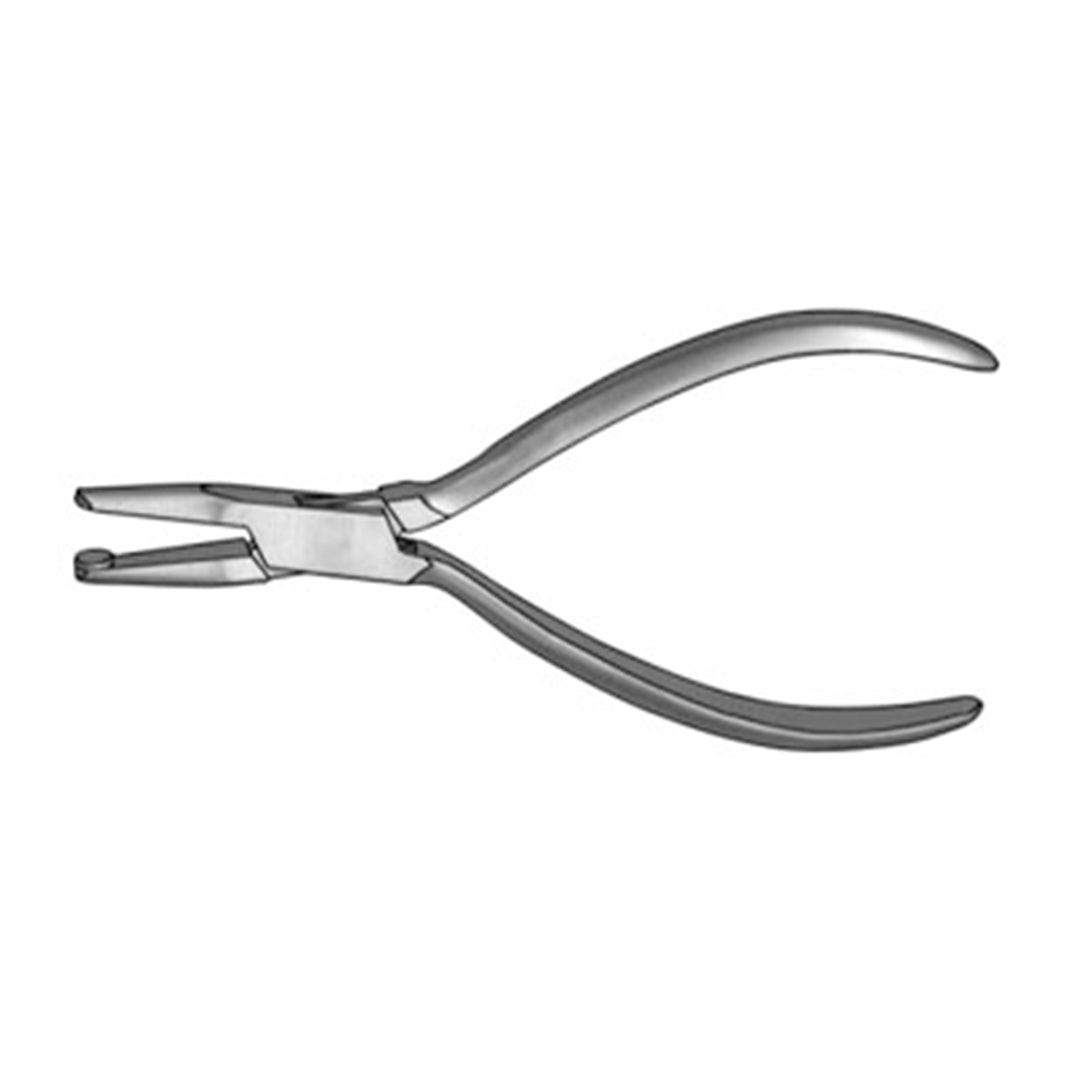
Mini Plate Bending Pliers, Ambler Surgical catalog number 45-694, are reusable orthopedic contouring instruments designed specifically for controlled adjustment of 1.5 mm and 2.0 mm mini fixation plates. The exact manufacturer configuration measures 5 in (127 mm) overall and is manufactured in Germany from stainless steel for repeated professional surgical use. Its compact profile provides direct manual control when shaping small fixation plates used in hand, foot, maxillofacial, small-fragment, and other reconstructive procedures where larger plate-bending instruments may occupy unnecessary working space. The plier-style mechanism allows incremental contouring so the operator can adjust a plate gradually and reassess its fit after each movement. Peak Surgicals lists this Ambler Surgical instrument at $93.49, identifies it as reusable and supplied non-sterile, and provides Primary DI 00190660201838 for device traceability. Because the current Peak page incorrectly displays 5.5 in / 140 mm, the length should be corrected to the manufacturer-verified 5 in / 127 mm specification before final publication.
The Mini Plate Bending Pliers use direct manual leverage to create controlled changes in the contour of compatible orthopedic fixation plates. The plate is positioned within the working jaws at the specific region requiring adjustment, and gradual compression of the handles applies localized bending force. The compact 5-inch frame is particularly useful when working with mini plates because it provides sufficient mechanical leverage without the bulk of large-fragment plate-bending instruments. Rather than attempting to create the required shape in one aggressive movement, the operator can apply a small bend, release the plate, inspect its contour, and repeat the process as necessary. This incremental method improves control and reduces unnecessary deformation. Plate engagement should remain stable during bending so the implant does not slip, twist, or become marked by improper tool placement. Because the instrument is manually controlled, bending force depends on handle pressure, plate position, and the geometry of the working jaws. The implant manufacturer's contouring instructions should always determine how much deformation is acceptable.
During small-fragment fracture fixation or reconstructive surgery, the Mini Plate Bending Pliers can be used after the appropriate 1.5 mm or 2.0 mm plate has been selected and compared with the intended bone surface. The plate is positioned within the bending jaws at the area requiring adjustment, and controlled manual pressure is applied to create a gradual contour. The implant can then be reassessed against the anatomical surface or an appropriate template before additional bending is performed. This workflow is relevant to hand and foot surgery, small-bone fracture reconstruction, selected maxillofacial applications, and other procedures using compatible mini fixation plates. The compact instrument is particularly beneficial when precise localized adjustment is required around a small implant. Bending should not be performed directly through a screw hole unless the implant manufacturer specifically permits that technique, because deformation around fixation interfaces may affect screw seating or structural performance. Repeated reverse bending should also be avoided. Before implantation, the plate should be inspected for correct contour, intact holes, absence of cracking, and appropriate fit.
The exact device identity supplied on the Peak page is Primary DI 00190660201838, which corresponds to Ambler Surgical catalog number 45-694. Both Ambler Surgical and FDA AccessGUDID identify this model as Mini Bending Pliers measuring 5 in overall and intended for 1.5 mm and 2.0 mm plates. This manufacturer-verified specification should take precedence over the current Peak description stating 5.5 in / 140 mm. The instrument is not a universal plate bender and should not be used as though it were designed for 2.7 mm, 3.5 mm, or larger fixation plates. The 1.5 mm and 2.0 mm designations identify the mini plate systems for which the working geometry is intended. A larger plate requires a correctly sized bending instrument with sufficient jaw dimensions and mechanical capacity. Procurement teams should therefore retain catalog number 45-694, Primary DI 00190660201838, the 5-inch overall length, and the 1.5 mm / 2.0 mm compatibility in their tray and purchasing records.
Ambler Surgical manufactures catalog 45-694 in Germany from stainless steel and supplies the instrument non-sterile for reusable clinical service. Before first use and after subsequent procedures, the Mini Plate Bending Pliers should be cleaned and sterilized according to the applicable manufacturer's instructions and the healthcare facility's validated reusable-instrument process. Reprocessing should include careful cleaning of the working jaws, hinge area, handle surfaces, and any recessed regions where soil or residue may accumulate. Following rinsing and complete drying, staff should inspect the instrument for corrosion, cracks, deformation, joint wear, or damaged plate-contact surfaces. The jaws should remain correctly aligned and the plier mechanism should open and close smoothly without excessive looseness or binding. Because this is an Ambler Surgical branded device, Peak Surgicals should be presented as the seller or supplier rather than the manufacturer. FDA AccessGUDID provides traceability through Primary DI 00190660201838 and catalog 45-694; this database record supports device identification but should not be described as individual FDA approval.
| Peak Product Name | Mini Plate Bending Pliers |
|---|---|
| Price | $93.49 USD |
| Manufacturer | Ambler Surgical |
| Manufacturer Catalog Number | 45-694 |
| Primary DI Number | 00190660201838 |
| Overall Length | 5 in / 127 mm — manufacturer and FDA verified |
| Compatible Plate Sizes | 1.5 mm and 2.0 mm mini fixation plates |
| Instrument Category | Orthopedic Mini Plate Bending Pliers |
| Primary Use | Precise bending, contouring, and adjustment of mini fixation plates |
| Procedure | Small-fragment fixation, hand and foot reconstruction, selected maxillofacial and other mini plate procedures |
| Material | Stainless Steel |
| Country of Origin | Germany |
| Supply Condition | Non-Sterile |
| Sterilization | Reusable; clean and sterilize according to Ambler instructions and validated healthcare-facility protocols |
| Instrument Classification | Reusable Manual Surgical / Orthopedic Bending Pliers |
| Reusable | Yes |
| FDA Device Traceability | AccessGUDID Primary DI 00190660201838; catalog 45-694 |
| Certifications | Peak storefront displays CE, FDA, and ISO badges; retain exact manufacturer and procurement documentation as applicable |
| Warranty | 30-Day Money-Back Guarantee on eligible Peak Surgicals purchases |
| MOQ | 1 Piece for standard online ordering |
| OEM / Custom Orders | The Ambler 45-694 branded configuration should remain unchanged; Peak Surgicals custom or OEM programs are separate from this branded instrument |
| After-Sale Service | Return and replacement support under Peak Surgicals policy |
How do Mini Plate Bending Pliers differ from standard Plate Bending Pliers?
Mini Plate Bending Pliers are specifically designed for smaller fixation systems and a more compact surgical workflow. Ambler catalog 45-694 is intended for 1.5 mm and 2.0 mm mini plates and measures only 5 inches overall. Standard plate bending pliers are commonly longer and may be designed for thicker plates such as 2.7 mm, 3.5 mm, or reconstruction systems. The smaller frame provides controlled handling when localized contouring of a small implant is required. A larger plate should not be forced into a mini bending instrument simply because both tools perform a similar function. Instrument selection should follow the exact plate system, implant dimensions, and manufacturer's contouring recommendations.
Can these Mini Plate Bending Pliers be used for both 1.5 mm and 2.0 mm plates?
Yes, the exact Ambler 45-694 configuration is documented for both 1.5 mm and 2.0 mm fixation plates. This dual compatibility makes the instrument useful across multiple mini-fragment plating applications. The plate must still fit correctly within the working surfaces before force is applied. A 2.7 mm or 3.5 mm plate should not automatically be used with this instrument because those systems require different bending capacities. The Mini Plate Bending Pliers should be selected according to the dimensions and manufacturer instructions of the actual implant being contoured. Hospitals should record the 1.5 mm and 2.0 mm compatibility directly in their mini-fragment instrument inventory.
What do the Ambler catalog number and FDA Primary DI mean for procurement?
The Peak listing identifies Ambler Surgical as the manufacturer and provides Primary DI 00190660201838. FDA AccessGUDID links that Primary DI to Ambler catalog number 45-694 and describes the device as 5-inch mini bending pliers for 1.5 mm and 2.0 mm plates. This gives hospitals a stronger traceability reference than a generic product title alone. The GUDID record confirms the commercial device identity but does not mean the product should be described as individually FDA approved. Procurement teams should retain the manufacturer, catalog number, Primary DI, supplier invoice, and applicable regulatory documentation. These identifiers also help prevent confusion with Ambler's separate larger plate-bending instruments.
How should the pliers be used to avoid damaging a mini fixation plate?
The plate should be positioned securely within the appropriate working area before the handles are compressed. A small controlled bend should be created first and the plate contour should then be reassessed. Repeated gradual adjustments are preferable to one aggressive bending movement. Reverse bending should be minimized because repeated deformation can reduce implant fatigue strength. Bending directly through screw holes or specialized plate features should be avoided unless the implant manufacturer specifically allows it. Before implantation, the plate should be inspected for cracks, damaged holes, excessive tool marks, twisting, or any other alteration that could affect fixation.
How should hospitals order and reprocess the Mini Plate Bending Pliers?
Hospitals should identify the instrument as Ambler Surgical catalog 45-694 with Primary DI 00190660201838 and compatibility with 1.5 mm and 2.0 mm plates. Peak Surgicals currently lists the instrument at $93.49 and provides a 30-day money-back guarantee on eligible purchases. The correct overall length is 5 inches according to the manufacturer and FDA device record, so the existing 5.5-inch Peak specification should be corrected before final publication. The instrument is supplied non-sterile and must be processed before clinical use. Following each procedure, the jaws, joint, and handles should be thoroughly cleaned, rinsed, dried, and inspected for wear, corrosion, or deformation. Final sterilization should follow Ambler's applicable reusable-instrument instructions and the healthcare facility's validated protocol.


