Tá do chairt folamh
Lean ort ag siopadóireachtAn bhfuil cuntas agat?
Logáil isteach chun seiceáil amach níos tapúla.

Bailiúchán Luaite
Do chairt siopadóireachta
Tá do chairt folamh
Lean ort ag siopadóireachtAn bhfuil cuntas agat?
Logáil isteach chun seiceáil amach níos tapúla.
Bailiúchán Luaite

PEAK SURGICALS
SKU:PI-013
Níorbh fhéidir infhaighteacht bailithe a luchtú


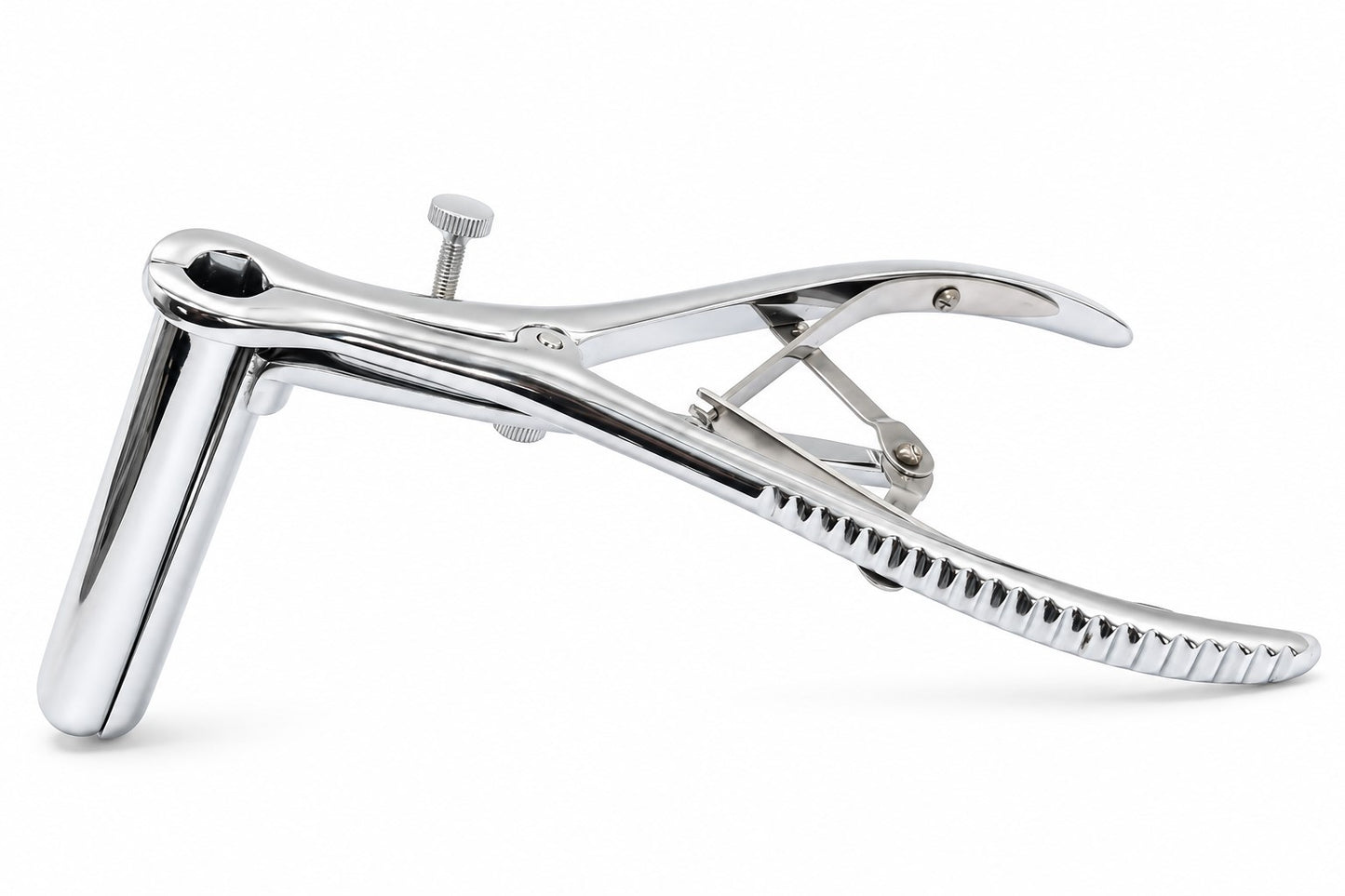
Mathieu Rectal Speculum 19 cm, SKU PI-012, is a reusable three-prong anorectal exposure instrument manufactured from German stainless steel for controlled dilation of the anal canal and direct visualization of the distal rectum. The 19 cm overall pattern uses three smooth blades, an articulated handle assembly, pivot linkage, and an adjustable screw-lock mechanism that allows the surgeon to open the blades gradually and maintain the selected aperture during examination or treatment. The working blades are approximately 90 x 15 mm, providing focused retraction while preserving access for suction, biopsy forceps, ligation instruments, electrosurgical tools, and other compatible anorectal accessories. Colorectal surgeons, general surgeons, proctologists, and gastrointestinal procedure teams use this configuration during rectal examination, hemorrhoidectomy, hemorrhoid banding, fistulotomy, anal fissure repair, rectal biopsy, local lesion assessment, and postoperative inspection. The three-prong geometry creates circumferential exposure rather than unilateral retraction, making it useful when the operator needs a stable open field around the anal canal. It is intended for operating rooms, colorectal clinics, ambulatory surgery centers, and procedure suites where reusable manual rectal dilation and visualization are required.
The Mathieu pattern converts hand movement at the handles into controlled separation of three distal blades through an articulated linkage and pivot system. When the handles are approximated, the linkage opens the prongs in a coordinated manner so the anal canal can be dilated progressively rather than forced apart abruptly. The three-blade arrangement distributes retraction around the circumference and creates a central working space for inspection or instrumentation. Each blade has a smooth rounded profile designed to contact the canal wall without sharp edges, while the approximately 90 x 15 mm working surfaces provide a balance between tissue support and preservation of the operative field. A threaded set screw acts as the principal control feature once the desired opening has been reached. Tightening the screw maintains the selected dilation so the surgeon can release some hand pressure while continuing the examination or procedure. The pivot and connecting arms keep the blade motion synchronized and allow the instrument to close again in a controlled manner before withdrawal. Serrated or contoured handle surfaces improve grip during opening and repositioning. Unlike a tubular proctoscope, this speculum does not create exposure through a fixed lumen; it opens the canal mechanically and leaves the center unobstructed for direct access.
During anorectal examination, the closed blades are lubricated and introduced under direct control before the handles are compressed gradually to separate the anal canal. Once adequate exposure is obtained, the set screw is adjusted to hold the opening while the surgeon inspects the dentate-line region, hemorrhoidal columns, fissure margins, fistulous openings, distal rectal mucosa, or postoperative tissue. In hemorrhoidectomy, the three-prong configuration provides a stable field for identifying individual hemorrhoidal pedicles, applying ligatures, controlling bleeding, and completing excision while maintaining access around the operative site. During fistulotomy or fistula assessment, circumferential dilation can improve visualization of an internal opening and permit passage of probes or other instruments without repeated manual retraction. For anal fissure repair, the open field facilitates inspection of the fissure base, sphincter region, and associated sentinel tissue. Rectal biopsy forceps can be introduced through the central space to sample a visible lesion, and suction or electrosurgical devices can be used without passing through a narrow tube. After local anorectal surgery, the same mechanism allows postoperative inspection for bleeding, wound separation, stenotic change, or residual pathology before the blades are closed and the instrument is withdrawn.
This listing is supplied as a 19 cm Mathieu pattern with three expanding blades and an adjustable screw lock. The overall length gives the operator sufficient external handle leverage while keeping the working section compact for anal canal and distal rectal access. The distal blades measure approximately 90 x 15 mm, a geometry that supports controlled circumferential dilation without occupying the entire central field. Because all three prongs move through the linked mechanism, the clinician can enlarge the aperture progressively and stop at the degree of exposure required for the planned procedure. The upper set screw is used after dilation to maintain the opening, while the handle linkage is the active mechanism that generates blade separation. This configuration is particularly appropriate for adult anorectal examination, hemorrhoid surgery, fistula work, fissure procedures, and rectal biopsy where a self-maintained open field is preferable to repeated hand-held retraction. Compared with a two-blade rectal speculum, the third prong provides additional circumferential support and can create a more evenly distributed operative window. Selection should therefore be based on the amount of dilation required, the need for central instrument access, and surgeon preference for a three-point exposure pattern rather than a fixed tubular lumen.
German stainless steel provides the stiffness required for the blades, linkage, pivots, and locking screw to maintain alignment during repeated opening and closing while supporting corrosion resistance through routine decontamination and steam sterilization. A polished finish creates smooth patient-contact surfaces and facilitates removal of blood, mucus, lubricant, and tissue residue from the prongs and mechanical joints. Reprocessing should begin promptly after use with the instrument opened sufficiently to expose the hinge points, screw threads, and linkage surfaces for cleaning. The blades and handle recesses should be washed thoroughly, movable joints brushed, and the locking screw worked through its range so retained soil is not trapped within the mechanism. After rinsing and complete drying, sterile-processing staff should inspect blade alignment, pivot movement, screw engagement, surface integrity, and freedom from corrosion before packaging. The device can then enter a validated steam-autoclave cycle appropriate to reusable stainless-steel surgical instruments. CE marking supports applicable conformity documentation, while ISO 13485 identifies the medical-device quality-management framework used for controlled manufacture and traceability. For United States procurement, FDA-compliant purchasing requires the relevant device, establishment, labeling, import, and supplier records. Peak Surgicals supports institutional ordering with a one-year warranty, single-piece MOQ, OEM or private-label supply, and return or replacement service.
| SKU | PI-013 |
|---|---|
| Product Name | Mathieu Rectal Speculum 19 cm |
| Price | $39.80 USD |
| Size/Gauge Variants | 19 cm overall length; approximately 90 x 15 mm blades |
| Instrument Category | Proctology Instruments / Rectal Speculums |
| Procedure | Rectal examination, hemorrhoidectomy, hemorrhoid banding, fistulotomy, anal fissure repair, rectal biopsy and postoperative anorectal inspection |
| Material | German stainless steel |
| Finish | Polished stainless-steel finish |
| Sterilization | Reusable and compatible with validated steam-autoclave processing |
| Instrument Classification | Reusable manual three-prong rectal speculum |
| Reusable | Yes |
| Certifications | CE marked, ISO 13485 quality system, FDA-compliant procurement documentation |
| Warranty | 1 year |
| MOQ | 1 piece |
| OEM / Custom Orders | Available for hospitals, distributors and private-label procurement |
| After-Sale Service | Return and replacement support |
How does the Mathieu Rectal Speculum differ from a Sims Rectal Speculum?
The Mathieu Rectal Speculum 19 cm uses three mechanically expanding blades to create circumferential anorectal exposure. A Sims Rectal Speculum uses a single manual blade to retract one wall at a time rather than expanding around the entire canal. The Mathieu pattern incorporates an articulated linkage and set screw that can maintain the selected opening during examination or surgery. Sims requires continuous manual positioning by the operator or assistant to preserve exposure. Mathieu is better suited when central working access and stable dilation are required during hemorrhoidectomy, fistula work, or biopsy. Sims is selected when focused unilateral retraction is sufficient and the surgeon wants the opposite side of the canal completely free.
Why is the 19 cm Mathieu pattern selected for anorectal procedures?
The 19 cm configuration combines manageable overall length with blades approximately 90 x 15 mm for anal canal and distal rectal exposure. The blade length provides sufficient working reach for examination of hemorrhoidal columns, fissures, fistulous openings, and visible distal lesions. The 15 mm blade width distributes contact without filling the central operative space. Because all three prongs expand together, the surgeon can increase dilation gradually until the required field is obtained. Mathieu Rectal Speculum 19 cm is particularly useful when suction, biopsy forceps, ligation instruments, or electrosurgical tools must pass centrally while the canal remains open. The pattern is therefore selected according to the required exposure, operative access, and surgeon preference for a self-maintained three-point dilation mechanism.
What do CE, ISO 13485 and FDA requirements mean for procurement?
The Mathieu Rectal Speculum 19 cm is supplied within Peak Surgicals' CE and ISO 13485 procurement framework. CE marking supports applicable conformity documentation for regulated medical-device markets. ISO 13485 identifies the medical-device quality-management system used for controlled manufacture, traceability, documentation, and supplier processes. FDA procurement context for United States buyers concerns the applicable device, establishment, labeling, import, and distribution records associated with the transaction. Hospitals and distributors should retain these documents within vendor qualification and purchasing files. These regulatory elements serve separate functions and should be reviewed accordingly during institutional sourcing.
How is the screw-lock mechanism used during anorectal exposure?
The screw lock is used after the closed speculum has been introduced and the handles are compressed to separate the three blades. As the blades open, the surgeon monitors tissue tension and the amount of operative exposure produced. Once the required aperture is reached, the threaded screw is tightened to hold the linkage in that position. Mathieu Rectal Speculum 19 cm can then maintain the open field while the operator performs inspection, biopsy, ligation, electrosurgical work, or hemostasis through the central space. The lock is released before the blades are brought together for withdrawal. The mechanism allows progressive dilation rather than requiring the surgeon to maintain constant hand compression throughout the procedure.
How should hospitals sterilize and maintain this reusable rectal speculum?
The instrument should be placed into a validated reusable-instrument reprocessing pathway immediately after use. Blood, mucus, lubricant, and tissue residue should be removed from the blades, pivots, handle linkage, and screw threads before drying occurs. The mechanism should be opened during cleaning so staff can access the articulated joints and internal surfaces. After washing and rinsing, the device should be dried completely and inspected for blade alignment, smooth pivot action, correct screw engagement, rough edges, or corrosion. The stainless-steel instrument can then undergo a validated steam-autoclave cycle appropriate to the hospital's sterile-processing protocol. Procurement teams should maintain SKU PI-012, warranty documentation, certification records, supplier details, and service history for traceable inventory management.


