Tá do chairt folamh
Lean ort ag siopadóireachtAn bhfuil cuntas agat?
Logáil isteach chun seiceáil amach níos tapúla.

Bailiúchán Luaite
Do chairt siopadóireachta
Tá do chairt folamh
Lean ort ag siopadóireachtAn bhfuil cuntas agat?
Logáil isteach chun seiceáil amach níos tapúla.
Bailiúchán Luaite

PEAK SURGICALS
SKU:PS-000053
Níorbh fhéidir infhaighteacht bailithe a luchtú
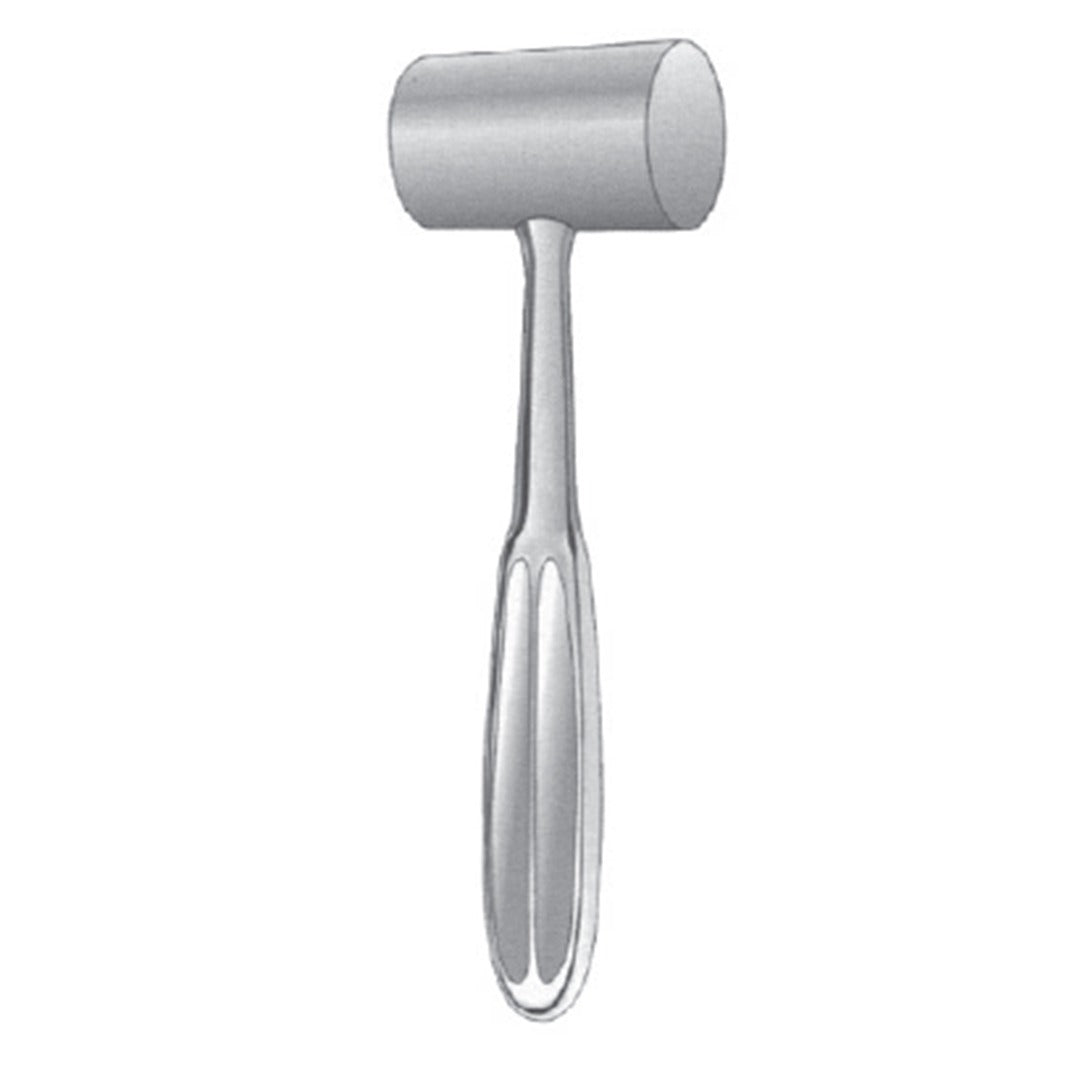

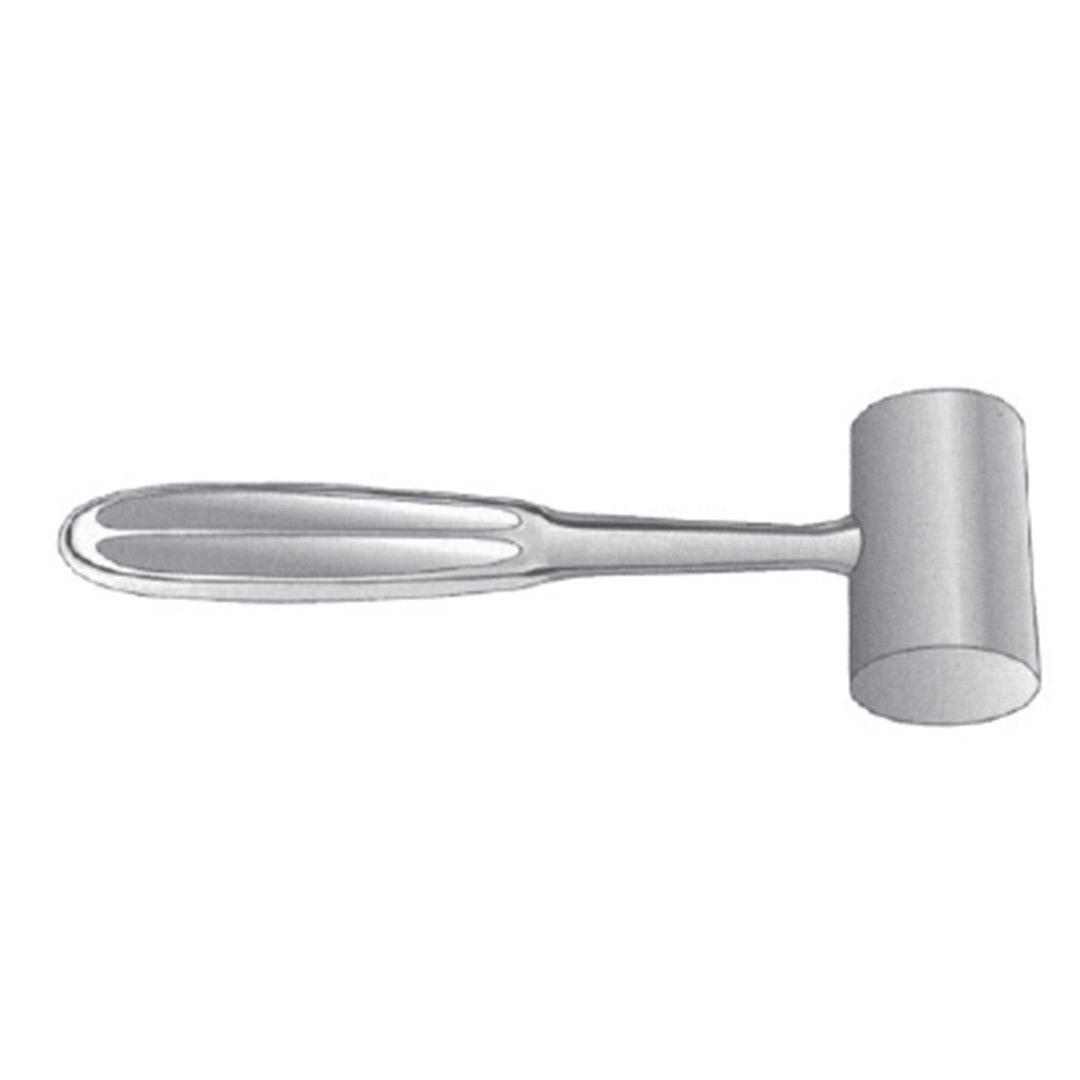
Kirk Mallet, Shopify SKU PS-000053 and catalog reference G20-34, is a reusable orthopedic surgical mallet manufactured with a German stainless steel body and brass-filled head for controlled heavy impact during bone-cutting and reconstruction procedures. The instrument measures 8 in overall and weighs 1 lb 6 oz, providing substantially greater striking mass than lightweight hand and small-bone mallets. Its cylindrical head, brass-filled construction, rigid neck, and long round ergonomic handle are designed to transmit measured force to compatible osteotomes, chisels, gouges, bone tamps, and other instruments intended for manual impact. The Kirk pattern is used during orthopedic osteotomy, fracture reconstruction, cortical bone preparation, joint reconstruction, bone graft impaction, and other procedures requiring forceful but controlled advancement of bone-working instruments. The concentrated head mass supports effective driving force while the elongated handle gives the operator directional control throughout each strike. Orthopedic trauma surgeons, arthroplasty specialists, reconstructive surgeons, and spine teams can use this configuration in hospital operating rooms and specialist musculoskeletal surgical centers.
The defining feature of the Kirk Mallet is its brass-filled striking head. Brass incorporated within the stainless steel head increases concentrated mass at the working end, allowing the instrument to develop substantial momentum without requiring an excessively long handle. When the surgeon swings the mallet toward the proximal striking surface of a compatible osteotome, chisel, gouge, or tamp, the 1 lb 6 oz total weight converts hand acceleration into mechanical impact along the receiving instrument's longitudinal axis. The cylindrical head provides a broad striking relationship intended for flat impact surfaces. This pattern should therefore be aligned squarely with the receiving tool rather than used for oblique contact that could redirect the driven instrument. The rigid stainless steel neck transfers the motion of the head without a pivot, spring, ratchet, or adjustable mechanism. A long round handle provides leverage and permits the surgeon to regulate swing length and striking orientation. The brass-filled construction is intended for heavy orthopedic impact delivery but does not remove the need for controlled technique. Force remains determined by mallet mass, swing velocity, contact alignment, bone resistance, and the number of sequential strikes delivered.
During orthopedic osteotomy, the Kirk Mallet is used after the selected osteotome or bone chisel has been positioned along the planned osseous cutting line. The surgeon aligns the mallet with the proximal striking surface and delivers controlled axial blows that progressively advance the cutting edge through cortical or cancellous bone. During fracture reconstruction, compatible chisels, gouges, elevators, or bone tamps can be activated as required while fracture reduction and surrounding soft-tissue protection are maintained. In joint reconstruction, the heavier striking pattern can assist during selected bone-preparation or implant-instrument steps when the operative system specifies manual mallet impact. Bone graft procedures may also require the mallet to activate a compatible tamp for consolidation of cancellous graft against a prepared recipient bed. The 1 lb 6 oz configuration provides greater momentum than lightweight precision mallets used for hand, foot, or delicate facial work. Progress should therefore be assessed between strikes, particularly around thin cortex, osteoporotic bone, or implants. The Kirk Mallet should contact only instruments designed to receive surgical impact, with each stroke maintained along the intended working axis.
Catalog reference G20-34 identifies the 8 in brass-filled Kirk Mallet weighing 1 lb 6 oz. The overall length creates a compact but effective striking arc for orthopedic procedures while keeping the operator's fingers separated from the proximal end of the receiving osteotome or chisel. Its heavy working end provides the momentum needed for substantial bone-cutting and reconstruction tasks without extending the instrument to the dimensions of larger revision or large-bone hammers. The long round handle supplies a stable gripping surface and allows changes in swing amplitude to regulate delivered force. Unlike narrow-tip mallets, the Kirk pattern is intended for instruments presenting a suitable broad, flat proximal striking surface. The brass-filled head should therefore not be used against irregular or sharply projecting contact points that could concentrate force unevenly. PS-000053 is the Peak Surgicals store identifier, while G20-34 identifies the published Kirk configuration associated with the 8-inch length and 1 lb 6 oz weight. Selection should be based on required momentum, receiving-instrument geometry, bone density, operative clearance, and the degree of controlled force required during the surgical stage.
German stainless steel provides the structural rigidity, corrosion resistance, and impact durability required for the external surfaces and handle of a reusable orthopedic mallet, while the brass-filled head supplies additional concentrated mass for bone-working procedures. Reprocessing should begin promptly after surgery so blood, marrow, bone fragments, and other residue do not dry on the striking faces, cylindrical head, neck transition, or handle. Cleaning should address the complete external surface, followed by thorough rinsing and complete drying before inspection. Sterile-processing personnel should examine the striking faces for deformation, cracks, mushrooming, corrosion, or other impact damage and confirm that the head remains securely integrated with the handle. The round grip should remain structurally straight and free of defects that could compromise control during use. Because the brass fill is enclosed within the head rather than serving as the external striking surface, routine inspection primarily focuses on the stainless steel exterior and structural integrity of the assembled mallet. Terminal sterilization should follow the healthcare facility's validated reusable surgical-instrument protocol and applicable reprocessing instructions. Peak Surgicals supports CE and ISO 13485 procurement documentation together with FDA-related records for institutional supplier qualification.
| SKU | PS-000053 |
|---|---|
| Product Name | Kirk Mallet |
| Price | $44.00 USD |
| Size/Gauge Variants | G20-34: 8 in overall length, 1 lb 6 oz total weight |
| Instrument Category | Heavy Orthopedic Surgical Mallet |
| Procedure | Orthopedic osteotomy, fracture reconstruction, cortical bone preparation, joint reconstruction, bone graft impaction, and mallet-assisted bone instrumentation |
| Material | German Stainless Steel Construction with Brass-Filled Head |
| Finish | Surgical Stainless Steel Finish |
| Sterilization | Reusable; sterilize following validated healthcare-facility cleaning and reprocessing protocols |
| Instrument Classification | Reusable Manual Orthopedic Surgical Mallet |
| Reusable | Yes |
| Certifications | CE, ISO 13485, FDA-related procurement documentation |
| Warranty | 30-Day Money-Back Guarantee on eligible purchases |
| MOQ | 1 Piece for standard online ordering |
| OEM / Custom Orders | Available for institutional, distributor, and custom procurement requirements |
| After-Sale Service | Return and replacement support under Peak Surgicals policy |
How does the Kirk Mallet differ from a standard Surgical Mallet?
The Kirk Mallet uses a heavy brass-filled head and weighs 1 lb 6 oz, giving it greater concentrated striking mass for demanding orthopedic bone work. A standard Surgical Mallet can use a solid stainless steel head with a different weight distribution and may be selected for more general osteotome, tamp, or impactor use. The Kirk configuration is particularly suited to robust osteotomy and dense bone preparation where substantial momentum is required. Its brass-filled construction differentiates the head mechanically from a conventional solid metal pattern. Both instruments remain manually controlled and should contact only compatible striking surfaces. Selection depends on required impact energy, receiving-instrument dimensions, bone density, and the surgeon's preferred mallet balance.
Why select the 8-inch, 1 lb 6 oz Kirk Mallet?
The 8-inch length provides a compact striking arc while maintaining sufficient separation between the surgeon's hand and the receiving bone instrument. Its 1 lb 6 oz mass supplies greater momentum than lightweight mallets intended for fine hand, foot, or facial procedures. This makes the Kirk Mallet suitable for demanding osteotomy and cortical bone preparation when a surgeon requires repeated substantial impacts. The brass-filled head concentrates much of the useful mass toward the working end. A heavier pattern should not automatically be selected for every bone procedure because thin or osteoporotic structures may require lower impact energy. Selection should therefore follow the receiving instrument, bone quality, surgical approach, and amount of advancement required.
What do CE, ISO 13485 and FDA references mean for procurement?
Peak Surgicals displays CE, ISO, and FDA-related information for the Kirk Mallet and supports ISO 13485 procurement requirements. ISO 13485 concerns the quality-management system used for controlled medical-device manufacturing and related production processes. CE documentation supports conformity assessment within applicable medical-device markets. Reusable Kirk surgical mallets are also represented in FDA device databases as manual surgical mallet instruments. These records should not be converted into an unsupported statement that PS-000053 is individually FDA approved. Hospitals and distributors can retain applicable certificates, SKU and catalog identification, purchasing records, and supplier documentation within their vendor-qualification files.
How is striking force controlled when the Kirk Mallet has no adjustment mechanism?
The Kirk Mallet contains no mechanical power regulator, spring, ratchet, trigger, or locking system. The surgeon determines delivered force by controlling swing distance, acceleration, grip, contact angle, and the number of impacts. The 1 lb 6 oz mass provides significant momentum as swing velocity increases. Short controlled strokes permit more incremental advancement than long forceful swings. The head should meet the receiving instrument on a flat, appropriate striking surface so the force travels along its intended axis. Bone-cutting depth and instrument advancement therefore remain controlled through manual technique, tactile feedback, visualization, and reassessment between strikes.
How should hospitals order and reprocess the Kirk Mallet?
Hospitals should order the Kirk Mallet using Shopify SKU PS-000053 together with catalog reference G20-34, 8-inch overall length, and 1 lb 6 oz weight. Peak Surgicals currently lists the product at $44.00 and provides a 30-day money-back guarantee on eligible purchases. Standard online ordering begins with one piece, while custom and bulk requirements can be coordinated for institutional and distributor procurement. After surgery, blood, marrow, and bone residue should be removed promptly from both striking surfaces, the cylindrical head, neck, and handle. Cleaning should be followed by thorough rinsing, complete drying, and inspection for corrosion, impact deformation, cracks, or structural looseness. Final sterilization should follow the healthcare facility's validated reusable surgical-instrument process before PS-000053 returns to the orthopedic mallet and osteotome tray.


