Tá do chairt folamh
Lean ort ag siopadóireachtAn bhfuil cuntas agat?
Logáil isteach chun seiceáil amach níos tapúla.

Bailiúchán Luaite
Do chairt siopadóireachta
Tá do chairt folamh
Lean ort ag siopadóireachtAn bhfuil cuntas agat?
Logáil isteach chun seiceáil amach níos tapúla.
Bailiúchán Luaite

PEAK SURGICALS
SKU:PS-000072
Níorbh fhéidir infhaighteacht bailithe a luchtú


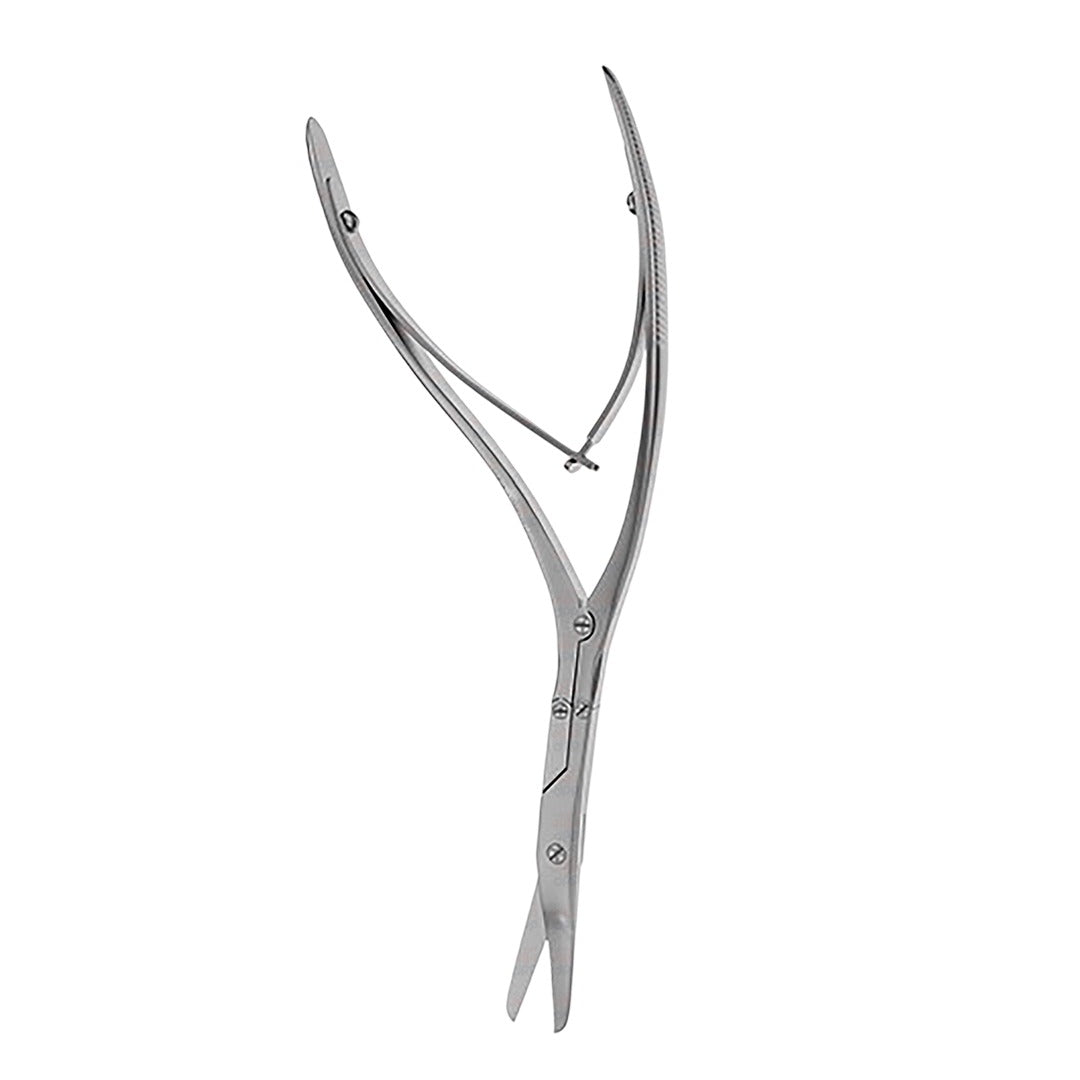
Cottle Septum Scissors, SKU PS-000072, are reusable ENT and rhinoplasty scissors manufactured from German stainless steel for controlled division of firm nasal septal cartilage during endonasal surgery. This configuration uses a double-jointed mechanism, short rounded blades, rigid shanks, and manual handles to generate increased cutting force at the distal working end while maintaining precise control within the narrow septal corridor. The compact blade profile is designed for cartilage cutting where longer general surgical scissors would occupy excessive space or provide less mechanical advantage. Cottle Septum Scissors are used during septoplasty, submucous septal resection, functional septorhinoplasty, structural rhinoplasty, correction of deviated septal cartilage, release of cartilaginous septal segments, and selected bone-cartilage unit preparation. The pattern is particularly relevant after bilateral mucoperichondrial flap elevation when the surgeon must incise resistant cartilage while preserving the planned L-strut and surrounding mucosa. Otolaryngologists, facial plastic surgeons, rhinoplasty specialists, and reconstructive surgeons use this instrument in hospital operating rooms, ambulatory surgical centers, and dedicated ENT procedure environments.
The defining mechanical feature of this Cottle pattern is its double-jointed construction. Instead of transferring handle movement through a single pivot directly to the blades, the compound linkage increases mechanical advantage as the surgeon closes the handles. This allows greater cutting force to reach the distal working end while requiring less hand compression than a comparable single-joint scissor cutting dense septal cartilage. The short blades limit the length of tissue captured during each closure and support controlled incremental division within the confined nasal cavity. Their rounded distal profile reduces unnecessary projection beyond the intended cut line and gives the operator a compact working end around elevated septal flaps. The rigid shanks transmit the amplified force from the compound linkage without the flexible response associated with finer soft-tissue scissors. Each blade must remain aligned through the complete closing cycle because lateral play at either articulation can reduce effective shearing. There is no ratchet or locking mechanism; the operator determines cutting pressure continuously through the handles. The instrument is therefore positioned deliberately around the selected cartilage segment, closed under direct control, released, and repositioned for the next staged cut rather than advanced blindly through the septum.
During septoplasty, Cottle Septum Scissors are used after the mucoperichondrial flaps have been elevated and the deviated cartilaginous framework has been clearly exposed. The surgeon identifies the portion requiring division while preserving sufficient dorsal and caudal support for the structural L-strut. The short blades are positioned across the selected cartilage line and the double-joint mechanism supplies the force required to divide resistant septal tissue with a controlled closure. During structural or functional septorhinoplasty, the instrument can extend a planned cartilaginous incision toward the bony septum as part of correction of deviation, dorsal modification, or preparation of a bone-cartilage unit. Published rhinoplasty technique literature describes Cottle septum scissors being used to continue a subdorsal cartilaginous incision along the perpendicular plate, with careful avoidance of rocking force near the skull base. During submucous septal resection, the scissors can support controlled segmentation of exposed septal cartilage before removal or reshaping with complementary instruments. Throughout these steps, the surgeon maintains awareness of the mucosal flaps, perpendicular plate, vomer, dorsal support, nasal spine, and cribriform region while using sequential rather than uncontrolled cutting movements.
PS-000072 represents the compact double-jointed Cottle Septum Scissors configuration on this Peak Surgicals listing. Clinical selection is based on its mechanical design and short rounded blade geometry rather than a published multi-size range. The distal blades provide the cutting interface for dense cartilaginous septum and are deliberately shorter than the long blades found on many general dissecting scissors. Immediately proximal to the working end, rigid shanks maintain alignment and transmit the increased force generated through the compound articulations. The double-joint assembly acts as a force multiplier, making this pattern suitable when conventional fine nasal scissors provide insufficient leverage against resistant cartilage. The proximal handles allow the surgeon to regulate each closure and release the blades immediately once the intended section has been divided. This PS-000072 configuration should be distinguished from Peak Surgicals' separate Cottle Septum Scissor listing with 18 cm overall length, angled handles, and serrated blades. The two designs occupy related but different roles within a rhinoplasty or septoplasty tray. PS-000072 is best selected when compact blade control and compound leverage are priorities, while the longer angled pattern provides additional reach and a different approach to the septal cutting plane.
German stainless steel provides the rigidity, corrosion resistance, and edge support needed for a reusable nasal scissor repeatedly subjected to cartilage cutting and sterilization cycles. The product is listed with rust-resistant properties, supporting routine use within reusable ENT and plastic surgery instrument sets. Reprocessing should begin soon after surgery so blood, cartilage fragments, and tissue residue do not dry around the short blades or within either articulation of the compound mechanism. Cleaning must address both cutting surfaces, the proximal and distal joints, shanks, and handle contact areas, followed by thorough rinsing and complete drying. Functional inspection should confirm smooth movement through both pivots, accurate blade approximation, intact rounded tips, appropriate joint tension, and absence of corrosion or deformation. A stiff articulation, loose connection, damaged edge, or asymmetrical closure can reduce controlled cutting performance and warrants removal from the active tray. The instrument is reusable and can undergo steam sterilization through the healthcare facility's validated stainless steel instrument process and applicable reprocessing instructions. Peak Surgicals supports CE and ISO 13485 procurement documentation together with FDA-related records for institutional and distributor qualification workflows.
| SKU | PS-000072 |
|---|---|
| Product Name | Cottle Septum Scissors |
| Price | $44.00 USD |
| Size/Gauge Variants | Single PS-000072 double-jointed configuration with short rounded blades |
| Instrument Category | ENT and Rhinoplasty Septum Scissors |
| Procedure | Septoplasty, submucous septal resection, functional septorhinoplasty, structural rhinoplasty, septal cartilage division, and bone-cartilage unit preparation |
| Material | German Stainless Steel |
| Finish | Rust-Resistant Surgical Finish |
| Sterilization | Reusable; steam sterilization following validated healthcare-facility cleaning and reprocessing protocols |
| Instrument Classification | Class I Reusable Manual Nasal Scissors |
| Reusable | Yes |
| Certifications | CE, ISO 13485, FDA-related procurement documentation |
| Warranty | 1 Year |
| MOQ | 1 Piece |
| OEM / Custom Orders | Available |
| After-Sale Service | Return and Replacement |
How do double-jointed Cottle Septum Scissors differ from standard angled Cottle Septum Scissors?
The PS-000072 configuration uses a compound double-joint mechanism with short rounded blades to increase cutting force at a compact distal working end. Standard angled Cottle Septum Scissors commonly use longer shanks or angled handles with serrated blades and a different approach to the septal cutting plane. The double-jointed pattern prioritizes mechanical leverage when dense cartilage requires greater force through a short controlled bite. The longer angled design provides additional reach and can orient the surgeon's hand away from the direct nasal axis. Both patterns are intended for septal surgery, but their leverage, blade geometry, and working access differ. Selection should therefore reflect cartilage resistance, depth of the intended cut, exposure, and the surgeon's preferred instrument trajectory.
Why are short rounded blades used on this Cottle Septum Scissor?
The short blades keep the cutting zone compact inside the restricted septal corridor. Their reduced length limits the amount of cartilage captured during a single closure and supports incremental division rather than a long uncontrolled cut. Rounded distal ends reduce unnecessary tip projection beyond the visible working area. This geometry is useful after mucoperichondrial elevation when the surgeon needs to divide selected cartilage while protecting the opposing flap and preserving structural septum. The double-joint mechanism compensates for the short blade length by providing increased mechanical leverage against firm tissue. PS-000072 is therefore selected for its combination of compact working geometry and amplified cutting force rather than for a particular gauge or overall-length variant.
What do CE, ISO 13485 and FDA references mean for procurement?
Peak Surgicals provides CE, ISO 13485, and FDA-related procurement information for reusable surgical instruments including Cottle Septum Scissors. ISO 13485 relates to the quality-management system used for controlled medical-device manufacturing and associated production processes. CE documentation supports conformity review within applicable medical-device markets. United States hospitals and distributors should evaluate the relevant manufacturer, establishment, listing, and device records required by their procurement procedures. These references should not be converted into an unsupported claim that PS-000072 is individually FDA approved. Supplier certificates, product identification, purchasing records, and applicable regulatory documentation can be maintained within institutional or distributor vendor-qualification files.
How does the double-joint mechanism increase cutting power intraoperatively?
The two articulations create a compound-leverage system between the handles and short distal blades. When the surgeon compresses the handles, movement is transferred through both joints before reaching the cutting edges. This mechanical arrangement increases the force available at the blades compared with a similar simple single-pivot scissor. The surgeon can therefore divide resistant septal cartilage with controlled hand pressure while maintaining a compact working end inside the nose. Because the instrument has no ratchet or lock, reducing handle pressure immediately releases cutting force and allows the blades to reopen. Both joints should move smoothly and maintain alignment so the mechanical advantage translates into clean shearing rather than lateral blade displacement.
How should hospitals order and reprocess Cottle Septum Scissors?
Hospitals should order this configuration using SKU PS-000072 so it is not confused with Peak Surgicals' separate 18 cm angled Cottle Septum Scissor pattern. The current listed price is $44.00, while Peak Surgicals supports a one-piece MOQ, one-year warranty, OEM ordering, and return or replacement service for reusable instruments. After surgery, cartilage and tissue residue should be removed promptly from the short blades, both joint assemblies, shanks, and handles. Cleaning should be followed by complete rinsing, drying, and inspection of cutting edges, rounded tips, articulation tension, corrosion resistance, and blade alignment. Both pivots should articulate freely before the device is packaged for sterilization. Final steam processing should follow the healthcare facility's validated reusable surgical instrument cycle and applicable reprocessing instructions before PS-000072 returns to the septoplasty or rhinoplasty tray.


