Tá do chairt folamh
Lean ort ag siopadóireachtAn bhfuil cuntas agat?
Logáil isteach chun seiceáil amach níos tapúla.

Bailiúchán Luaite
Do chairt siopadóireachta
Tá do chairt folamh
Lean ort ag siopadóireachtAn bhfuil cuntas agat?
Logáil isteach chun seiceáil amach níos tapúla.
Bailiúchán Luaite

PEAK SURGICALS
SKU:PS-000069
Níorbh fhéidir infhaighteacht bailithe a luchtú


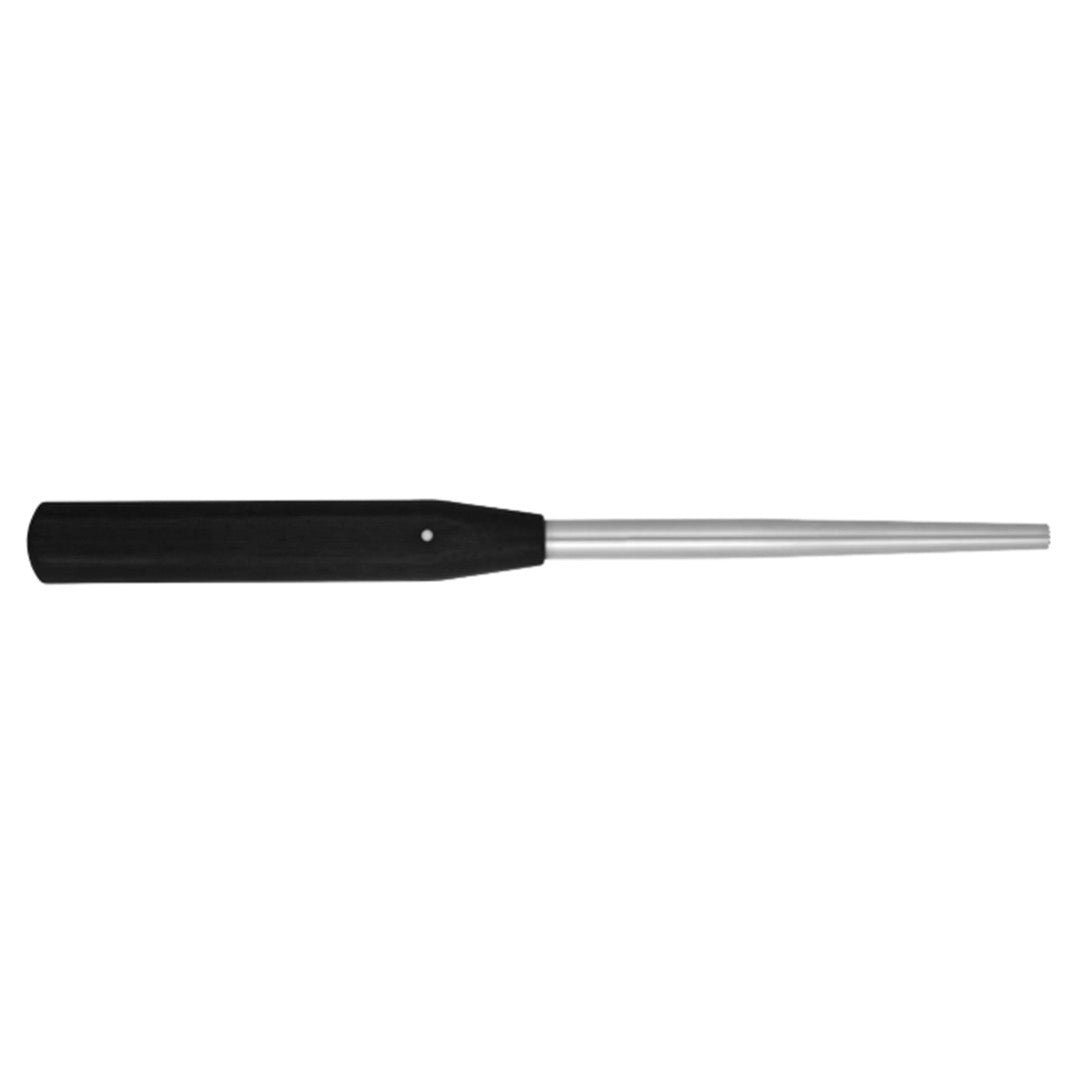
Caspar Bone Tamp, SKU PS-000069 and part number gS 60.7503, is a reusable orthopedic impaction instrument manufactured from German surgical stainless steel with a black plastic handle for controlled placement and compaction of bone graft material. The instrument measures 8 in overall and uses a 3 mm cross-serrated working tip that provides a focused contact surface for manipulating cancellous graft within confined osseous and spinal operative fields. The long rigid shaft transmits measured mallet force from the proximal handle to the distal tamp while keeping the surgeon's hand outside the deeper working corridor. The Caspar pattern is used during cervical and lumbar spinal fusion, interbody graft preparation, posterolateral fusion, orthopedic bone-graft reconstruction, and procedures requiring controlled consolidation of cancellous graft around prepared bone surfaces. Its narrow 3 mm end is particularly suited to localized graft placement where a broader impactor would obstruct visualization or contact adjacent structures. Spine surgeons, orthopedic reconstructive surgeons, neurosurgeons performing spinal fusion, and operating-room teams use this pattern in hospital and specialist surgical environments requiring precise manual graft impaction.
The Caspar design functions through direct axial impact rather than a pivot, ratchet, spring, or powered mechanism. Its distal 3 mm working end carries a cross-serrated contact pattern that increases friction between the tamp and cancellous graft during controlled advancement. The intersecting serrations reduce lateral slipping when the tip is positioned against graft material, helping maintain the intended point of compression while the surgeon or assistant delivers measured mallet strikes to the proximal end. A narrow working diameter concentrates force within a limited area, which is useful when graft must be packed into a confined spinal or orthopedic space without introducing a broad impactor. The rigid stainless steel shaft transfers impact energy along its longitudinal axis and should remain aligned with the intended direction of graft movement. At the proximal end, the black plastic handle provides a stable grip and separates the operator's hand from the metallic shaft. Because the instrument has no mechanical depth stop, impaction depth is controlled through tip position, mallet force, number of strikes, tactile resistance, and direct visualization. The tamp should be repositioned between areas of graft rather than levered laterally against surrounding bone or implants.
During spinal fusion procedures, the Caspar Bone Tamp is used after the fusion bed or graft recipient site has been prepared and the surgeon begins placing cancellous or structural graft material into the intended space. In cervical fusion, the narrow 3 mm tip can assist with controlled packing around a prepared interbody region when localized graft placement is required without obstructing the operative corridor. During lumbar fusion, the instrument may be used to consolidate graft within accessible posterolateral or interbody preparation zones according to the selected surgical technique. In orthopedic reconstruction, the same mechanical principle applies when cancellous graft must be packed into a contained osseous defect or around a prepared fusion surface. The cross-serrated working end is positioned directly against the graft, and measured mallet strikes advance or compact the material incrementally. The surgeon reassesses distribution after each sequence so graft is consolidated without uncontrolled migration. The tamp should remain oriented toward the intended recipient site and away from neural structures, cortical margins, implants, or fragile bone. It is an impaction instrument rather than a cutting or prying device, so effective use depends on controlled axial loading and adequate visualization of the working field.
PS-000069 corresponds to part number gS 60.7503 and is supplied with an 8 in overall length and 3 mm distal working end. The 3 mm diameter provides a narrow impaction footprint for focused graft placement within confined anatomy. This smaller contact area allows the surgeon to direct compression toward a specific graft region while preserving working clearance for retractors, suction instruments, implants, or other spinal instrumentation. The 8 in overall length provides reach to deeper operative sites while keeping the proximal grip outside the immediate wound. Its stainless steel shaft supplies the rigidity required to transmit repeated axial impact without depending on a jointed mechanism. The black plastic handle provides a broad proximal gripping surface and helps the operator maintain alignment during positioning and mallet contact. Although Caspar bone tamps are manufactured in additional tip diameters by established instrument systems, this Peak Surgicals listing identifies the gS 60.7503 configuration with a 3 mm tip. Selection of this model is therefore appropriate when the surgical workflow requires localized graft consolidation rather than the broader contact area produced by larger tamp diameters.
German surgical stainless steel provides the rigidity, corrosion resistance, and dimensional stability required for a reusable bone tamp exposed to repeated impaction loads. The distal cross-serrated surface requires particular attention during reprocessing because blood, marrow, and graft particles can lodge within the intersecting grooves. Cleaning should begin promptly after use and include the 3 mm working end, shaft transitions, and junction between the metal body and black plastic handle. Thorough rinsing and complete drying should follow before functional inspection. Sterile-processing personnel should examine the serrations for retained debris, deformation, surface damage, or corrosion and confirm that the shaft remains straight without impact-related distortion. The handle should remain secure and intact without cracking, looseness, or other damage that could compromise control during mallet use. Reprocessing and terminal sterilization should follow the healthcare facility's validated protocol and applicable manufacturer instructions for a reusable instrument containing both stainless steel and a plastic handle. Peak Surgicals displays CE, ISO, and FDA-related certification information for this product, while institutional buyers should retain the applicable documentation within their supplier-qualification and procurement records.
| SKU | PS-000069 |
|---|---|
| Product Name | Caspar Bone Tamp |
| Price | $60.50 USD |
| Size/Gauge Variants | gS 60.7503: 8 in overall length with 3 mm working tip |
| Instrument Category | Orthopedic and Spine Bone Tamp |
| Procedure | Cervical spinal fusion, lumbar fusion, interbody graft placement, posterolateral fusion, orthopedic bone-graft reconstruction, and cancellous graft compaction |
| Material | German Surgical Stainless Steel |
| Finish | Surgical stainless steel shaft with black plastic handle |
| Sterilization | Reusable; clean and sterilize according to validated healthcare-facility protocols and applicable reprocessing instructions |
| Instrument Classification | Reusable Manual Orthopedic Bone Tamp |
| Reusable | Yes |
| Certifications | CE, ISO 13485, FDA-related procurement documentation |
| Warranty | 30-Day Money-Back Guarantee |
| MOQ | 1 Piece for standard store ordering |
| OEM / Custom Orders | Available through Peak Surgicals bulk and private-label manufacturing |
| After-Sale Service | Return and replacement support under Peak Surgicals policy |
How does a Caspar Bone Tamp differ from a standard Bone Impactor?
The Caspar Bone Tamp uses a narrow 3 mm cross-serrated working end designed for focused graft placement and controlled compaction. A standard Bone Impactor commonly has a broader flat or removable impact surface intended to distribute force across a larger graft or bone area. The Caspar pattern therefore provides more localized contact when the operative corridor is narrow or the surgeon needs to direct graft into a defined region. Its cross-serrated face also increases friction against cancellous material during axial impaction. Both instruments transfer mallet force manually and contain no locking mechanism. Selection depends on the size of the graft bed, available access, required contact area, and whether focused or broader impaction is needed.
Why is a 3 mm tip selected for the Caspar Bone Tamp?
The 3 mm tip provides a small contact footprint for precise graft placement within confined spinal and orthopedic operative spaces. This is useful when cancellous material must be consolidated near a defined fusion surface without introducing a wider impactor into the field. The narrow end also preserves clearance around retractors, implants, and other instruments during graft placement. Cross-serrations help stabilize the graft at the contact point as axial force is applied. The 8 in shaft provides reach while the surgeon's hand remains outside the deeper corridor. PS-000069 should therefore be selected when localized impaction is required rather than when a broad surface must be compressed simultaneously.
What do CE, ISO 13485 and FDA references mean for procurement?
Peak Surgicals displays CE, ISO, and FDA-related certification information for the Caspar Bone Tamp. ISO 13485 concerns the quality-management system used for controlled medical-device manufacturing and associated processes. CE documentation supports conformity assessment requirements within applicable medical-device markets. United States hospitals and distributors should evaluate FDA-related manufacturer and device records according to their own purchasing requirements. Regulatory references should not be rewritten as an unsupported statement that PS-000069 is individually FDA approved unless that exact status is documented. Procurement teams can retain product identification, certificates, supplier records, and purchasing documentation within institutional vendor-qualification files.
How is impaction controlled when the Caspar Bone Tamp has no mechanical adjustment?
The Caspar Bone Tamp is a fixed manual instrument with no ratchet, pivot, spring, or locking mechanism. The surgeon places the 3 mm cross-serrated tip directly against the bone graft at the intended point of compression. The rigid shaft is aligned with the desired direction of graft movement before a mallet strike is delivered to the proximal end. Each impact transfers axial force through the shaft to the narrow working surface. Depth and compaction are controlled by strike intensity, number of impacts, tip position, tactile resistance, and repeated visual assessment. The instrument should be lifted and repositioned when the target area changes rather than rocked sideways against bone or adjacent instrumentation.
How should hospitals order and reprocess the Caspar Bone Tamp?
Hospitals should order this product using SKU PS-000069 and part number gS 60.7503 together with the 8 in length and 3 mm tip specification. Peak Surgicals currently lists the instrument at $60.50 and displays a 30-day money-back guarantee. The standard online ordering unit is one instrument, while bulk and private-label manufacturing services are available through Peak Surgicals for institutional and distributor requirements. Following use, graft, blood, and marrow residue should be removed promptly from the cross-serrated tip and shaft before material dries within the grooves. The instrument should then be cleaned, rinsed, dried, and inspected for tip deformation, shaft bending, corrosion, or damage to the black plastic handle. Final sterilization should follow the facility's validated process and applicable reprocessing instructions before PS-000069 returns to the orthopedic or spinal instrument set.


