Tá do chairt folamh
Lean ort ag siopadóireachtAn bhfuil cuntas agat?
Logáil isteach chun seiceáil amach níos tapúla.

Bailiúchán Luaite
Do chairt siopadóireachta
Tá do chairt folamh
Lean ort ag siopadóireachtAn bhfuil cuntas agat?
Logáil isteach chun seiceáil amach níos tapúla.
Bailiúchán Luaite

PEAK SURGICALS
SKU:PS-000022
Níorbh fhéidir infhaighteacht bailithe a luchtú


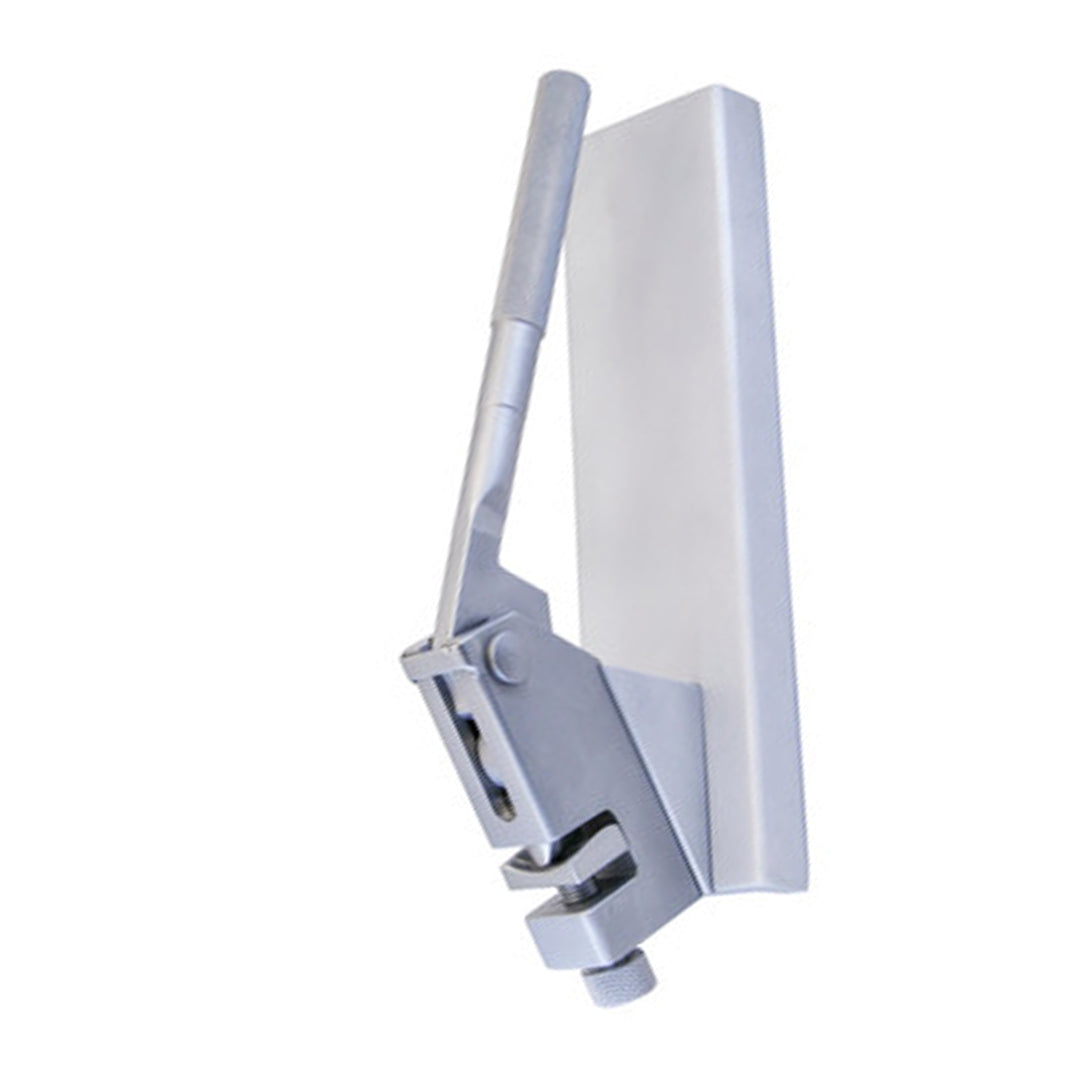
Bone Plate Bending Press — New Model, SKU PS-000022, is a reusable table-top orthopedic instrument designed for controlled bending and contouring of surgical fixation plates before fracture fixation or reconstructive procedures. The press combines a stable non-slip base with a manually operated leverage mechanism to provide greater control than unsupported free-hand plate bending. Peak Surgicals lists the instrument as suitable for multiple bone plate sizes, profiles, and types, making it useful where different fixation systems require gradual anatomical contouring. Premium-grade stainless steel and aluminum components provide the rigid framework needed to resist deformation while manual pressure is transferred to the plate. The updated design emphasizes improved leverage, enhanced stability, smooth operation, and damage-resistant plate bending. Applications include orthopedic trauma surgery, reconstructive plating, veterinary orthopedics, and surgical training environments. PS-000022 is currently listed at $285.99 and is designed for convenient cleaning, sterilization, and routine maintenance between procedures.
The Bone Plate Bending Press uses a stable tabletop configuration to provide a fixed platform while manual leverage is applied to the selected fixation plate. Unlike handheld bending irons or pliers, the press remains supported on a flat work surface so the operator can concentrate force through the bending mechanism without simultaneously stabilizing the entire instrument. Peak Surgicals specifies a non-slip base to reduce movement during contouring and describes the new model as providing improved leverage and smoother operation. A compatible plate is positioned within the working area, and pressure is applied progressively until a small change in contour is produced. The plate can then be released, inspected, and repositioned for further adjustment. This incremental method gives the surgeon or surgical technologist greater control over the location and degree of each bend. Excessive force, repeated reverse bending, or aggressive deformation around locking holes should be avoided unless specifically permitted by the implant manufacturer. The objective is controlled contouring rather than uncontrolled bending that may compromise plate geometry or structural integrity.
During fracture fixation, the Bone Plate Bending Press can be used after the surgeon has selected an appropriate plate and assessed how closely its existing geometry matches the exposed bone or planned reconstruction. The plate is placed into the press at the section requiring adjustment and gradually contoured using the manual leverage system. After each controlled bend, the plate can be compared again with the anatomical surface or a suitable template before further modification is performed. This workflow can support trauma surgery, corrective osteotomy, reconstruction, and other orthopedic procedures where plate adaptation is required before definitive screw fixation. The stable tabletop base is particularly useful when a plate requires several controlled adjustments along its length. Peak also lists veterinary orthopedic use, where the same principle can support preparation of fixation plates for animal fracture repair. Final implant geometry should be inspected carefully before implantation, including screw holes, locking interfaces, plate surfaces, and overall alignment. Any bending must remain within the limits specified by the manufacturer of the fixation plate being used.
Peak Surgicals SKU PS-000022 is described as compatible with multiple bone plate sizes, profiles, and types, but the current live page does not publish a specific maximum plate thickness, width, or named fixation-system capacity. This detail should remain unspecified until an exact technical limit is confirmed from the product engineering record or physical instrument. Peak also sells a separate high-capacity bending tool specifically identified for plates up to 6 mm, so that 6 mm specification should not be transferred to PS-000022. Bone plate bending presses may be used with different small-fragment, large-fragment, reconstruction, locking, or veterinary plate systems depending on the dimensions of their working mechanism. Before use, the plate should fit the bending area correctly and remain stable throughout the adjustment. Procurement teams should identify PS-000022 as the New Model tabletop press and separately document the confirmed compatible fixation systems. This prevents confusion with dedicated 6 mm presses, handheld plate benders, mini plate pliers, roller benders, and other specialized contouring instruments.
Peak Surgicals specifies premium-grade stainless steel and aluminum components for the Bone Plate Bending Press — New Model. This combination provides a rigid structural framework while supporting a stable tabletop design and repeated manual operation. The live product page states that the press is designed for convenient cleaning, sterilization, and routine maintenance but does not publish a specific autoclave cycle or sterilization temperature. Those parameters should therefore follow applicable manufacturer instructions and the healthcare facility's validated process rather than being added without confirmation. After use, all plate-contact areas, moving interfaces, pivots, adjustment surfaces, and base components should be cleaned carefully and inspected for residue, corrosion, deformation, looseness, or damage. The bending mechanism should move smoothly and maintain stable alignment before the press returns to service. Peak displays CE, FDA, and ISO certification badges and identifies the product as reusable medical-grade construction. For institutional procurement, CE and ISO 13485 documentation should be retained together with supplier records, while any FDA-related claim should be tied to exact device documentation rather than described as unsupported individual FDA approval.
| SKU | PS-000022 |
|---|---|
| Product Name | Bone Plate Bending Press — New Model |
| Price | $285.99 USD |
| Instrument Type | Table-Top Orthopedic Plate Bending Press |
| Compatibility | Multiple bone plate sizes, profiles, and types; exact maximum plate thickness is not published on the current listing |
| Primary Use | Controlled bending and contouring of surgical bone plates used in fracture fixation |
| Mechanism | Manual Leverage Plate-Bending Mechanism |
| Base Design | Stable Non-Slip Tabletop Base |
| Key Features | Improved leverage, enhanced stability, smooth operation, and damage-resistant plate bending |
| Instrument Category | Orthopedic Bone Plate Bending / Contouring Instrument |
| Applications | Orthopedic surgery, trauma surgery, veterinary orthopedics, reconstructive plating, and surgical training laboratories |
| Material | Premium-Grade Stainless Steel and Aluminum Components |
| Sterilization | Designed for cleaning and sterilization; exact cycle should follow validated facility and applicable manufacturer instructions |
| Instrument Classification | Reusable Manual Tabletop Orthopedic Plate-Bending Press |
| Reusable | Yes |
| Certifications | CE and ISO 13485 procurement documentation; FDA-related documentation subject to exact device identification |
| Warranty | 30-Day Money-Back Guarantee on eligible purchases |
| MOQ | 1 Piece for standard online ordering |
| OEM / Custom Orders | Available for institutional, distributor, veterinary, and custom procurement requirements |
| After-Sale Service | Return and replacement support under Peak Surgicals policy |
How does the Bone Plate Bending Press differ from handheld plate bending pliers?
The Bone Plate Bending Press uses a stable tabletop base while the bending force is applied through a dedicated manual leverage mechanism. Handheld plate bending pliers rely on the operator holding and stabilizing the entire instrument during contouring. A press can therefore provide greater stability when several controlled bends are required along a plate. Plate bending pliers may be more convenient for small localized adjustments or smaller fixation systems. Both instrument types should be matched to the dimensions and design of the plate being contoured. Selection should depend on plate size, required bending force, desired contour, and the implant manufacturer's bending instructions.
What plate thickness can PS-000022 bend?
The current Peak Surgicals product page does not publish a maximum plate thickness for PS-000022. It states that the press is suitable for multiple bone plate sizes, profiles, and types. Peak also maintains a separate product specifically advertised for plates up to 6 mm, so that 6 mm capacity should not automatically be assigned to the New Model press. The actual plate must fit securely within the working mechanism before contouring begins. Hospitals should confirm the supported plate thickness and fixation systems from the supplied technical documentation or physical instrument. Once verified, that exact capacity should be added to the Shopify specification table and orthopedic tray record.
What do CE, ISO 13485 and FDA references mean for procurement?
Peak Surgicals displays CE, FDA, and ISO certification badges on the Bone Plate Bending Press — New Model listing. ISO 13485 concerns quality-management systems used for medical-device manufacturing and controlled production processes. CE documentation supports applicable conformity requirements within relevant medical-device markets. A general FDA storefront badge should not automatically be described as individual FDA approval of PS-000022. Procurement teams should retain the exact product SKU, supplier certificates, purchasing records, and any product-specific regulatory documentation available. This approach provides more reliable traceability than relying solely on general certification graphics.
How does the tabletop press improve control during plate contouring?
The non-slip tabletop base provides a stable platform while force is transferred through the manual bending mechanism. This allows the operator to focus on plate position and the amount of contour being created rather than stabilizing a handheld tool. A small amount of pressure can be applied first, followed by inspection of the resulting curve. The plate can then be repositioned for additional incremental adjustment. This controlled sequence reduces the need for large uncontrolled bending movements. Final plate geometry should always be checked for screw-hole alignment, surface condition, unintended twisting, and compliance with the implant manufacturer's contouring limits.
How should hospitals order and maintain the Bone Plate Bending Press — New Model?
Hospitals should order the instrument using Peak Surgicals SKU PS-000022 and identify it specifically as the New Model tabletop plate bending press. Peak currently lists the product at $285.99 and displays a 30-day money-back guarantee. The separate Peak press specifically rated for plates up to 6 mm should remain a distinct procurement item. After use, staff should clean all plate-contact surfaces, moving mechanisms, pivots, base components, and accessible recesses. Cleaning should be followed by drying and inspection for corrosion, deformation, mechanical looseness, surface damage, or abnormal operation. Final sterilization and routine maintenance should follow applicable validated instructions before PS-000022 returns to the orthopedic plate-bending workstation.


