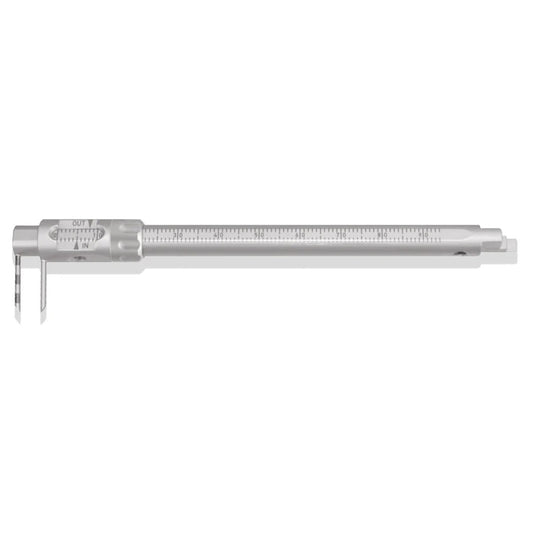
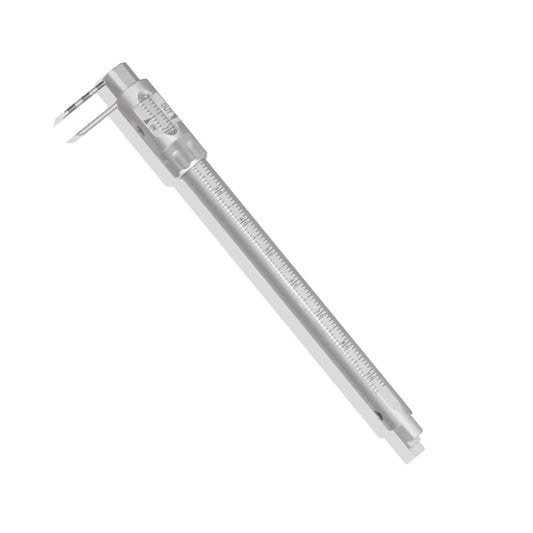
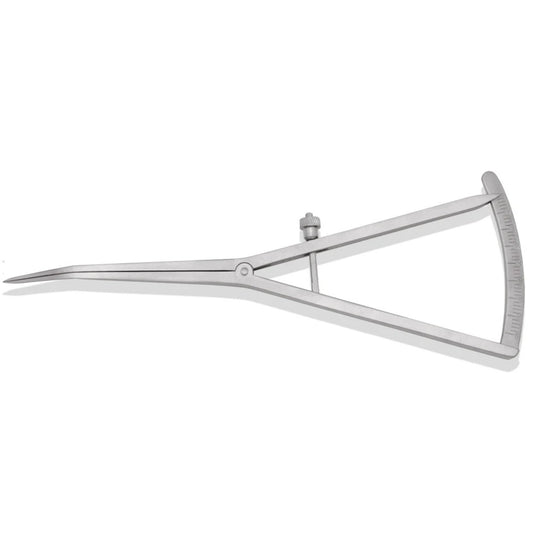
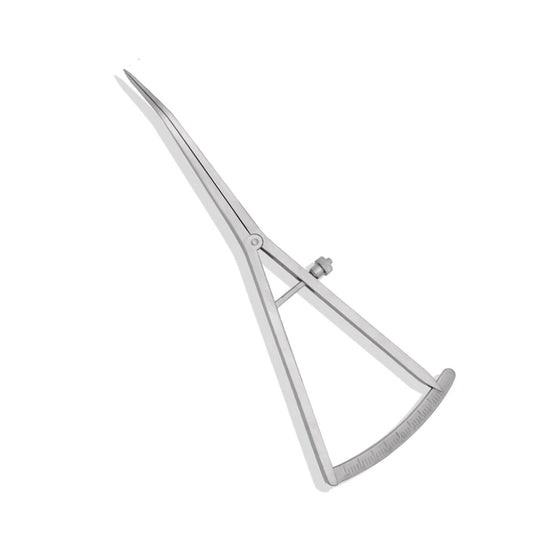
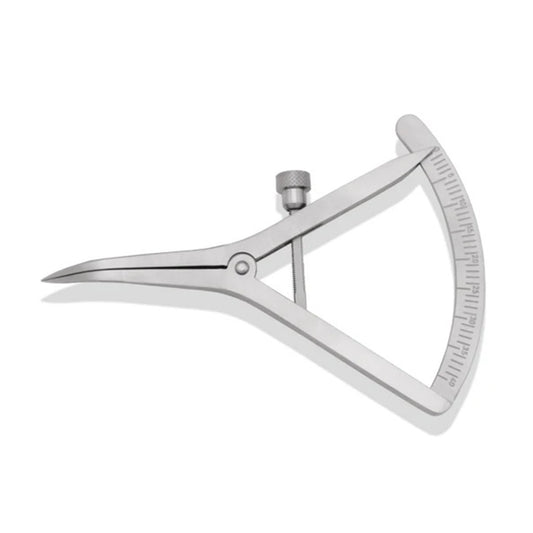
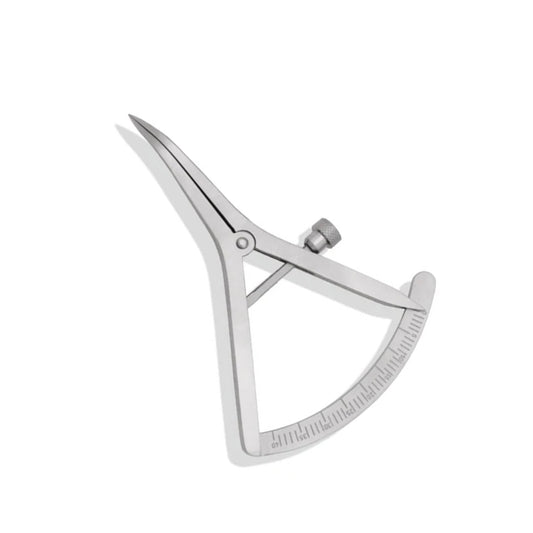
Dentalimplantat kalibermålere dybden, bredden og afstanden, som implantatplacering afhænger af. En kalibermåling erstatter et gæt, og implantatpositionering har ringe tolerance over for gætværk. Peak Surgicals leverer tre mønstre: Glidende implantatkaliber og Castro vinklet i rustfrit stål, fra $22.00 til $38.50. Hver er CE-mærket og bygget under ISO 13485. Sammenlign alle tre mønstre i gitteret nedenfor.
Glidende eller Castro vinklet: Hvilken kaliber til hvilken måling?
Den glidende implantatkaliber anvender en jævn glidemekanisme med indgraverede markeringer til at aflæse afstanden direkte mellem to punkter, mens Castro vinklet mønster, en Castroviejo-stil målekaliper, er bygget til både implantat- og almen tandpleje-målinger, hvor en vinklet tilgang nemmere når stedet. Adgang og aflæsningsstil er det, der adskiller dem.
Glidende implantatkaliber (PS-603, $38.50) giver en direkte, indgraveret skalaaflæsning for implantatstørrelse, dybde og inter-implantatafstand mesial-til-distal afstandskontrol, der vejleder præcis positionering under placeringsplanlægning. Castro Caliper Angled (PS-601, $22.00) og Castro Caliper Angled Instruments (PS-602, $22.00) benytter den Castroviejo-mønstrede vinklede tilgang, nyttig til måling på posteriore steder eller hvor den glidende kalibers lige profil ikke når komfortabelt. Vi leverer hvert mønster ved MOQ 1.
Aflæsningsnøjagtighed og hvorfor mekanismen er vigtig
En skydelæres nøjagtighed afhænger af en jævn, modstandsfri bevægelse langs skalaen – en mekanisme, der binder eller sidder fast, giver en aflæsning, operatøren skal tvinge frem, snarere end en, de kan stole på. Det er hele værdiforslaget ved en dedikeret implantatskydelære frem for en improviseret måling: gentagelige, indgraverede aflæsninger snarere end visuel estimering i et felt, hvor en millimeter fejl ændrer implantatpositioneringsresultaterne.
Det vinklede Castro-mønster løser et adgangsproblem, som den glidende kalibers lige profil ikke kan: måling på et posteriort sted, eller enhver position, hvor et lige instrument ville kræve en akavet tilgangsvinkel, drager fordel af en kaliber formet til at nå målepunktet direkte. Begge mekanismer tjener det samme underliggende formål: at erstatte estimering med et specifikt, registrerbart tal, som den kirurgiske plan kan bygges omkring.
Genbehandling, skalaens integritet og certificering
Den indgraverede skala er den funktion, disse instrumenter ikke kan fungere uden, og det er også det første, grov håndtering nedbryder – en slidt eller korroderet skala giver en upålidelig aflæsning, hvilket underminerer hele formålet med at måle. Inspicér skalaen for læsbarhed ved hver cyklus, og på det glidende mønster, bekræft, at mekanismen stadig bevæger sig jævnt uden at binde.
Hvert instrument er klasse I, genanvendeligt, CE-mærket og bygget under ISO 13485 – den dokumentation, et team inden for dentalforsyning verificerer, før de kvalificerer en leverandør. Garantien er et år med retur og udskiftning, MOQ er 1 stk., ordrer over $99 sendes gratis i kartonkasseemballage, og OEM-mærkning er tilgængelig for distributører. For hele implantologiserien se dental implantologi instrumenter; gennemse alle dental instrumenter. Tal med os om OEM og volumenbetingelser.