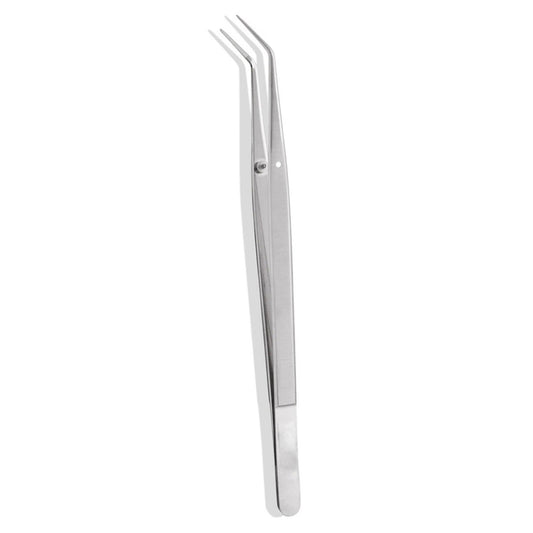
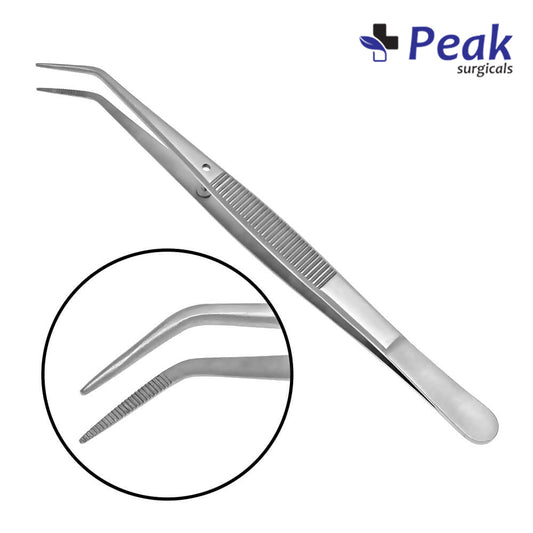
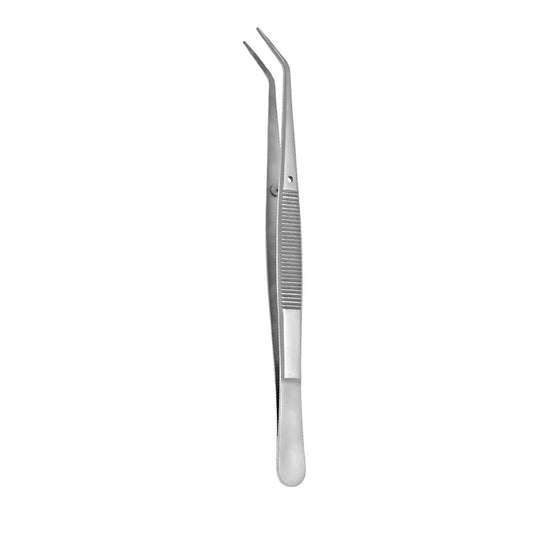
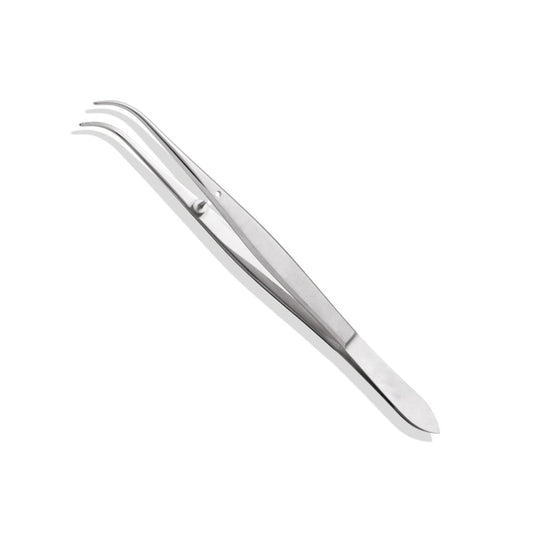
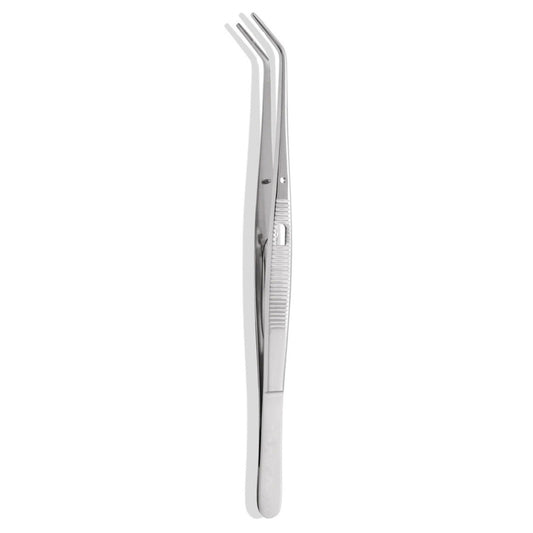
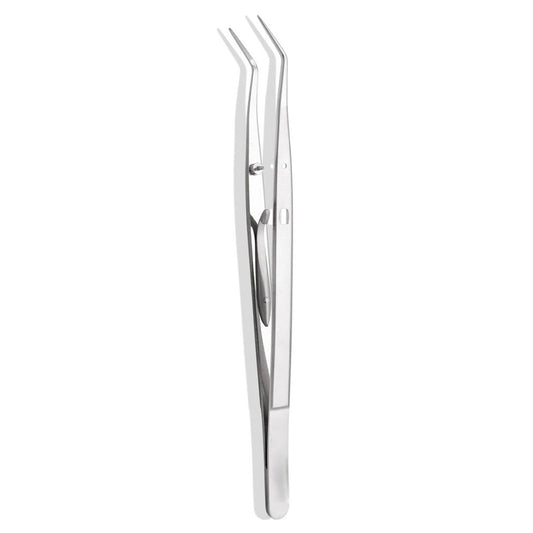
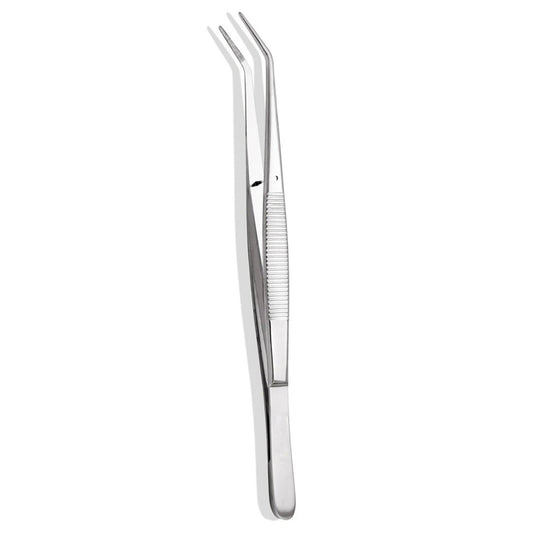
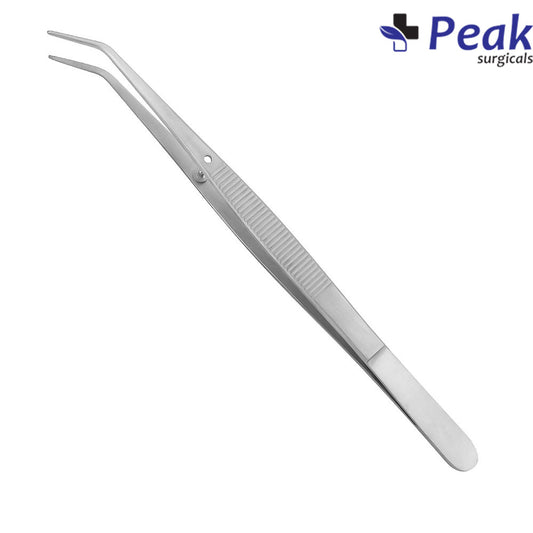
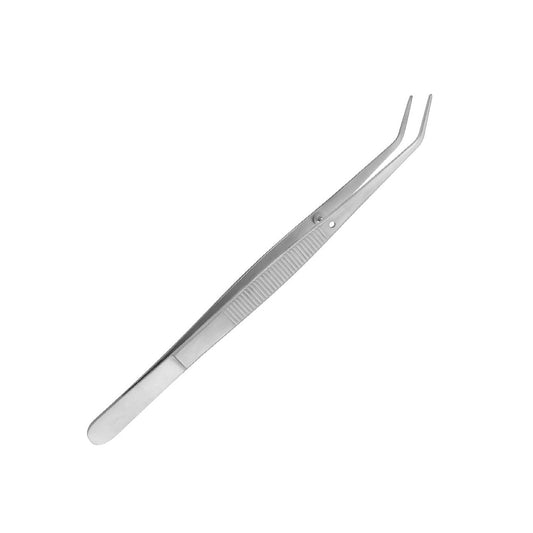
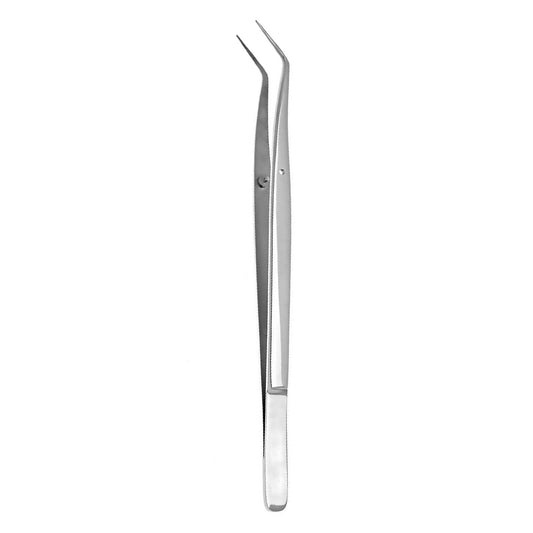
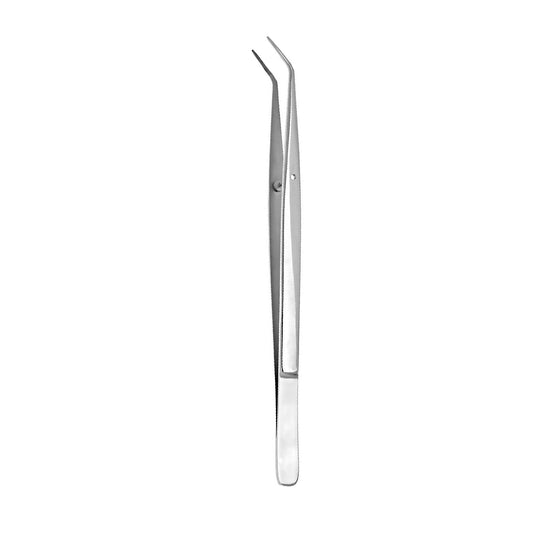
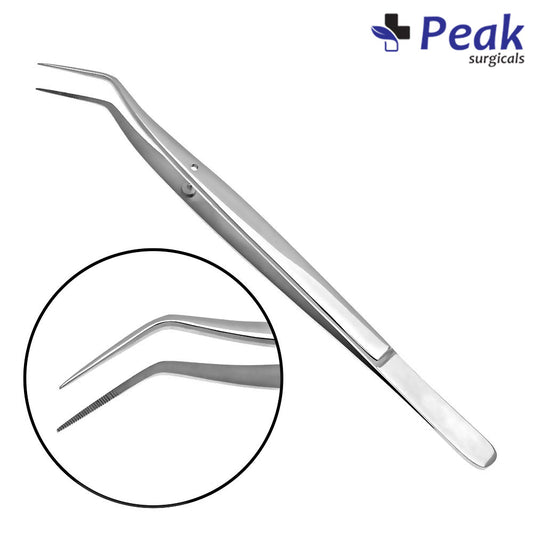
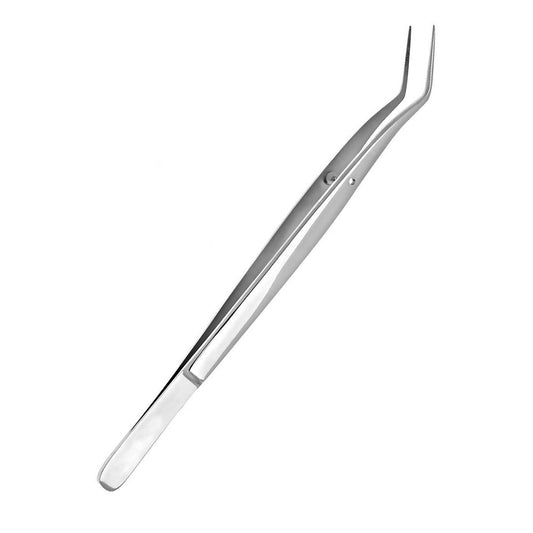
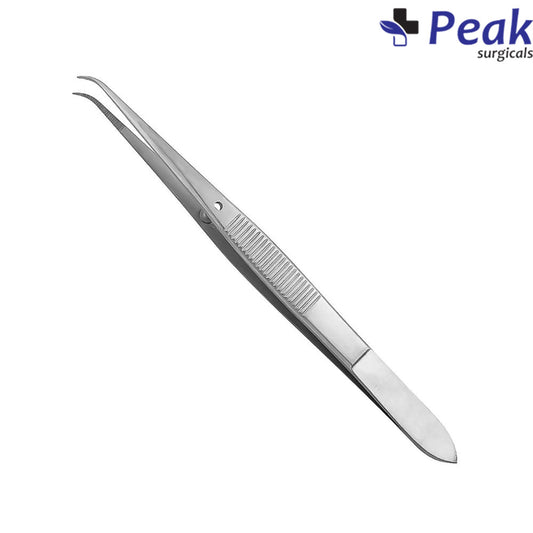
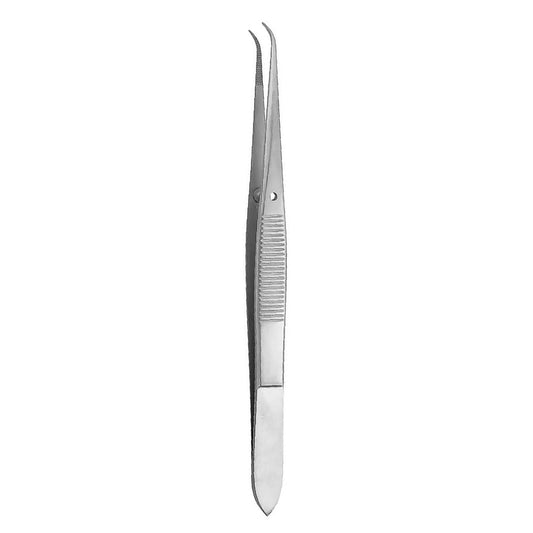
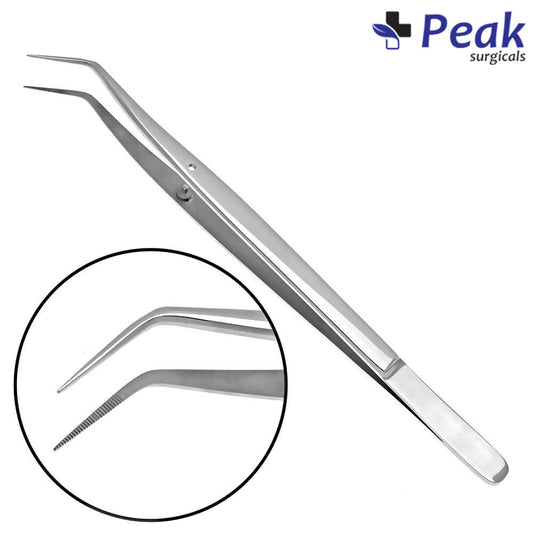
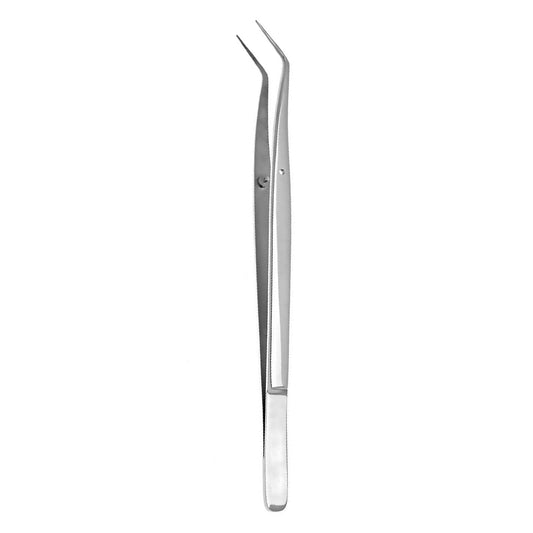
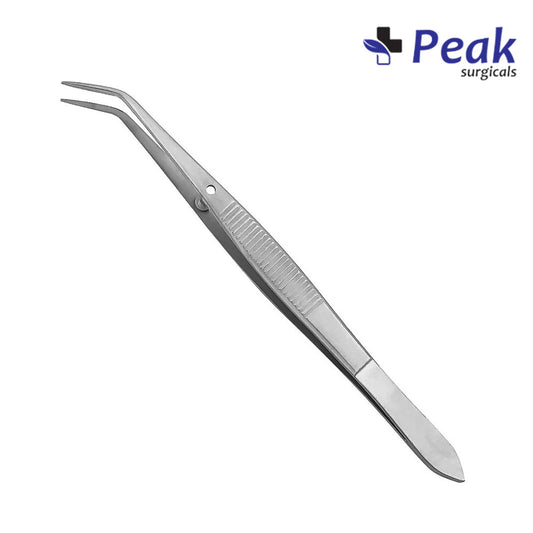
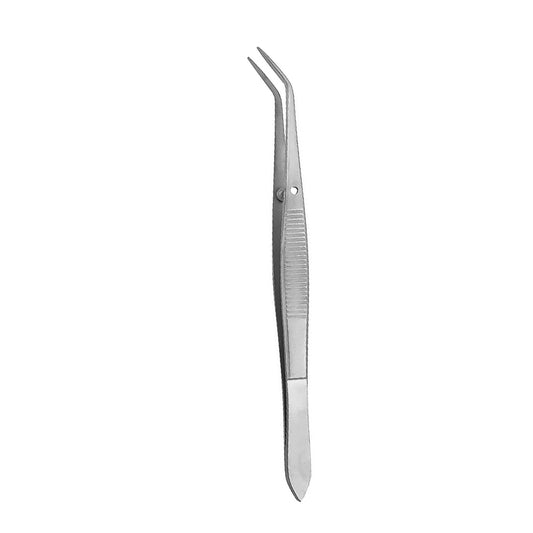
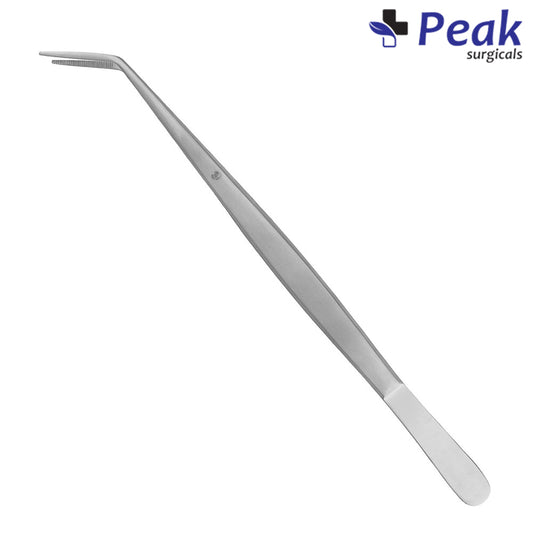
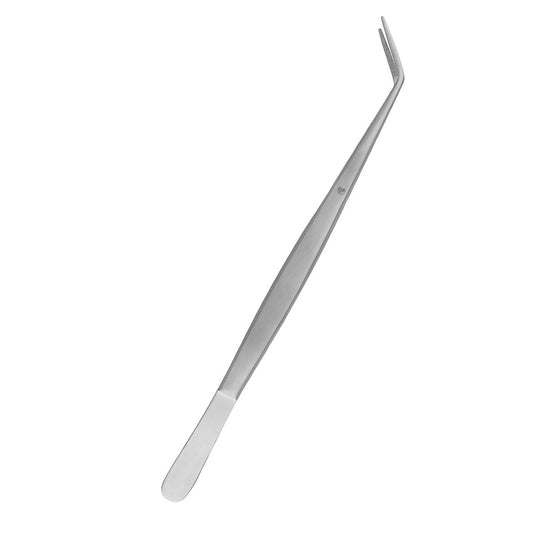
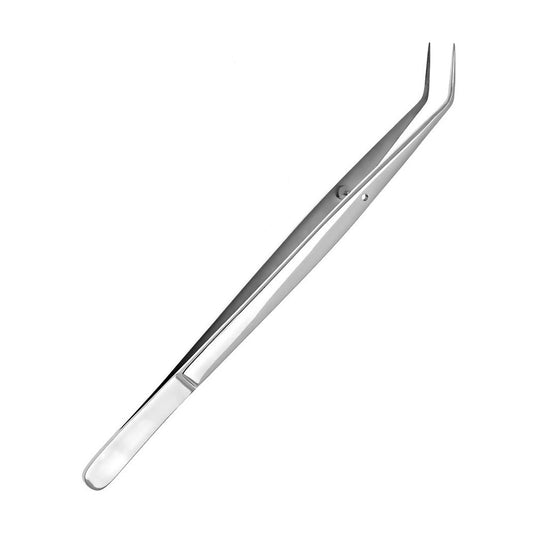
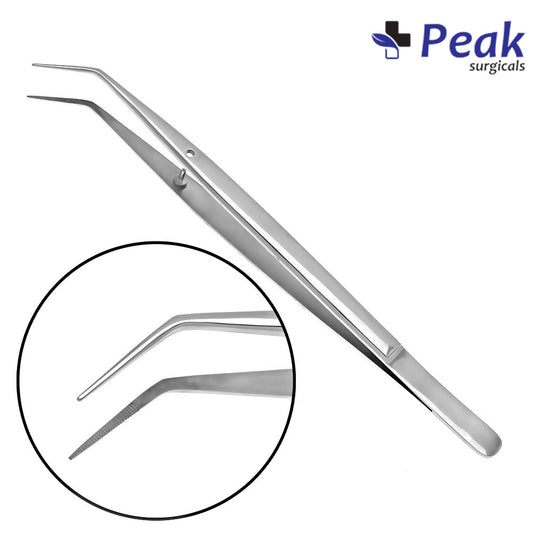
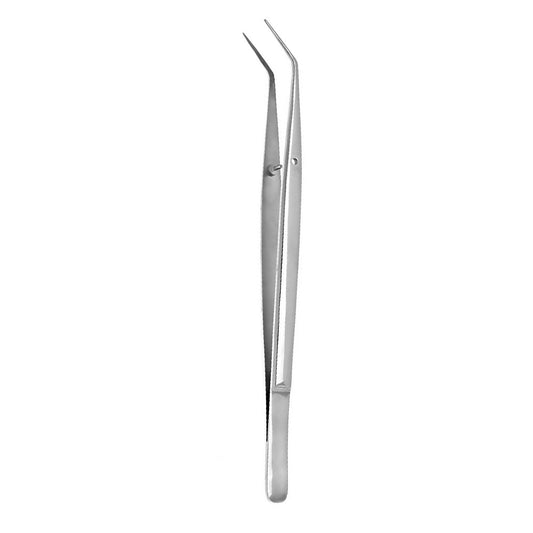
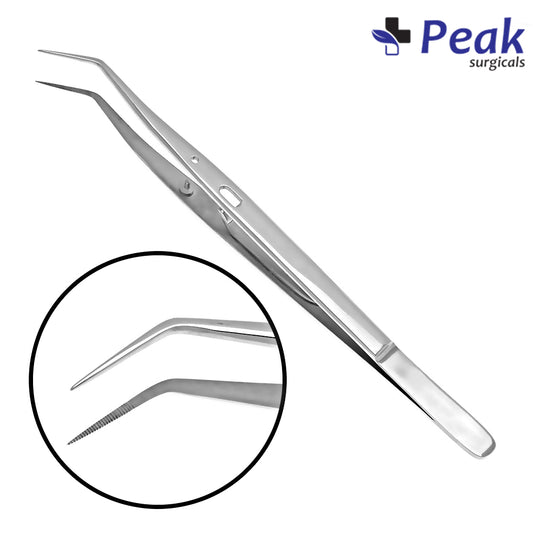
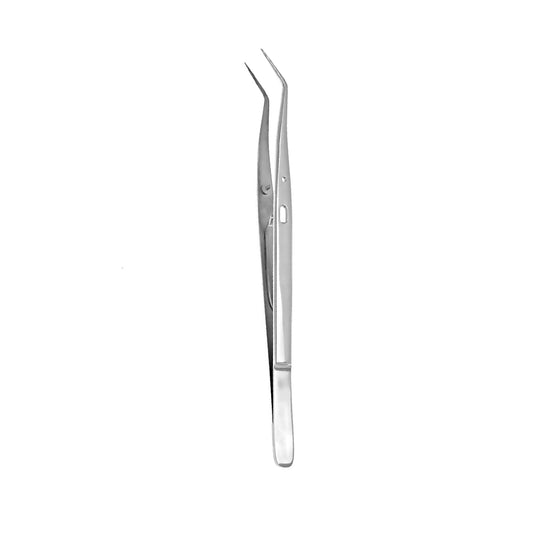
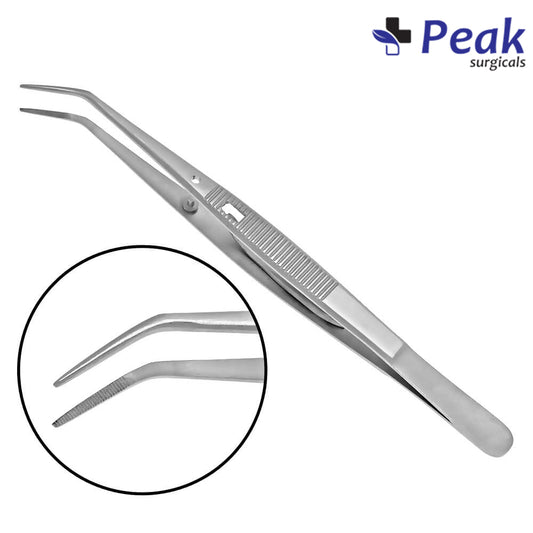
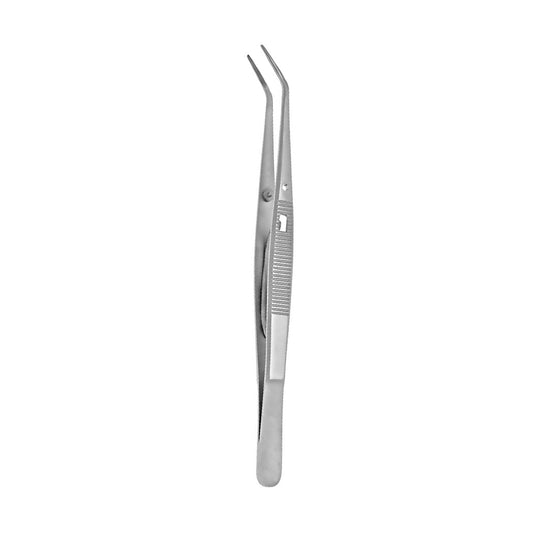
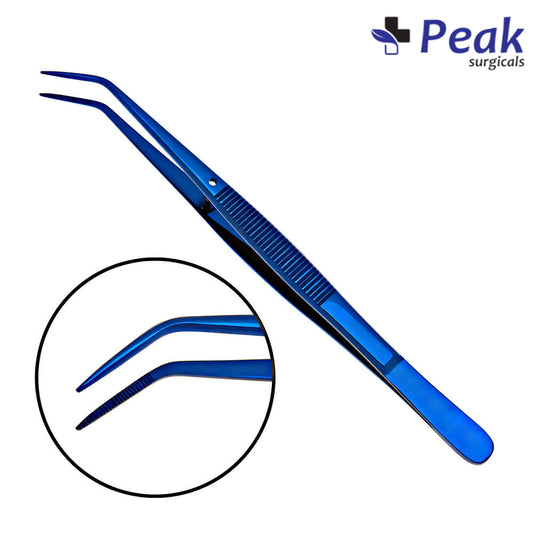
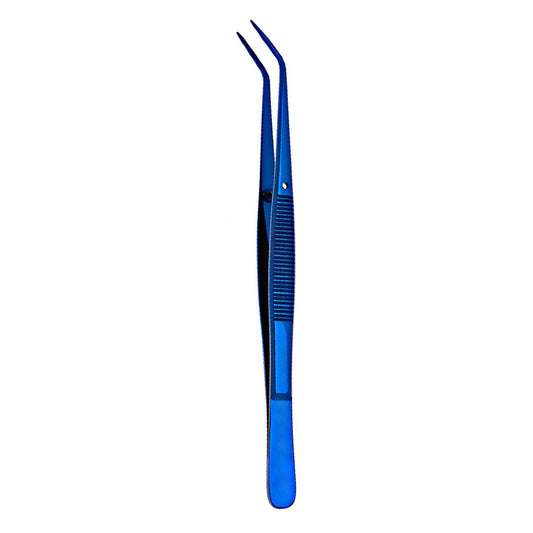
Dressing pincetten grijpen en plaatsen wattenbolletjes, verbanden en kleine materialen in de mondholte, en laten deze precies los waar de behandelaar ze neerzet. Peak Surgicals smeedt 14 patronen College, Meriam en Perry in Duits roestvrij staal, vanaf $6,60, met gekartelde, gladde, vergrendelbare en titanium opties. Elk is CE-gemarkeerd en gebouwd volgens ISO 13485. Vergelijk alle 14 patronen in het onderstaande raster.
Welk dressing pincet: gekarteld, glad of vergrendelbaar?
Gekartelde College dressing pincetten grijpen katoen en verbanden stevig vast, gladde patronen behandelen delicate materialen zonder ze te versnipperen, en vergrendelbare Meriam pincetten houden een verband op zijn plaats zonder continue vingerdruk. De punt en het slot zijn de twee beslissingen die deze veertien patronen onderscheiden, en elk beantwoordt een ander probleem aan de stoel.
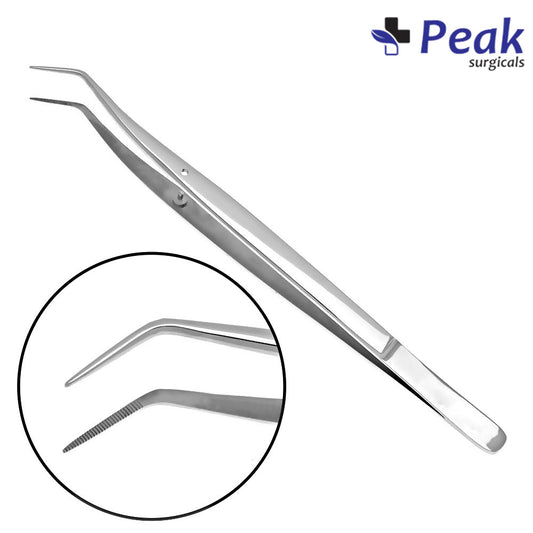
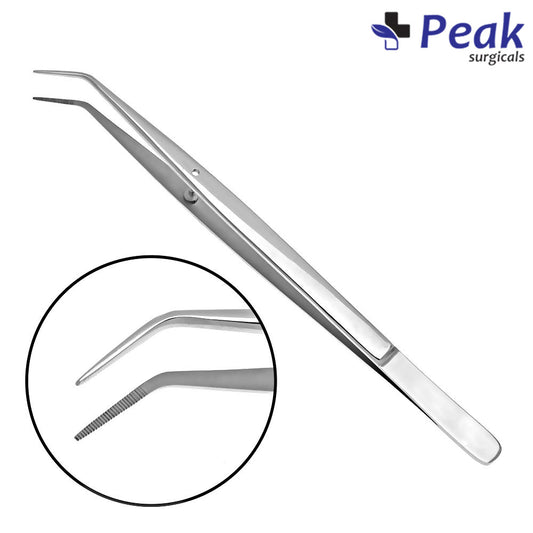
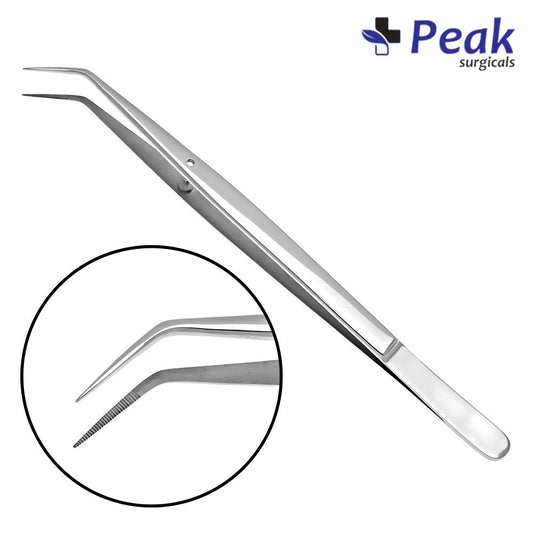
Gekartelde tips zijn de standaard — de kruislings gestreepte bek houdt een verzadigd wattenbolletje of gaas vast dat een gladde tip zou laten vallen. De College Dressing Pliers Serrated ($11,00) en smalle tipvarianten dekken de meeste plaatsing en retrieval. Waar het materiaal fijn is of niet mag worden geplet, ruilen gladde tip patronen zoals de College Dressing Pliers Smooth Tip ($11,00) grip in voor zachtheid. De schuine bek is ook belangrijk: Perry Dressing Pliers ($11,00) zijn gebogen of schuin zodat de werktip de achterste tanden bereikt terwijl de hand buiten het zicht blijft. Voor procedures waarbij de behandelaar beide handen nodig heeft, houdt het Meriam Locking patroon ($11,00) de kaakpositie vast door een zelfvergrendelend mechanisme. We leveren elk patroon met een minimale afname van 1.
Tip, bek en geleidepen: waarom de geometrie werkt
Een dressing pincet is een plaatsingsinstrument, en de geometrie van de bek bepaalt wat het kan vasthouden en waar het kan reiken. Dit zijn pincet-type tangen waarvan de twee armen onder vingerdruk openen en sluiten, dus het tip patroon van de bek en de hoek ervan bepalen de hele functie.
De geleidepen met stop is het kenmerk dat de meeste lijsten weglaten en degene die ertoe doet in de hand: het houdt de twee bekken uitgelijnd zodat de kartelingen schoon samenkomen in plaats van te kruisen, wat de tips in staat stelt een klein bolletje vast te pakken zonder het te laten vallen. Tip lengte en hoek bepalen het bereik, korte tip Meriam patronen (vanaf $7,15) werken voor anterieure plaatsing, terwijl de 6,5-inch varianten dieper reiken. De steek van de karteling bepaalt de grip: fijne kruisarcering houdt katoen vast waar een grove bek het zou pletten. Ook bekend als watten pincetten, omvatten deze dressing pincetten gekartelde, gladde, gegroefde en vergrendelbare bekken binnen de College, Meriam en Perry families, zodat een praktijk de tip kan afstemmen op de taak in plaats van één instrument te forceren voor elke stap.
Materiaal, titanium en certificering
Deze dressing pincetten zijn gesmeed uit Duits roestvrij staal, corrosiebestendig over de herhaalde stoomautoclaafcycli die een instrument aan de stoel dagelijks ziet, en behouden de bekuitlijning waar een zachter instrument zou buigen. Voor grootschalige of MRI-nabije omgevingen, de College Dressing Pliers Titanium ($66,00) verminderen de massa van het instrument en zijn niet-magnetisch. De veer en de bekken zijn het herverwerkingspunt: ultrasone reiniging voor autoclavering verwijdert verbandresten van de kartelingen die handmatig borstelen mist.
Elk instrument is Klasse I, herbruikbaar, CE-gemarkeerd en gebouwd volgens ISO 13485, de documentatie die een tandheelkundig toeleveringsteam controleert voordat een leverancier wordt gekwalificeerd. De garantie is één jaar met retour en vervanging, de minimale afname is 1 stuk, en bestellingen boven $99 worden gratis verzonden in kartonnen verpakking. OEM-markering is beschikbaar voor distributeurs die eigen-merklijnen opbouwen. Voor gerelateerde hulpmiddelen, zie tandheelkundige diagnostische instrumenten en tandheelkundige explorers, of blader door alle tandheelkundige instrumenten. Neem contact met ons op over OEM- en volumevoorwaarden.