Giỏ hàng của bạn đang trống
Tiếp tục mua sắmBạn đã có tài khoản?
Đăng nhập để thanh toán nhanh hơn.

Bộ sưu tập nổi bật
Giỏ hàng của bạn
Giỏ hàng của bạn đang trống
Tiếp tục mua sắmBạn đã có tài khoản?
Đăng nhập để thanh toán nhanh hơn.
Bộ sưu tập nổi bật

PEAK SURGICALS
SKU:PI-007
Không thể tải khả năng nhận hàng tại cửa hàng


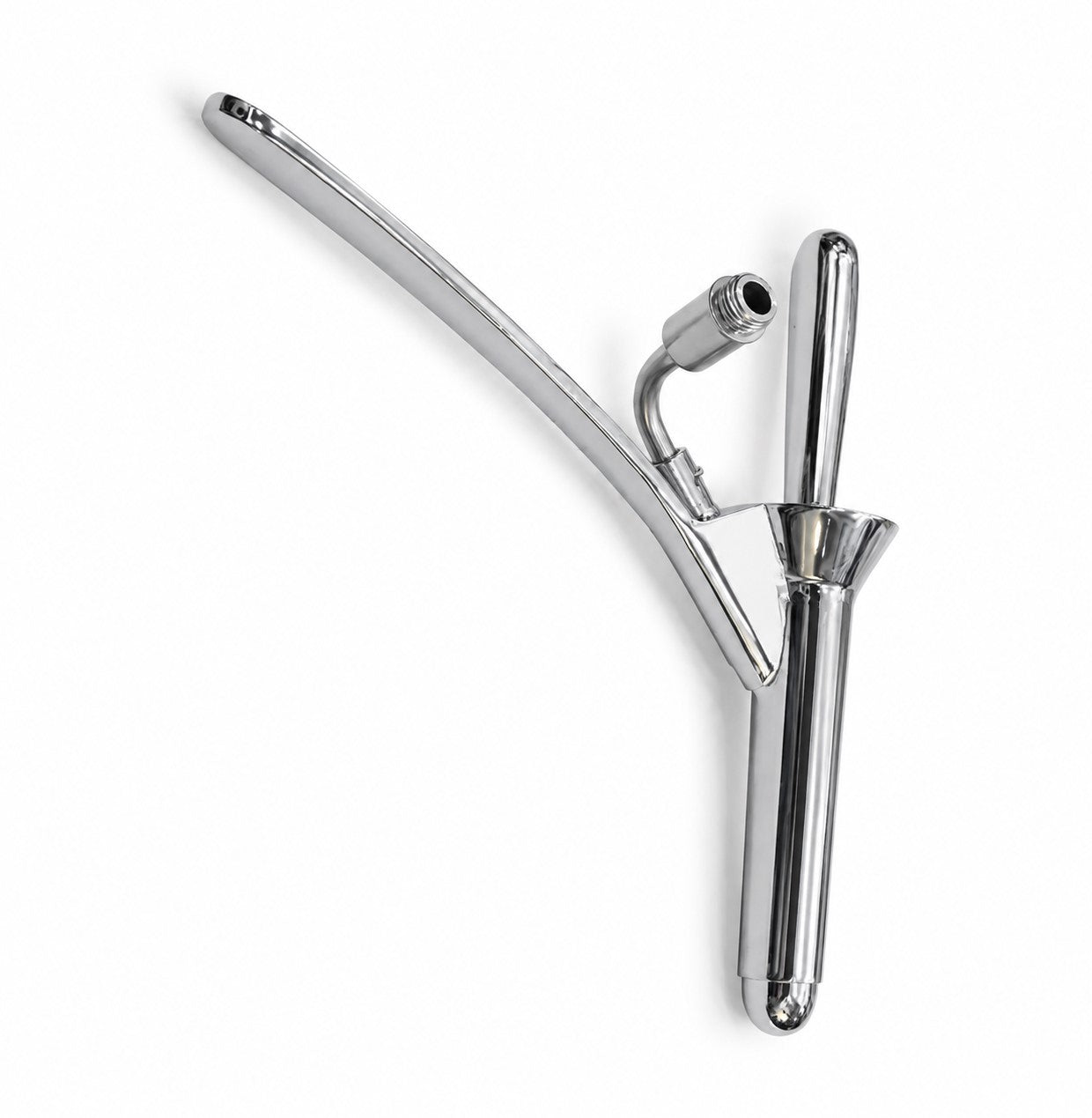
Fiber Optic Proctoscope with Light Carrier, SKU PI-007, is a reusable rigid proctology examination instrument manufactured from German stainless steel for illuminated inspection of the anal canal and distal rectum. The product is supplied in Small 15 mm, Medium 20 mm, and Large 25 mm diameter variants under the same SKU, allowing the clinician to select lumen caliber according to access requirements and the intended examination. Its principal components are the cylindrical scope body, removable obturator, flared proximal opening, curved operating handle, and side-mounted fiber optic light carrier. The obturator closes the distal opening during insertion, then withdraws to expose the internal channel for direct viewing and passage of compatible swabs, suction tips, biopsy forceps, or treatment accessories. The light carrier couples external illumination into the working lumen so mucosal surfaces can be examined without relying on ambient room lighting. Colorectal surgeons, general surgeons, proctologists, and gastrointestinal procedure teams use this pattern during proctoscopy, internal hemorrhoid assessment, anal fissure inspection, fistula opening localization, evaluation of lower rectal bleeding, distal rectal lesion examination, targeted biopsy access, and postoperative review after hemorrhoidectomy, fistulotomy, fissure surgery, or local anorectal excision. It is suited to operating rooms, colorectal clinics, ambulatory surgery centers, and procedure suites.
The device works through a rigid tubular geometry that maintains a defined examination corridor while the clinician advances, rotates, and withdraws the scope. Before insertion, the obturator sits within the cylinder so its rounded distal end covers the open metal rim and creates a smooth leading profile through the anal canal. Once the required depth has been reached, the insert is removed and the lumen becomes available for illuminated inspection and compatible accessory passage. A side-mounted light carrier provides the optical interface for a fiber optic cable or compatible external light source, directing illumination along the bore toward the distal field. This arrangement places the light path outside the central working channel, preserving space for visualization, suction, swabbing, or biopsy instrumentation. The flared proximal opening keeps the viewing entrance accessible and provides an external reference during positioning. The curved handle projects away from the optical axis, giving the surgeon leverage for stabilization, controlled rotation, directional correction, and staged withdrawal without obstructing the proximal aperture. Because exposure is produced by the fixed tube rather than expanding blades, there is no ratchet, screw spreader, or self-retaining jaw mechanism. The resulting design combines constant luminal diameter with targeted illumination and manual control during circumferential anorectal assessment.
During diagnostic proctoscopy, the selected diameter is lubricated with the obturator fully seated and introduced under controlled hand pressure until the desired anorectal depth is reached. The insert is then removed, the fiber optic illumination is connected, and the clinician inspects the anal canal, dentate-line region, hemorrhoidal cushions, and accessible distal rectal mucosa while rotating and withdrawing the tube in a systematic sequence. For internal hemorrhoid assessment, the illuminated field helps distinguish prolapse, congestion, friability, ulceration, recent bleeding, and tissue changes after office-based treatment. In patients presenting with hematochezia, the rigid corridor can assist localization of distal mucosal lesions, traumatic injury, postoperative bleeding points, or inflamed tissue. When fistula-in-ano is suspected, direct visualization may support identification of an internal opening before probing or definitive operative treatment. A visible abnormality can be approached through the lumen with a slender biopsy forceps or swab when tissue sampling is required, while compatible suction can clear blood or mucus that obscures the field. After hemorrhoidectomy, fistulotomy, fissurectomy, or local rectal excision, the instrument can support postoperative review of healing surfaces, scar formation, residual bleeding, stenotic change, or recurrent mucosal pathology. The illuminated fixed-channel approach is especially useful when consistent visualization must be maintained as the scope is repositioned.
The Small, Medium, and Large variants differ by lumen diameter and are selected according to access requirements, patient anatomy, and the amount of working space needed during the examination. The Small 15 mm configuration provides the narrowest entry profile and is useful when limited anal opening, discomfort, postoperative sensitivity, or a focused diagnostic view favors reduced caliber. The Medium 20 mm option provides a broader visual corridor while remaining suitable for routine adult proctoscopy, hemorrhoid assessment, distal rectal inspection, swabbing, and passage of slender diagnostic accessories. The Large 25 mm version creates the widest field in this series and offers additional internal space when the clinician needs greater visualization or easier manipulation of compatible suction, biopsy, or treatment instruments. Diameter selection should match the procedural objective rather than being based on a fixed patient category alone. Across all three sizes, the removable obturator performs the same insertion role, the rigid body maintains the examination channel, and the fiber optic carrier delivers illumination without occupying the central lumen. The curved handle provides the same external control point for rotation and withdrawal in each variant. This three-size system allows hospitals and colorectal clinics to standardize one instrument family while selecting the caliber that best matches routine examination, difficult access, or accessory-intensive workflows.
German stainless steel provides the rigidity required to preserve tubular alignment during repeated clinical use while supporting corrosion resistance through cleaning, disinfection, and steam sterilization. The polished finish creates smooth internal and external surfaces that reduce drag during insertion and facilitate removal of blood, mucus, lubricant, and tissue residue during reprocessing. After use, the obturator and detachable light carrier should be separated from the scope body according to the facility protocol so the bore, connector, handle junction, proximal opening, and distal rim can be cleaned and visually inspected. The lumen should be brushed and flushed, all components thoroughly rinsed and dried, and the optical coupling surface checked for residue that could interfere with light transmission. Reusable stainless-steel parts can then enter a validated steam-autoclave cycle appropriate to the device and local sterile-processing policy. CE marking supports applicable conformity documentation for regulated medical-device markets, while ISO 13485 identifies the quality-management framework governing controlled manufacture, documentation, and traceability. For United States procurement, FDA-compliant purchasing requires the relevant supplier, establishment, device, labeling, and import records applicable to the transaction. Peak Surgicals supports institutional and distributor ordering with a one-year warranty, single-piece MOQ, OEM or private-label supply, and return or replacement after-sale service.
| SKU | PI-007 |
|---|---|
| Product Name | Fiber Optic Proctoscope with Light Carrier |
| Price | $74.80 USD |
| Size/Gauge Variants | Small 15 mm, Medium 20 mm, Large 25 mm |
| Instrument Category | Proctology Instruments / Fiber Optic Proctoscopes |
| Procedure | Proctoscopy, internal hemorrhoid assessment, anal fissure inspection, fistula evaluation, lower rectal bleeding assessment, distal rectal lesion examination, biopsy access and postoperative anorectal review |
| Material | German stainless steel |
| Finish | Mirror-polished stainless-steel finish |
| Sterilization | Reusable and compatible with validated steam-autoclave processing |
| Instrument Classification | Reusable illuminated rigid proctology examination instrument |
| Reusable | Yes |
| Certifications | CE marked, ISO 13485 quality system, FDA-compliant procurement documentation |
| Warranty | 1 year |
| MOQ | 1 piece |
| OEM / Custom Orders | Available for hospitals, distributors and private-label procurement |
| After-Sale Service | Return and replacement support |
How does the Fiber Optic Proctoscope with Light Carrier differ from a Kelly Proctoscope?
The Fiber Optic Proctoscope with Light Carrier differs from a non-fiber-optic Kelly Proctoscope primarily in its illumination pathway and accessory layout. Both patterns use a rigid tubular body and removable obturator to create a stable anorectal viewing channel. This model adds a dedicated side-mounted fiber optic carrier that couples external light directly into the lumen while leaving the central bore available for inspection and instruments. A conventional Kelly pattern without that optical interface relies on separate room, headlight, or external illumination directed through the proximal opening. The fiber optic arrangement can provide a more concentrated field when examining hemorrhoidal cushions, distal rectal mucosa, or a focal bleeding site. Instrument selection therefore depends on whether the procedure requires dedicated fiber-delivered illumination or a simpler rigid proctoscope configuration.
How should Small 15 mm, Medium 20 mm and Large 25 mm sizes be selected?
The Fiber Optic Proctoscope with Light Carrier is available in Small 15 mm, Medium 20 mm, and Large 25 mm diameters. The 15 mm size is chosen when a narrower anal entry profile is desirable, including limited opening, postoperative sensitivity, or focused inspection where a smaller caliber improves tolerance. The 20 mm model provides a balanced field for routine adult proctoscopy, internal hemorrhoid assessment, dentate-line inspection, and lower rectal evaluation. The 25 mm version provides the greatest working space for broader mucosal visualization and easier passage of compatible suction, biopsy, or treatment accessories. Size selection should reflect the anal canal dimensions, planned procedural stage, and amount of accessory access required rather than a fixed age category alone. The obturator should remain seated during insertion regardless of diameter and is removed only when the chosen tube is positioned for examination.
What do CE, ISO 13485 and FDA requirements mean for procurement?
The Fiber Optic Proctoscope with Light Carrier is supplied within Peak Surgicals' CE and ISO 13485 procurement framework. CE marking supports applicable conformity documentation for regulated medical-device markets. ISO 13485 identifies the quality-management system governing controlled manufacture, traceability, documentation, and supplier processes. FDA procurement context for United States buyers relates to the establishment, device, labeling, import, and distribution records applicable to the transaction. Hospitals and distributors should retain these documents within vendor qualification, purchasing, and audit files. These frameworks address different regulatory functions and should be reviewed as separate elements of institutional procurement.
How are the obturator, curved handle and light carrier used during the procedure?
The principal control elements are the removable obturator, curved handle, and side-mounted fiber optic light carrier. Before insertion, the obturator occupies the tube and covers the distal opening with a rounded profile so the assembly can advance without presenting an open rim to the mucosa. Once the Fiber Optic Proctoscope with Light Carrier reaches the intended depth, the obturator is withdrawn to open the lumen for visualization and accessory passage. The curved handle gives the surgeon leverage for stabilization, rotational scanning, directional correction, and gradual withdrawal while keeping the proximal aperture unobstructed. The fiber optic carrier is then coupled to a compatible external light source so illumination travels along the examination channel toward the distal field. There is no ratchet, pivoted blade lock, or self-retaining spreader because exposure is produced by the fixed tubular diameter and controlled manually.
How should hospitals sterilize and procure this reusable fiber optic proctoscope?
Hospitals should reprocess the Fiber Optic Proctoscope with Light Carrier through a validated reusable-instrument pathway after every procedure. The obturator and detachable optical carrier should be separated from the body so blood, mucus, lubricant, and tissue residue can be removed from the lumen, connector, and external surfaces. The channel should be brushed and flushed, the components rinsed and dried completely, and the light-coupling interface inspected for residue or damage before packaging. Reusable stainless-steel components can then undergo a validated steam-autoclave cycle appropriate to the device and the facility's sterile-processing policy. Procurement teams should retain SKU PI-007, variant size, warranty, supplier documentation, certification records, and replacement history for traceable inventory control. Peak Surgicals lists the product at $74.80 with Small, Medium, and Large options under one purchasing family, supporting hospitals, clinics, and distributors that need standardized illuminated proctoscopy inventory.


