콘텐츠로 건너뛰기
PEAK SURGICALS
SKU(재고 관리 코드):PSPS-001
픽업 사용 가능 여부를 로드할 수 없습니다.
CE Certified
FDA Certified
ISO Certified

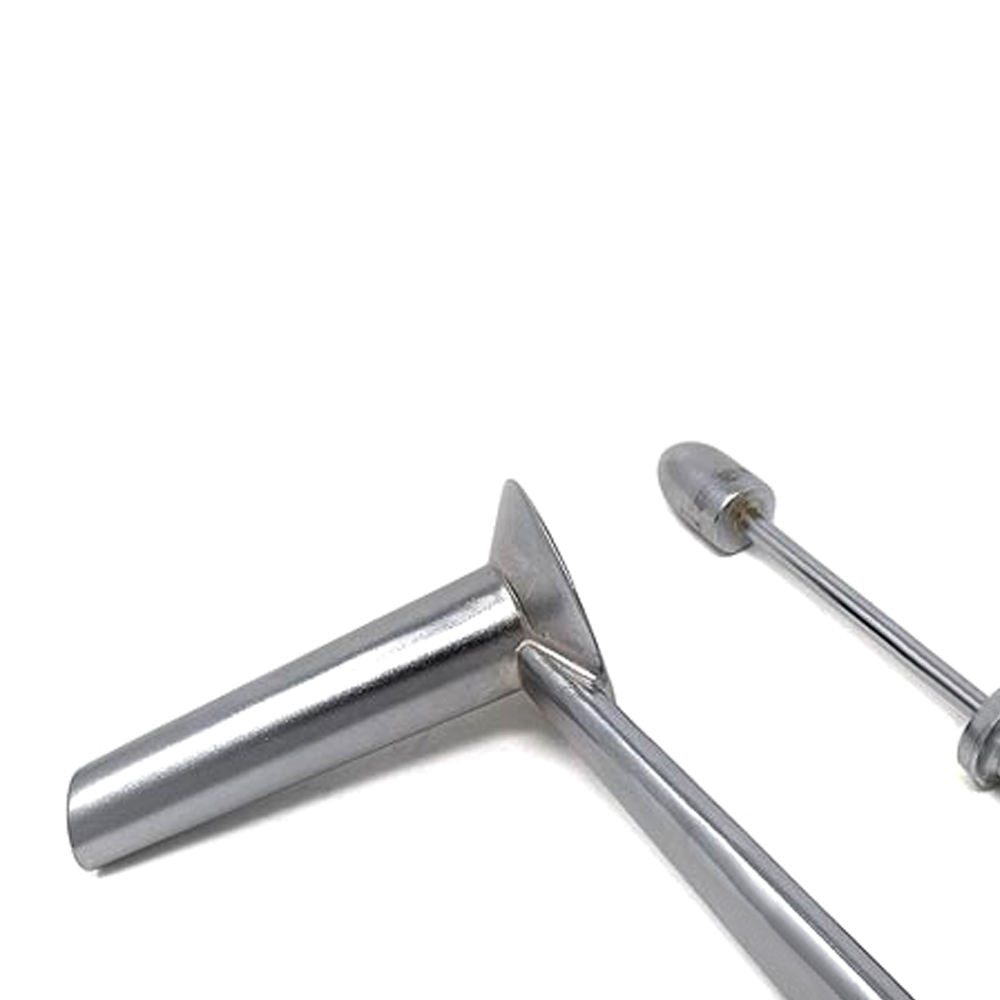
Kelly Proctoscope 140 mm with Obturator, SKU PSPS-001, is a reusable 22 mm diameter proctology instrument manufactured from German stainless steel for controlled visualization of the anal canal and distal rectum. The 140 mm tubular working length provides a straight examination corridor, while the detachable obturator occupies the lumen during insertion and presents a smooth rounded leading profile before removal for inspection. Once the obturator is withdrawn, the open cylindrical channel permits direct viewing, external illumination, swab passage, suction access, and introduction of appropriately sized biopsy or treatment instruments. The proximal flange defines the viewing entry and prevents excessive advancement, while the lateral handle gives the operator rotational and directional control during insertion, withdrawal, and circumferential mucosal assessment. Colorectal surgeons, general surgeons, proctologists, and gastrointestinal procedure teams use this pattern during proctoscopy, internal hemorrhoid assessment, evaluation of rectal bleeding, anal fissure inspection, fistula opening localization, distal rectal lesion examination, biopsy access, foreign-body assessment, and postoperative review after hemorrhoidectomy, fissure surgery, or fistula treatment. It is suited to hospital operating rooms, colorectal clinics, ambulatory surgery centers, and procedure rooms requiring a reusable rigid anorectal examination instrument.
The Kelly pattern is built around a straight cylindrical tube that maintains a fixed 22 mm internal examination pathway over a 140 mm working length. During introduction, the removable obturator fills the hollow bore so the distal end advances as a continuous rounded profile rather than an open metal edge, reducing the tendency for mucosa to enter or catch within the tube. After the instrument has crossed the anal verge and is aligned with the canal, the obturator is withdrawn to create an unobstructed visual and working passage. The proximal flange acts as a broad stop and handling reference at the external opening, helping the surgeon judge insertion depth while keeping the viewing entrance accessible. A solid lateral handle projects away from the lumen so the operator can rotate the tube, alter orientation, and perform controlled withdrawal without placing fingers across the visual axis. This geometry is particularly useful for systematic circumferential inspection because the rigid wall preserves the field as the device is turned. The smooth bore also allows external light to be directed through the channel and provides a route for swabs, suction tips, forceps, or topical delivery instruments when clinically indicated.
In routine proctoscopy, the obturator is seated inside the tube before insertion, the assembly is advanced through the lubricated anal canal under controlled hand pressure, and the obturator is then removed once the required depth has been reached. The open lumen allows inspection of the anal columns, dentate-line region, internal hemorrhoidal cushions, lower rectal mucosa, and visible bleeding points as the scope is gradually rotated and withdrawn. During hemorrhoid evaluation, the 22 mm channel provides space to identify prolapse, mucosal congestion, recent bleeding, ulceration, and post-treatment tissue after banding or injection therapy. For rectal bleeding assessment, the rigid corridor supports direct localization of distal lesions, friable mucosa, fissure-related bleeding, traumatic injury, or postoperative sites. In fistula workup, the surgeon can inspect the canal for an internal opening and relate it to the dentate line before further probing or operative planning. The same access can support targeted swabbing or biopsy of visible distal rectal abnormalities using appropriately sized instruments. Colorectal and general surgical teams may also employ the proctoscope during follow-up after hemorrhoidectomy, fistulotomy, fissure procedures, or local rectal excision to examine healing surfaces and identify persistent bleeding, stenotic change, or mucosal irregularity.
This configuration combines a 22 mm diameter with a 140 mm working length, creating a balance between luminal access and reach for examination of the anal canal and lower rectum. The 22 mm caliber provides a stable visual opening large enough for direct inspection and passage of slender accessory instruments while remaining within the conventional diameter used for rigid Kelly-pattern proctoscopy. The 140 mm tube extends beyond short anoscopic profiles, allowing the surgeon to inspect more proximal distal-rectal mucosa without moving to a substantially longer rigid rectoscope. The detachable obturator is the insertion component: its rounded distal contour closes the leading end during advancement and is removed immediately before visualization or instrumentation. The tubular body is the working channel, maintaining alignment and shielding the visual corridor from collapsing surrounding tissue. The proximal flange provides an external reference point and helps resist unintended deep advancement, while the lateral handle supports controlled rotation and withdrawal during circumferential inspection. For a clinician selecting this model, the key rationale is the need for a rigid 22 mm access lumen with 140 mm reach for diagnostic proctoscopy, hemorrhoid assessment, distal lesion review, and minor trans-luminal maneuvers performed under direct vision.
German stainless steel provides the rigidity required for a reusable proctoscope while supporting corrosion resistance through repeated cleaning, disinfection, and steam sterilization cycles. A smooth polished surface is clinically important on the distal tube and obturator because irregularities can increase drag during insertion and can retain biological soil after use. The rigid cylindrical wall should be inspected after every reprocessing cycle for dents, distortion, rough edges, or lumen obstruction, since any change in geometry can compromise insertion and visualization. Reprocessing begins with prompt removal of visible soil, separation of the obturator from the scope body, thorough brushing and flushing of the lumen, rinsing, complete drying, and inspection before packaging for sterilization. The instrument is compatible with validated hospital steam-autoclave workflows used for reusable stainless-steel surgical devices. CE marking and an ISO 13485 quality-management framework support documentation expected by hospitals, distributors, and tender teams purchasing reusable proctology instrumentation. FDA-compliant procurement requires the buyer to maintain the relevant device, establishment, labeling, and import documentation applicable to the destination market rather than treating FDA status as a substitute for local facility validation. Peak Surgicals supplies the instrument for institutional and distributor purchasing with a one-year warranty, single-piece MOQ, OEM ordering capability, and after-sale return or replacement support.
| SKU | PSPS-001 |
|---|---|
| Product Name | Kelly Proctoscope 140 mm with Obturator |
| Price | $40.48 USD |
| Size/Gauge Variants | 22 mm diameter x 140 mm working length with removable obturator |
| Instrument Category | Proctology Instruments / Proctoscopes |
| Procedure | Proctoscopy, anorectal examination, hemorrhoid assessment, rectal bleeding evaluation, anal fissure inspection, fistula assessment, distal rectal biopsy access and postoperative review |
| Material | German stainless steel |
| Finish | Mirror-polished stainless-steel finish |
| Sterilization | Reusable and steam-autoclave compatible |
| Instrument Classification | Reusable manual proctology instrument |
| Reusable | Yes |
| Certifications | CE marked, ISO 13485 quality system, FDA-compliant procurement documentation |
| Warranty | 1 year |
| MOQ | 1 piece |
| OEM / Custom Orders | Available for institutional, distributor and private-label requirements |
| After-Sale Service | Return and replacement support |
How does the Kelly Proctoscope compare with a Pratt rectal speculum? The Kelly Proctoscope 140 mm with Obturator differs from a Pratt rectal speculum in both exposure method and working geometry. The Kelly design uses a rigid cylindrical tube that maintains a fixed 22 mm lumen for direct viewing of the anal canal and distal rectum. A Pratt speculum uses paired blades that separate after insertion, producing adjustable lateral exposure rather than a tubular corridor. The removable obturator on the Kelly pattern closes the distal opening during advancement, whereas the Pratt pattern depends on closed blades that are opened after placement. Kelly is therefore better suited to systematic proctoscopic visualization and instrument passage through a stable bore, while Pratt is selected when the operative task requires adjustable spreading of the anal canal.
When is the 22 mm x 140 mm Kelly Proctoscope selected? The 22 mm x 140 mm configuration is selected when the clinician needs more distal-rectal reach than a short anoscope while retaining the familiar Kelly tubular profile. The 22 mm diameter provides enough visual and working space for mucosal inspection, swab passage, suction access, and slender biopsy instruments. The 140 mm length allows the operator to examine the anal canal and extend into the lower rectum during evaluation of bleeding, hemorrhoidal disease, or visible lesions. Shorter Kelly patterns are generally favored when the target is limited to the anal canal, while longer rigid scopes provide additional proximal reach at the cost of a longer instrument pathway. For the Kelly Proctoscope 140 mm with Obturator, selection is appropriate when a 22 mm rigid corridor and 140 mm working reach match the planned proctoscopy or postoperative examination.
What do CE, ISO 13485 and FDA requirements mean for procurement? CE marking and ISO 13485 documentation address different procurement requirements for reusable surgical instrumentation. CE documentation supports conformity for applicable European-market requirements, while ISO 13485 demonstrates a medical-device quality-management system governing controlled manufacturing and traceability processes. FDA procurement context concerns the establishment, device listing, labeling, import, and regulatory documentation applicable to distribution in the United States. Hospitals and distributors should evaluate these records as part of vendor qualification rather than interpreting one certificate as a substitute for another. The Kelly Proctoscope 140 mm with Obturator can therefore be incorporated into institutional purchasing workflows where CE, ISO 13485, and FDA-compliant documentation are required by the buyer or destination market.
How is the removable obturator used during proctoscopy? The removable obturator is the principal insertion-control component of this Kelly pattern. Before entry, it is seated within the cylindrical tube so its rounded distal end covers the open lumen and creates a continuous leading profile. Once the assembly is positioned through the anal canal, the obturator is withdrawn to open the 22 mm channel for visualization and accessory passage. The lateral handle then gives the surgeon leverage for controlled rotation, alignment, and stepwise withdrawal while the proximal flange remains outside the canal as a depth and handling reference. On the Kelly Proctoscope 140 mm with Obturator, these features work together without a ratchet or spreading mechanism because exposure is produced by the fixed tubular lumen rather than expanding blades.
How should hospitals reprocess and manage this reusable proctoscope? Reusable proctoscopes should enter a defined decontamination and sterilization pathway immediately after use. The obturator is separated from the tube, visible soil is removed, and the lumen is brushed and flushed so blood, mucus, lubricant, and tissue debris are cleared from internal surfaces. After rinsing and complete drying, staff inspect the distal edge, bore, flange, handle junction, and obturator fit before packaging. The instrument can then be processed in a validated steam-autoclave cycle appropriate for reusable stainless-steel surgical instruments under the facility's reprocessing protocol. Procurement teams should also retain product identification, warranty, regulatory documentation, and lot or supply records so replacement, audit, and inventory control remain traceable.