제품 정보로 건너뛰기
1 3

PEAK SURGICALS

Full Cheek Snaffle Bit with Copper Roller

Full Cheek Snaffle Bit with Copper Roller

SKU(재고 관리 코드):AE-FC-CR-9

정가 $63.80 USD
정가 할인가 $63.80 USD
할인 품절
세금이 포함된 가격입니다. 배송료는 결제 시 계산됩니다.
수량
  • 30 Days Money Back Guarantee.
  • 100% Quality Satisfaction.
  • Medical Grade Steel Reusable.
  • CE-CertificateCE Certified
  • FDA-CertificateFDA Certified
  • iso-certificateISO Certified
전체 세부 정보 보기

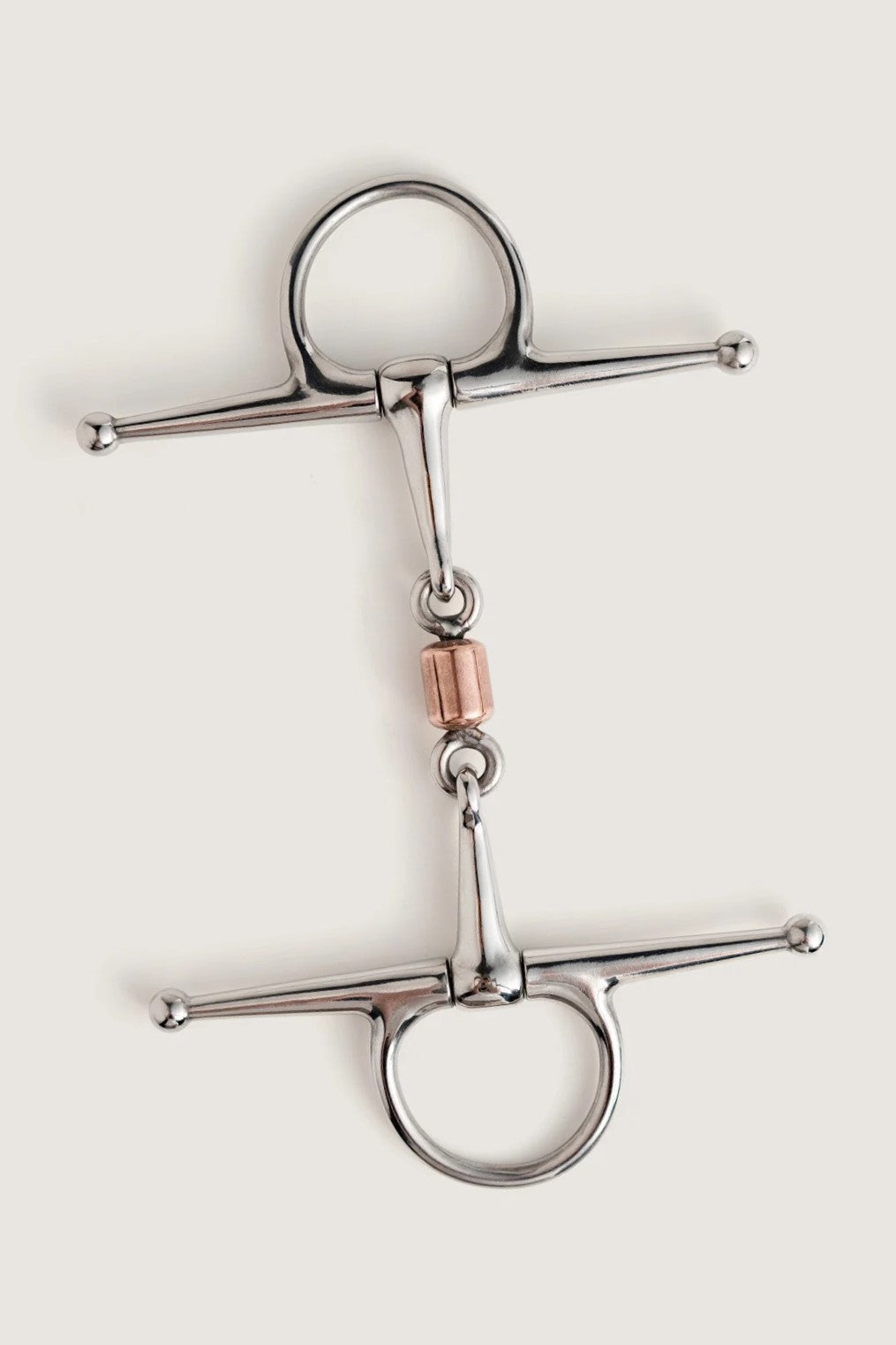
The Full Cheek Copper Roller Snaffle Bit (SKU: AE-FC-CR-5) is a single-jointed snaffle built from mirror-polished stainless steel cheek bars and rings with a free-spinning copper roller barrel bridging the center of the mouthpiece. It is built for riders working horses through schooling, dressage, and lateral exercises where the horse needs both a stable, non-shifting cheek and a mouthpiece that keeps the tongue engaged rather than braced against contact. The fixed cheek bars run above and below each ring, bracing the mouthpiece against the horse's face and delivering a direct lateral cue the instant a rider applies an opening or leading rein. At the center of the mouthpiece, the copper roller barrel rotates independently on its own axle, giving the horse a moving surface to mouth that interrupts leaning, jaw-crossing, and grabbing at the bit between the teeth. This combination puts a stable, bracing cheek design on a mouthpiece built around tongue engagement rather than a fixed bar, which is why riders reach for this pattern on horses that need lateral steering support but also resist a static single-jointed mouthpiece. Riders use this bit through flatwork, straightness exercises, transitions, and early jumping preparation where both cheek stability and jaw relaxation matter in the same session.

Bit Design & Mechanical Function

The full cheek bars extend a straight bar above and below each ring, terminating in a rounded ball end that keeps the bit from pinching the corners of the mouth or catching on other tack while mounted. These bars press against the horse's cheek the instant a rider applies a direct or opening rein, transmitting lateral pressure before the ring itself has to rotate into contact, which shortens the response time compared to a loose ring pattern. The rings rotate independently within the fixed cheek bars, letting the mouthpiece settle naturally across the bars of the mouth while the cheek bars hold their bracing position against the face. At the mouthpiece's center, the copper roller sits on its own axle, separate from the two arms that connect to the rings, so tongue pressure from the horse spins the roller instead of pressing straight against a fixed bar. Rein pressure still transmits through the arms into the rings and against the corners of the mouth, but the roller's independent rotation changes how the horse experiences pressure specifically at the center of the tongue. The result is two mechanisms working at once: the cheek bars manage lateral bracing and steering response, while the roller manages tongue engagement and jaw relaxation, each functioning independently of the other.

Training Applications & Riding Disciplines

This bit fits schooling programs built around straightness and lateral suppling where the rider also needs to manage a horse that leans, grinds, or resists a static mouthpiece. Dressage riders use the cheek bars during flatwork to reinforce direct rein aids through leg-yield, shoulder-fore, and turn-on-the-forehand, while the roller keeps the horse's jaw working rather than locking against contact during longer schooling sessions. Trainers starting young horses use the cheek bars to back up an opening rein during early steering lessons, pairing that bracing with a roller mouthpiece that gives an inexperienced horse something to mouth instead of bracing against a plain bar. Jump riders use this bit through grid work and related distances, where the cheek bars hold the mouthpiece steady under repeated rein contact and the roller keeps the horse's mouth soft between fences. Riders working a horse that has started leaning on the bit or crossing its jaw against contact use this pattern specifically because the roller interrupts that habit while the cheek bars still deliver the lateral bracing the horse's training level requires. This bit also suits horses transitioning from a plain full cheek snaffle once they begin resisting a fixed mouthpiece, keeping the cheek stability the horse is used to while introducing roller movement at the tongue.

Size Variants & Bit Configuration

This bit is available in 4.5 inch, 5 inch, 5.5 inch, and 6 inch mouthpiece widths, measured across the inside of the rings. The 4.5 inch size fits ponies and narrow-jawed horses, keeping the cheek bars close against the face and the roller centered on the tongue without extra mouthpiece length shifting either component out of position. The 5 inch size, shown on the pictured bit, fits the average horse mouth and is the starting point for most riders sizing this bit for the first time. The 5.5 inch size suits horses with a wider jaw or thicker cheek tissue, giving the mouthpiece room to sit without pinching at the corners while the cheek bars stay flush against the face and the roller remains centered. The 6 inch size fits draft crosses and larger warmbloods, where a shorter mouthpiece would pull the rings tight against the lips and crowd the roller before it can settle on the tongue. Sizing this bit affects both systems at once: a mouthpiece that runs long lets the bit shift before the cheek bars engage and pushes the roller off-center, while a mouthpiece that runs short concentrates pressure at the corners and crowds the roller against one side of the tongue. Riders measure the horse's mouth with a sizing string or a prior bit before ordering, since both the cheek bracing and the roller's centering depend on getting this measurement right.

Material, Finish & Care

The cheek bars, rings, and mouthpiece arms are manufactured from stainless steel with a mirror-polished finish that resists corrosion under regular exposure to saliva, wash-down water, and tack room humidity while keeping the bearing surface against the face and lips smooth. The copper roller barrel is manufactured from a copper alloy that ages and develops a patina through normal use while remaining free-spinning on its axle throughout the bit's service life. This patina reflects the same reaction that gives copper mouthpieces their salivation-promoting effect, and continued darkening on the roller is expected performance rather than a defect. Riders clean this bit by rinsing the cheek bars, rings, and roller after each use, directing water into the roller's axle point to clear saliva and feed residue before it dries and stiffens the rotation. A soft cloth or bit brush lifts buildup from the roller housing and the ring-to-cheek joints without scratching the stainless steel's mirror finish. Check the roller periodically under light finger pressure to confirm it still spins freely, since resistance signals residue building inside the housing rather than wear on the axle itself. Store the bit dry, away from direct moisture, to keep the stainless steel components free of surface spotting and to slow the rate at which the copper roller develops its patina between uses.

Specifications

SKU AE-FC-CR-5
Product Name Full Cheek Snaffle Bit with Copper Roller
Price $58.00 USD
Bit Type Snaffle, Full Cheek
Discipline Dressage, Schooling, Lateral Work, Jumping Preparation, Young Horse Starting
Riding Application Lateral steering, contact training, jaw relaxation, tongue engagement
Bit Pattern Single-Jointed Full Cheek Snaffle with Copper Roller Barrel
Cheek Type Full Cheek, fixed bars with ball ends, free-rotating ring
Mouthpiece Stainless steel arms with free-spinning copper roller center
Roller Copper alloy, independently rotating on axle pin
Material Stainless steel cheeks, rings and mouthpiece arms, copper roller
Finish Mirror-polished stainless steel, satin copper roller
Size Variants 4.5", 5", 5.5", 6"
Care Rinse after use, clear roller axle, store dry
Reusable Yes
Certifications Available on request
Warranty Manufacturer defect warranty, 12 months
MOQ 1 unit retail; wholesale MOQ available on request
OEM / Private Label Available
After Sales Service Order tracking, returns support, wholesale account support

Frequently Asked Questions

How does this Full Cheek Copper Roller bit differ from a plain Full Cheek or a D-Ring Copper Roller version?

A plain full cheek snaffle without a roller uses a single fixed bar or a lozenge link across the mouthpiece, giving the horse a static surface that some horses lean into or brace against during longer schooling sessions. This bit keeps the same full cheek bracing but replaces that fixed center with a free-spinning copper roller, so the horse still gets the lateral steering support of the cheek bars without a static bar to grab or push against at the center of the tongue. A D-Ring Copper Roller version of this mouthpiece uses the same roller but drops the extended cheek bars for a fixed flattened ring, trading lateral bracing for a lower risk of the bit catching on tack or a lead rope during turnout. Riders choose the full cheek pattern specifically when the horse's training level calls for direct steering support, since the cheek bars respond to a rein aid before the ring itself has to rotate into contact. The trade-off with any full cheek pattern is that the extended bars can catch on gear if the bit is left on an unattended horse, which the D-ring version avoids entirely. Riders managing a horse through structured lateral work who also need to interrupt leaning or jaw-crossing habits use this full cheek and roller combination together rather than choosing one feature over the other.

How do I choose the right size for my horse?

Measure the horse's mouth with a length of string or an existing bit, running the measurement across the bars where the mouthpiece sits, since both the cheek bar position and the roller's centering depend on this measurement. A horse measuring close to 4.5 inches takes the smallest size in this bit, keeping the cheek bars tight against a narrow face and the roller centered without extra mouthpiece length shifting either component. Most horses measure between 4.75 and 5.25 inches, which places them in the 5 inch size shown on the pictured bit. Horses with a wider jaw or thicker cheek tissue take the 5.5 inch size, since a smaller mouthpiece pulls the corners of the lips against the rings before the roller can settle centered on the tongue. Draft crosses, warmbloods, and horses with a heavy head take the 6 inch size, where the cheek bars need the extra length to sit flush against the face rather than crowding the mouth and pushing the roller off-center. A mouthpiece that runs long lets the bit shift before the cheek bars engage and pulls the roller away from center, while a mouthpiece that runs short concentrates pressure at the corners and crowds the roller against one side of the tongue, so measuring correctly before ordering keeps both systems functioning as intended.

Where is this bit manufactured, and can I order it under my own label?

This bit is manufactured from stainless steel and a copper alloy at Altiger Equestrian's production facility in Sialkot, Punjab, a region with a long-standing base of equestrian metalware manufacturing that supplies tack shops and distributors across North America, Europe, and Australia. Every cheek bar, ring, mouthpiece arm, and roller is shaped, polished, and assembled in-house, which keeps the roller's fit and the cheek bar tolerances consistent across a full production run rather than varying between third-party suppliers. Distributors, tack shops, and wholesale buyers order this bit in bulk with volume pricing applied above the standard minimum order quantity, and Altiger Equestrian ships internationally to fulfill both retail and wholesale orders. Private label and OEM production are available for buyers who want their own branding stamped or engraved onto the cheek bars, with artwork and stamping specifications reviewed before a production run begins. Procurement teams sourcing for retail chains or distribution networks can request bulk quotes, lead times, and sample units ahead of placing a full order. Export documentation, packaging, and shipping are handled directly through Altiger Equestrian for international buyers, removing the need for a separate freight forwarder on standard orders.

What do the full cheek bars and the copper roller each do inside the horse's mouth?

The full cheek bars run through the mouthpiece rings and extend above and below them, held in a fixed position that does not rotate independently of the mouthpiece arm. When a rider applies an opening rein, the bar on that side presses against the horse's cheek immediately, giving a direct steering cue that a loose ring cannot deliver until the ring itself rotates into contact. The rings themselves still rotate freely within the cheek bars, letting the mouthpiece settle and self-adjust across the bars of the mouth independent of the cheek bar's fixed bracing position. At the center of the mouthpiece, the copper roller sits on its own axle, separate from both arms, so when the horse presses its tongue upward or attempts to cross the jaw and grab the bit, the roller spins under that pressure instead of holding still and giving the horse a fixed surface to brace against. The single-jointed arms on either side of the roller fold at their own hinge points when rein pressure is applied, so the mouthpiece flexes normally around the bars of the mouth while the roller handles pressure specifically at the tongue's center. These three mechanisms operate independently: the cheek bars control lateral steering response, the rings allow the mouthpiece to settle naturally, and the roller manages tongue engagement and jaw relaxation.

How do I maintain this bit for long-term use?

Rinse the bit under running water after every ride, directing water into the roller's axle point and the ring-to-cheek joints to clear saliva and feed residue before it dries and stiffens either mechanism. A bit brush or a soft cloth lifts buildup from the roller housing and the cheek bar joints without scratching the mirror finish on the stainless steel components. Check the roller periodically under light finger pressure to confirm it still spins freely, and check the rings for smooth rotation within the cheek bars at the same time, since both moving parts need to move independently for the bit to function as designed. The copper roller develops a patina as it ages through normal use, and this darkening is part of how the roller supports salivation rather than a sign the bit needs replacing. Wipe the roller with a light polish periodically if a brighter copper tone is preferred, though the patina does not affect the roller's rotation or function. Store the bit dry and away from direct moisture between uses, since the stainless steel resists corrosion but will still spot if left wet, and a consistently damp environment accelerates the copper roller's patina beyond normal use. With routine rinsing and periodic checks on both the roller and the ring joints, this bit holds its finish and mechanical function through years of regular schooling and competition use.