Tá do chairt folamh
Lean ort ag siopadóireachtAn bhfuil cuntas agat?
Logáil isteach chun seiceáil amach níos tapúla.

Bailiúchán Luaite
Do chairt siopadóireachta
Tá do chairt folamh
Lean ort ag siopadóireachtAn bhfuil cuntas agat?
Logáil isteach chun seiceáil amach níos tapúla.
Bailiúchán Luaite

PEAK SURGICALS
SKU:PI-012
Níorbh fhéidir infhaighteacht bailithe a luchtú
 CE Deimhnithe
 FDA Deimhnithe
 Deimhnithe ag ISO


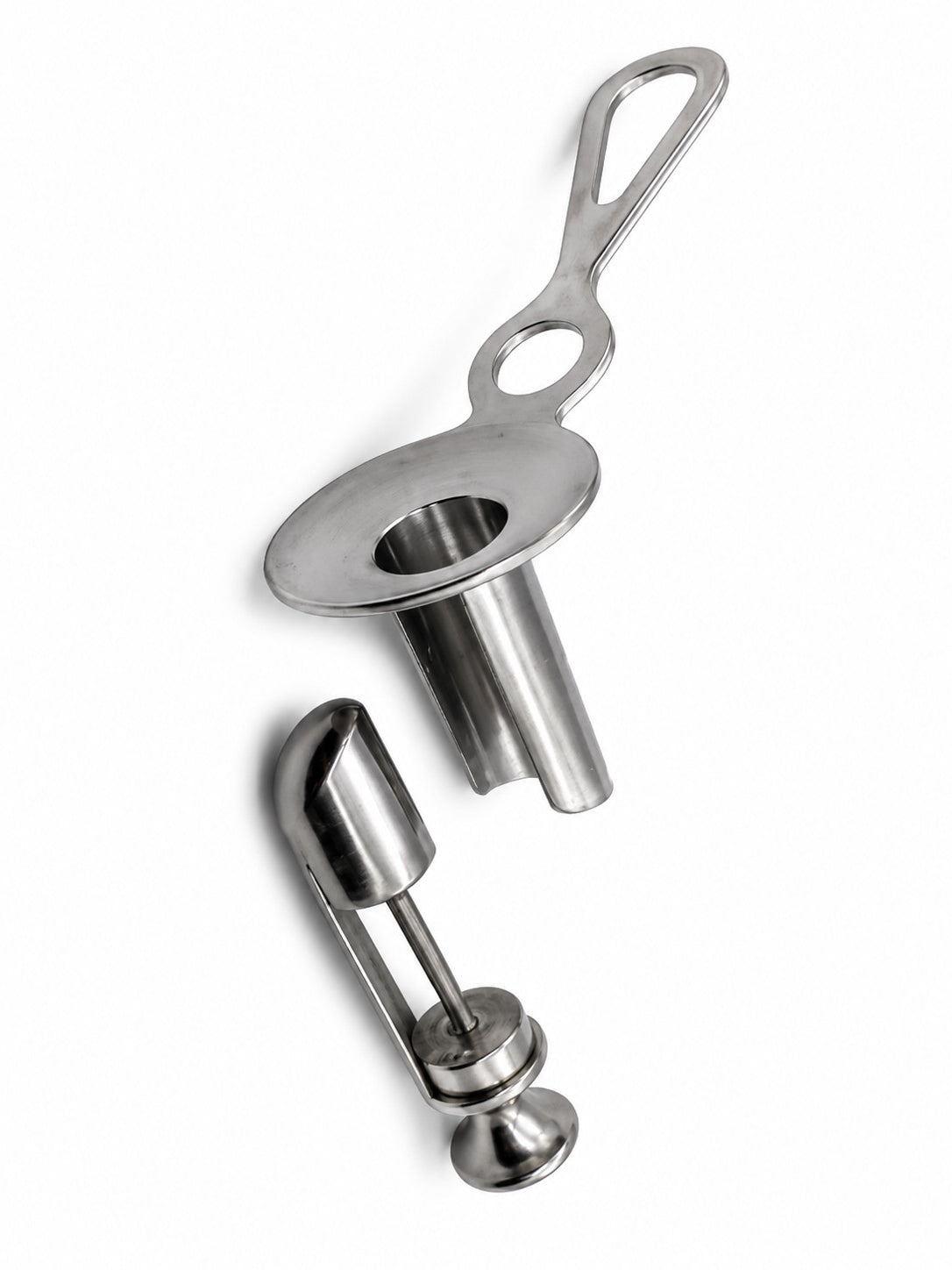
Fiber Optic Proctoscope 30080, SKU PI-011, is a reusable rigid proctology instrument manufactured from German stainless steel for illuminated examination of the anal canal and rectum. The pattern measures 22 mm in diameter and 280 mm in working length and incorporates a partial-slotted tubular body, removable obturator, proximal flange, external handle, and triple fiber-optic fitting compatible with Storz, Wolf, and ACMI light sources. During insertion, the obturator occupies the lumen and presents a rounded distal profile; after positioning, it is withdrawn so the working channel and slotted field can be used for direct visualization, suction, swabbing, biopsy forceps, or other compatible instruments. The fiber-optic interface delivers focused illumination along the rectal corridor without occupying the central access pathway. Colorectal surgeons, general surgeons, proctologists, and gastrointestinal procedure teams use this configuration for proctoscopy, evaluation of rectal bleeding, internal hemorrhoid assessment, distal rectal lesion inspection, mucosal biopsy access, postoperative review, and examination of inflammatory or neoplastic changes within reach of the rigid tube. It is suited to colorectal operating rooms, ambulatory surgery centers, specialty clinics, and hospital procedure suites requiring reusable illuminated rectal access.
The 30080 pattern combines a long rigid tube with a partial-slotted distal section so the clinician can maintain rectal wall separation while exposing a selected mucosal segment through the opening. Its 22 mm diameter creates a stable examination corridor, while the 280 mm length allows deeper rigid access than a short anoscope or compact proctoscope. The obturator fits within the body during introduction and closes the distal end with a smooth rounded profile, reducing the chance that mucosa enters or catches against the open working edge. Once the desired depth is reached, the obturator is removed and the slot can be rotated toward the target wall for inspection or instrumentation. A proximal flange provides an external positional reference, and the handle gives the surgeon leverage for controlled advancement, rotation, stabilization, and staged withdrawal. The side-mounted optical connector accepts Storz, Wolf, or ACMI-compatible fiber-optic interfaces, allowing light to travel along the instrument toward the distal field. Because the illumination port remains outside the main lumen, the central pathway stays available for suction, swabs, slender biopsy forceps, or treatment accessories. There is no expanding blade or ratchet mechanism; exposure is determined by tube diameter, slot orientation, and manual positioning.
For proctoscopy, the lubricated assembly is introduced with the obturator seated until the planned rectal level is reached. The insert is then removed, the fiber-optic source is connected, and the surgeon rotates the partial slot toward the mucosal quadrant requiring assessment. During evaluation of rectal bleeding, focused illumination helps identify friable mucosa, vascular lesions, ulceration, postoperative bleeding points, or hemorrhoidal disease extending proximally. If a discrete lesion is visible, the rigid lumen can support passage of a compatible biopsy forceps or swab for targeted sampling while the slot preserves a direct view of the working area. In inflammatory or postoperative assessment, the operator can inspect mucosal edema, granulation tissue, scar formation, stenotic change, residual hemorrhage, or recurrent pathology as the tube is withdrawn in stages. The 280 mm reach extends examination beyond the immediate anal canal and lower rectum, making the instrument useful when a longer rigid corridor is desired before changing to flexible endoscopy. Colorectal and general surgical teams may also use the device during local diagnostic or minor therapeutic maneuvers that require stable illumination, direct wall exposure, and controlled access through a rigid channel. The surgeon retains manual control of depth, rotational alignment, and withdrawal throughout the workflow.
This model is supplied as a single 22 mm x 280 mm configuration, so selection is based on the need for a relatively wide rigid lumen combined with extended rectal reach rather than a choice among diameter variants. The 22 mm bore provides enough space for illuminated inspection and compatible accessory passage while keeping the surrounding wall separated from the central viewing path. Its 280 mm working length is substantially longer than typical short anoscopes used mainly at the anal canal, allowing the clinician to assess more proximal rectal segments without switching immediately to a flexible platform. The partial slot is the main exposure feature: it can be oriented toward a lesion, bleeding site, or mucosal abnormality while the remaining tube wall supports the opposite side. The removable obturator is the insertion component and is withdrawn once the instrument reaches the intended depth. The proximal flange acts as an external stop and orientation marker, while the handle supports rotation and controlled withdrawal. The triple fiber-optic fitting is the compatibility component, permitting connection to Storz, Wolf, or ACMI light-source systems. For hospitals already using those platforms, this arrangement simplifies integration into existing colorectal procedure setups and reduces the need for separate dedicated illumination hardware.
German stainless steel provides the rigidity required to maintain the 22 mm tubular geometry during repeated insertion, rotation, and reprocessing while supporting corrosion resistance under validated cleaning and steam-sterilization cycles. The polished finish creates smooth patient-contact and internal surfaces that facilitate removal of blood, mucus, lubricant, and tissue residue after use. Reprocessing begins with prompt pre-cleaning, removal of the obturator, brushing and flushing of the lumen and slotted section, and cleaning around the handle, flange, and optical fitting. Particular attention should be given to the fiber-optic interface because retained debris or surface damage can reduce light transmission during the next procedure. After rinsing and complete drying, sterile-processing staff should inspect the distal edges, tube alignment, obturator fit, and connector surfaces before packaging. Reusable stainless components can then enter a validated hospital steam-autoclave cycle appropriate to the device, while external light cables follow their own manufacturer-specific reprocessing instructions. CE marking supports applicable conformity documentation, and ISO 13485 identifies the quality-management framework used for controlled manufacture, traceability, and documentation. For United States purchasing, FDA-compliant procurement requires the relevant establishment, device, labeling, import, and supplier records. Peak Surgicals supports institutional ordering with a one-year warranty, single-piece MOQ, OEM or private-label supply, and return or replacement service.
| SKU | PI-012 |
|---|---|
| Product Name | Fiber Optic Proctoscope 30080 |
| Price | $64.80 USD |
| Size/Gauge Variants | 22 mm diameter x 280 mm working length (7/8" x 11"), Pattern 30080 |
| Instrument Category | Proctology Instruments / Fiber Optic Proctoscopes |
| Procedure | Proctoscopy, rectal bleeding assessment, hemorrhoid evaluation, distal rectal inspection, mucosal biopsy access and postoperative review |
| Material | German stainless steel |
| Finish | Polished stainless-steel finish |
| Sterilization | Reusable and compatible with validated steam-autoclave processing |
| Instrument Classification | Reusable rigid fiber-optic proctology examination instrument |
| Reusable | Yes |
| Certifications | CE marked, ISO 13485 quality system, FDA-compliant procurement documentation |
| Warranty | 1 year |
| MOQ | 1 piece |
| OEM / Custom Orders | Available for hospitals, distributors and private-label procurement |
| After-Sale Service | Return and replacement support |
How does the Fiber Optic Proctoscope 30080 differ from a standard Kelly Proctoscope?
Fiber Optic Proctoscope 30080 differs from a standard Kelly Proctoscope in length, distal exposure geometry, and illumination interface. The 30080 pattern uses a 22 mm x 280 mm rigid body with a partial slot that can be rotated toward a selected rectal wall. A conventional Kelly model is generally shorter and is intended mainly for examination of the anal canal and lower rectum through a complete tubular lumen. The 30080 configuration also incorporates a triple fiber-optic fitting for Storz, Wolf, and ACMI light systems. Its longer reach and slotted field support more proximal rigid inspection and targeted accessory access. The Kelly pattern is chosen when shorter diagnostic access is sufficient, whereas the 30080 is selected when extended reach and dedicated fiber-optic illumination are required.
Why is the 22 mm x 280 mm configuration selected for rectal examination?
The 22 mm x 280 mm size is selected when the procedure requires both a stable working lumen and deeper rigid rectal access. The 22 mm diameter preserves room for direct viewing, suction, swabbing, and compatible biopsy instruments while maintaining separation of the rectal wall. The 280 mm length extends farther than short anoscopes used primarily around the anal canal and dentate-line region. During rectal bleeding assessment or lesion inspection, the added reach allows the operator to evaluate more proximal mucosa before switching to a flexible endoscopic platform. Fiber Optic Proctoscope 30080 is therefore suited to adult colorectal workflows where the planned target lies within the reach of a long rigid tube. Size selection should reflect examination depth, patient anatomy, and the accessory space required for the intended maneuver.
What do CE, ISO 13485 and FDA requirements mean for procurement?
Fiber Optic Proctoscope 30080 is supplied within Peak Surgicals' CE and ISO 13485 procurement framework. CE marking supports applicable conformity documentation for regulated medical-device markets. ISO 13485 identifies the quality-management system used for controlled manufacturing, traceability, documentation, and supplier processes. FDA procurement context for United States buyers concerns the relevant establishment, device, labeling, import, and distribution records applicable to the transaction. Hospitals and distributors should retain these records within vendor qualification, purchasing, and audit files. These frameworks address different regulatory functions and should be reviewed independently rather than treated as interchangeable certifications.
How are the obturator, partial slot and triple light fitting used during the procedure?
The main procedural controls are the removable obturator, external handle, partial slot, and triple fiber-optic fitting. Before insertion, the obturator fills the lumen and presents a rounded leading profile so the open working edge does not contact mucosa directly. Once Fiber Optic Proctoscope 30080 reaches the intended depth, the obturator is removed and the handle is used to rotate the slot toward the target wall. The Storz, Wolf, or ACMI-compatible optical connection is then coupled to the available light source so illumination reaches the distal field. The surgeon can advance, stabilize, rotate, or withdraw the tube while keeping the central channel available for compatible accessories. There is no ratchet or expanding blade mechanism because exposure is controlled by fixed diameter, slot orientation, and manual positioning.
How should hospitals sterilize and manage this reusable proctoscope?
Hospitals should reprocess the instrument through a validated reusable rigid-instrument pathway after every procedure. The obturator should be separated, and the lumen, partial slot, flange, handle junction, and optical connector should be cleaned before residue dries. The bore should be brushed and flushed, then all components should be rinsed and dried completely before inspection. Particular attention is required at the fiber-optic interface because debris or damage can reduce illumination during subsequent use. Reusable stainless-steel components can then undergo an appropriate validated steam-autoclave cycle, while external light cables follow their own reprocessing instructions. Procurement teams should retain SKU PI-011, the selected purchase price, warranty information, regulatory records, and service history for traceable inventory control.


