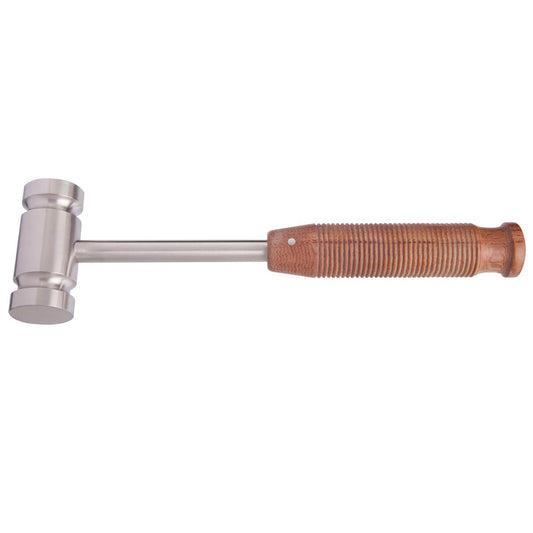
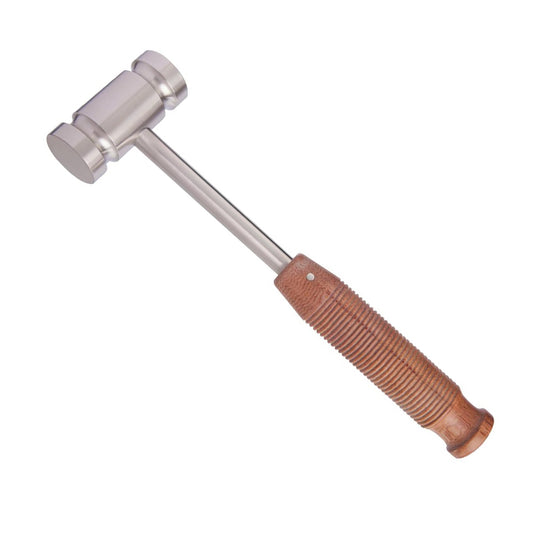
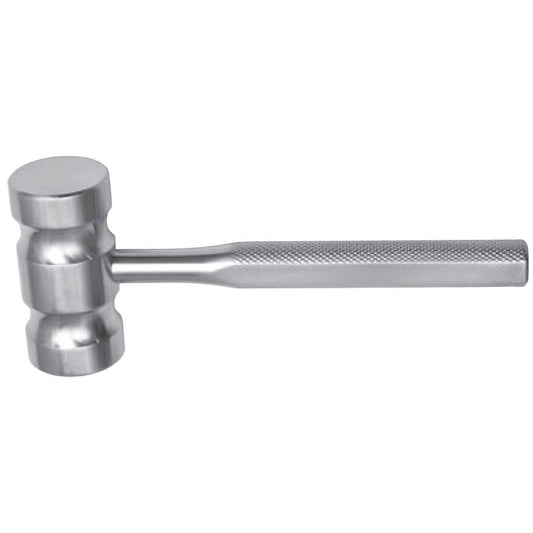
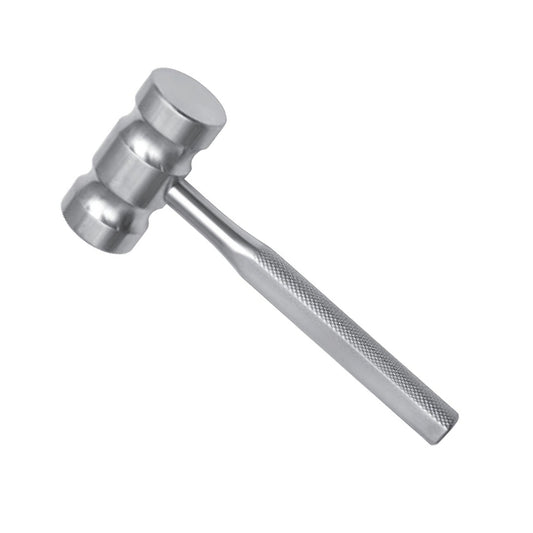
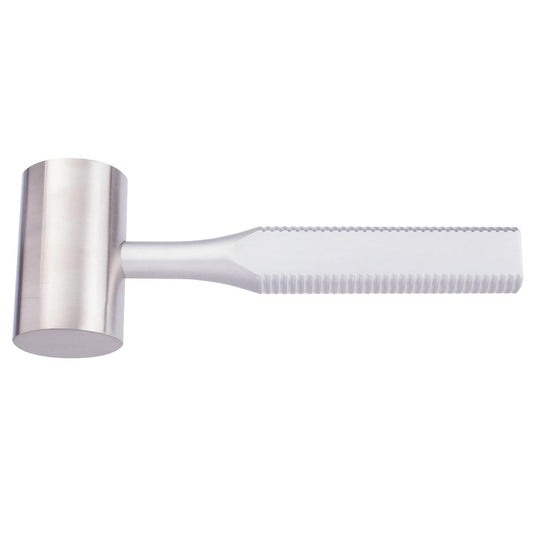
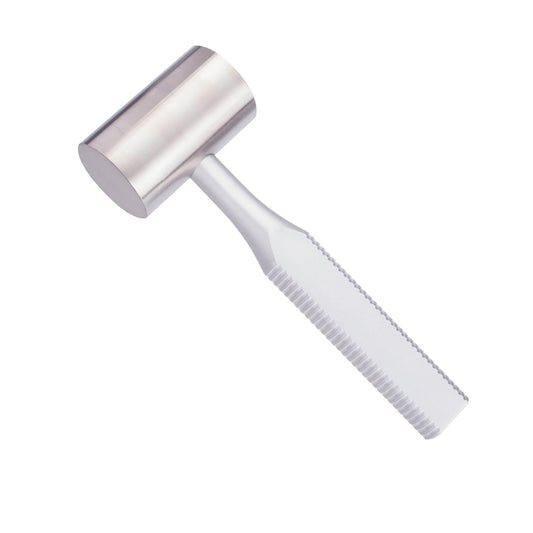
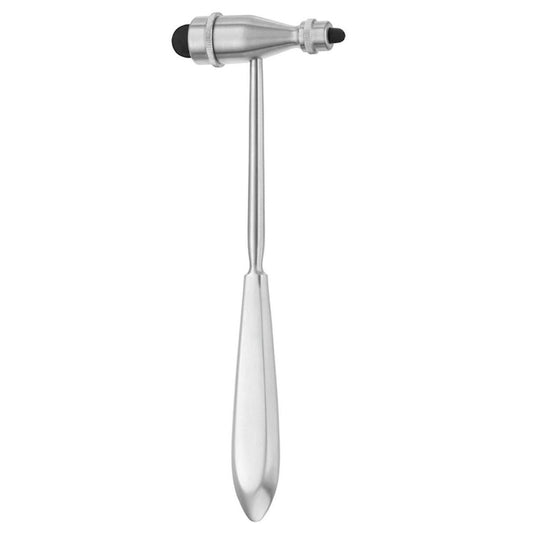
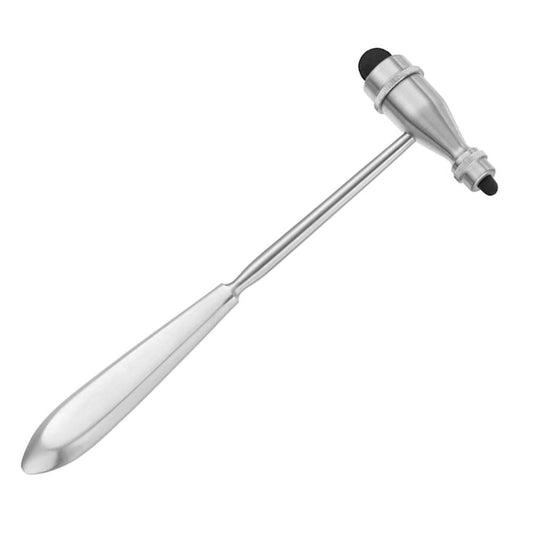
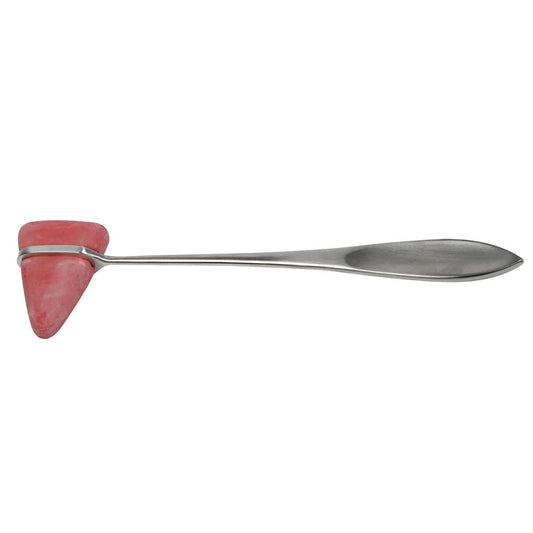
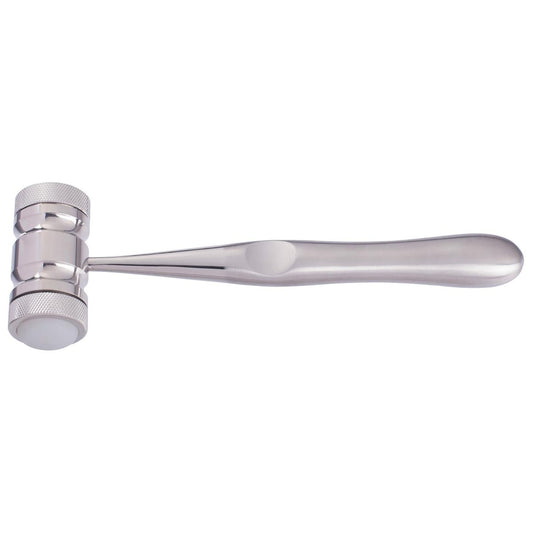
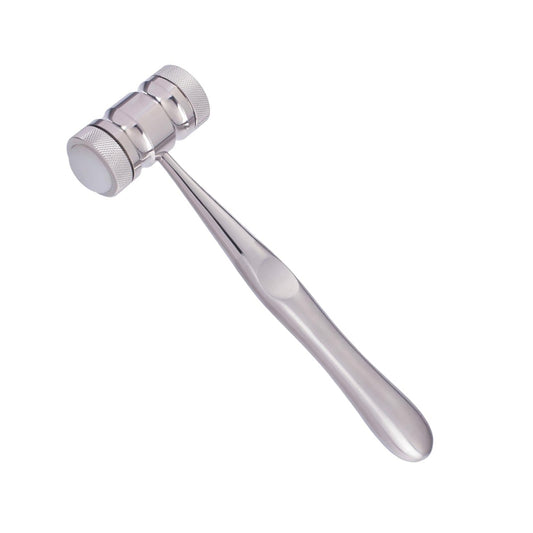
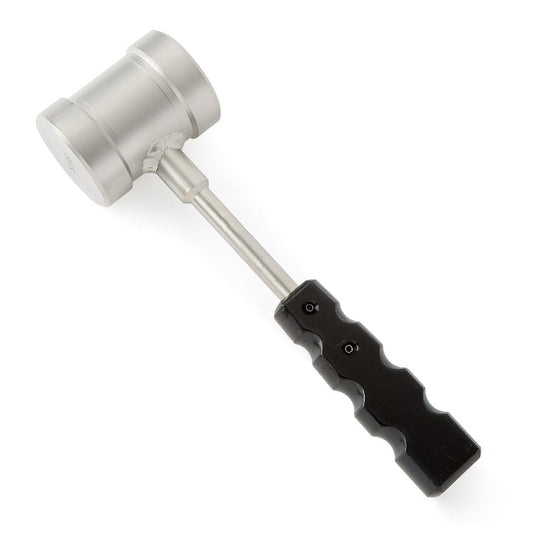
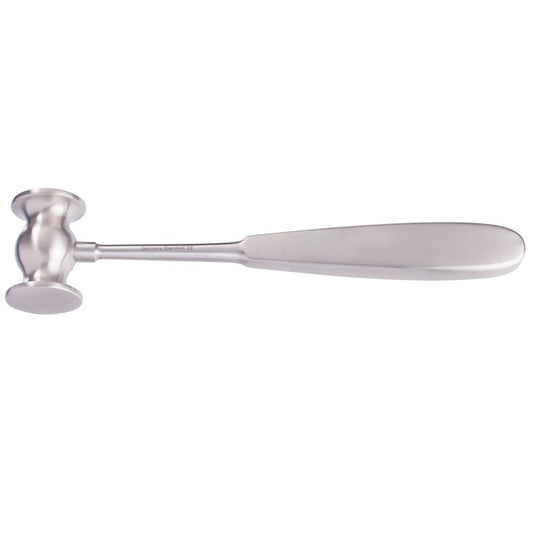
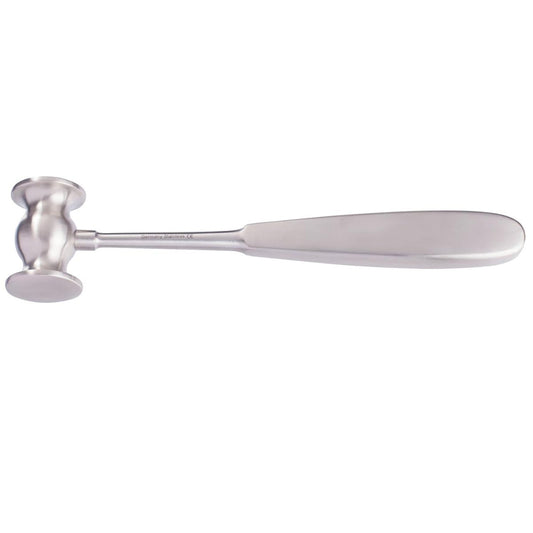
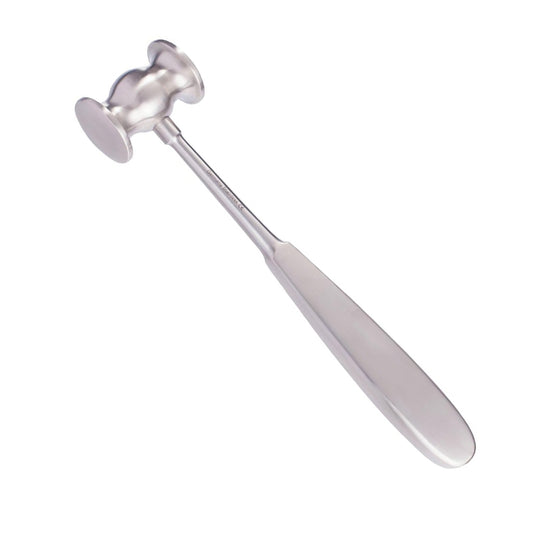
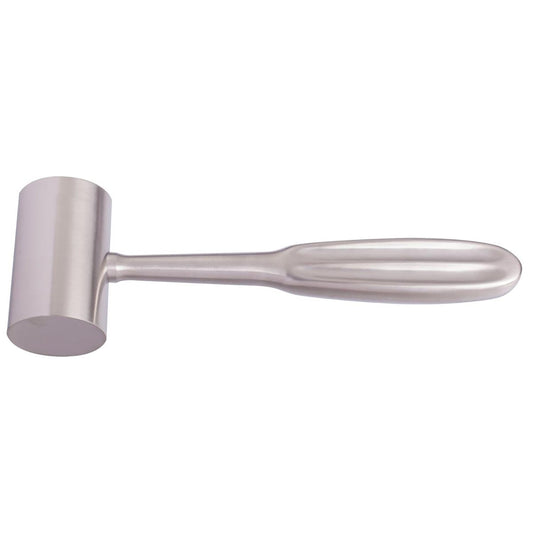
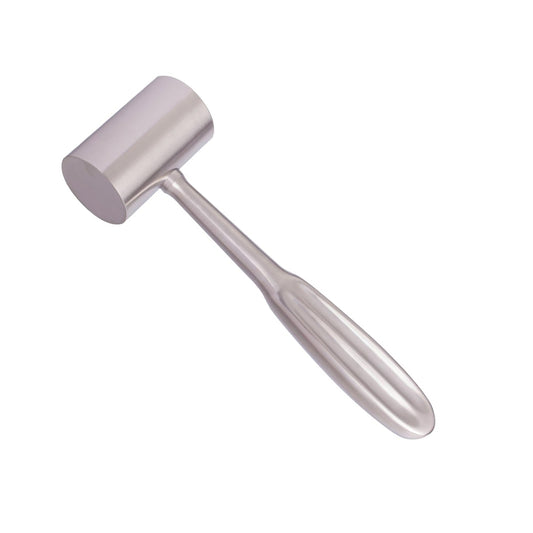
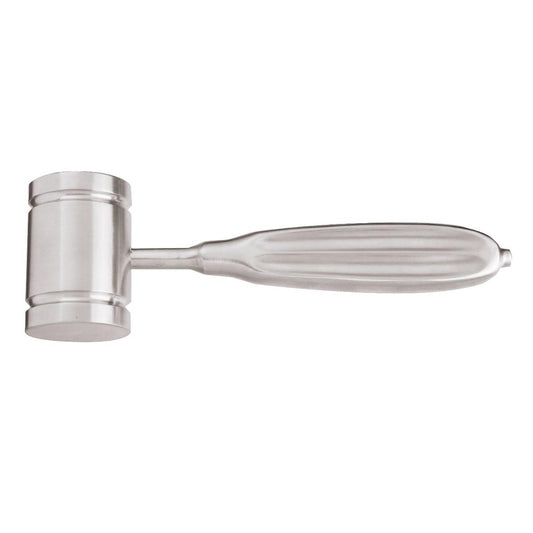
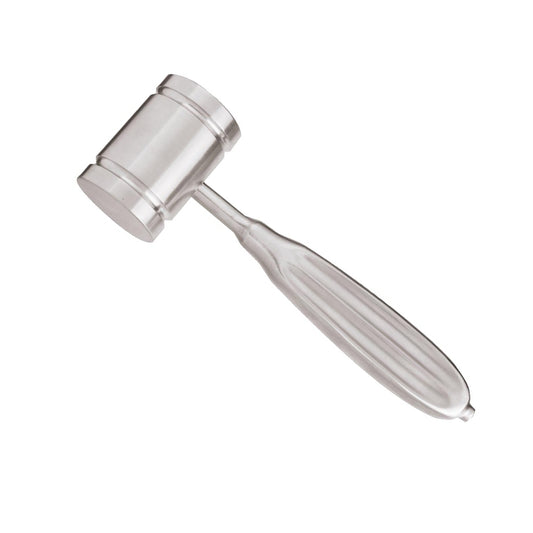
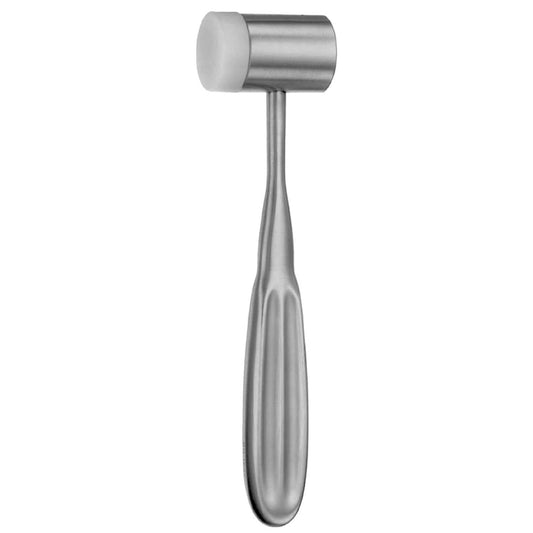
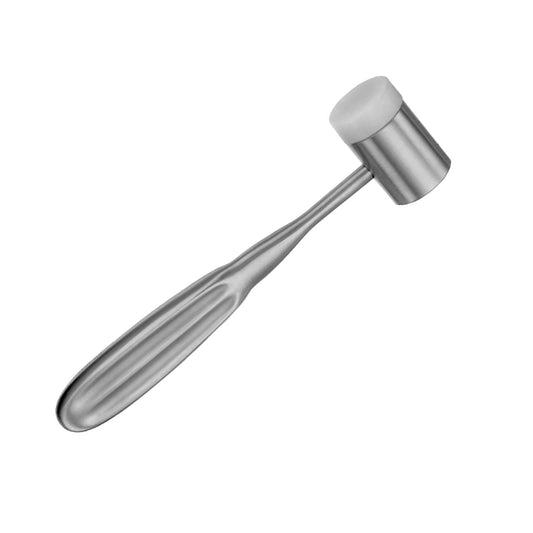
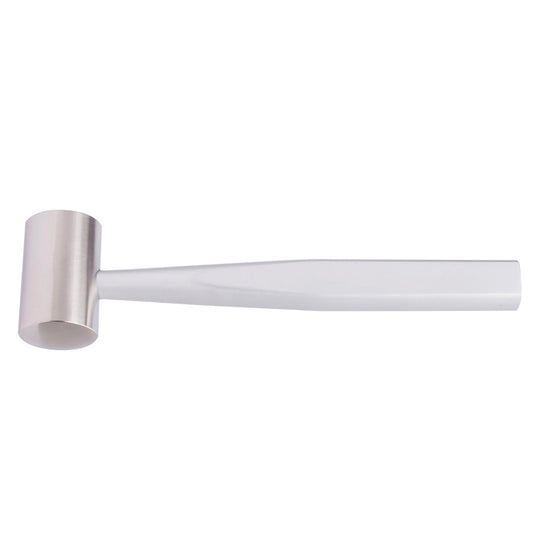
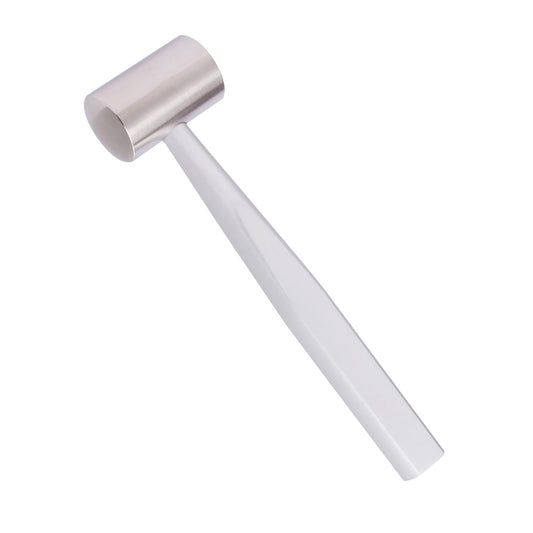
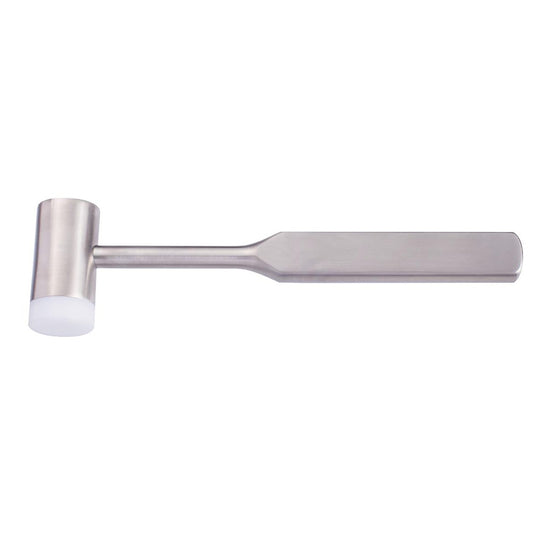
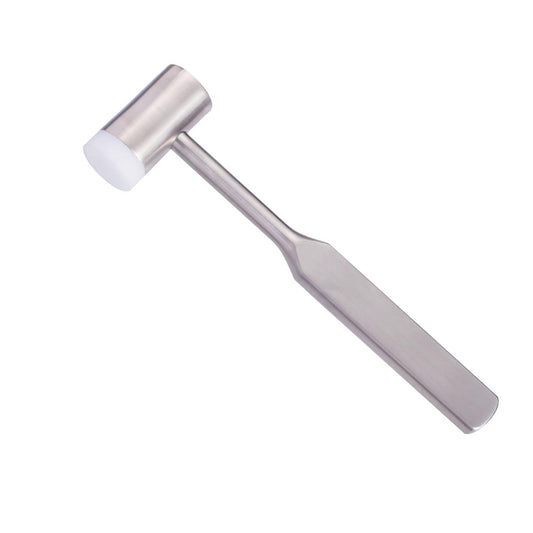
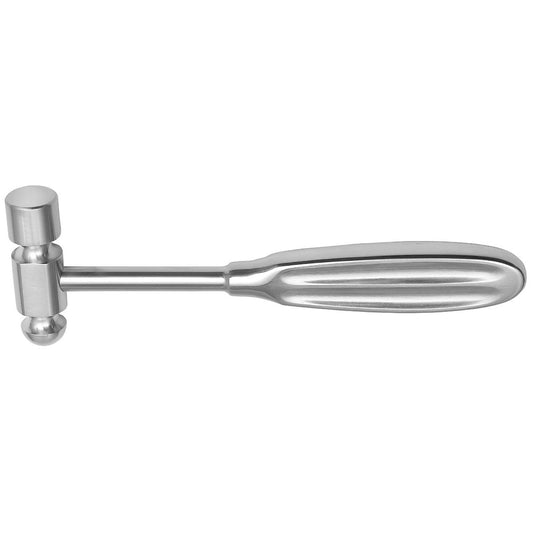
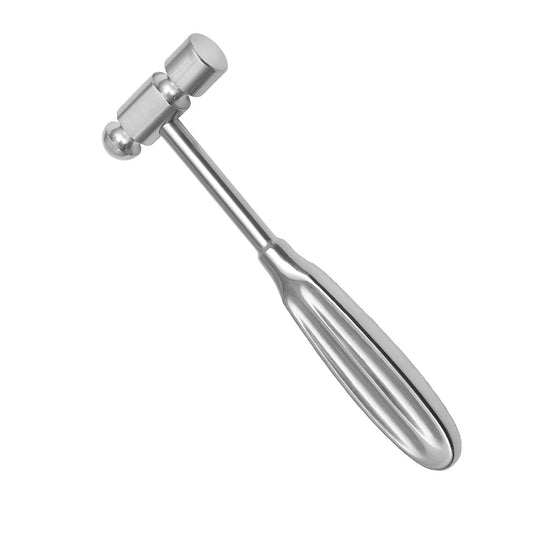
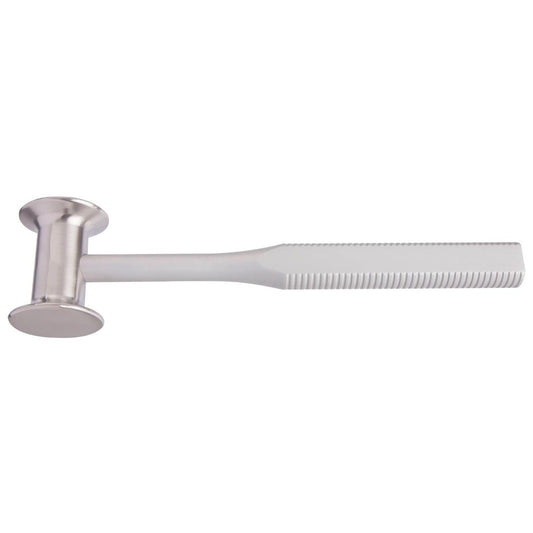
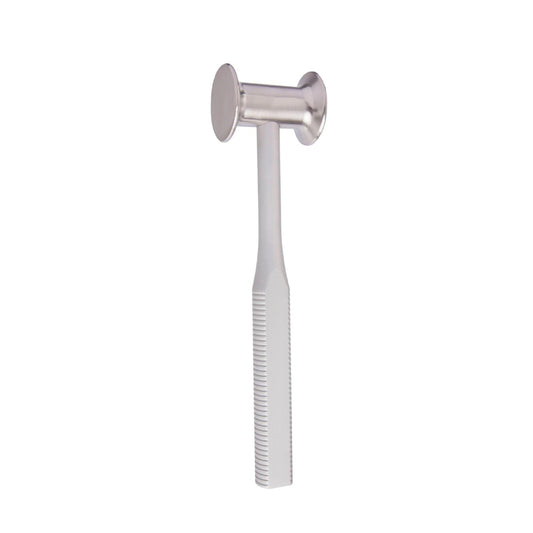
Un mazo quirúrgico para hueso se elige por el material de su cabeza, no por su peso. Peak Surgicals tiene en stock nueve modelos de mazos para hueso con caras de impacto de acero, nailon y polímero, fabricados en acero inoxidable alemán y con marcado CE y construidos bajo la norma ISO 13485. Compare cada modelo en la siguiente tabla.
¿Acero, Nailon o Polímero? La Cara Decide el Golpe
El material de la cabeza decide cómo se transmite el golpe. Una cabeza de acero inoxidable macizo transmite la fuerza casi sin disminuir, de modo que un osteótomo avanza a través del hueso cortical con el menor número de golpes y el operador siente exactamente lo que está haciendo el borde. Esa direccionalidad es lo que necesita el trabajo pesado de huesos, y es la razón por la que el Mazo Pesado Ortopédico y el Mazo de Acero Inoxidable tienen cabezas totalmente de acero.
Una cara de nailon o polímero hace lo contrario a propósito. Absorbe parte del impacto y distribuye el resto durante un tiempo de contacto más largo, lo que suaviza el golpe en el instrumento que se golpea y reduce el impacto que sube por el brazo del cirujano. Esto es importante cuando el extremo de trabajo se encuentra cerca de estructuras a las que un golpe con toda la fuerza lo llevaría, y donde una serie de golpes ligeros controlados es preferible a menos golpes fuertes. Los mazos con cara también son más silenciosos, lo cual no es una consideración trivial en una lista larga. Suministramos cada modelo con un MOQ de 1.
Peso, Diámetro de la Cara y Modelos de Doble Extremo
El peso y el diámetro de la cara configuran el resto. Una cabeza más pesada proporciona más energía por golpe y es adecuada para trabajos con huesos grandes en los que el instrumento tiene que avanzar a través de una corteza gruesa; una cabeza más ligera permite más golpes para el mismo avance total y más posibilidades de detenerse en el punto correcto. El diámetro de la cara sigue el extremo de impacto que encuentra: una cara más estrecha que la cabeza del osteótomo corre el riesgo de un contacto de refilón, una mucho más ancha añade masa sin añadir precisión.
Los Mazos Ortopédicos y los Mazos de Hueso Lucae se suministran de doble extremo, lo que permite tener dos tamaños de cara o dos materiales en un mismo instrumento y elimina un intercambio de la secuencia. Los Mazos Heath, Crane, Bergman y Kirk cubren los modelos de un solo extremo con tamaños de cabeza desde aproximadamente 38 mm hacia arriba, para equipos que prefieren un peso fijo en la mano.
Material, Reprocesamiento y Certificación
Cada modelo está fabricado con acero inoxidable alemán y pasivado para una resistencia a la corrosión en ciclos repetidos, con caras de nailon o polímero en los modelos que se suministran de esa manera. El punto de inspección de un mazo es la cara de impacto y la unión de la cabeza al mango: verifique la cara en busca de deformación o expansión en el borde, ya que una cara deformada desvía el golpe del eje y ya no golpea el osteótomo de manera uniforme, y en los modelos con cara, verifique si hay grietas, aplanamiento o cualquier holgura en el inserto. Agarre la cabeza y gírela contra el mango para confirmar que la unión es sólida, ya que una cabeza que se ha soltado produce un golpe impredecible. Limpie inmediatamente con una solución enzimática de pH neutro, trabajando alrededor de la unión de la cabeza y el asiento de la cara, luego enjuague con agua desionizada y seque completamente, siguiendo las instrucciones de reprocesamiento suministradas.
Estos son dispositivos reutilizables de Clase I, suministrados no estériles, con marcado CE y construidos bajo la norma ISO 13485, con una garantía de un año. Realizamos envíos con un MOQ de 1 y envío gratuito para pedidos superiores a $99. Consulte Osteótomos, Cinceles y Gubias para los instrumentos que accionan, o explore todos los Instrumentos Ortopédicos. Hable con nosotros sobre los términos OEM.