



PEAK SURGICALS
Blue Sweet Iron Dee Ring Snaffle Bit with Copper Roller for Schooling and Everyday Contact
Blue Sweet Iron Dee Ring Snaffle Bit with Copper Roller for Schooling and Everyday Contact
رمز التخزين التعريفي:AE-DR-CR-5
تعذّر تحميل توفر الاستلام
- ضمان استعادة الأموال خلال 30 يومًا.
- رضا تام عن الجودة.
- فولاذ طبي قابل لإعادة الاستخدام.
 معتمد من قبل CE
 معتمد من إدارة الغذاء والدواء (FDA)
 حاصل على شهادة الأيزو


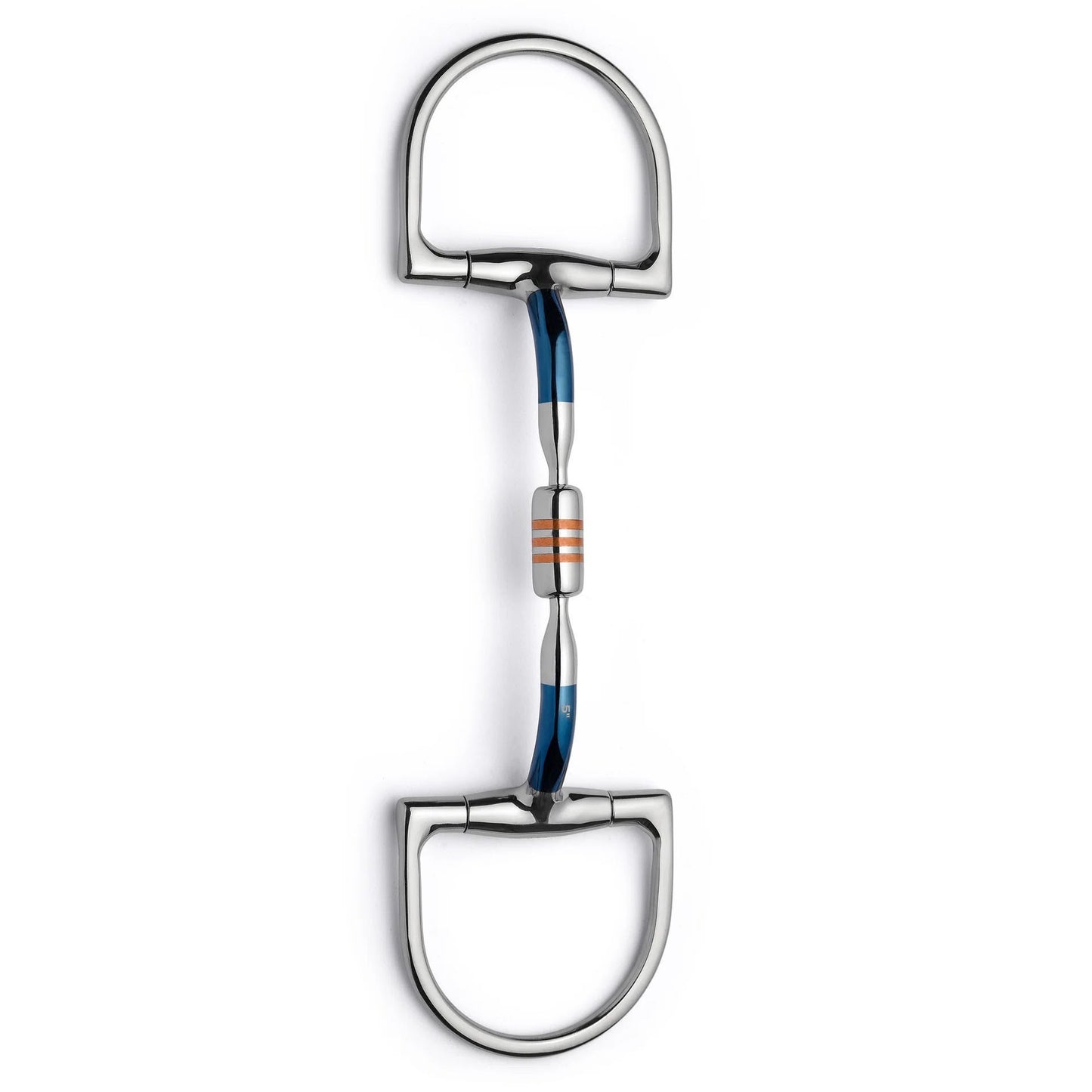
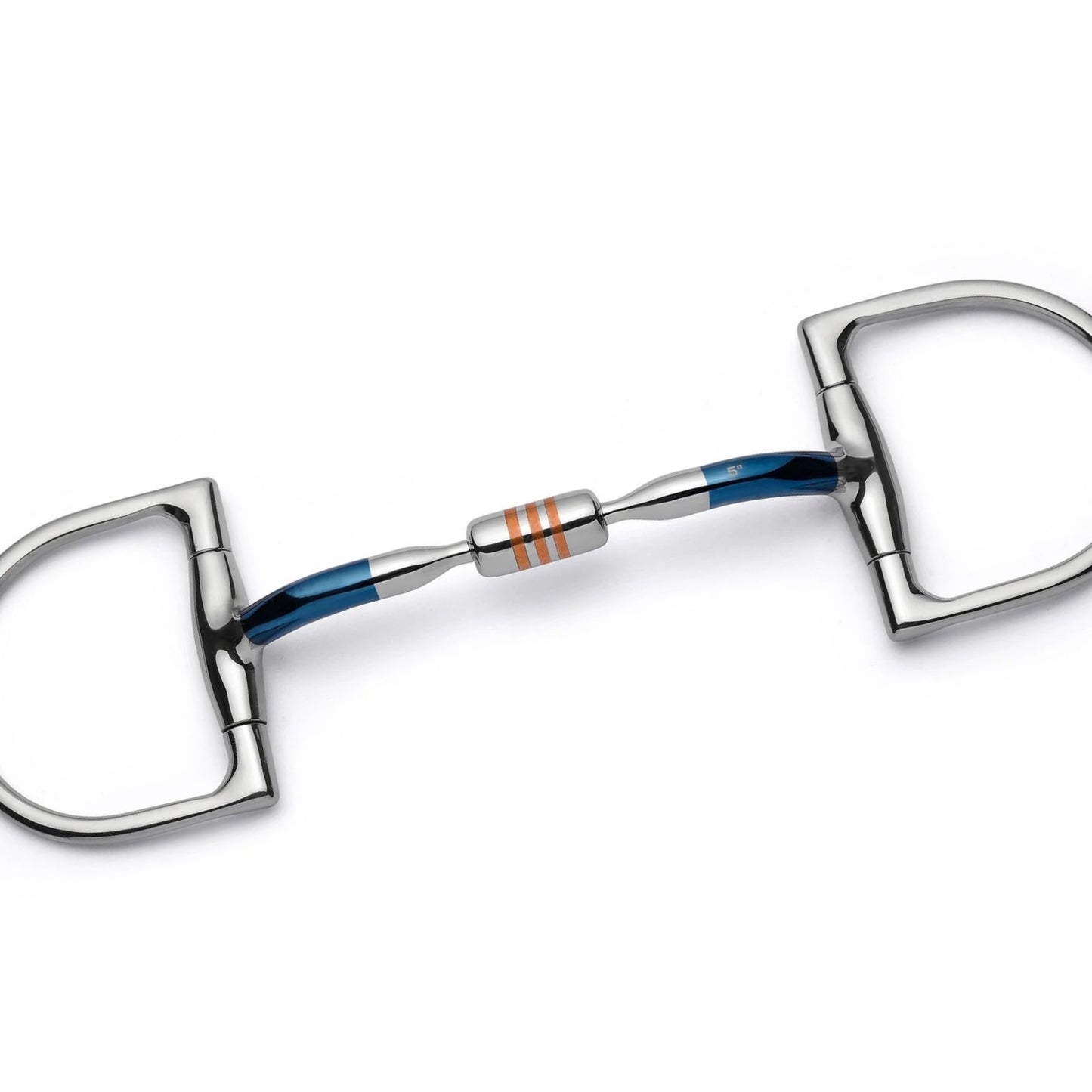
The Blue Sweet Iron Dee Ring Snaffle Bit with Copper Roller (SKU: AE-DR-CR-5) is a single-jointed snaffle built from blued sweet iron mouthpiece arms, a free-spinning copper roller barrel, and stainless steel D-ring cheeks. It is built for riders working horses through daily schooling, trail riding, and flatwork where a horse needs a mouthpiece that keeps the jaw relaxed and the tongue occupied rather than braced against contact. The D-ring cheeks present a flat bar against the side of the horse's face, giving more stopping surface than a loose ring without the bracing action of a full cheek bar, which keeps the bit from pulling through the mouth during turns while still allowing it to settle naturally between rides. The sweet iron arms oxidize to a blue-black finish that promotes salivation and softens the horse's acceptance of contact compared to bright stainless steel. At the center of the mouthpiece, the copper roller barrel rotates independently on its own pin, giving the horse a moving surface to mouth that discourages leaning, crossing the jaw, or grabbing the bit between the teeth. Riders use this bit on horses that chew excessively, resist contact, or need a softer introduction to rein pressure during early schooling and hacking.
Bit Design & Mechanical Function
The D-ring cheek is fixed in shape, cut into a flattened D that sits against the horse's face rather than curving away like a loose ring. This geometry increases the surface area of contact when a rider applies a turning aid, spreading pressure across a wider patch of cheek and reducing the local pressure spikes a thin loose ring produces at the same rein force. Because the D-ring does not extend above and below the mouthpiece the way a full cheek bar does, it offers less lateral bracing during steering, positioning this bit between a loose ring and a full cheek in how directly a turning aid reaches the horse's face. The mouthpiece itself is single-jointed at two points, with a copper roller barrel bridging the center rather than a fixed lozenge link. The roller spins freely around its own axle, independent of the mouthpiece arms on either side, so downward or lateral tongue pressure from the horse spins the roller instead of transmitting straight through to the bars. This rotation breaks up the leverage a horse can build against the bit by pressing the tongue upward or crossing the jaw, since the roller simply turns under that pressure rather than resisting it. Rein pressure from the rider still transmits through the mouthpiece arms into the D-ring and against the corners of the mouth, but the roller's independent motion changes how the horse experiences pressure at the center of the tongue specifically.
Training Applications & Riding Disciplines
This bit fits into everyday schooling and hacking programs where the priority is a relaxed jaw and consistent tongue acceptance rather than the lateral bracing a full cheek bit provides. Riders use the D-ring cheek during flatwork and transitions, where the flattened bar gives enough turning surface for basic steering without locking the mouthpiece against the face the way a full cheek bar does. Trail riders choose this pattern for horses that need a stable, non-swinging cheek on long rides but do not require the bracing a schooling horse might need for lateral work. The copper roller addresses horses that chew, grind, or brace against a fixed mouthpiece, since the rotating barrel gives the tongue something to move against instead of a static bar to push into. Trainers introduce this bit to horses transitioning off a plain snaffle when the horse has started resisting contact, using the roller's motion to interrupt the horse's habit of leaning on the bit or crossing the jaw against rein pressure. The blued sweet iron finish supports this same goal, since horses that resist a bright stainless steel mouthpiece often accept the oxidized surface more readily during the same schooling sessions. Riders working young horses through early bit acceptance use this pattern before moving to a full cheek or a more structured cheek design once steering is established.
Size Variants & Bit Configuration
This bit is available in 4.5 inch, 5 inch, 5.5 inch, and 6 inch mouthpiece widths, measured across the inside of the D-rings. The 4.5 inch size fits ponies and narrow-jawed horses, keeping the roller centered on the tongue without extra mouthpiece length pushing the D-rings against the corners of the lips. The 5 inch size, shown on the pictured bit, fits the average horse mouth and covers most riders sizing this bit for the first time. The 5.5 inch size suits horses with a wider jaw or thicker cheek tissue, giving the mouthpiece room to sit without pinching at the corners while the D-ring still presents a flat bearing surface against the face. The 6 inch size fits draft crosses and larger warmbloods, where a shorter mouthpiece would crowd the mouth and pull the D-rings tight against the lips before the roller can settle centered on the tongue. Sizing this bit correctly matters more for roller position than for cheek bracing, since a mouthpiece that runs long shifts the roller off-center and lets one arm ride longer than the other, while a mouthpiece that runs short crowds the roller against one side of the tongue under rein pressure. Riders measure the horse's mouth with a sizing string or a prior bit before ordering, since the roller performs best when it sits centered rather than pushed to either side.
Material, Finish & Care
The mouthpiece arms are manufactured from sweet iron and oxidize to a blue-black surface through controlled exposure rather than plain corrosion, which is the mechanism behind the mouthpiece's name and its salivation-promoting effect. This oxidized layer sits on top of the base metal and continues to darken with use, and continued darkening is expected performance rather than a defect. The copper roller barrel is manufactured from a copper alloy that ages through the same exposure differently, developing its own patina while remaining free-spinning on its axle throughout normal use. The D-ring cheeks and axle pin are manufactured from stainless steel, which resists corrosion under regular exposure to saliva and wash-down water and holds a mirror-polished finish that keeps the bearing surface against the face smooth. Riders clean this bit by rinsing the mouthpiece, roller, and D-rings after each use, working water directly into the roller's axle point to clear saliva and feed residue before it dries and stiffens the rotation. A soft cloth or bit brush lifts buildup from the roller housing without scratching the stainless steel D-rings, and the roller should be checked periodically to confirm it still spins freely under light finger pressure. Store the bit dry, away from direct moisture, since the sweet iron mouthpiece continues oxidizing in storage and an excessively damp environment accelerates that process beyond normal use.
Specifications
| SKU | AE-DR-CR-5 |
| Product Name | Blue Sweet Iron Dee Ring Snaffle Bit with Copper Roller |
| Bit Type | Snaffle, D-Ring |
| Discipline | Schooling, Trail Riding, Flatwork, Everyday Riding |
| Riding Application | Jaw relaxation, contact acceptance, tongue engagement |
| Bit Pattern | Single-Jointed D-Ring Snaffle with Copper Roller Barrel |
| Cheek Type | D-Ring, fixed flattened bar |
| Mouthpiece | Blue sweet iron arms with free-spinning copper roller center |
| Roller | Copper alloy, independently rotating on axle pin |
| Material | Sweet iron mouthpiece, copper roller, stainless steel D-rings |
| Finish | Oxidized blue-black sweet iron, mirror-polished stainless steel D-rings |
| Size Variants | 4.5", 5", 5.5", 6" |
| Care | Rinse after use, clear roller axle, store dry |
| Reusable | Yes |
| Certifications | Available on request |
| Warranty | Manufacturer defect warranty, 12 months |
| MOQ | 1 unit retail; wholesale MOQ available on request |
| OEM / Private Label | Available |
| After Sales Service | Order tracking, returns support, wholesale account support |
Frequently Asked Questions
How does this D-Ring Copper Roller bit differ from a Loose Ring or Full Cheek version of the same mouthpiece?
A loose ring version of this mouthpiece allows the ring to rotate freely through the arm, which lets the bit shift and self-center in the mouth but gives less consistent contact against the face when a rider applies a turning aid. The D-ring on this bit is fixed in shape, presenting a flat bearing surface against the cheek that steadies the mouthpiece's position without the bit swinging or rotating the way a loose ring does. A full cheek version of the same mouthpiece adds bars extending above and below the ring, bracing directly against the outside of the mouth for a more immediate steering response than either the D-ring or loose ring pattern provides. Riders choose the D-ring specifically when they want more stability than a loose ring without the bracing and turnout risk that come with a full cheek's extended bars. The copper roller functions identically across all three cheek types, since its rotation depends only on the axle pin at the center of the mouthpiece and not on how the outer rings or cheeks are shaped. Riders moving a horse toward more structured steering work typically progress from this D-ring pattern to a full cheek once the horse accepts contact consistently, keeping the same roller mouthpiece across that transition.
How do I choose the right size for my horse?
Measure the horse's mouth with a length of string or an existing bit, running the measurement across the bars rather than across the outside of the lips, since the roller needs to land centered on the tongue rather than pushed to either side. A horse measuring close to 4.5 inches takes the smallest size in this bit, keeping the D-rings snug against a narrow face without extra mouthpiece length shifting the roller off-center. Most horses measure between 4.75 and 5.25 inches, which places them in the 5 inch size shown on the pictured bit. Horses with a wider jaw or thicker cheek tissue take the 5.5 inch size, since a smaller mouthpiece pulls the corners of the lips against the D-rings under rein pressure before the roller can settle correctly. Draft crosses, warmbloods, and horses with a heavy head take the 6 inch size, where the mouthpiece needs the extra length to keep the D-rings flush against the face rather than crowding the mouth. A mouthpiece that runs long shifts the roller away from center and lets one mouthpiece arm ride longer than the other, while a mouthpiece that runs short crowds the roller against one side of the tongue, so measuring correctly before ordering keeps the roller functioning as intended.
Where is this bit manufactured, and can I order it under my own label?
This bit is manufactured from sweet iron, copper alloy, and stainless steel at Altiger Equestrian's production facility in Sialkot, Punjab, a region with a long-standing base of equestrian metalware manufacturing that supplies tack shops and distributors across North America, Europe, and Australia. Every mouthpiece arm, roller, and D-ring is shaped, oxidized, and assembled in-house, which keeps the roller's fit and free rotation consistent across a full production run rather than varying between third-party suppliers. Distributors, tack shops, and wholesale buyers order this bit in bulk with volume pricing applied above the standard minimum order quantity, and Altiger Equestrian ships internationally to fulfill both retail and wholesale orders. Private label and OEM production are available for buyers who want their own branding stamped or engraved onto the D-rings, with artwork and stamping specifications reviewed before a production run begins. Procurement teams sourcing for retail chains or distribution networks can request bulk quotes, lead times, and sample units ahead of placing a full order. Export documentation, packaging, and shipping are handled directly through Altiger Equestrian for international buyers, removing the need for a separate freight forwarder on standard orders.
What does the copper roller actually do inside the horse's mouth?
The copper roller sits at the center of the mouthpiece on its own axle pin, separate from the two mouthpiece arms that connect to the D-rings on either side. When the horse pushes its tongue upward against the mouthpiece or attempts to cross the jaw and grab the bit between the molars, the roller spins under that pressure instead of holding still and giving the horse a fixed surface to brace against. This constant, low-effort rotation keeps the tongue and lower jaw occupied, which is why riders use a roller mouthpiece specifically on horses that chew, grind, or resist a static bar. The copper alloy of the roller reacts with saliva in a way plain stainless steel does not, adding a taste response that keeps the horse mouthing the bit rather than clamping down against it. The single-jointed arms on either side of the roller still fold at their own hinge points when rein pressure is applied, so the mouthpiece flexes normally around the bars of the mouth while the roller handles pressure specifically at the tongue's center. This combination separates two functions that a plain single-jointed bit combines into one bar: the arms manage the fold around the bars of the mouth, and the roller manages contact at the center of the tongue.
How do I maintain this bit for long-term use?
Rinse the bit under running water after every ride, directing water into the roller's axle point to clear saliva and feed residue before it dries and stiffens the rotation. A bit brush or a soft cloth lifts buildup from around the roller housing and the D-ring hinge points without scratching the mirror finish on the stainless steel rings. Check the roller periodically by spinning it under light finger pressure; it should rotate freely with no grinding or resistance, and any stiffness signals residue building inside the housing that needs a more thorough rinse. The sweet iron mouthpiece will continue to darken with use as the oxidized layer develops further, and this darkening is the mechanism the mouthpiece depends on rather than a sign of deterioration. The copper roller develops its own patina over time, and this patina does not need to be polished off for the roller to continue functioning or continue promoting salivation. Store the bit dry and away from direct moisture between uses, since a consistently damp storage environment accelerates the sweet iron's oxidation beyond what normal riding use produces. With routine rinsing and periodic roller checks, this bit holds its rotation and mouthpiece finish through years of regular schooling and trail use.