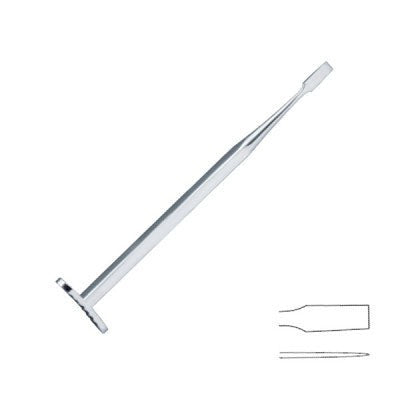
수의학 연골 기구는 서로 관련 없는 도구들의 집합이 아닙니다. 여기에 있는 세 가지 패턴은 대퇴골두와 경부 골절술에서 순서대로 사용됩니다. Peak Surgicals는 Martin Cartilage Clamp (PS-VS-00762, $13.20), Femoral Ligament Cutter Hatt Spoon ($51.69), 그리고 Smillie Cartilage Knife ($27.50)를 모두 독일제 스테인리스 스틸로 만들고 CE 마크를 획득했으며 ISO 13485에 따라 제조합니다. 아래 표에서 세 가지 패턴을 모두 비교해 보세요.
FHO에서 각 기구는 어떤 역할을 할까요?
해트 스푼은 원인대가 완전히 제거되어야 하고, 큐렛은 대퇴골 머리窩에 섬유를 남겨 육아 조직을 형성하기 때문에 존재합니다. 구부러진 스푼 모양의 작업 끝 부분은 인대를 긁어내는 대신 한 번에 부착부에서 떠올립니다. 그래서 FHO 세트에는 구부러진 Mayo 가위와 함께 해트 스푼이 포함되어 있습니다.
Femoral Ligament Cutter Hatt Spoon ($51.69)이 그 단계를 처리합니다. Martin Cartilage Clamp (PS-VS-00762, $13.20)는 연골이나 인대를 장력 하에 고정하여 움직이는 구조가 아닌 고정된 구조에 대고 절단을 할 수 있도록 하며, Smillie Cartilage Knife ($27.50)는 절개 자체를 합니다. 클램프, 스쿱, 절단 순서입니다. 모든 패턴을 MOQ 1로 공급합니다.
스밀리 패턴과 T자형 손잡이가 중요한 이유
스밀리 패턴은 주걱형 작업 끝 부분을 가진 T자형 손잡이이며, 그 모양이 핵심입니다. St Andrews와 나중에 Dundee에서 정형외과 초대 회장을 지냈고 1981년 국제 무릎 학회 회장으로 선출된 Ian Scott Smillie는 관절경이 존재하기 전에 제한된 개구부를 통해 찢어진 연골을 절제하기 위해 이 칼을 설계했습니다. T자형 손잡이는 외과의가 칼날 끝을 볼 수 없을 때 손이 칼날을 제어하여 앞으로 밀어낼 수 있도록 합니다.
이러한 기하학적 구조는 관절 접근이 동일한 이유로 좁은 소동물 작업에 직접적으로 적용됩니다. 주걱 끝은 뾰족한 부분이 아닌 넓고 얕은 칼날을 제공하므로 연골 평면을 따라 분리되며 뚫고 들어가지 않습니다. 개 무릎과 고관절 수술에서 이러한 차이는 인접한 인대와 피막이 접근 방식에서 손상 없이 살아남는지를 결정합니다.
재료, 재처리 및 인증
세 가지 패턴 모두 독일제 스테인리스 스틸로 단조되었으며 반복되는 주기 동안 내식성을 위해 부동태화되었습니다. 칼과 스푼의 경우 검사 지점은 작업 날입니다. 스밀리 칼날의 주걱 가장자리에 흠집이 있는지, 해트 스푼 테두리가 납작해지지 않았는지 확인하세요. 무뎌진 스쿱은 인대를 들어 올리는 대신 찢어지게 만듭니다. 클램프의 경우 첫 번째 래칫 톱니까지 닫고 미끄러지지 않고 고정되는지 확인합니다. 중성 pH 효소 용액으로 사용 즉시 세척하고 스푼 볼과 클램프 박스 잠금 장치 안쪽까지 닦아낸 다음 탈이온수로 헹구고 완전히 건조시킨 후 134°C에서 고압 증기 멸균합니다.
이들은 Class I 재사용 가능 기기이며, CE 마크를 획득하고 ISO 13485에 따라 제조되었으며 1년 제조 보증이 제공됩니다. MOQ 1부터 배송하며 99달러 이상 구매 시 무료 배송됩니다. 유통업체를 위한 OEM 및 개인 라벨 생산도 가능합니다. 전체 수의과 수술 기구 제품군을 둘러보거나 인체 정형외과 연골 가위 및 반월판 칼 컬렉션을 참조하세요. OEM 조건에 대해 문의하십시오.