



PEAK SURGICALS
Full Cheek Copper Lozenge Snaffle Bit for Schooling, Dressage and Flatwork Training
Full Cheek Copper Lozenge Snaffle Bit for Schooling, Dressage and Flatwork Training
SKU:AE-FC-CL-5
Δεν ήταν δυνατή η φόρτωση της διαθεσιμότητας παραλαβής
- 30 Days Money Back Guarantee.
- 100% Quality Satisfaction.
- Medical Grade Steel Reusable.
 CE Certified
 FDA Certified
 ISO Certified


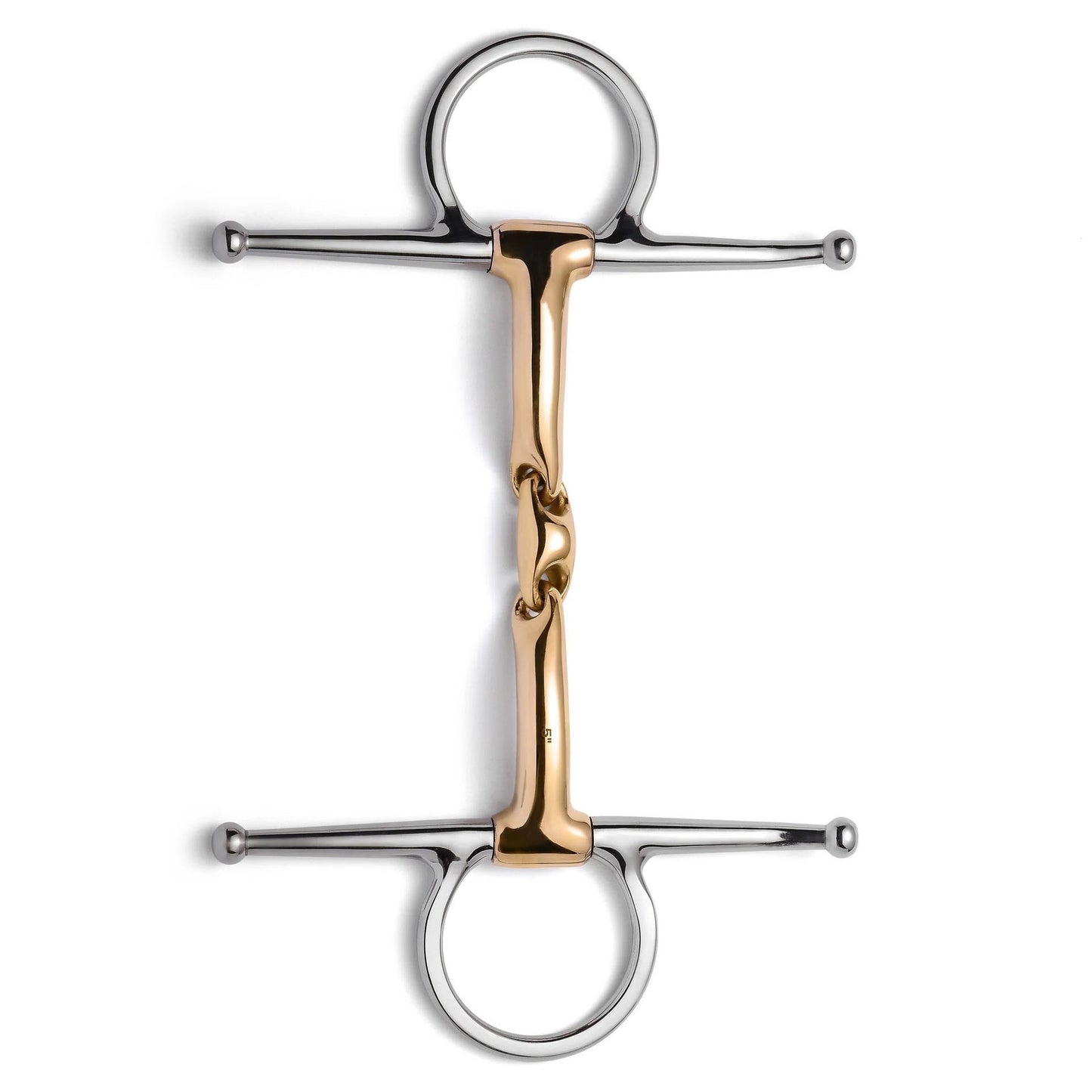
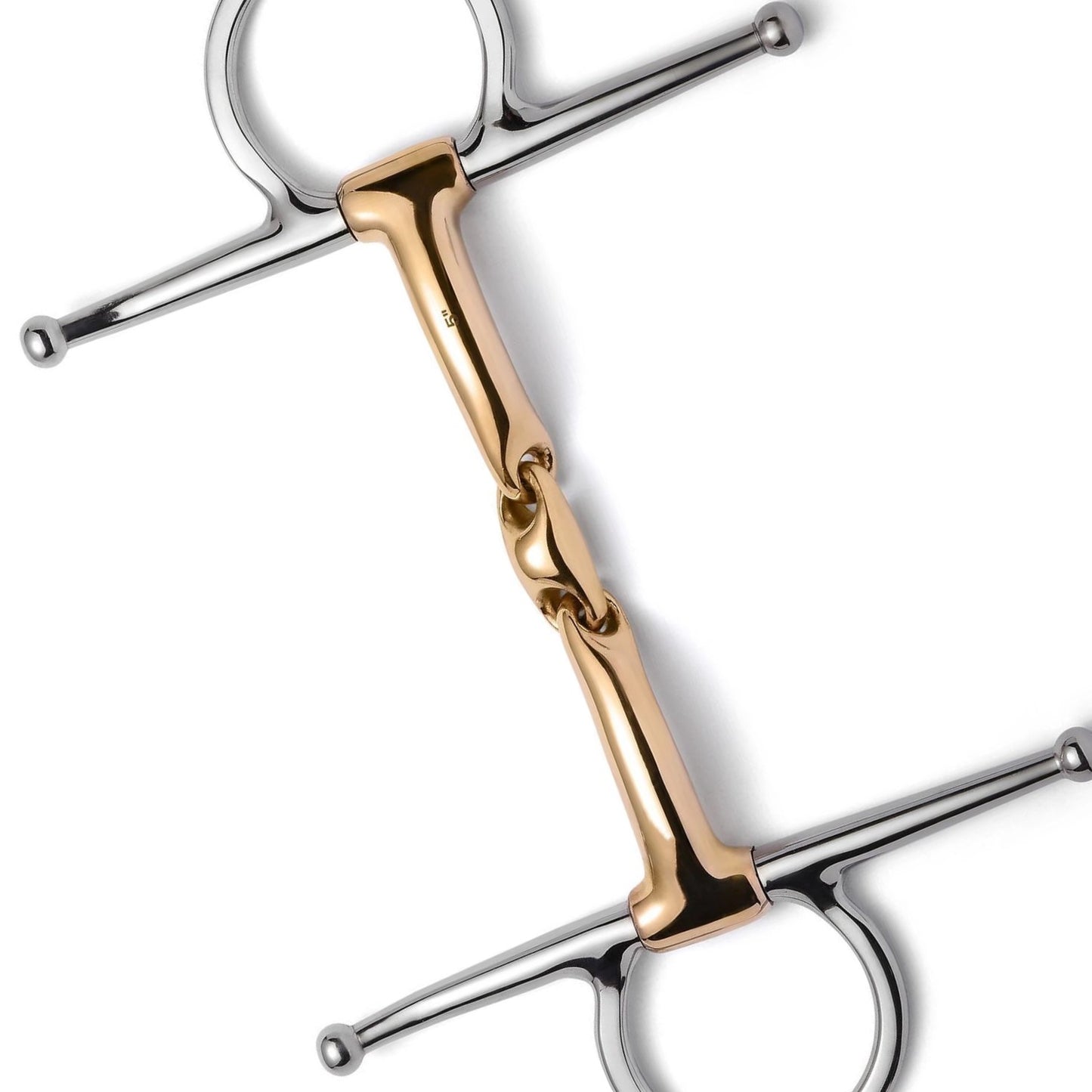
The Full Cheek Copper Lozenge Snaffle Bit (SKU: AE-FC-CL-5) is a double-jointed snaffle constructed from stainless steel cheek bars and rings paired with a copper alloy mouthpiece. It is built for riders working horses through schooling, dressage, and early jumping preparation, where consistent bar and tongue contact determines how cleanly the horse accepts contact and steps into the rein. The fixed cheek bars run above and below each ring, holding the mouthpiece square in the horse's mouth and preventing lateral pull-through that a plain ring bit cannot control on its own. This bracing effect makes the bit suited to young horses learning steering aids and to horses that need extra lateral guidance during flatwork and turns. The copper alloy center link and side arms oxidize gradually in the mouth, which encourages salivation and a softer, more relaxed jaw compared to a plain stainless steel mouthpiece. The lozenge-shaped center link removes the nutcracker action found in a single-jointed mouthpiece, spreading pressure across the tongue and bars rather than concentrating it on the tongue's center. Riders use this bit across flatwork, transitions work, lateral exercises, and jumping grids where a stable, non-slipping mouthpiece and clear lateral cues are needed.
Bit Design & Mechanical Function
The full cheek design extends a straight bar above and below each ring, terminating in a rounded ball end that prevents the bit from pinching the corners of the mouth or catching on other tack. These bars sit against the horse's cheek and transmit direct lateral pressure the moment the rider applies an opening or leading rein, which shortens the response time compared to a loose ring snaffle where the ring must rotate before pressure reaches the bars. The rings themselves rotate independently of the cheek bars, allowing the mouthpiece to settle and self-adjust across the bars of the mouth while the fixed cheeks maintain their bracing position. The mouthpiece is double-jointed through a center lozenge link, which folds around the tongue rather than pressing straight down on it. This geometry distributes rein pressure across a wider surface of the tongue and bars, reducing the peak pressure a horse feels compared to a single-jointed mouthpiece. Force applied through the reins travels through the ring, into the mouthpiece arm, and across the lozenge link to the opposite arm, giving the rider a mouthpiece that moves through a two-stage hinge rather than a single pivot point. The cheek bars add a mechanical stop against sideways movement through the mouth, which keeps the bit centered during lateral work, direct-rein steering, and young horse schooling where straightness through the bit is inconsistent.
Training Applications & Riding Disciplines
This bit fits directly into schooling programs built around straightness, lateral suppling, and contact acceptance. Dressage riders use the fixed cheek design during early flatwork to reinforce direct rein aids while the horse learns to step into contact without leaning or drifting through corners. The bracing action of the cheek bars supports leg-yield, shoulder-fore, and turn-on-the-forehand work, where a rider needs the mouthpiece to hold its position rather than sliding through the mouth under sideways pressure. Trainers starting young horses use this configuration during the earliest steering lessons, since the cheek bars back up an opening rein and teach a colt to follow the bit before the horse fully understands leg aids. Jump riders use the same bit through grid work and related distances, where a stable mouthpiece under repeated rein contact keeps the horse's response consistent from fence to fence. The copper mouthpiece supports horses that chew, gape, or resist contact on plain stainless steel, since the oxidation process keeps the mouth moist and the jaw relaxed through longer schooling sessions. Riders bringing a horse off the trail into arena work also use this bit as a transition tool, pairing the cheek stability with a mouthpiece that horses accept more readily than a plain steel bar.
Size Variants & Bit Configuration
This bit is available in 4.5 inch, 5 inch, 5.5 inch, and 6 inch mouthpiece widths, measured across the inside of the rings. The 4.5 inch size fits ponies and narrow-jawed horses, keeping the cheek bars close against the face without excess mouthpiece length crowding the corners of the lips. The 5 inch size, shown on the pictured bit, fits the average horse mouth and is the starting point for most riders sizing a new bit for the first time. The 5.5 inch size suits horses with wider jaws or thicker cheek tissue, giving the mouthpiece enough length to avoid pinching at the corners while the cheek bars still sit flush against the face. The 6 inch size fits draft crosses and larger warmbloods, where a shorter mouthpiece would pull the rings tight against the lips and reduce the bracing effect the cheek bars are meant to provide. Sizing up or down changes how much lateral leverage the cheek bars deliver: a mouthpiece that runs long lets the bit shift before the bars engage, while a mouthpiece that runs short concentrates pressure at the corners before the lozenge link can settle across the tongue. Riders fitting this bit for the first time measure the horse's mouth with a sizing string or a prior bit before ordering, since a half-inch difference changes both comfort and how quickly the cheek bars respond to a rein aid.
Material, Finish & Care
The cheek bars and rings are manufactured from stainless steel, giving the bit corrosion resistance under regular exposure to saliva, wash-down water, and tack room humidity. The mirror-polished finish on the stainless steel components reduces surface friction against the horse's lips and cheek tissue, and resists pitting that would otherwise roughen the surface over repeated use. The mouthpiece is manufactured from a copper alloy with a satin finish, which oxidizes gradually as it contacts saliva and encourages a warmer taste response that keeps a horse mouthing and salivating rather than clamping down against the bit. This oxidation layer is a normal part of the metal's function and is not a sign of corrosion or wear on the underlying alloy. Riders clean this bit by rinsing the mouthpiece and cheek bars after each use to remove saliva, feed residue, and arena dust before it dries into the joints of the lozenge link. A soft cloth or bit brush clears buildup from the hinge points without scratching the stainless steel finish, and periodic polishing keeps the copper mouthpiece active rather than allowing a heavy patina to dull its salivation response. Store the bit dry, away from direct moisture, to keep the stainless steel components free of surface spotting between rides.
Specifications
| SKU | AE-FC-CL-5 |
| Product Name | Full Cheek Copper Lozenge Snaffle Bit |
| Bit Type | Snaffle, Full Cheek |
| Discipline | Dressage, Schooling, Flatwork, Jumping Preparation, Young Horse Starting |
| Riding Application | Direct rein steering, lateral work, contact training, transitions |
| Bit Pattern | Double-Jointed Full Cheek Snaffle with Lozenge Center Link |
| Cheek Type | Full Cheek, fixed bars with ball ends, free-rotating ring |
| Mouthpiece | Copper alloy, double-jointed, lozenge center link |
| Ring Type | Loose ring, free-rotating within fixed cheek bar |
| Material | Stainless steel cheeks and rings, copper alloy mouthpiece |
| Finish | Mirror-polished stainless steel, satin copper mouthpiece |
| Size Variants | 4.5", 5", 5.5", 6" |
| Care | Rinse after use, wipe joints, store dry |
| Reusable | Yes |
| Certifications | Available on request |
| Warranty | Manufacturer defect warranty, 12 months |
| MOQ | 1 unit retail; wholesale MOQ available on request |
| OEM / Private Label | Available |
| After Sales Service | Order tracking, returns support, wholesale account support |
Frequently Asked Questions
How does the Full Cheek Copper Lozenge Snaffle Bit differ from a Loose Ring or Eggbutt version of the same mouthpiece?
A loose ring version of this mouthpiece lets the ring rotate freely through the cheek, which gives the horse room to mouth the bit and self-adjust its position but offers no lateral bracing when a rider applies a direct or opening rein. The full cheek bars on this bit remove that slack by holding the mouthpiece square against the sides of the mouth, so a rein aid reaches the horse's face immediately instead of taking up ring rotation first. An eggbutt version sits between these two extremes, fixing the ring's rotation against the mouthpiece but still lacking the extended cheek bars that brace against the outside of the mouth. Riders training a horse that drifts, leans, or resists turning aids choose the full cheek pattern specifically because the cheek bars back up the rein cue mechanically rather than relying on the horse's own straightness. The trade-off is that the full cheek bars can catch on a lead rope, fence rail, or another horse's tack if the bit is left on an unattended horse, which is not a concern with a loose ring or eggbutt pattern. Riders who need bracing during ridden work but want to remove that risk during turnout switch to a loose ring or eggbutt bit once the horse's steering is established.
How do I choose the right size for my horse?
Start by measuring the horse's mouth with a length of string or an existing bit, running the measurement across the bars where the mouthpiece sits rather than across the outside of the lips. A horse measuring close to 4.5 inches takes the smallest size in this bit, which keeps the cheek bars tight against a narrow face without extra mouthpiece length shifting side to side. Most horses measure between 4.75 and 5.25 inches, which places them in the 5 inch size shown on the pictured bit. Horses with a noticeably wide jaw or thick cheek tissue take the 5.5 inch size, since a smaller mouthpiece would pull the corners of the lips against the rings under rein pressure. Draft crosses, warmbloods, and horses with a heavy head take the 6 inch size, where the cheek bars need the extra length to sit flush against the face rather than crowding the mouth. Fitting a size too large lets the mouthpiece slide before the cheek bars engage, and fitting a size too small concentrates pressure at the corners before the lozenge link settles across the tongue, so measuring before ordering saves a return and a refit.
Where is this bit manufactured, and can I order it under my own label?
This bit is manufactured from stainless steel and a copper alloy at Altiger Equestrian's production facility in Sialkot, Punjab, a region with a long-standing base of equestrian metalware manufacturing that supplies tack shops and distributors across North America, Europe, and Australia. Every mouthpiece and cheek bar is shaped, polished, and assembled in-house, which keeps tolerances consistent across a full production run rather than varying between third-party suppliers. Distributors, tack shops, and wholesale buyers order this bit in bulk with volume pricing applied above the standard minimum order quantity, and Altiger Equestrian ships internationally to fulfill both retail and wholesale orders. Private label and OEM production are available for buyers who want their own branding stamped or engraved onto the cheek bars, with artwork and stamping specifications reviewed before a production run begins. Procurement teams sourcing for retail chains or distribution networks can request bulk quotes, lead times, and sample units ahead of placing a full order. Export documentation, packaging, and shipping are handled directly through Altiger Equestrian for international buyers, removing the need for a separate freight forwarder on standard orders.
What does the lozenge link and full cheek bar actually do inside the horse's mouth?
The lozenge link sits at the center of the mouthpiece and connects the two side arms through a flattened oval piece rather than a single pin joint, which spreads rein pressure across a wider band of the tongue instead of folding into a peak at the center. This removes the nutcracker action a single-jointed mouthpiece produces, where the two halves of the bit fold upward and press a narrow ridge of pressure into the roof of the mouth. Each side arm of the mouthpiece pivots independently at the lozenge, so the bit can flex to match uneven pressure from the rider's hands without transmitting that unevenness straight across to the opposite side. The full cheek bars run through the mouthpiece rings and extend above and below them, held in a fixed position that does not rotate independently of the mouthpiece arm. When a rider applies an opening rein, the bar on that side presses against the horse's cheek immediately, giving a direct steering cue that a loose ring cannot deliver until the ring itself rotates into contact. The combination gives the rider two distinct mechanisms working together: the lozenge controls how pressure lands across the tongue and bars, and the cheek bars control how directly a lateral rein aid reaches the horse's face.
How do I maintain this bit for long-term use?
Rinse the bit under running water after every ride to clear saliva, feed residue, and arena dust before any of it dries into the lozenge joint or the ring-to-cheek connection points. A bit brush or a soft cloth removes buildup from the hinge points without scratching the mirror finish on the stainless steel cheek bars and rings. The copper mouthpiece develops a surface patina as it oxidizes, and this darkening is part of how the metal encourages salivation rather than a sign the bit needs replacing. Wipe the mouthpiece with a light polish periodically if a brighter copper tone is preferred, though many riders leave the patina in place since it does not affect the bit's function. Store the bit dry and away from direct moisture between uses, since stainless steel resists corrosion but will still spot if left wet inside a closed tack trunk. Inspect the lozenge link and the ring joints every few months for looseness or wear, particularly on bits used daily in a training program, and replace the bit if the joints develop play beyond normal rotation. With routine rinsing and periodic inspection, this bit holds its finish and joint tolerances through years of regular schooling and competition use.