


PEAK SURGICALS
Balfour Retractor for 7 Inch to 9.25 Inch Abdominal Exposure
Balfour Retractor for 7 Inch to 9.25 Inch Abdominal Exposure
SKU:PS-2448
Couldn't load pickup availability
- 30 Days Money Back Guarantee.
- 100% Quality Satisfaction.
- Medical Grade Steel Reusable.
 CE Certified
 FDA Certified
 ISO Certified


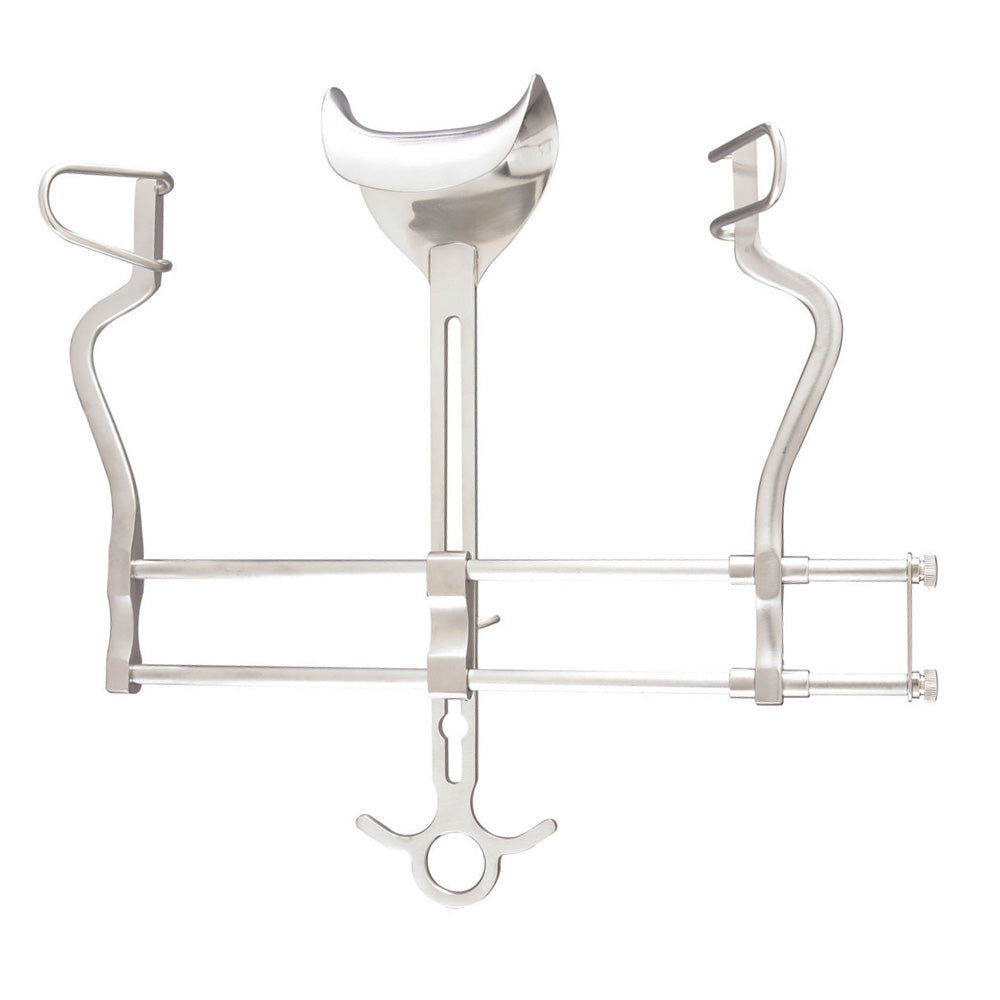
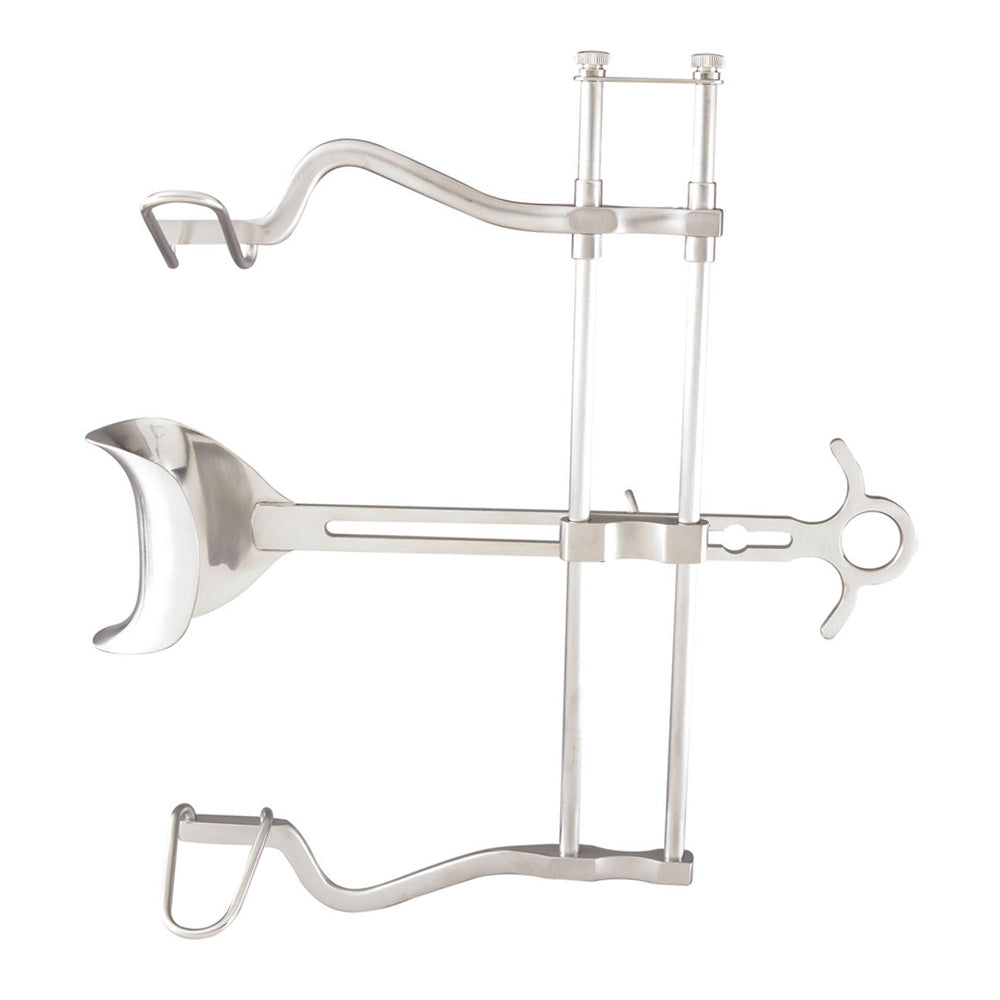
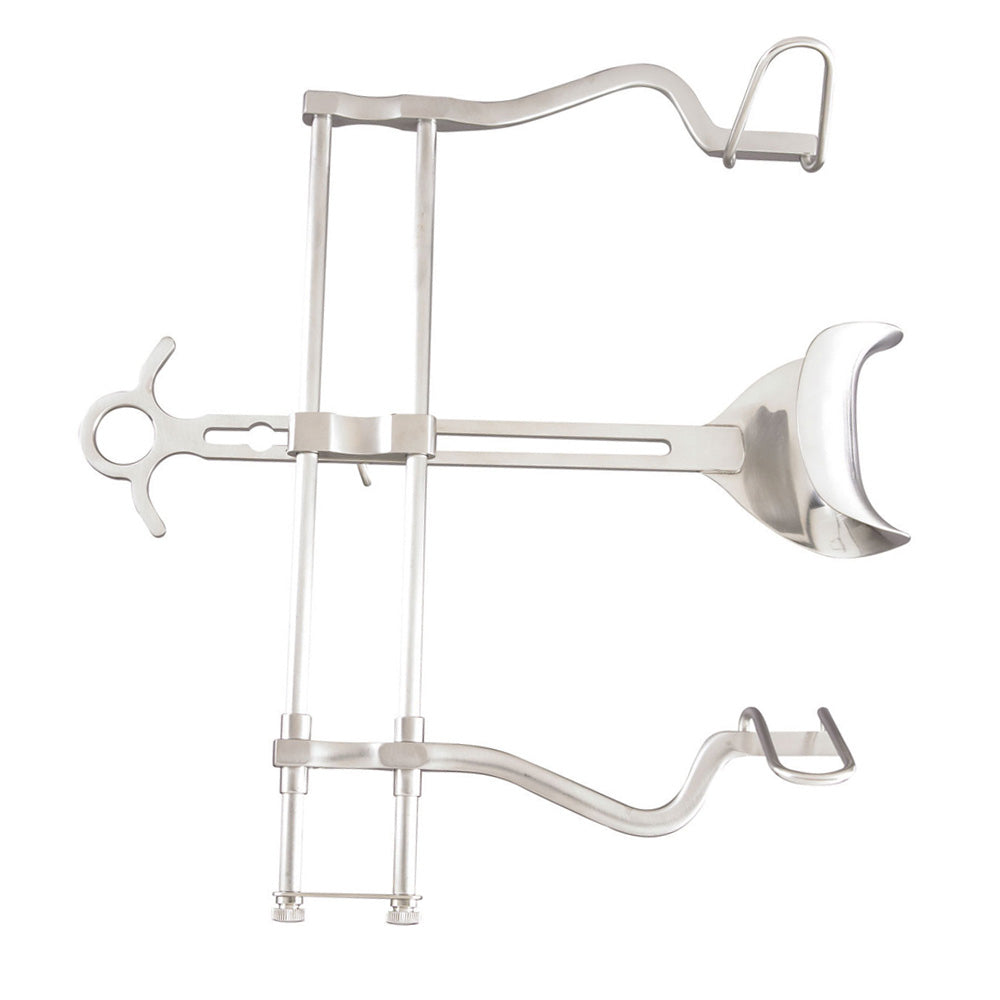
The Balfour Retractor from Peak Surgicals (SKU: PS-2448) is a reusable German Stainless Steel self-retaining abdominal retractor designed for stable exposure of the abdominal wall, pelvic cavity, lower abdomen, bowel field, bladder region, and deep wound margins during open surgery. This series includes the 7” (180mm) spread model with fenestrated side blades and solid center blade, the 9 ¼” (235mm) spread model with fenestrated side blades and solid center blade, and the 7” (17.8cm) spread model with solid side blades and solid center blade, with each instrument priced at $66.00. The retractor includes two lateral blades, a solid central deep blade, parallel frame bars, sliding blade carriers, thumb screws, center blade stem, finger-ring adjustment handle, and self-retaining locking mechanism. General surgeons, gynecologic surgeons, urologists, colorectal surgeons, hospital operating rooms, ambulatory surgical centers, and procurement teams use this retractor during laparotomy, bowel surgery, hysterectomy, pelvic exploration, bladder surgery, appendectomy, hernia repair, and lower abdominal wound exposure. The frame maintains tissue separation without continuous hand-held traction.
Lateral Side Blades, Solid Center Blade, Parallel Bars, and Thumb Screw Fixation
The Balfour pattern works through a three-point retraction system that separates the wound laterally while the center blade controls deeper tissue in the midline. The paired side blades retract the skin, subcutaneous tissue, fascia, rectus sheath, muscle, and peritoneal edges away from the incision. Fenestrated side blades reduce blade mass and allow fluid visibility through the blade opening, while solid side blades provide a continuous contact surface when broader tissue support is required. The solid center blade is positioned into the deeper abdominal or pelvic field to retract bowel, omentum, bladder dome, uterus, peritoneal fold, or deep fascial margin away from the operative target. The parallel frame bars allow the side blade carriers to slide laterally until the incision is opened to the required width. Thumb screws fix the carriers in position and prevent narrowing during dissection, suction, irrigation, cautery, and suturing. The center blade stem and finger-ring adjustment handle allow controlled depth positioning so the blade can be advanced or withdrawn without disturbing the lateral exposure.
Open Abdominal Surgery, Pelvic Exposure, and Deep Wound Retraction
During laparotomy, the Balfour Retractor maintains separation of the abdominal wall after fascial entry, allowing the surgeon to inspect bowel, omentum, peritoneum, mesentery, and deep pelvic structures. In bowel surgery, the lateral blades keep the incision open while the solid center blade helps displace bowel loops away from the anastomotic site, mesenteric pedicle, or resection field. During gynecologic procedures such as hysterectomy and pelvic exploration, the retractor exposes the uterus, adnexa, bladder reflection, pelvic sidewall, and cul-de-sac while freeing the assistant for suction, clamping, or suture handling. In urological surgery, the central blade helps retract the bladder or lower abdominal tissue during suprapubic and pelvic access. In hernia repair and lower abdominal wound exposure, the frame gives stable access to fascial margins and deep tissue planes. During appendectomy or limited abdominal exploration, the 7” spread options provide controlled opening without the footprint of larger table-mounted systems. The self-retaining design gives consistent exposure during hemostasis, tissue handling, knot tying, and closure.
7 Inch, 9 ¼ Inch, Fenestrated, and Solid Blade Selection
The 7” (180mm) spread variant with fenestrated side blades and solid center blade is selected for moderate abdominal exposure where the surgeon needs lateral separation with reduced blade bulk and a clear view around fluid, gauze, or tissue edges. This option suits appendectomy, limited laparotomy, lower abdominal exposure, hernia repair, and selected pelvic cases. The 9 ¼” (235mm) spread variant with fenestrated side blades and solid center blade provides broader access for adult laparotomy, bowel surgery, pelvic exploration, and gynecologic exposure where wider lateral retraction is required. Its larger span gives more space for suction, clamps, forceps, needle holders, and bowel handling. The 7” (17.8cm) spread model with solid side blades and solid center blade is selected when the surgeon wants continuous blade contact across the wound margins rather than fenestrated contact. Solid blades are useful when tissue support, wound edge control, and stable pressure distribution are the priority. These configurations allow one Balfour pattern to cover compact and broader open abdominal work.
German Stainless Steel, Finish Options, Reprocessing, and Procurement Documentation
German Stainless Steel gives the Balfour Retractor the rigidity, corrosion resistance, and mechanical stability required for repeated operating room use. A self-retaining abdominal frame must resist distortion because uneven lateral spread can increase focal pressure on the wound edge, reduce exposure, or shift the center blade from the intended deep retraction plane. The sliding carriers, thumb screws, frame bars, blade stems, and center blade adjustment must operate smoothly so exposure remains stable throughout the procedure. Satin and dull finishes reduce glare under operating lights, while mirror finish provides a smooth surface for visual inspection after cleaning. After surgery, the instrument is decontaminated, the side blades and center blade are brushed, the sliding bars are cleaned, the screw threads are cleared, and the moving parts are inspected before steam sterilization by autoclave. The Class I classification, CE marking, ISO-13485 certification, and FDA compliance support hospital procurement files, distributor documentation, and tender review. The 1-year warranty, MOQ of 1 piece, OEM availability, and return and replacement service support reusable abdominal retractor tray replacement planning.
| SKU | PS-2448 |
|---|---|
| Product Name | Balfour Retractor |
| Price | $66.00 per piece |
| Size/Gauge Variants | 7” (180mm) Spread Fenestrated Side Blade Solid Center Blade; 9 ¼” (235mm) Spread Fenestrated Side Blade Solid Center Blade; 7” (17.8cm) Spread Solid Side Blades Solid Center Blade |
| Instrument Category | Surgical Instruments / Self-Retaining Abdominal Retractors |
| Procedure | Laparotomy, Bowel Surgery, Hysterectomy, Pelvic Exploration, Bladder Surgery, Appendectomy, Hernia Repair, Lower Abdominal Wound Exposure |
| Material | German Stainless Steel |
| Finish | Satin, Dull, Mirror |
| Sterilization | Steam sterilizable / Autoclave compatible |
| Instrument Classification | Class I |
| Reusable | Yes |
| Certifications | CE, ISO-13485, FDA |
| Warranty | 1 Year |
| MOQ | 1 Piece |
| OEM / Custom Orders | Available |
| After-Sale Service | Return and Replacement |
How does the Balfour Retractor compare with the Balfour Baby Self Retaining Retractor?
The Balfour Retractor is designed for broader abdominal and pelvic exposure, while the Balfour Baby Self Retaining Retractor is built for smaller incisions and compact operative fields. The standard Balfour pattern offers larger spread options, making it more suitable for adult laparotomy, bowel surgery, hysterectomy, pelvic exploration, and urological access. The Baby pattern is better for pediatric laparotomy, appendectomy, limited pelvic access, and small-incision work. The Balfour Retractor provides a wider frame and more working space for suction, clamps, bowel packs, needle holders, and deep blade positioning. Its side blade and center blade arrangement gives the surgeon stable three-point exposure. For surgical trays, the Baby model covers compact exposure, while the standard Balfour Retractor covers larger open abdominal procedures.
Which Balfour Retractor variant is selected for each procedure?
The 7” fenestrated side blade model is selected for moderate abdominal exposure, appendectomy, hernia repair, limited laparotomy, and lower abdominal wound access. Its fenestrated side blades reduce instrument bulk while maintaining lateral wound separation. The 9 ¼” fenestrated side blade model is selected for wider adult laparotomy, bowel surgery, hysterectomy, and pelvic exploration where a broader operative window is required. The 7” solid side blade model is selected when the surgeon wants continuous tissue support across the wound edges. Solid side blades are useful when fascia, muscle, or peritoneal margins need stable contact during prolonged exposure. The Balfour Retractor allows the team to match blade style and spread width to incision size, tissue depth, and procedural access. This variant structure helps procurement teams stock a practical abdominal retraction range without unnecessary duplication.
What do CE, ISO 13485, and FDA compliance mean for procurement?
CE marking supports conformity documentation for hospitals, clinics, and distributors sourcing reusable surgical instruments. ISO 13485 indicates that manufacturing is managed under a medical device quality management system with controlled production, inspection, and traceability. FDA compliance supports procurement files for buyers sourcing reusable stainless steel instruments for regulated markets. The Balfour Retractor is listed as a Class I reusable instrument, which fits standard purchasing categories for non-powered abdominal retractors. These credentials help procurement officers compare the product against tender requirements, internal sourcing policies, and distributor documentation needs. German Stainless Steel construction, 1-year warranty, MOQ of 1 piece, and OEM availability strengthen the ordering record for repeat supply. For hospital operating rooms, the documentation aligns clinical function with regulated purchasing expectations.
How are the thumb screws and sliding frame used intraoperatively?
The sliding frame is adjusted after the side blades are positioned against the wound edges. The surgeon or assistant moves the blade carriers along the parallel bars until the incision is opened to the required span. The thumb screws are then tightened to hold the selected opening and prevent the frame from drifting inward. The center blade is positioned into the deeper field using its stem and adjustment handle so bowel, bladder, omentum, or pelvic tissue can be held away from the target anatomy. This mechanism allows the Balfour Retractor to maintain exposure without constant manual traction. The screws are loosened when the opening needs to be changed, the blade position must be adjusted, or the instrument is removed. Stable screw control is central to safe and efficient self-retaining abdominal exposure.
How should the Balfour Retractor be cleaned and sterilized after use?
After surgery, the instrument is decontaminated promptly so blood, tissue residue, saline, fat, and coagulum do not dry around the blades, sliding frame, bars, screws, or center blade stem. Fenestrated side blades are brushed through their openings because retained debris can remain inside blade windows. Solid blades are cleaned along their concave surfaces and edges where tissue contact occurs. The sliding carriers, thumb screw threads, and adjustment components are cleaned and inspected so the frame moves smoothly during the next procedure. German Stainless Steel supports steam sterilization by autoclave after complete cleaning and drying. The Balfour Retractor should return to the surgical tray only after the blades align correctly, the frame opens evenly, and the screws hold securely. Proper reprocessing preserves stable exposure and repeated operating room readiness.